Category Archives: Essential Oil Information

Melissa-Did You Know?

Melissa Lemon Balm
Did you know Melissa is Greek for “honey bee”? Melissa essential oil is the oil of light. Melissa oil brings to mind truth, and light to the soul. It reminds us of who we are, and why we came to this earth. Melissa invites people to release everything, and anything that holds them back from reaching their greatest potential. When people are feeling weighed down with life’s burdens, Melissa encourages them to keep going.

Melissa also know as Lemon balm has become popular with continued use through the years. So widespread was lemon balm’s reputation for promoting longevity, and dispelling melancholy that by the 17th century, French Carmelite nuns were giving out their Carmelite Water to a faithful following. The lemon-balm infused “miracle water” was thought to improve memory, vision, reduce rheumatic pain, fever, melancholy, and congestion.

In the mid 1500’s to 1700’s when the colonization of the North American continent was occurring, the settlers brought tools, and equipment over with them but more importantly they brought their cherished medical herbal books, and healing plants as well. Lemon balm was one of these herbs of great importance for its many uses. The colonist used lemon balm for cooking, and flavoring, for beverages such as teas and wines, medicine, cosmetic, and house- hold uses such as cleaning, and aromatic uses.

Because of its positive effect on mood, Melissa has long been used to calm tension, and nerves. Diffusing Melissa at night initiates a restful sleep, and promotes emotional, and cognitive health. Melissa helps boost immunity and is especially beneficial when seasonal threats are high. Melissa can also soothe stomach discomfort and help with nausea and indigestion. As one of our rarest and most expensive oils, Melissa has a wide range of health benefits and uses.


Frankincense is Fantastic!

Rocky Mountain Nation Park.jpeg
Frankincense is a very powerful essential oil. I have heard it called the Swiss Army Knife of essential oils because of it’s multiple uses. I have a friend at work that I was sharing essential oils with. He mentioned he has a daughter with a big planter wart on her hand. I looked in my Modern Essential Book and found that Frankincense essential oil was studied to help planter warts and may be effective. I put frankincense in a roller bottle with fractionated coconut oil. My friend had his daughter apply the the oil several times a day. After 10 days her planter wart was much improved .

Frankincense is a great oil to use if your immune system has been compromised. When I find myself feeling run down, with a stuffy nose and cough, I will put 3-4 drops of Frankincense essential oil in a glass of water and drink it. I find it frustrating when I finally decide to go to the doctor and he tells me sorry it is a virus there is nothing I can do for you. I am thinking to myself can’t you see I feel miserable and look horrible, I need help!

All essential oils cross the blood-brain barrier. This makes them uniquely able to address disease, not only from a physical level, but from a more basic, primary, level which the emotions are often the root cause of physical illness. Now when I hear “sorry you have a virus”, I know I can use essential oils that can cross the blood brain barrier to attack the virus that is negatively effecting my body.

There are many reasons I choose to use essential oils. The other day I was interested in knowing how many different essential oils I use in a day, I was surprised to count over 15. If your using essential oils great keep it up, if not let me help you get started on a life with positive effects.

The Real Pyramid Scheme

The Real Pyramid SchemeIf you are ready to look at the world from a different point of view.
Give me a call 801-661-4786 or send me an email lfish64@yahoo.com
TEXT FREE SAMPLE if you would like to try an essential oil.
I love sharing essential oils with people for a new way to look at health and wealth.

Melaleuca-Did You Know?

Melaleuca (Tea Tree)
Did you know Melaleuca essential oil has over 92 different compounds and limitless applications? Melaleuca is the oil of energetic boundaries. A natural disinfectant, Melaleuca clears the baggage from the negative energy. It clearly releases codependent and toxic relationships. Melaleuca encourages people to connect with each other in a positive way.

For many centuries, the native Aborigines of Australia used the therapeutic oil of the Melaleuca trees for a wide range of topical and oral applications. They crushed the leaves to use as rubbing mediums and mixed them with clay to form poultices, and even bathed in the water that had collected under the trees. When the white settlers came, they watched and learned how to use the leaves for their own healing purposes.

It was most unfortunate for people in the west that there was no documented evidence of the use of Melaleuca oil. It was to remain confined to Australia, as a bush remedy, for the next 150 years. In 1922, however, an Australian chemist, Arthur Penfold and his team, distilled the oil from the Melaleuca alternifolia, and subsequently published a paper stating that it had a wide-rang of antibacterial and anti-fungal activity.

During the Second World War Melaleuca oil was in such short supply that all the available supplies of oil were used to help stop infections from the unavoidable war wounds, both in soldiers and munitions workers that were helping with the war effort. Soon it was considered necessary that a cheaper, more readily available, alternative should be manufactured to help stop the spread of germs. The once thriving industry went into a steep decline until recently. Over the past few years it has made a huge come back.

Marjoram-Did You Know?


Marjoram
Did you know Marjoram essential oil is the oil of Connection? Marjoram assists people who are unable to trust others or form a serious relationship. Being unable to trust often originates from unpleasant life experiences. Marjoram teaches that trust is the foundation for all human relationships.

Marjoram is surrounded by mythology. People thought marjoram was created by the greek goddess Venus who gifted it with its pleasant sweet flavor and aroma. This is one of the most desired sought after herbs by Aphrodite. People believed that when an unmarried girl kept a marjoram plant in her bed she would see Aphrodite in her dreams, who would then reveal to her, a prospective husband.

By the middle ages, marjoram was worn by couples as garlands to represent love, warm respect, and contentment. It was also added in the food to encourage devotion. Due to its sweet aroma, it was frequently used as deodorant and carried in bouquets and sweet bags. People of England used marjoram as a preservative.

Marjoram was known to the Greeks and Romans as a symbol of happiness. Marjoram has been used in culinary dishes, imparting a unique flavor to soups, stews, dressings, and sauces. In Germany, Marjoram is known as the “Goose Herb” for its traditional use in roasting geese.

In traditional Austrian medicine, Marjoram was used to promote gastrointestinal health and to purify the skin. In modern applications, Marjoram is valued for its calming properties, and for its positive effect on the nervous system. It also soothes tired, stressed muscles, and supports both healthy cardiovascular, and respiratory systems.

Magnolia-Did You Know?

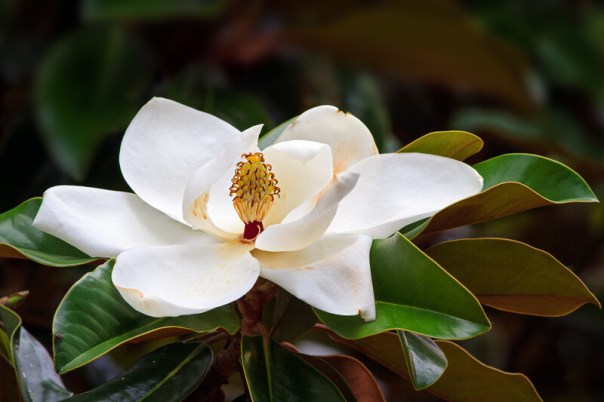
Magnolia Flower.jpgThe Magnolia tree has large dark green leaves and beautiful large white flowers that have a strong pleasant scent. Magnolia  flowers have been used in Chinese medicine for many generations to help create a sense of balance in your body. 

 Steam distilled from the sturdy petals of the magnolia flower, Magnolia essential oil has a fruity and floral aroma that helps promote a relaxed enviroment. Like Beramot and Lavender  Magnolia is primarily Linalool, which may help with feelings of  being stressed or anxious.

Combined with Fractionated Coconut Oil, Magnolia is moisturizing and soothing to the skin. Add to your daily skin care routine to help keep skin clean and hydrated. As a personal fragrance, Magnolia gives a constant comfort to your mood while being uplifting and refreshing.

Lemon-Did You Know?

LemonDid you know Lemon essential oil is the oil of focus? Lemon is a fantastic aid for children that have a difficult time with school. Lemon’s specialty is helping people with with learning disorders to focus. Lemon clears self-judgement about learning, such as, “I am stupid” Lemon calms fears, and uncertain feelings while bringing back confidence in ones self.

Lemon came into full culinary use in Europe in the 15th century? The first major cultivation in Europe began in Genoa. Lemons came to the New World in 1493, when Christopher Columbus brought lemon seeds to Hispaniola. Spanish conquest spread the lemon throughout the New World, where it was still used mainly used as an ornamental plant, and for medicine. Lemons were grown in California by 1751; and in the 1800s in Florida, they began to be used in cooking and flavoring.

Lemon oil is calming in nature and therefore helps with mental fatigue, exhaustion, dizziness, anxiety, nervousness and nervous tension. It has the ability to refresh the mind by creating a positive mindset and removing negative emotions. It is also believed that inhaling lemon oil helps in increasing concentration and alertness. It can therefore be used as a room freshener in offices to increase the efficiency of the employees.

Lavender-Did You Know?

LavenderDid you know Lavender essential oil is the oil of communication? Lavender helps with verbal expression. It calms the uncertain thoughts that are felt when a person exposes their true feelings. Lavender aids in releasing the tension pressure that comes from the fear of self expression. Lavender encourages emotional honesty by encouraging people to speak their most private thoughts, and desires.
The use of lavender has been recorded for more than 2,500 years. Egyptians, Phoenicians and the people of Arabia used lavender as a perfume, and also for mummification, by wrapping the dead in lavender-dipped shrouds. In ancient Greece, lavender was used as a cure for everything from insomnia, and aching backs to insanity.

By Roman times, lavender had already become a prized commodity. Lavender flowers were sold to ancient Romans for 100 denarii per pound, equivalent to a full month’s wage for a farm laborer, and were used to scent the water in Roman baths. In fact, the baths served as the root of the plant’s current name. “Lavender” is derived from the Latin lavare, meaning, “to wash.” Romans also used lavender as a perfume, insect repellent and flavoring.

The use of lavender was highly revered during the Great Plague of London in the 17th century, when individuals fastened bunches of lavender to each wrist to protect themselves from the Black Death. Thieves who made a living stealing from the graves, and the homes of Plague victims concocted a wash known as “Four Thieves Vinegar,” which contained lavender, to cleanse, and protect themselves after a night’s work. Today, we know the disease was transmitted by fleas, so the use of lavender, which is known to repel these insects, could very well have saved lives, and prevented further spread of the plague.

The Shakers, a strict sect of English Quakers, are credited with commercializing lavender and introducing a variety of lavender-based products to the United States and Canada. The Shakers raised their own herbs, produced medicines, and sold them to neighbors and customers outside their religious sect.

Lavender is frequently used to soothe skin irritations and help skin recover quickly. Applying Lavender to the back of the neck, and temples helps reduce muscle tension. Inhaling Lavender promotes relaxation and a restful night’s sleep, making it an ideal oil to diffuse at bedtime and when stress levels are high. Due to Lavender’s versatility and soothing properties, it is considered the must-have oil to have on hand at all times

Juniper Berry-Did You know?

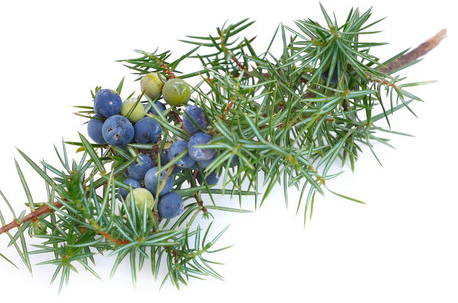
Juniper BerryDid you know Juniper berry essential oil is the oil of the night? Juniper berry aids those who fear darkness or a particular feature about themselves. Juniper berry gives support to people, to learn the lesson, and face their fear. Juniper berry helps bring back the balance between light and darkness. It acts as a guide on the road toward being whole.

Juniper Berries are native to the northern part of the world and Europe. Juniper Berries were found in ancient Egyptian tombs, like in the tomb of Tutankhamun. Many believed that these berries might have migrated into Egypt from Greece. The Greek records have shown that Juniper Berries were used in medicine before it was discovered to be used in food. The berries were widely used in Olympic events because the Greeks believed that the berries could increase physical strength among athletes.

The Western American Native Tribes have used these berries to suppress appetite in times of famine and hunger. On the other hand, Juniper Berries were initially intended for medications because of them being a diuretic and good remedy for arthritis and rheumatism. The Native Americans also have used the seeds of the berries for decoration and jewelry. The Swedes used the extracts from Juniper Berries as a topical medicine for the treatment of inflamed joints and wounds.

Juniper Berry essential oil has a rich history of traditional uses and therapeutic benefits. Juniper Berry acts as a natural cleansing agent, both internally and externally. Juniper Berry supports healthy kidney and urinary function, and is very beneficial to the skin. Its woody, spicy, yet fresh aroma, has a calming effect that helps relieve tension and stress. When diffused, Juniper Berry helps to cleanse and purify the air.

Jasmine-Did You Know?

canstockphoto23972273.jpgDid you know Jasmine essential oil promotes feelings of joy, peace, and self-confidence? It has a pleasing and uplifting effect on the mind and actively fights depression. This makes a person feel happy and potentially awakens romantic and poetic feelings, just as it has done in literary and music history! The aromatic effect of jasmine oil stimulates the release of certain hormones in the body, including serotonin, which results in the boost of energy and the uplifted mood.

The word jasmine is derived from the Arabic word “yasmin,” which means fragrant flower. Jasmine often has white or yellow star-shaped flowers that grow on vines or as shrubbery. Of the 200 species of jasmine, this tropical and subtropical flower is native to Asia. Many botanists believe Iran, formally known as Persia, is where jasmine originated. It was found in Egypt as early as 1000 B.C., then moved its way to Turkey, Greece and China. By the 1600s Italy and France quickly embraced jasmine flowers. The only continents without native species of jasmine are Antarctica and North America, according to the New World Encyclopedia.

Renowned as the “King of Flowers,” Jasmine is prized for its a highly fragrant aroma that can emit strong smells for up to 36 hours after being hand-picked. Extracting Jasmine is labor-intensive and must be done at daybreak, when the flowers are most fragrant and have the highest percentage of components intact. It takes 352 flower blossoms to yield one drop of essential oil.

Jasmine essential oil provides many different health benefits, both aromatically and topically. Its esteemed fragrance can be sedating, yet euphoric, soothing nervous tension and instilling a positive outlook. Emotionally, Jasmine promotes feelings of joy, peace, and self-confidence. Jasmine is known to help balance hormones, manage the symptoms of PMS, and promote healthy, radiant skin. Jasmine may also be beneficial in nourishing a dry scalp and reducing the appearance of scars and stretch marks.