Tag Archives: Jasmine

How to Use Essential Oils: Jasmine

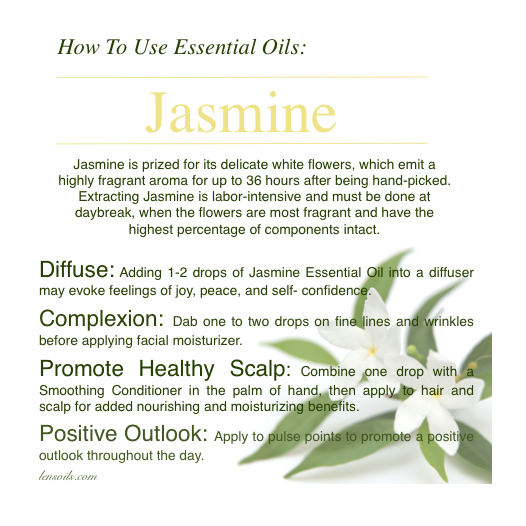
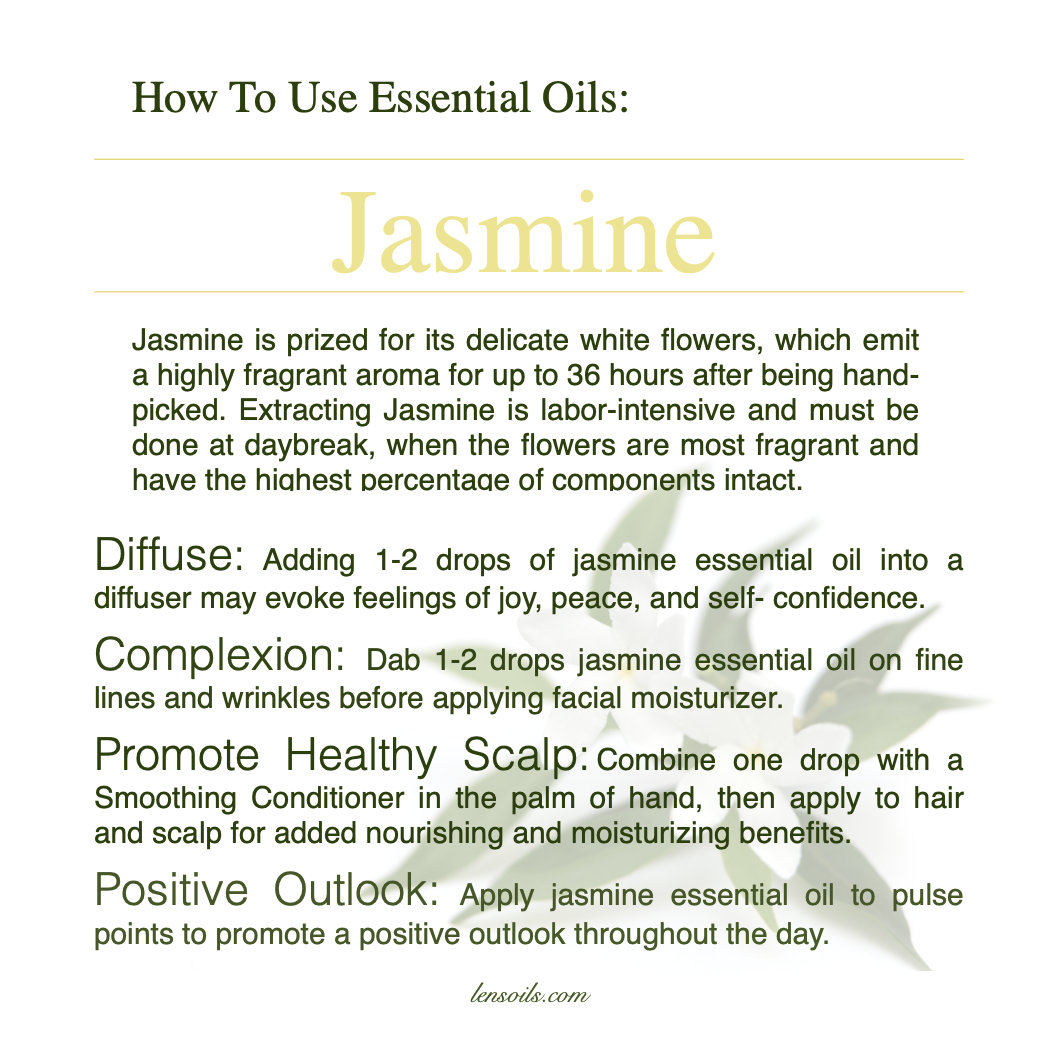
Jasmine essential oil is treasured for its delicate white flowers, which release a rich, captivating aroma for up to thirty-six hours after being carefully hand-picked. The extraction process is extremely labor-intensive and must begin at daybreak, when the blossoms are at their most fragrant and contain the highest concentration of aromatic components. This careful timing preserves jasmine’s signature scent, often described as both uplifting and deeply comforting.

In daily use, jasmine essential oil is often chosen for its ability to support emotional balance and self-confidence. Diffusing a small amount may encourage feelings of joy and peace, while topical use can complement skincare and hair routines with a nourishing, aromatic touch. Many people also enjoy applying jasmine to pulse points as part of a morning or evening ritual, using its gentle fragrance to foster a positive, steady outlook throughout the day.

Jasmine-Did You Know?

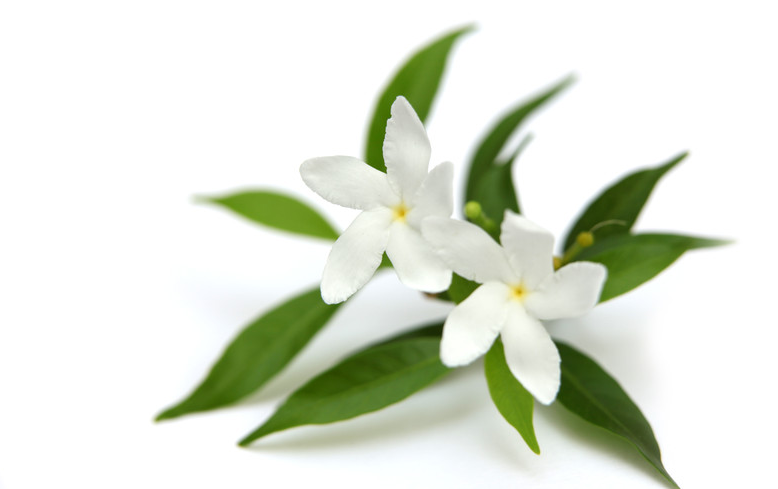
Jasmine flowers
Did you know jasmine essential oil promotes feelings of joy, peace, and self-confidence? It has a pleasing and uplifting effect on the mind and actively fights depression. This makes a person feel happy and potentially awakens romantic and poetic feelings, just as it has done in literary and music history! The aromatic effect of jasmine oil stimulates the release of certain hormones in the body, including serotonin, which results in the boost of energy and the uplifted mood.

The word jasmine is derived from the Arabic word “yasmin,” which means fragrant flower. Jasmine often has white or yellow star-shaped flowers that grow on vines or as shrubbery. Of the 200 species of jasmine, this tropical and subtropical flower is native to Asia. Many botanists believe Iran, formally known as Persia, is where jasmine originated. It was found in Egypt as early as 1000 B.C., then moved its way to Turkey, Greece and China. By the 1600s Italy and France quickly embraced jasmine flowers. The only continents without native species of jasmine are Antarctica and North America, according to the New World Encyclopedia.

Renowned as the “King of Flowers,” Jasmine is prized for its a highly fragrant aroma that can emit strong smells for up to 36 hours after being hand-picked. Extracting Jasmine is labor-intensive and must be done at daybreak, when the flowers are most fragrant and have the highest percentage of components intact. It takes 352 flower blossoms to yield one drop of essential oil.

Jasmine essential oil provides many different health benefits, both aromatically and topically. Its esteemed fragrance can be sedating, yet euphoric, soothing nervous tension and instilling a positive outlook. Emotionally, Jasmine promotes feelings of joy, peace, and self-confidence. Jasmine is known to help balance hormones, manage the symptoms of PMS, and promote healthy, radiant skin. Jasmine may also be beneficial in nourishing a dry scalp and reducing the appearance of scars and stretch marks.
Jasmine-Did You Know?

canstockphoto23972273.jpgDid you know Jasmine essential oil promotes feelings of joy, peace, and self-confidence? It has a pleasing and uplifting effect on the mind and actively fights depression. This makes a person feel happy and potentially awakens romantic and poetic feelings, just as it has done in literary and music history! The aromatic effect of jasmine oil stimulates the release of certain hormones in the body, including serotonin, which results in the boost of energy and the uplifted mood.

The word jasmine is derived from the Arabic word “yasmin,” which means fragrant flower. Jasmine often has white or yellow star-shaped flowers that grow on vines or as shrubbery. Of the 200 species of jasmine, this tropical and subtropical flower is native to Asia. Many botanists believe Iran, formally known as Persia, is where jasmine originated. It was found in Egypt as early as 1000 B.C., then moved its way to Turkey, Greece and China. By the 1600s Italy and France quickly embraced jasmine flowers. The only continents without native species of jasmine are Antarctica and North America, according to the New World Encyclopedia.

Renowned as the “King of Flowers,” Jasmine is prized for its a highly fragrant aroma that can emit strong smells for up to 36 hours after being hand-picked. Extracting Jasmine is labor-intensive and must be done at daybreak, when the flowers are most fragrant and have the highest percentage of components intact. It takes 352 flower blossoms to yield one drop of essential oil.

Jasmine essential oil provides many different health benefits, both aromatically and topically. Its esteemed fragrance can be sedating, yet euphoric, soothing nervous tension and instilling a positive outlook. Emotionally, Jasmine promotes feelings of joy, peace, and self-confidence. Jasmine is known to help balance hormones, manage the symptoms of PMS, and promote healthy, radiant skin. Jasmine may also be beneficial in nourishing a dry scalp and reducing the appearance of scars and stretch marks.