Nootka essential oil comes from the Nootka cypress, commonly known as Alaska yellow cedar. Its botanical classification has changed over the years, so it may be encountered under names including Cupressus nootkatensis and Callitropsis nootkatensis. The tree is native to the Pacific Northwest and grows from Alaska southward along the Pacific Coast, where it is well adapted to cool, wet mountain environments.
From skeptic to steady use, the shift didn’t happen all at once. At first, essential oils seemed like just another trend, easy to dismiss and easy to ignore. But with time, one small step led to another. A single bottle became a simple daily habit, and those small, consistent choices gradually became part of everyday life in my home.
There was no need to rush the process. I started small and simply discovered what I enjoyed using and what fit naturally into my routine. Over time, those little additions became familiar parts of my home—nothing complicated, just small habits that stuck.
Niaouli essential oil, derived from Melaleuca quinquenervia, has its roots in regions of Australia and New Caledonia. Indigenous communities traditionally used the leaves in everyday practices, often preparing simple applications as part of their routines. Early European settlers later recognized the plant, and it gradually became known more broadly for its fresh, penetrating aroma and its connection to these longstanding traditions.
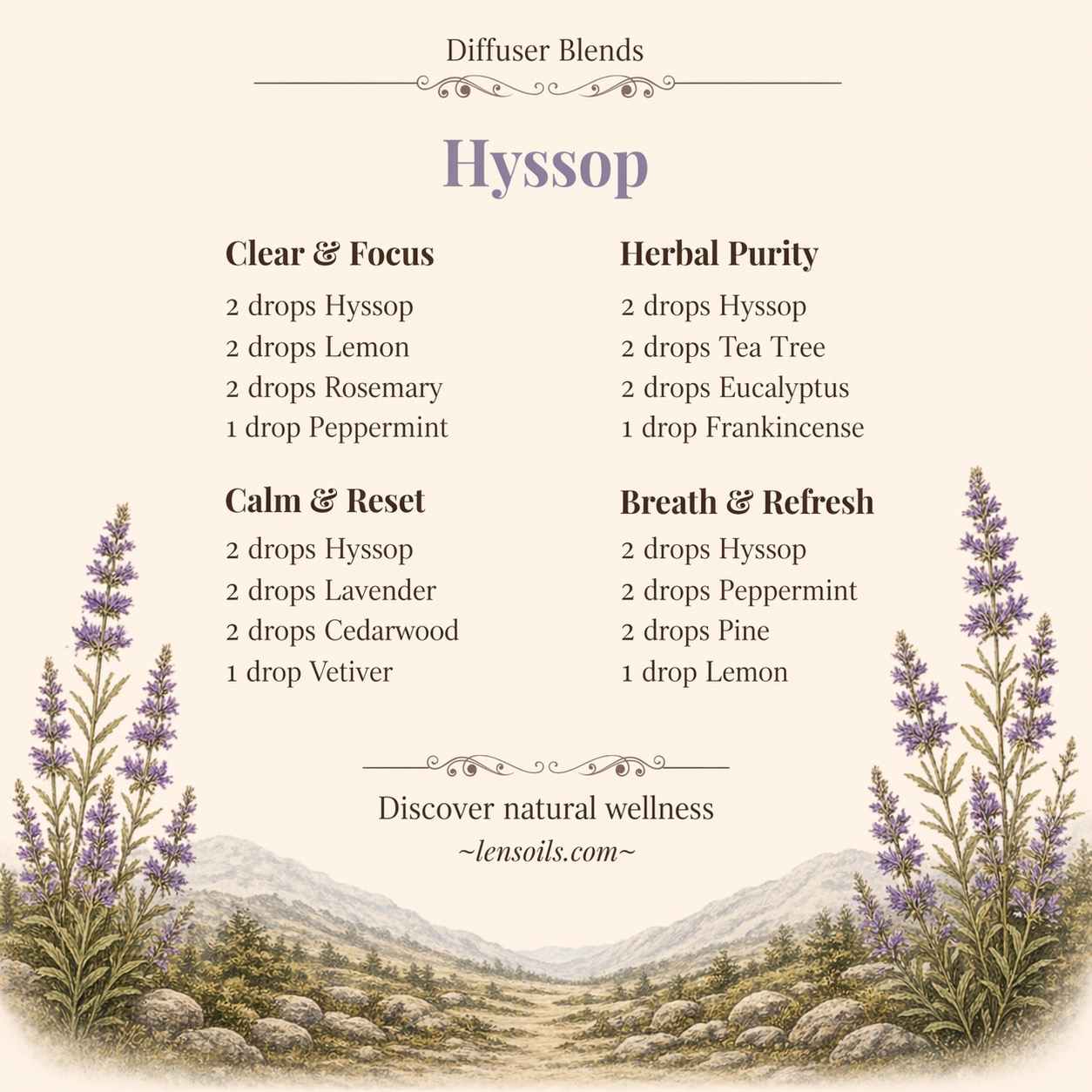
Hyssop diffuser blends tend to carry a crisp, herbal character that feels clean, bright, and slightly invigorating. Clear & Focus leans into that sharper profile with lemon, rosemary, and peppermint for a fresh, alert atmosphere, while Calm & Reset softens the edge with lavender, cedarwood, and vetiver for a more grounded, balanced feel. Herbal Purity emphasizes a clean, clearing tone with tea tree, eucalyptus, and frankincense, and Breath & Refresh opens things up with peppermint, pine, and lemon for a light, airy effect. Across all four, Hyssop provides a consistent thread—fresh, herbaceous, and quietly clarifying.
Emotionally, Hyssop’s aroma often feels like a mental reset, helping clear out that “foggy” or cluttered feeling and bringing a sense of renewed focus. It can support a feeling of openness and gentle clarity, especially when the mind feels scattered or overloaded. Rather than being heavy or deeply grounding, it tends to feel uplifting in a clean, natural way—like opening a window and letting in fresh air, helping everything feel a little more clear, steady, and refreshed.
Neroli essential oil is derived from the blossoms of the bitter orange tree, Citrus aurantium. Its name traces back to the 17th century, when Anne Marie Orsini, the Princess of Nerola in Italy, popularized its use as a personal fragrance. Since then, neroli has been associated with elegance and refinement, valued for its soft, floral aroma and its place in traditional perfumery and daily routines across Mediterranean cultures.
Myrtle essential oil, derived from Myrtus communis, has a long history in Mediterranean cultures, where it was associated with love, beauty, and ceremonial traditions. Ancient Greeks and Romans used myrtle in daily life and celebrations, and the plant became especially associated with Aphrodite and Venus. Its fresh, slightly sweet, herbaceous aroma helped make it a valued plant across generations.
Essential oils are drawn from plants, flowers, and herbs, carrying the natural aroma and character of the source they come from. Their scents can create a calming atmosphere and gently lift the mood, making them a simple addition to everyday routines. Used thoughtfully, they can become part of moments that invite pause, focus, and a sense of balance.
Many people include essential oils as a way to support daily rhythms such as managing stress, encouraging rest, and maintaining steady energy. While they are not a cure or replacement for care, they can complement a balanced lifestyle in a natural, approachable way. There may be a gentler path.
Myrrh essential oil comes from the resin of Commiphora myrrha, a small, thorny tree native to regions of northeastern Africa and the Arabian Peninsula. It has been valued for thousands of years, appearing in ancient Egyptian, Greek, and biblical traditions, where it was used in daily practices, ceremonies, and trade. Its rich, warm, and slightly smoky aroma made it one of the most treasured resins in early history.
Melissa essential oil, derived from Melissa officinalis and often called lemon balm, has a long history rooted in ancient Mediterranean cultures. The Greeks and Romans valued the plant for its gentle, uplifting aroma and included it in daily life and traditional practices. Its name comes from the Greek word for “honeybee,” reflecting how strongly the plant attracts bees, and it has remained a cherished botanical across generations for its light, lemony scent.
Melaleuca, commonly known as tea tree (Melaleuca alternifolia), is native to Australia, particularly northeastern New South Wales and southeastern Queensland. The Bundjalung people of northern New South Wales traditionally used tea-tree leaves in a variety of ways, including crushing the leaves and preparing infusions. The essential oil itself gained wider attention during the early twentieth century as researchers began studying Australia’s native aromatic plants.