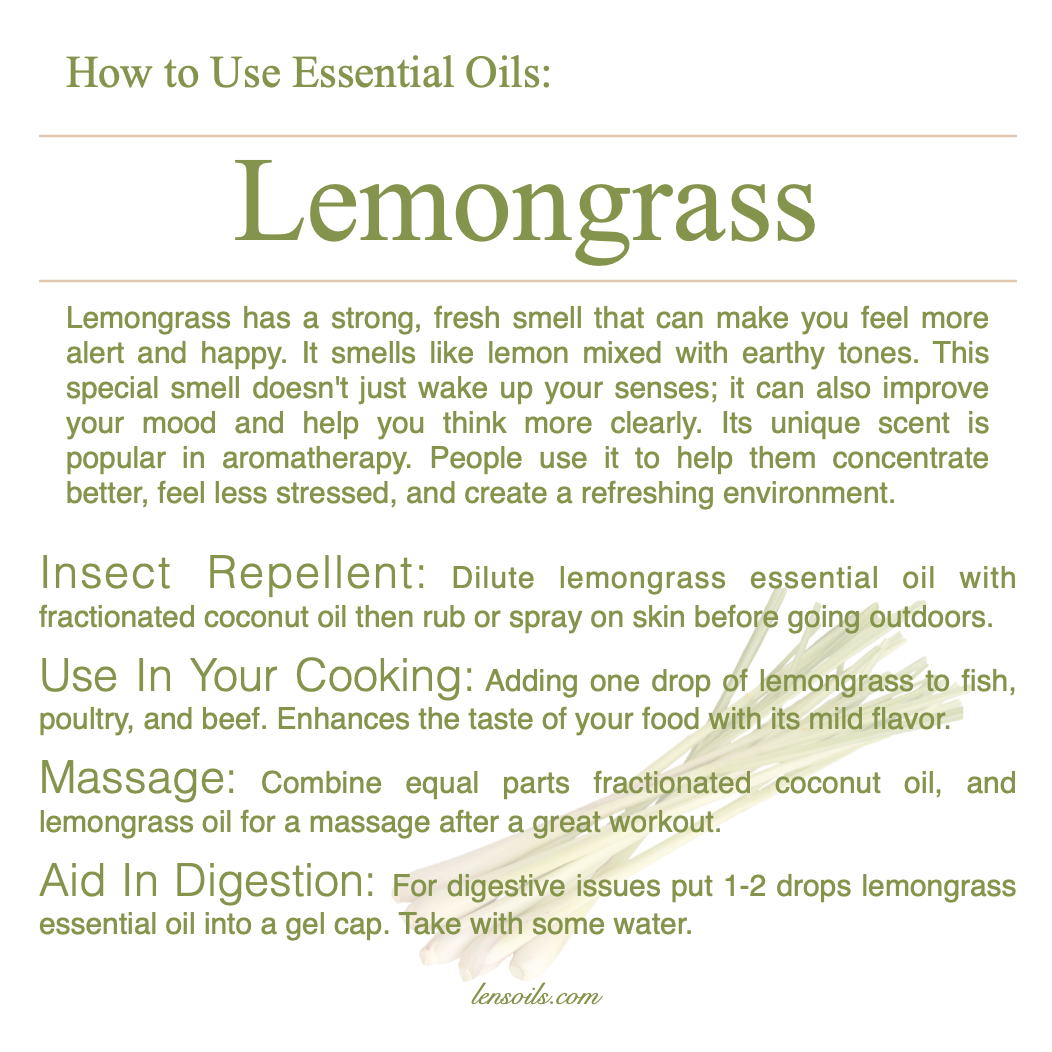
Lemongrass essential oil has a strong, fresh aroma that blends bright lemon notes with soft, earthy tones. This uplifting scent is often used to boost alertness, improve mood, and support mental clarity. In aromatherapy, lemongrass is popular for creating a clean, refreshing environment that helps with focus and stress reduction, making it a favorite for workspaces and post-workout relaxation.
Lemongrass oil is also valued for its practical uses. When diluted with fractionated coconut oil, it can be applied to the skin as a natural insect repellent before spending time outdoors. In cooking, a single drop can be added to fish, poultry, or beef to enhance flavor with a mild citrus touch. For muscle recovery, it can be blended with carrier oil for a soothing massage, and for digestive support, 1–2 drops may be placed in a gel capsule and taken with water.
Click here to get your Bingo cards and start the fun. Each card features a unique mix of essential oils, making every game a little different. Whether you are playing with friends, family, or at an event, these cards turn learning about plant oils into an engaging and memorable activity. Download your cards, gather your players, and see who gets Bingo first.
Story 5 of 10 — marking 250 years of American freedom When Restraint Held a Nation Together
June 7, 1776 brought the question of independence into the open in a way that could no longer be avoided. On that day, Richard Henry Lee introduced a resolution in the Continental Congress calling for the colonies to separate from Britain. The proposal did not create unity. It revealed how divided the colonies already were, even as war continued.
Many colonists feared what independence might cost. Trade ties with Britain supported entire communities, and separation threatened economic collapse. Others worried about foreign invasion or internal disorder. At the same time, those who favored independence believed delay would only strengthen British control. These disagreements existed within families, churches, town councils, and colonial assemblies.
Debate spread quickly beyond Philadelphia. Taverns, markets, and meeting halls became informal political forums where news traveled fast and arguments followed. Letters and diaries from the period describe conversations that were sharp but deeply personal. People understood that the outcome would affect everyone, regardless of which side they favored.
Despite these divisions, daily life forced cooperation. Crops still needed planting, roads needed repair, and barns had to be raised before weather or war made delays costly. Towns required defense, and neighbors who disagreed politically depended on one another for survival. Separation was not only impractical. It was dangerous.
Leaders faced the same reality. Members of Congress argued fiercely over timing and risk, yet they continued working together. They understood that fracturing the colonies before a decision was reached would guarantee failure. Progress depended not on agreement, but on restraint.
What held the colonies together during this period was not agreement on independence, but a shared understanding of consequence. People recognized that allowing disagreement to fracture relationships would weaken their ability to survive what lay ahead. Restraint became a practical skill rather than a moral ideal. Choosing to stay engaged, even while divided, protected the fragile framework that independence would soon require.
This moment shows that disagreement itself was not the greatest threat to independence. The danger was allowing conflict to destroy cooperation. The colonies endured because people chose to remain connected even when unity felt strained. Living with disagreement became a discipline—one that made the final decision possible.
References
Journals of the Continental Congress, June 1776
Pauline Maier, American Scripture: Making the Declaration of Independence
Bernard Bailyn, The Ideological Origins of the American Revolution
These stories are grounded in documented historical events and primary sources, with limited interpretive synthesis used to connect facts and reflect lived experience where the historical record does not capture every detail.
In ancient times, anointing was not only symbolic, it was also sensory. The gentle aroma of oils, drawn from plants of the earth, created an atmosphere of calm and focus. These moments were often quiet and intentional, helping individuals prepare their minds and hearts for what lay ahead.
Even now, small, simple practices can carry that same sense of purpose. A familiar scent or a peaceful routine can serve as a reminder to slow down, reflect, and reset. Without needing anything elaborate, these subtle experiences can support a steady, grounded sense of well-being in everyday life.
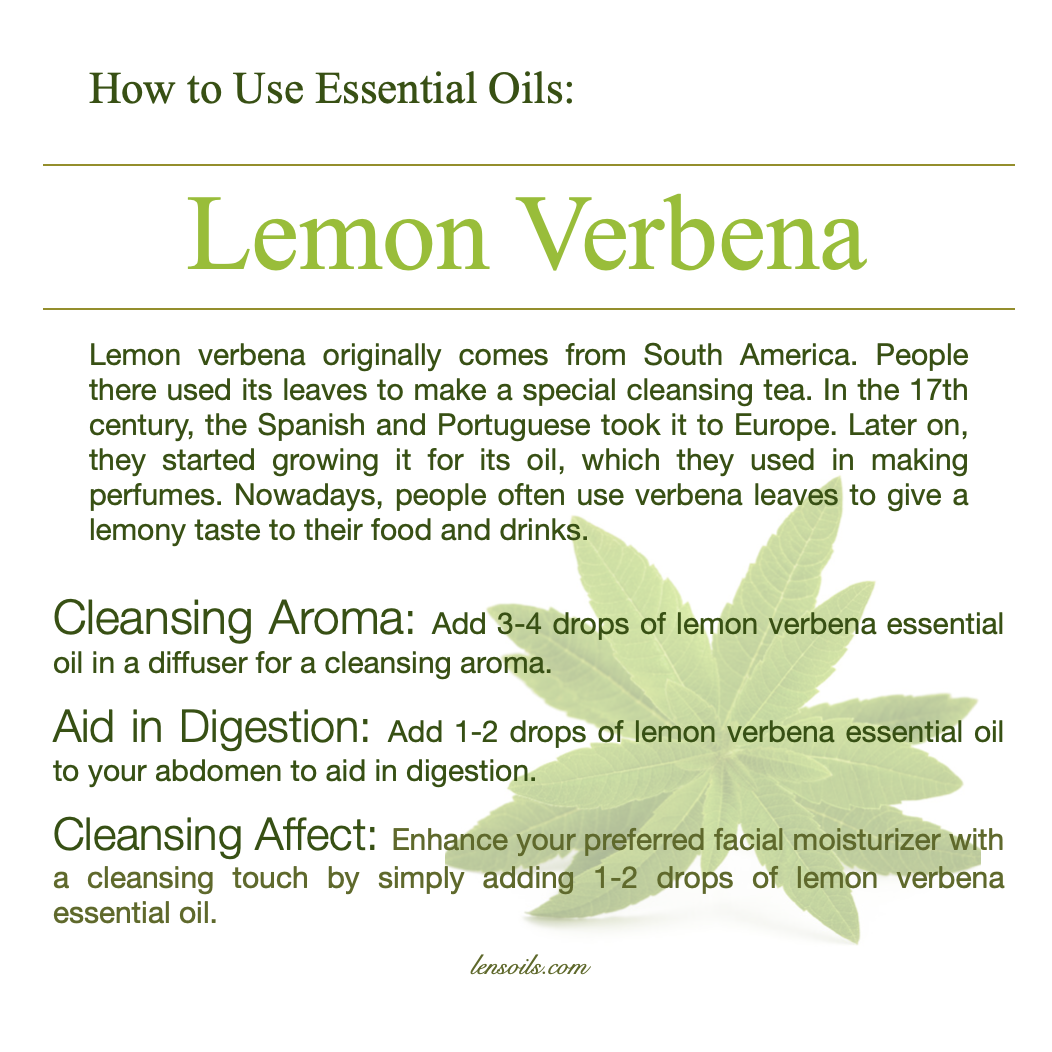
Lemon verbena is a fragrant plant that originally comes from South America, where its leaves were traditionally brewed into a refreshing, cleansing tea. In the 17th century, Spanish and Portuguese explorers introduced lemon verbena to Europe, where it quickly became popular for its bright, lemon-like scent. Over time, it was cultivated for its aromatic oil and widely used in perfumes and personal care products. Today, lemon verbena leaves are still enjoyed for adding a gentle lemon flavor to foods and drinks.
Lemon verbena essential oil is often appreciated for its clean, uplifting aroma and versatile uses. Diffusing a few drops can help create a fresh, cleansing atmosphere in a space. When diluted and applied gently to the abdomen, it is commonly used as part of a routine that supports digestive comfort. Lemon verbena is also valued in skincare, where a drop or two can be added to a facial moisturizer to give a light, refreshing, and cleansing touch, making it a favorite for those who enjoy bright, botanical scents.
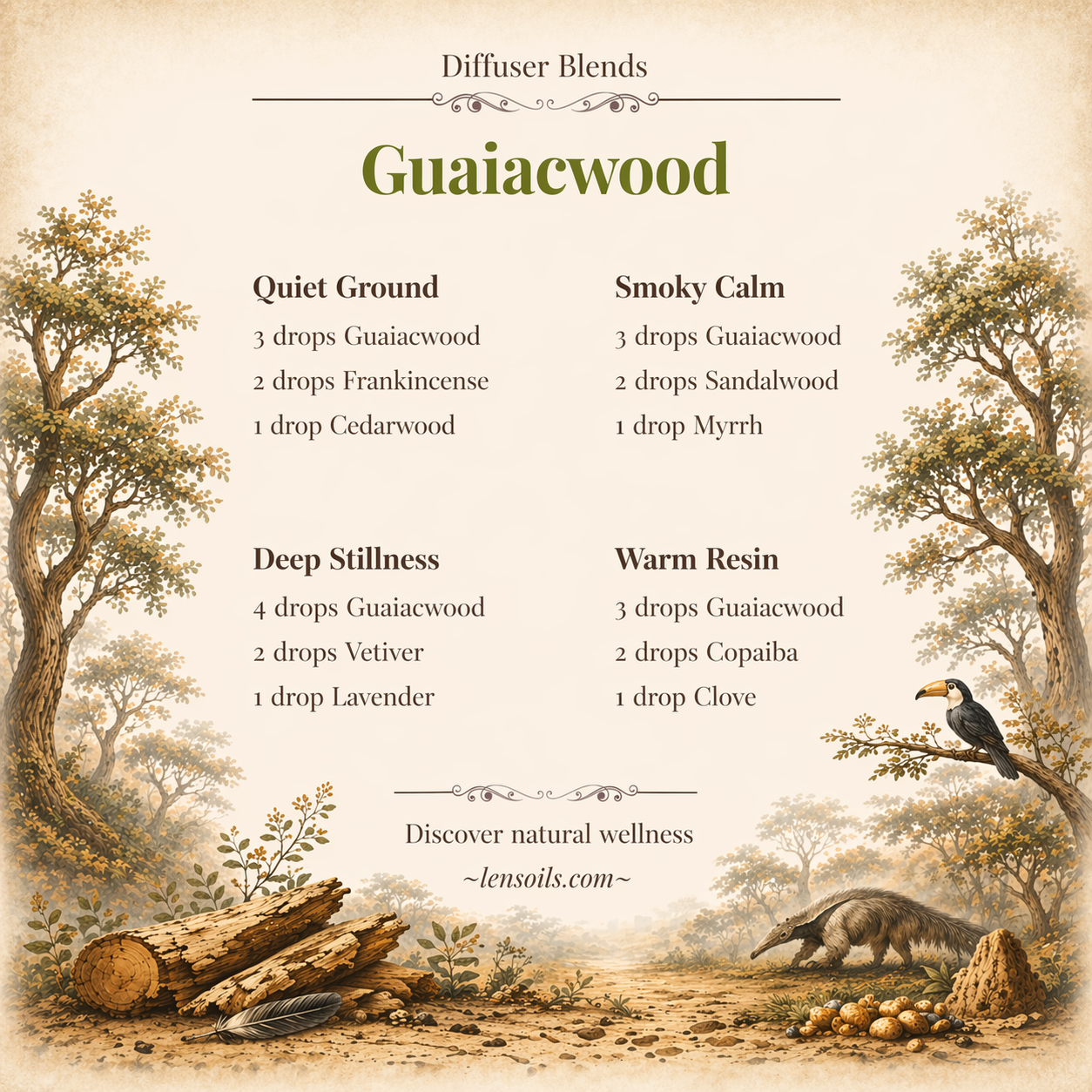
Guaiacwood diffuser blends tend to center around a deeply grounding, slow, and steady mood, with each variation offering a different shade of stillness. Quiet Ground leans calm and centered with frankincense and cedarwood, while Smoky Calm moves richer and more meditative with sandalwood and myrrh. Deep Stillness settles further with vetiver and a touch of lavender, and Warm Resin adds a gentle warmth through copaiba and clove. Each blend keeps the same core tone—soft, steady, and unhurried.
Emotionally, Guaiacwood’s aroma often feels like a quiet anchor, helping the body shift into a slower, more settled rhythm. Its deep, earthy profile can support a sense of grounded calm, especially when things feel overstimulating or scattered. Rather than lifting quickly, it creates space to pause, breathe, and feel more centered—like a steady presence that helps everything soften and come back into balance.
Somewhere out there, a diffuser sits silent… a lonely bottle of lavender gathers dust… and someone is out here navigating life with nothing but their actual feelings. Be brave. May a stray drop of peppermint find its way to you, may wild orange cross your path at just the right moment, and may you never again face chaos without at least something that smells like calm and confidence.
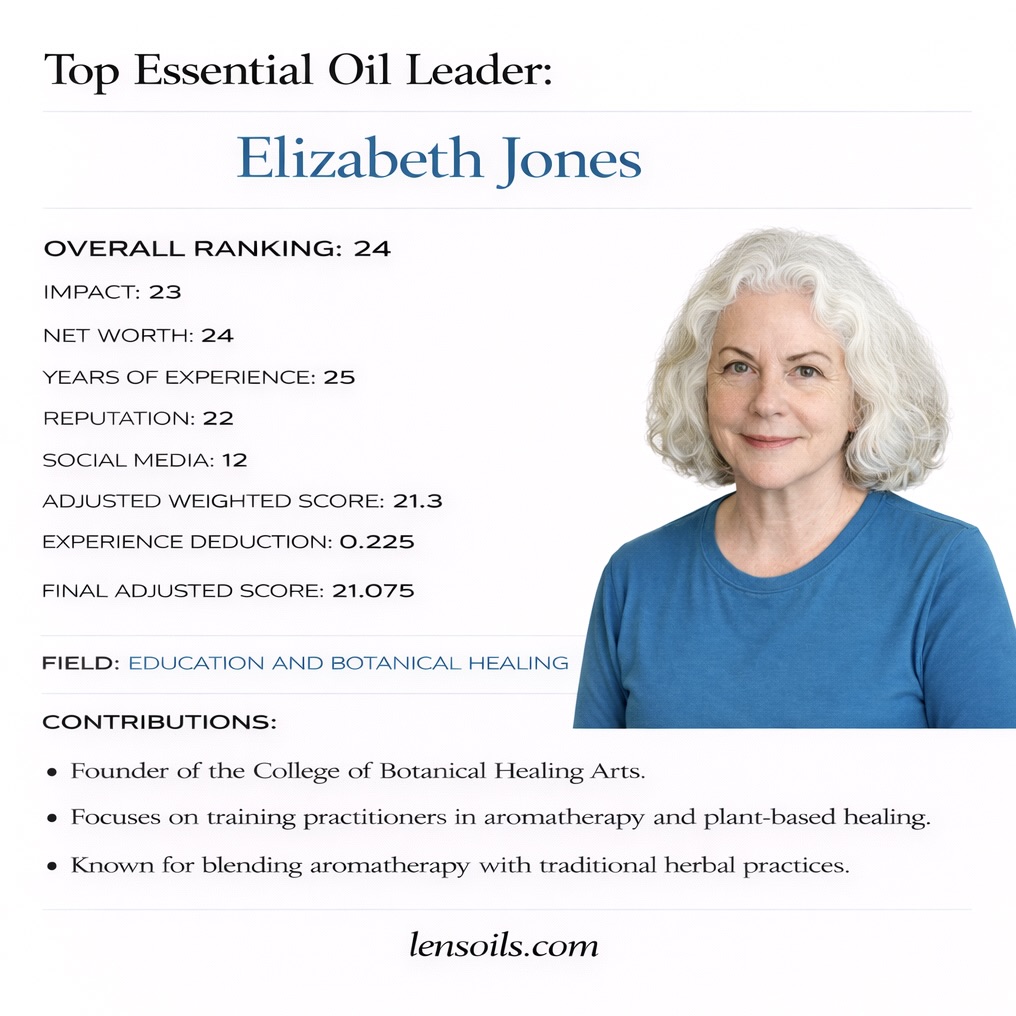
Elizabeth Jones is widely recognized for her leadership in education-centered aromatherapy and botanical healing. Her work has consistently focused on building strong foundations for practitioners, emphasizing careful study, ethical practice, and respect for plant-based traditions. Rather than following trends, she has helped shape a steady, thoughtful approach to essential oil education.
As the founder of the College of Botanical Healing Arts, Jones created a structured learning environment for students seeking professional training in aromatherapy and plant-based healing. The institution is known for prioritizing depth over speed, encouraging learners to understand not just how essential oils are used, but why they work within broader botanical systems. This educational focus has influenced many practitioners who now teach and practice with greater confidence and responsibility.
Jones is especially respected for blending aromatherapy with traditional herbal practices. She teaches that essential oils should not be separated from the plants they come from, but understood as part of a larger botanical relationship. This perspective has helped bridge gaps between herbalists and aromatherapists, encouraging collaboration rather than division within the natural health community.
With more than 25 years of experience, Elizabeth Jones has developed a reputation for clarity, balance, and integrity. She is known for supporting evidence-informed practice while still honoring historical and traditional knowledge. Her influence is often seen through the success of her students and the steady adoption of her teaching principles across educational programs.
Today, Elizabeth Jones stands as a respected voice in education and botanical healing. Her contributions continue to shape how essential oils are taught and practiced, with an emphasis on long-term learning, ethical responsibility, and holistic understanding. Through her leadership, she has helped ensure that aromatherapy remains grounded, professional, and deeply connected to its botanical roots.
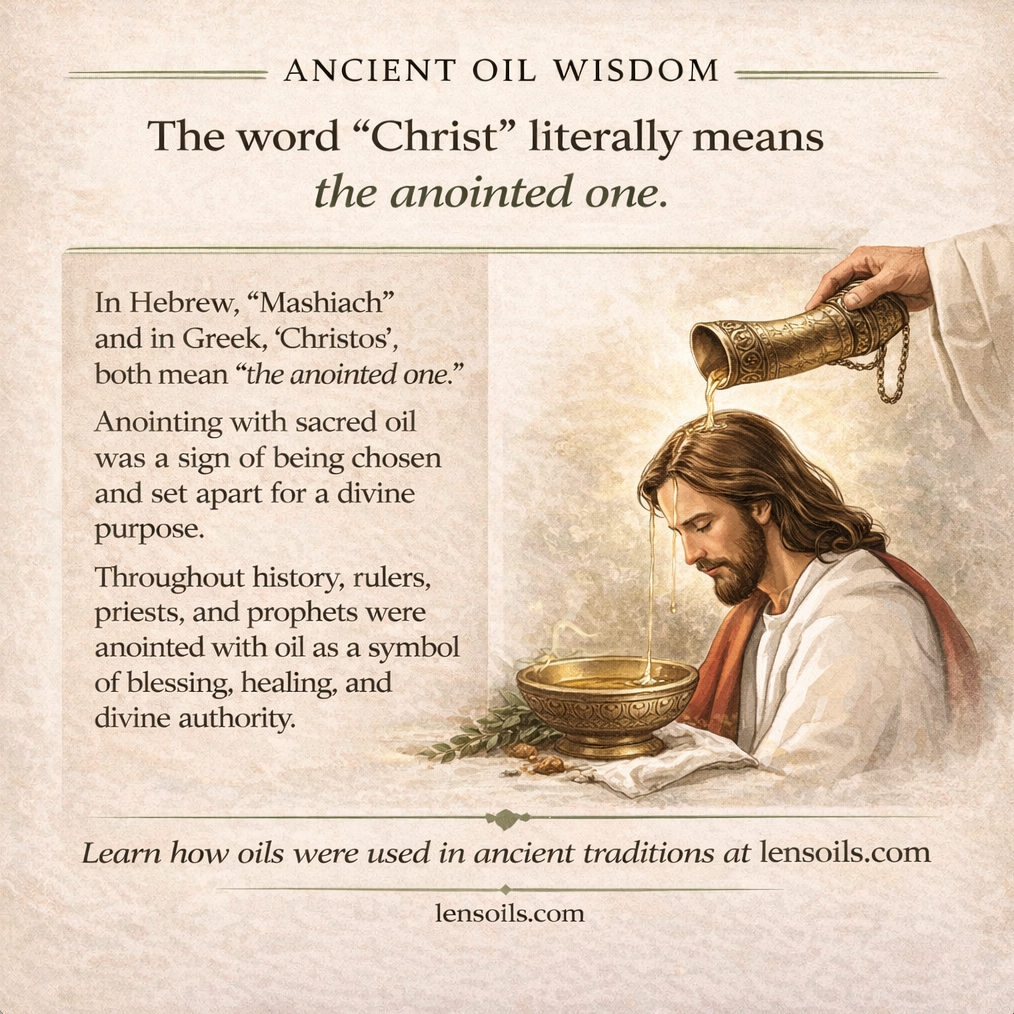
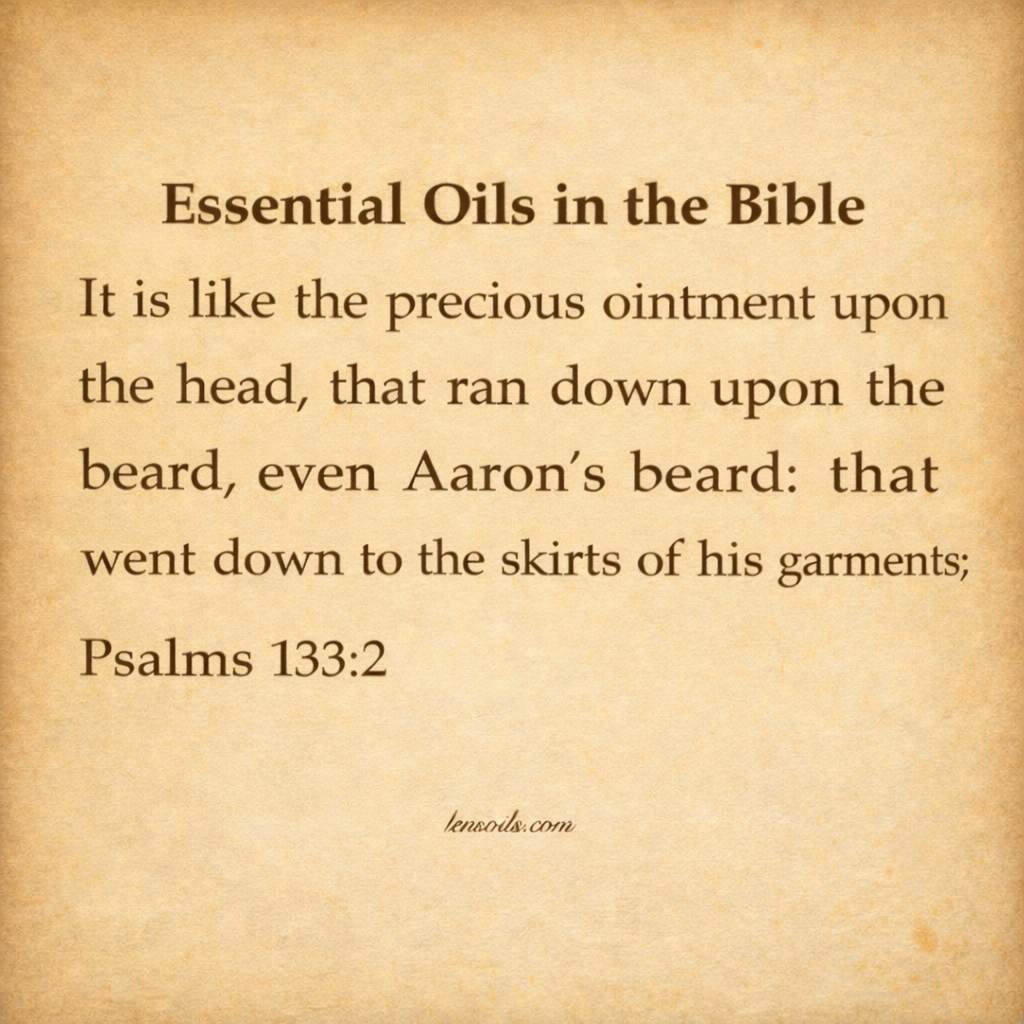
Psalm 133:2 comes from a short “Song of Ascents,” traditionally associated with pilgrims traveling up to Jerusalem for worship. These songs were likely sung together as families and communities made their way toward the temple, emphasizing unity, shared purpose, and peace among God’s people. The verse uses a vivid image from Israel’s sacred history—the anointing of Aaron, the first high priest. In ancient Israel, anointing oil was not ordinary; it was a carefully prepared blend of fragrant ingredients like myrrh, cinnamon, and olive oil, described in Exodus 30. This oil symbolized consecration, meaning Aaron was being set apart for a holy purpose, dedicated fully to serve God and the people.
The image of oil flowing down Aaron’s head, through his beard, and onto his garments reflects abundance, blessing, and completeness. It was not a small or symbolic drop—it was a generous pouring, representing how unity among people is meant to be rich, full, and unmistakable. In this context, the “precious ointment” connects essential oils to something sacred and communal, not just personal. The fragrance would have been noticeable to everyone nearby, reinforcing the idea that true harmony spreads outward and affects the whole community. This verse, therefore, uses the physical properties of anointing oil—its aroma, its richness, and its ability to flow—to teach a deeper spiritual truth about unity, blessing, and shared purpose.
He was not a king. Not a priest. Not even a wealthy merchant with caravans of silk and spice. He was simply a keeper of scents in a narrow stone shop tucked between a baker and a candle maker. Few noticed him. Fewer still understood what he guarded behind his wooden counter.
Every morning before the sun reached the clay rooftops, he swept the dust from his doorway. He arranged small clay jars in careful rows. Some held crushed bark. Some held dried petals. Others contained resins hardened like amber tears. Each jar carried a story older than the stones beneath his feet.
Travelers came and went. Soldiers passed through on their way to distant borders. Brides stopped in, searching for perfumes that would make a memory linger. Mothers sought balms to soothe a child’s restless night. The shopkeeper listened more than he spoke. He believed scent was not just fragrance. It was memory, comfort, even courage.
There were days when grief walked through his door. A widow once stood quietly at the counter, her hands trembling. She did not ask for joy. She asked for something steady. Something grounding. Something that reminded her the earth beneath her still held firm.
The keeper understood that some aromas lifted the spirit like sunlight. Others settled the heart like rain on dry soil. He selected carefully, measuring not only with scales but with wisdom gathered from years of watching human faces soften and steady.
He had studied the writings of ancient physicians. He had listened to elders who spoke of sacred incense rising from temple courts. He knew that certain resins were once burned in holy places, their smoke curling upward as prayers drifted into the air. History was not distant to him. It lived in every jar.
A young soldier once entered, proud and loud, boasting of coming battles. The shopkeeper said little. He offered a small vial and instructed the soldier to breathe deeply before sleep. Weeks later, the soldier returned quieter, humbled by loss. He bought another vial without speaking.
Seasons changed. Empires shifted. Yet the little shop remained. The baker next door retired. The candle maker’s son took over the trade. But the keeper of scents stayed at his counter, preserving knowledge that did not shout yet refused to fade.
Then one evening, a scholar arrived from the coast. He examined the jars and asked about the oldest resin in the room. The keeper reached to the highest shelf and brought down a hardened green-gold substance, fragrant even before it was opened. He spoke of how Egyptians burned it in sacred rites, how Greeks and Romans blended it into balms, how physicians like Hippocrates valued its steadying qualities, and how it was once named among holy ingredients in ancient Scripture.
The quiet resin was Galbanum—used in incense for the departed, blended into perfumes for the living, studied for its calming strength, and still today added in a drop or two to a favorite cleanser, diffused for a fresh aroma, or mixed with oil for a steadying massage. A humble substance. A sacred history. A reminder that sometimes the oldest remedies are the ones that endure. And now you know the rest of the story.


 Len's Oils