Tag Archives: Massage

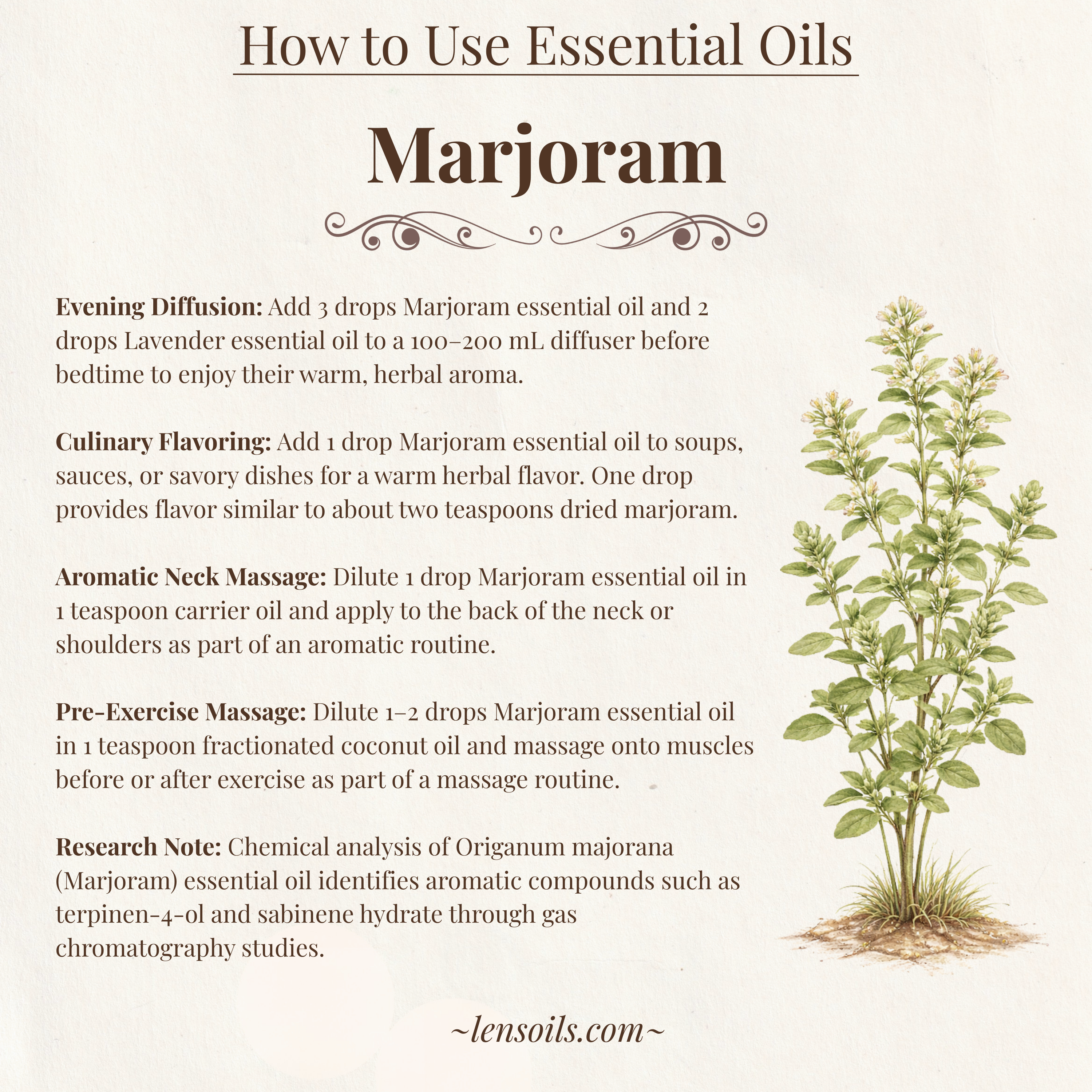
How to Use Essential Oils: Marjoram

Marjoram (Origanum majorana) has a long history of traditional use, especially in the Mediterranean region. Ancient cultures, including the Greeks and Romans, associated marjoram with comfort and well-being, often using it in daily life and symbolic practices. It was commonly included in herbal preparations and valued for its warm, herbaceous aroma, which made it a familiar and trusted plant across generations.

From a scientific perspective, marjoram essential oil is typically steam distilled from the plant’s leaves and flowering tops. Chemical analysis has identified naturally occurring compounds such as terpinen-4-ol, sabinene hydrate, and gamma-terpinene, which contribute to its soft, herbaceous scent. These components help define its Origanum majorana aromatic profile and support its continued use in modern essential oil applications.
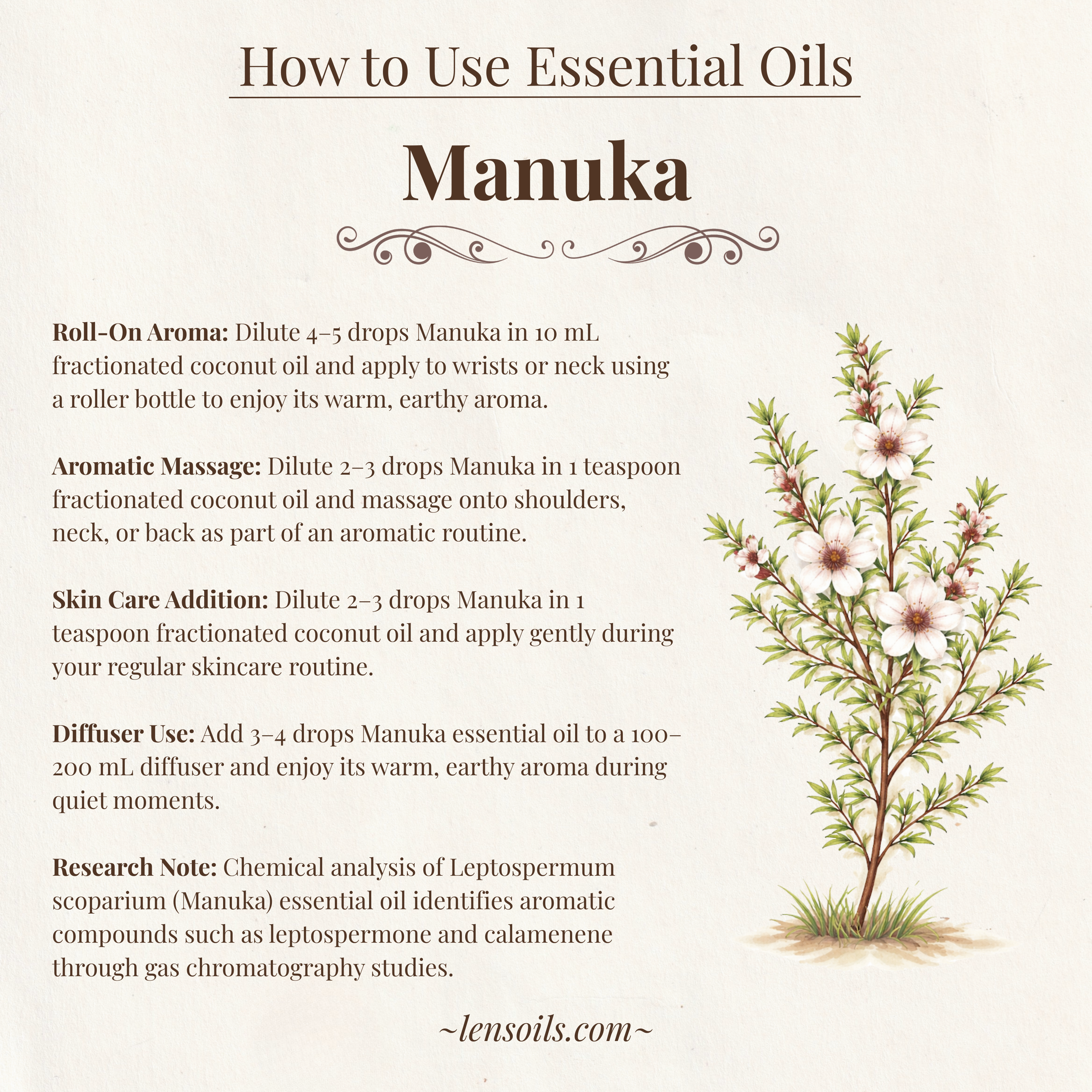
How to Use Essential Oils: Manuka

Manuka essential oil comes from Leptospermum scoparium, a hardy shrub native to New Zealand. For generations, the Māori people valued the plant for its many traditional uses, including applying leaves and bark in everyday practices and using infusions as part of their cultural routines. Over time, this plant became widely recognized, and its essential oil is now appreciated for its rich, grounded aroma and its connection to these longstanding traditions.

From a scientific perspective, Manuka essential oil is steam distilled from the plant’s leaves and small branches. Chemical analysis using gas chromatography has identified key aromatic compounds such as leptospermone and calamenene, which contribute to its distinct profile. These naturally occurring components help define the oil’s deep, earthy scent and support its consistent use in modern aromatic applications.

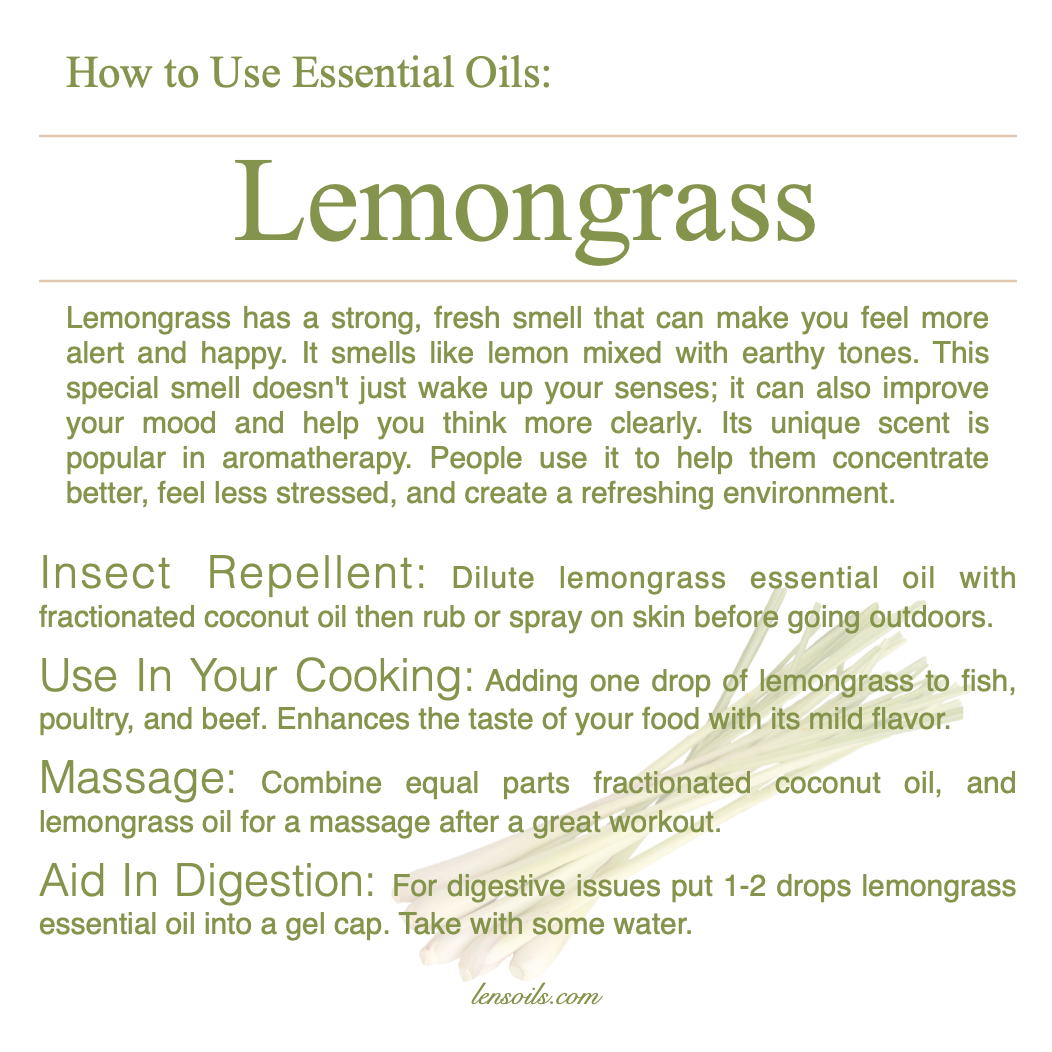
How to Use Essential Oils: Lemongrass

Lemongrass essential oil has a strong, fresh aroma that blends bright lemon notes with soft, earthy tones. This uplifting scent is often used to boost alertness, improve mood, and support mental clarity. In aromatherapy, lemongrass is popular for creating a clean, refreshing environment that helps with focus and stress reduction, making it a favorite for workspaces and post-workout relaxation.

Lemongrass oil is also valued for its practical uses. When diluted with fractionated coconut oil, it can be applied to the skin as a natural insect repellent before spending time outdoors. In cooking, a single drop can be added to fish, poultry, or beef to enhance flavor with a mild citrus touch. For muscle recovery, it can be blended with carrier oil for a soothing massage, and for digestive support, 1–2 drops may be placed in a gel capsule and taken with water.

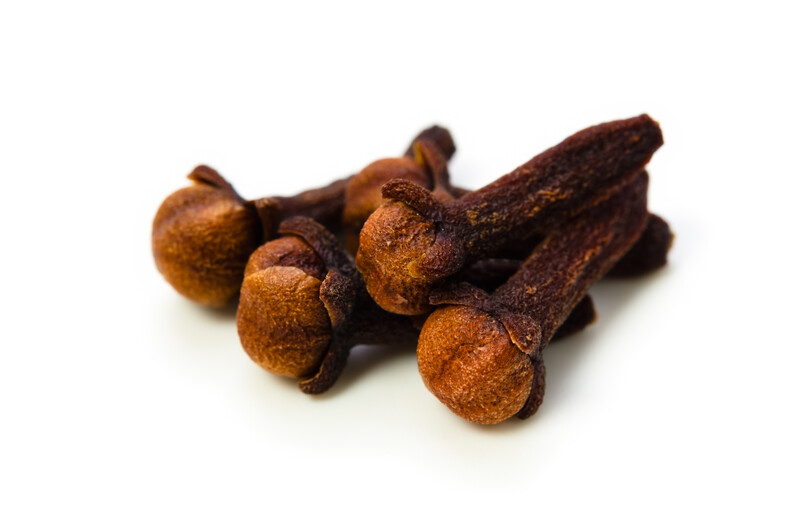
Clove Comfort

In kitchens, gums, and candy sweet,
This spice has made its mark complete,
For years its flavor led the way,
Yet deeper gifts in clove now stay.

Beyond fresh breath and warming bite,
It brings the body inner light,
A strength that reaches far inside,
Where balance grows and systems guide.

In treats and sweets where flavors blend,
Just drops enough the taste to send,
A dessert warmed with careful art,
Where spice awakens every part.

In toothpaste placed with measured care,
It cleans the mouth beyond repair,
Teeth feel fresh, the gums feel strong,
A trusted helper all along.

In capsules small its purpose clear,
To help the heart in ways sincere,
Supporting flow and steady pace,
With quiet strength it finds its place.

Blended soft with oil to warm,
It soothes the skin in gentle form,
A massage deep, both calm and kind,
Releasing tension from the mind.

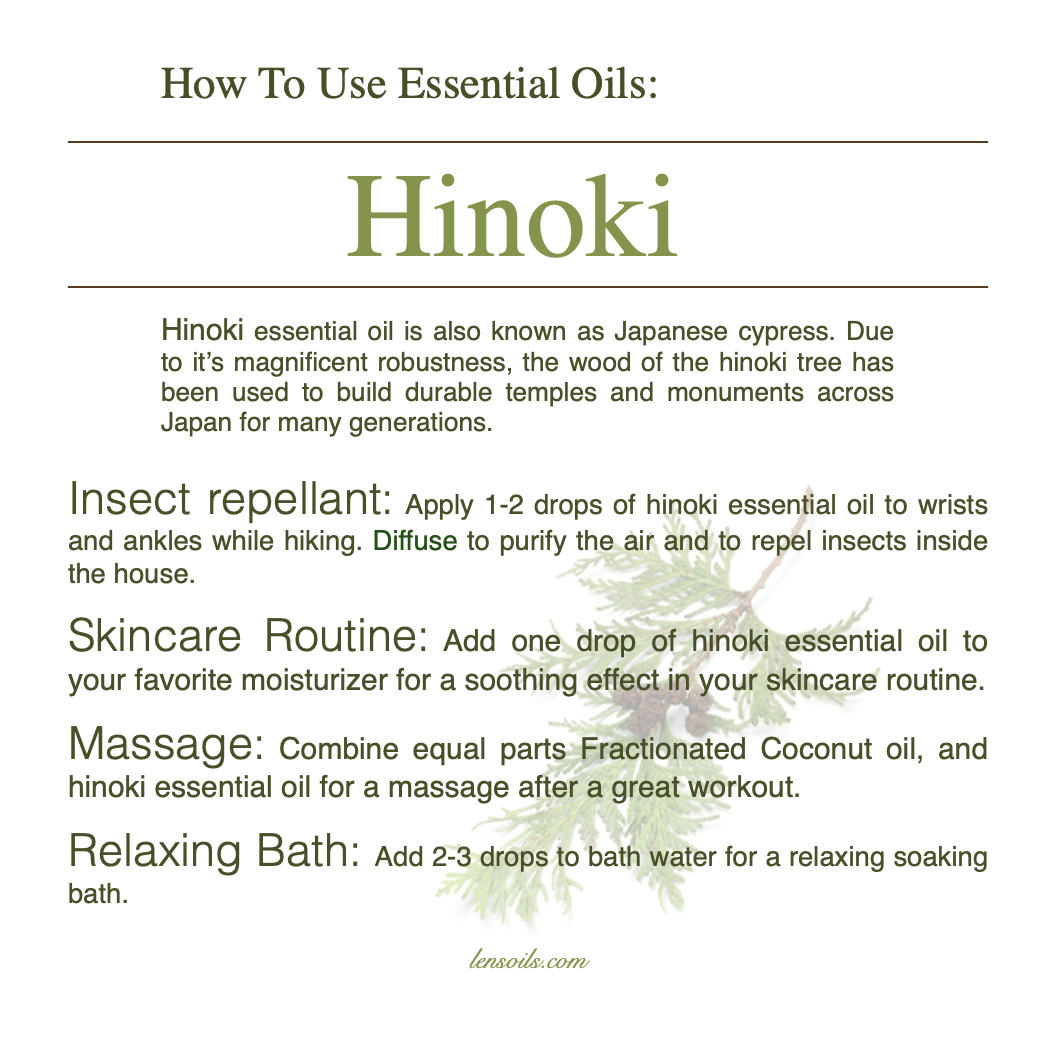
How to Use Essential Oils: Hinoki

Hinoki essential oil, also known as Japanese cypress, comes from a tree long respected for its strength, calm presence, and natural purity. For centuries, hinoki wood has been used to build temples and sacred spaces throughout Japan, valued for its durability and clean, grounding aroma. The oil carries that same sense of quiet strength. Its fresh, woody scent feels both calming and clarifying, making it a favorite for creating a peaceful atmosphere while gently supporting emotional balance and mental clarity.

In daily use, hinoki essential oil fits easily into both wellness and self-care routines. It can be added to a diffuser to freshen the air and create a relaxing environment, or blended into skincare and massage oils for a soothing, restorative touch. Many people enjoy using hinoki after physical activity or during evening routines, as its aroma helps the body unwind while encouraging a sense of calm, comfort, and steady relaxation.

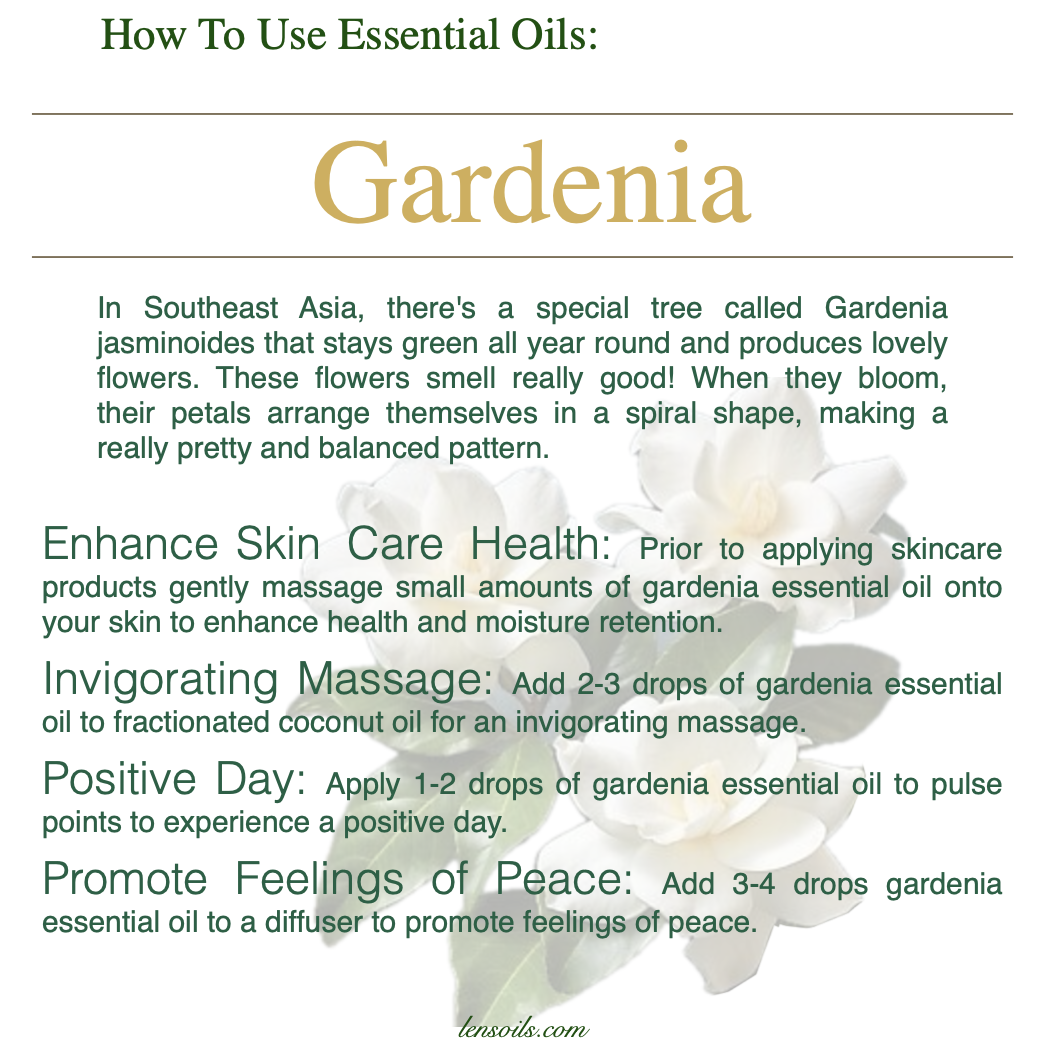
How To Use Essential: Gardenia

Gardenia essential oil comes from the beautifully fragrant flowers of the Gardenia jasminoides plant, an evergreen shrub native to Southeast Asia. Known for its creamy white blossoms and rich, floral aroma, gardenia has long been associated with balance, beauty, and quiet elegance. When the flowers bloom, their petals form a gentle spiral, a pattern often linked with harmony and calm, which mirrors the emotional effect many people experience when using this oil.

In skincare routines, gardenia essential oil is often used to support a healthy-looking complexion and help the skin feel soft and nourished. Gently massaging a small, well-diluted amount into the skin before applying lotions or serums can enhance moisture retention and leave the skin feeling refreshed. Its luxurious scent also adds a spa-like element to daily self-care, turning an ordinary routine into a calming ritual.

Gardenia essential oil is equally valued for emotional and aromatic use. When blended with a carrier oil for massage, it creates an uplifting and soothing experience that helps the body relax while the mind feels gently energized. Applied to pulse points, its aroma can support a positive, centered mood throughout the day. Diffused into the air, gardenia’s rich floral scent promotes feelings of peace and tranquility, making it a wonderful choice for quiet evenings, meditation, or moments when emotional balance is needed.

How to Use Essential Oils: Douglas Fir

Douglas Fir essential oil, distilled from the needles and branches of the towering Pseudotsuga menziesii tree, has a clean, fresh, and slightly lemony pine aroma. Native to North America, Douglas firs are iconic evergreens that can grow over 300 feet tall and live for centuries. In essential oil form, its bright, woodsy fragrance is often used to purify the air, uplift the mood, and bring the refreshing scent of the forest indoors. Diffused, it creates an environment that feels open, crisp, and revitalizing.

Beyond its invigorating scent, Douglas Fir essential oil is valued for its ability to promote clear breathing and emotional balance. It blends well with citrus oils like lemon or bergamot for an energizing aroma, or with grounding oils such as cedarwood to create a calming, forest-like experience. Many people also enjoy using it in natural cleaning sprays or massage blends for its fresh, cleansing qualities. Its combination of brightness and grounding notes makes it one of the most versatile conifer oils in aromatherapy.

Did You Know? The Douglas fir is not a true fir at all—it belongs to its own genus, Pseudotsuga. Despite this, it is one of the most important timber trees in North America, prized for its strength and resilience. Some Douglas firs are believed to be over 1,000 years old, and their massive trunks and towering height have made them symbols of endurance and vitality. Today, Douglas firs are also a favorite choice for Christmas trees because of their soft needles and uplifting scent.

How to Use Essential Oils: Cypress

Cypress essential oil, distilled from the branches of the Cupressus sempervirens tree, has a fresh, clean, and slightly woody aroma that reflects its evergreen nature. Native to the Mediterranean, the cypress tree has long been seen as a symbol of strength and resilience, often planted in sacred spaces and near places of remembrance. In essential oil form, its crisp fragrance is valued for promoting vitality and mental clarity. Diffused, it refreshes the air and fosters a sense of balance and calm.

Beyond its aromatic qualities, cypress essential oil is commonly used in massage and wellness practices to support circulation and ease occasional tension. It blends well with citrus oils like lemon or grapefruit for an invigorating atmosphere, or with floral oils like lavender for a more grounding effect. Its purifying aroma also makes it a useful addition to natural deodorants, cleansers, and sprays, where it brings a feeling of freshness and renewal.

Did You Know? Cypress trees are incredibly long-lived, with some species able to thrive for over a thousand years. In ancient cultures, the tree symbolized eternal life, and its durable wood was used to craft statues and sacred objects. Today, tall rows of cypress trees remain an iconic feature of Mediterranean landscapes, serving as both natural windbreaks and enduring reminders of stability through the ages.

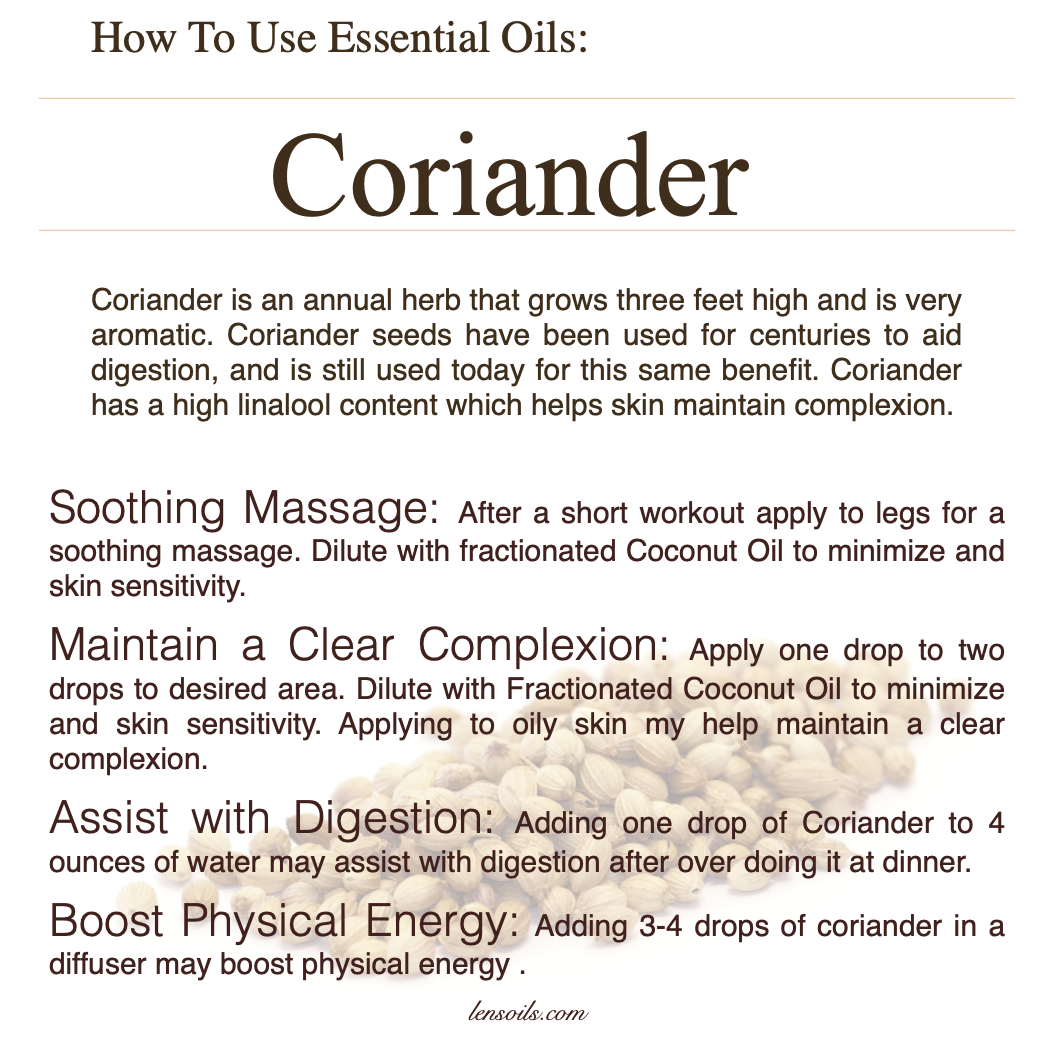
How to Use Essential Oils: Coriander

Coriander essential oil, distilled from the seeds of the Coriandrum sativum plant, has a warm, spicy, and slightly sweet aroma that differs from the fresher scent of cilantro, which comes from the leaves of the same plant. Used for centuries in both cooking and traditional wellness practices, coriander seed oil is prized for its ability to support digestion and ease occasional discomfort. Diffused, its soft and inviting fragrance can create a calming and centered atmosphere, making it a popular choice in blends that relax both the body and mind.

Beyond its aromatic qualities, coriander essential oil is often used to promote balance and tranquility. It pairs beautifully with citrus oils such as bergamot or spice oils like cardamom, creating uplifting diffuser combinations. When properly diluted, it can also be added to massage blends to comfort tired muscles and joints. With its warm yet gentle character, coriander seed oil bridges the worlds of spice and wellness, offering a versatile option for both home and self-care.

Did You Know? Coriander seeds have been discovered in ancient Egyptian tombs, showing their value as far back as 1500 B.C. The seeds were not only used in food and medicine but also in rituals and offerings. Coriander is even mentioned in the Bible—in Exodus 16:31, manna is described as being “like coriander seed.” More recently, coriander has been grown aboard the International Space Station as part of plant studies, making it one of the few herbs to journey beyond Earth.

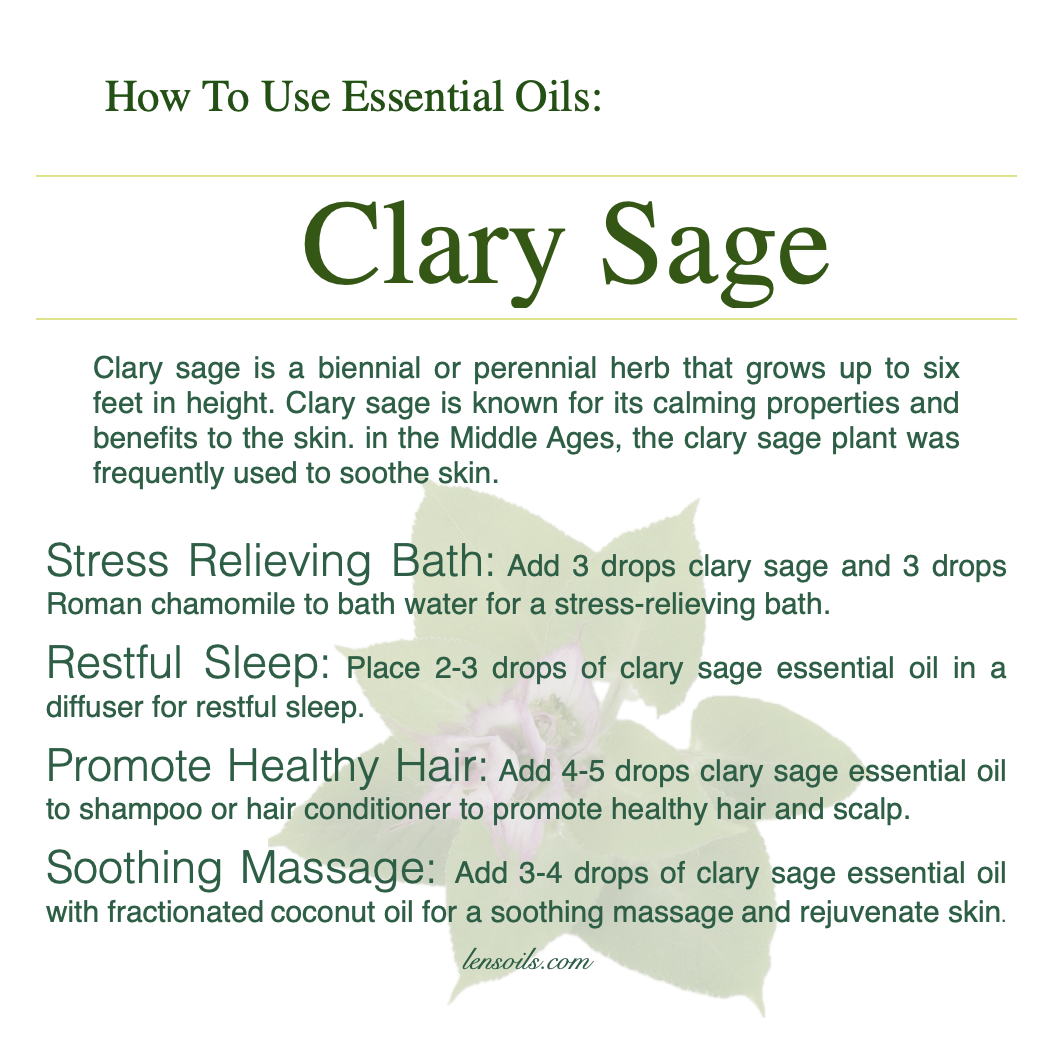
How to Use Essential Oils: Clary Sage

Clary sage (Salvia sclarea) is a biennial or perennial herb that can grow up to six feet tall and is widely recognized for its calming properties and benefits to the skin. Historically, clary sage was frequently used in the Middle Ages to help soothe skin irritations and promote overall wellness. The essential oil, distilled from the plant’s flowering tops and leaves, has a distinct herbal, earthy aroma that has made it a valuable ingredient in aromatherapy and natural skincare. Adding 3 drops of clary sage and 3 drops of Roman chamomile to bath water is a common practice for creating a relaxing, stress-relieving soak. Similarly, diffusing 2-3 drops of clary sage essential oil is widely believed to support restful sleep and relaxation. While anecdotal evidence supports these benefits, more scientific studies are needed to fully confirm its effectiveness in improving sleep quality.

Clary sage essential oil is also commonly used in hair and scalp care. Many people add 4-5 drops of clary sage essential oil to shampoo or conditioner to help promote a healthy scalp and strong hair. The oil contains linalyl acetate, a compound known for its soothing and balancing properties, which may help reduce scalp irritation and improve overall hair appearance. Additionally, clary sage essential oil is used in massage therapy, with 3-4 drops blended into fractionated coconut oil to create a soothing massage blend that helps relax muscles and rejuvenate the skin. Although these applications are widely practiced, further research is needed to determine the long-term benefits of clary sage essential oil on scalp health and hair growth.

Beyond stress relief and hair care, clary sage is being explored for its potential hormonal-balancing properties. Some studies suggest that its compounds may help support relaxation during menstrual cycles and contribute to a greater sense of emotional well-being. Many aromatherapists recommend diffusing clary sage oil or applying it diluted to the lower abdomen for potential menstrual support, though more clinical research is necessary to confirm its direct effects on hormonal balance. Despite these uncertainties, clary sage essential oil remains a popular and versatile natural remedy, valued for its calming, skin-soothing, and aromatic benefits in holistic wellness practices.