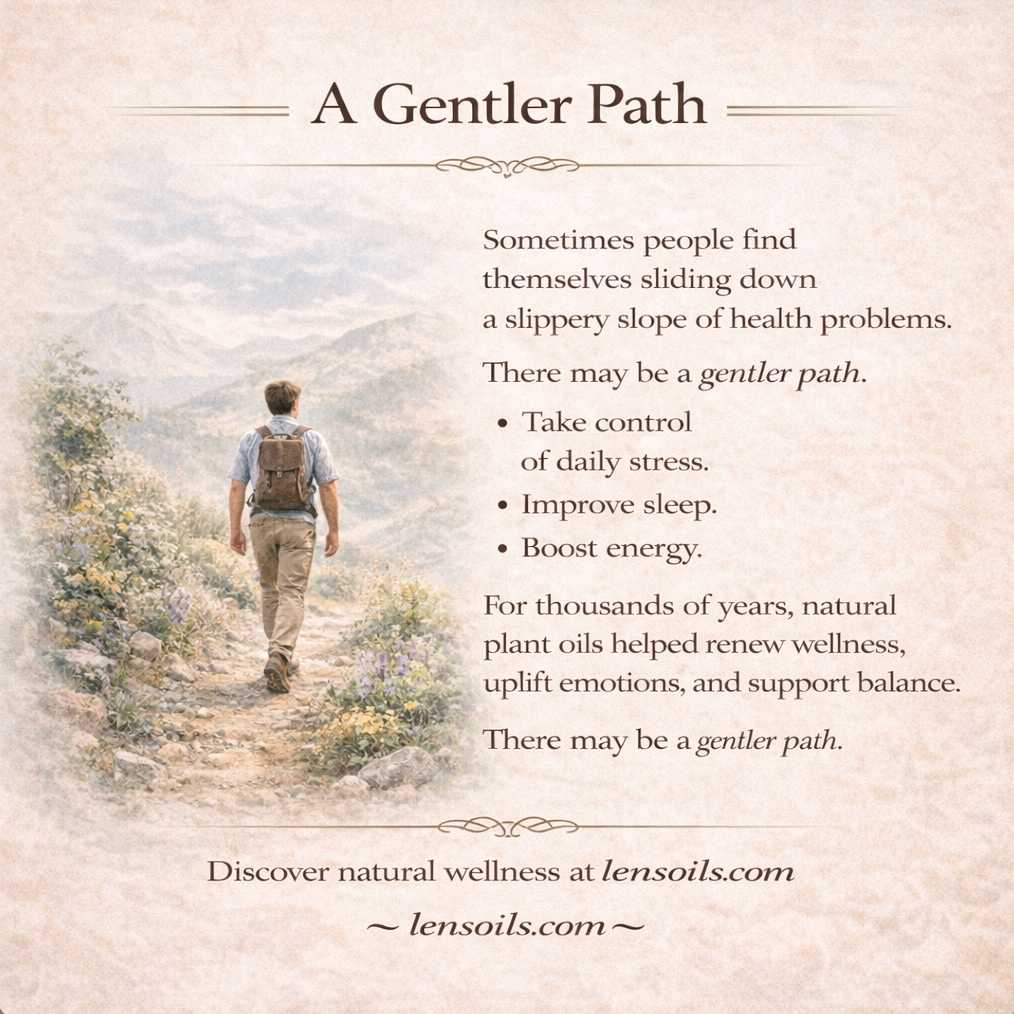
Sometimes the shift isn’t sudden, but gradual. Small, everyday challenges like stress, restless sleep, or low energy can quietly build over time, making things feel heavier than they once did. It can begin to feel like moving uphill, where each step takes a little more effort than before.
Across many cultures and generations, people have turned to simple, plant-based oils as part of their daily routines—used in ways that encourage calm, support balance, and create moments to reset. While not a solution on their own, these gentle practices can be one small step toward a steadier, more supported path forward.
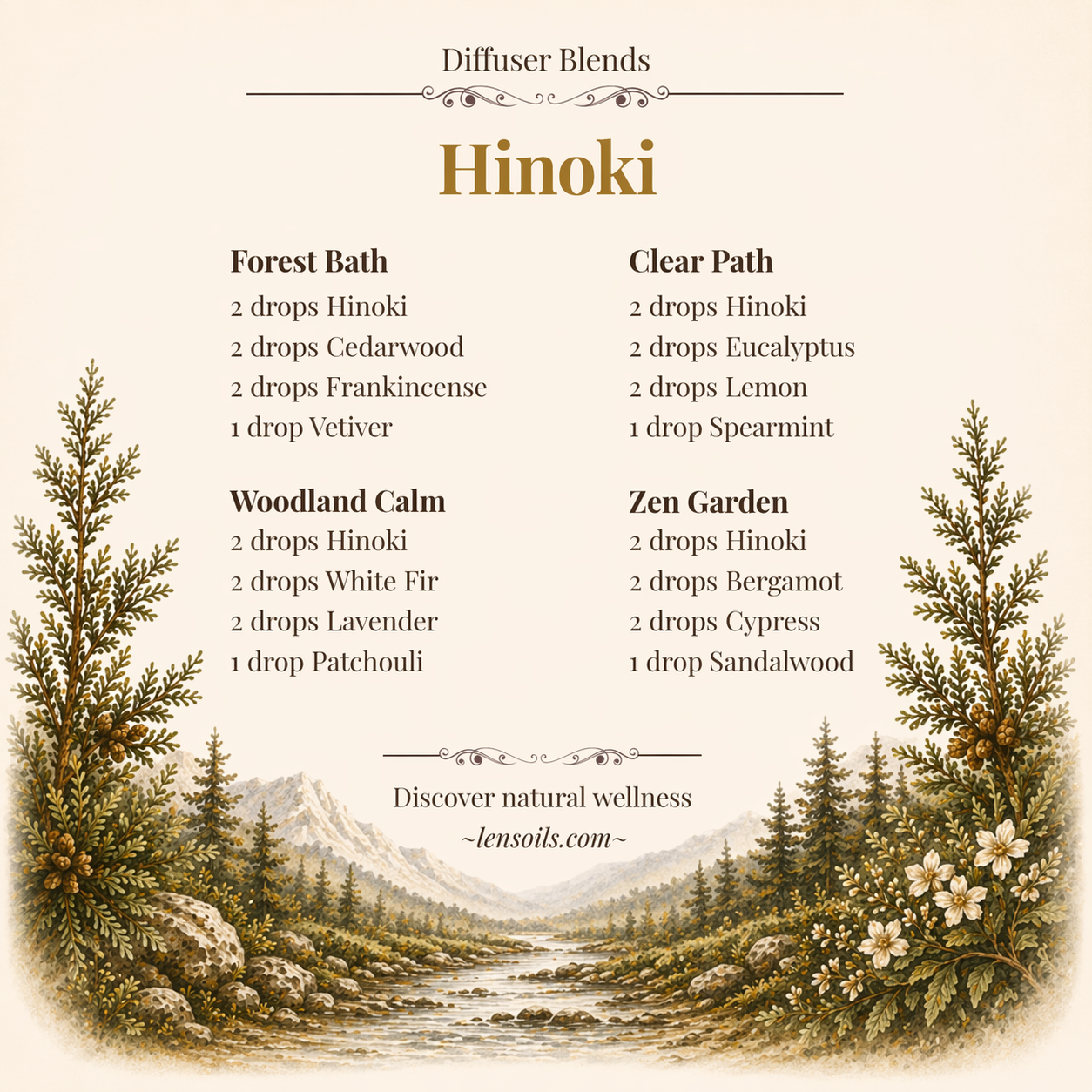
Hinoki diffuser blends tend to create a clean, wood-centered atmosphere that feels both fresh and quietly grounding. Forest Bath leans into a deep, wooded calm with cedarwood, frankincense, and vetiver, while Woodland Calm softens the forest profile with white fir, lavender, and patchouli for a more relaxed, settled feel. Clear Path shifts brighter, where eucalyptus, lemon, and spearmint lift the blend into something crisp and open, and Zen Garden brings a balanced, reflective tone with bergamot, cypress, and sandalwood. Across all four, Hinoki holds a consistent thread—smooth, airy wood with a sense of clarity and space.
Emotionally, Hinoki’s aroma often feels centering without being heavy, helping create a sense of calm alertness. It can support a feeling of mental clarity while still keeping the body relaxed, making it useful for moments that call for quiet focus or reset. Rather than pushing energy up or pulling it down, it tends to bring things into a steady middle ground—clear, composed, and quietly balanced.
Jack and Jill went up the hill To fetch a pail of water. Jack fell down and broke his crown, And Jill came tumbling after.
There was a report from the hillside where a routine errand took an unexpected turn. Jack and Jill were observed climbing steadily to fetch a pail of water when Jack suddenly lost his footing and fell, striking his head as he rolled downward. Jill followed close behind, tumbling after him in the same sudden motion. Both are now upright and responsive, though clearly shaken. The immediate concern in moments like this is not just the fall itself, but the body’s surge of adrenaline and shock that can linger after the danger has passed.
From an essential oil standpoint, the focus now shifts immediately to calming and recovery as the dust is still settling around them. Lavender would be the first choice to help settle the nervous system and slow the shallow breathing caused by stress. Frankincense supports grounding and clear thinking as the initial shock begins to fade, helping restore emotional balance in the moment. Helichrysum is well suited for the aftermath of impact, often used when reassurance and gentle recovery are needed. As this familiar nursery rhyme scene grows quieter, the message becomes clear: setbacks happen quickly, but steady care and a calm response help everyone find their footing again.
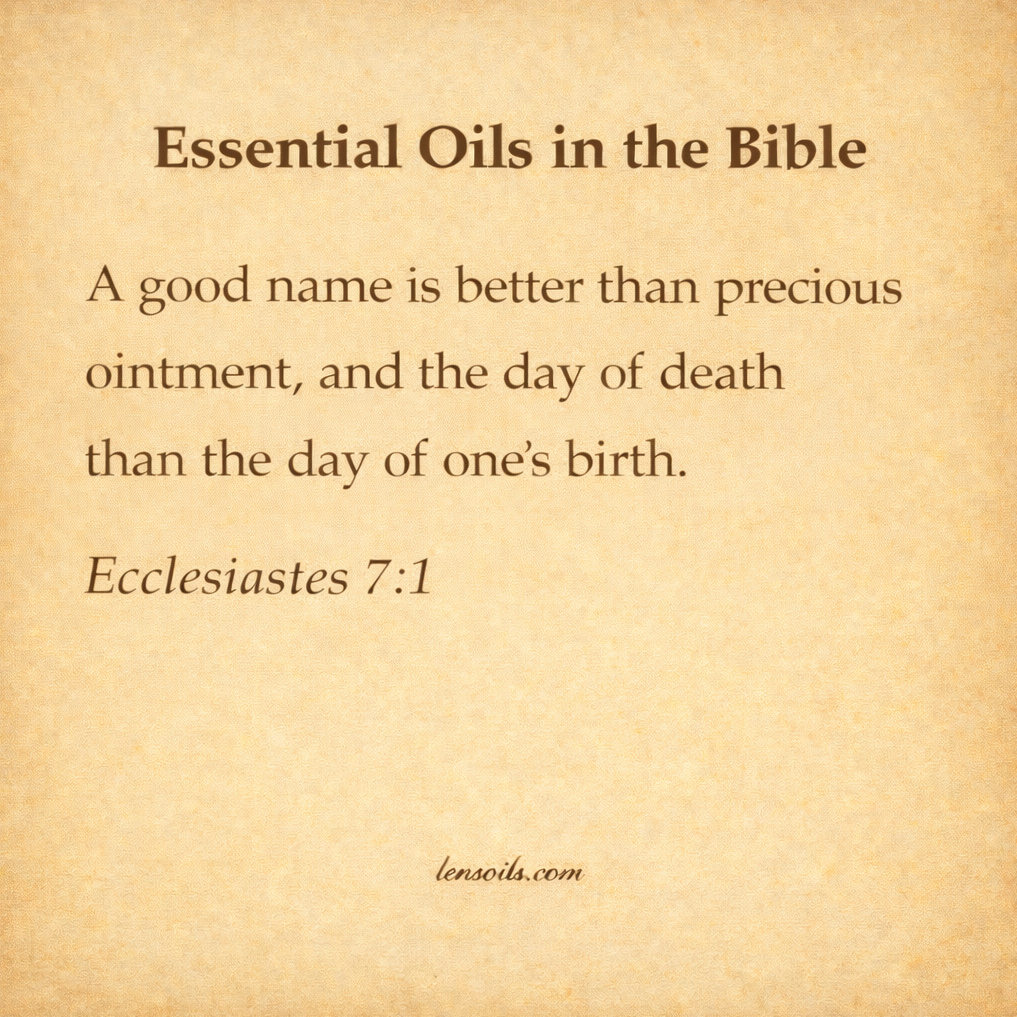
Ecclesiastes 7:1 comes from a part of Scripture that leans into reflection rather than celebration. In the ancient world, ointment, or fragrant oil, was one of the most valued possessions a person could have. It was used to honor guests, prepare bodies, and mark sacred moments, making it both practical and symbolic. Some oils were rare and costly, carefully stored and protected, representing wealth, care, and social standing within a community.
When the writer says a good name is better than precious ointment, it places character and reputation above even the most treasured physical possessions. A fine oil may carry a pleasing aroma for a time, but a person’s name carries meaning long after the moment has passed. This comparison shifts the focus from outward value to inward substance, suggesting that what people remember about a life holds greater weight than what was owned or displayed.
The second half of the verse deepens that idea by pointing to completion rather than beginning. In biblical times, oils were also used in preparation after death, connecting fragrance with remembrance and legacy. The day of birth begins a story, but the day of death reveals it in full. In a similar way, just as an oil releases its aroma when it is poured out, a life reveals its true essence over time, leaving behind what endures.
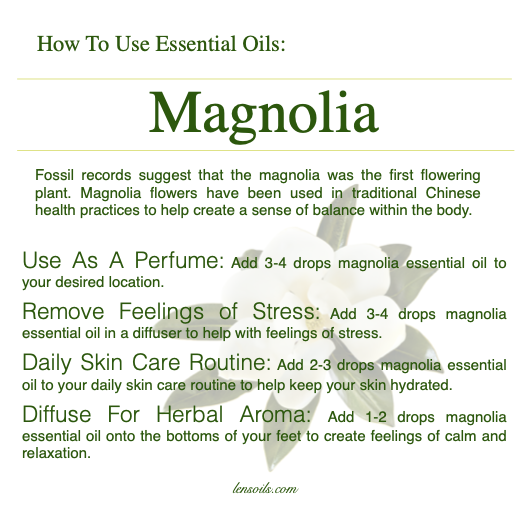
Magnolia essential oil comes from one of the oldest flowering plants on Earth, with fossil records suggesting magnolias were among the first plants to produce flowers. For centuries, magnolia flowers have been used in traditional Chinese health practices to support balance and harmony within the body. The oil has a soft, floral, and slightly sweet aroma that is often associated with calm, comfort, and emotional grounding.
Magnolia oil is commonly used in daily self-care routines. As a natural perfume, 3–4 drops can be applied to pulse points for a gentle, elegant scent. Diffusing 3–4 drops may help ease feelings of stress and create a peaceful atmosphere. Adding 2–3 drops to facial or body care products can support skin hydration, and applying 1–2 diluted drops to the bottoms of the feet may promote relaxation and a sense of calm throughout the day or before rest.
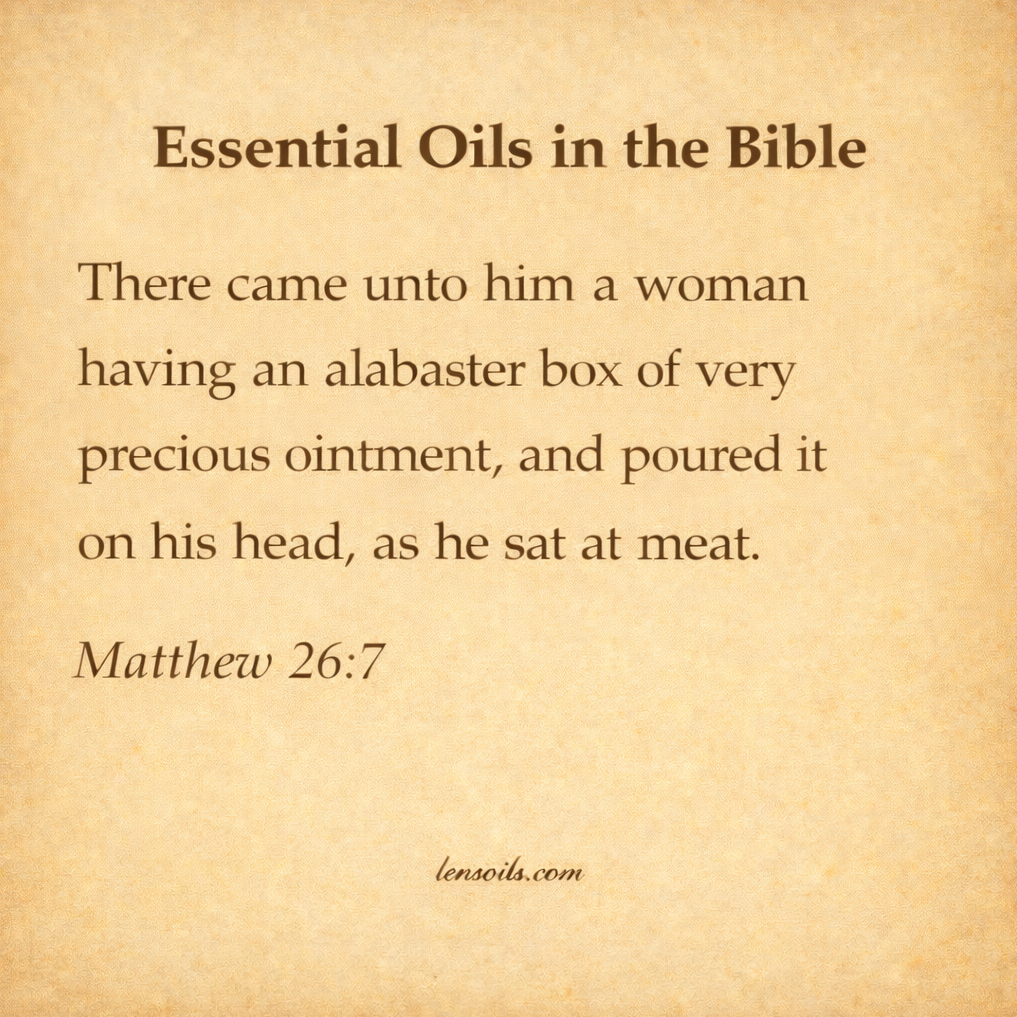
Gospel of Matthew 26:7 takes place near the end of the life of Jesus Christ, just days before His crucifixion. He was in the village of Bethany, eating at the house of Simon the leper, when a woman approached Him carrying an alabaster jar filled with very costly ointment. This ointment is widely understood to have been spikenard, a rare and expensive aromatic oil imported from distant regions. In that time, such oils were treasured possessions, often saved for special occasions or even burial preparations. By breaking the jar and pouring it over His head, the woman performed an act that would have immediately stood out as both extravagant and deeply symbolic.
The disciples questioned the act, seeing it as wasteful since the ointment could have been sold to help the poor. But Jesus reframed the moment, explaining that what she had done was meaningful and timely. In the cultural and historical context, anointing with oil could signify honor, devotion, and preparation, and here it pointed forward to His approaching burial. The fragrance would have filled the room, making the act impossible to ignore, much like a lasting expression of love and recognition. This moment connects the use of precious oils not just with daily life or healing, but with sacrifice, reverence, and awareness of something significant unfolding, giving the act a lasting place in the Gospel narrative.
For many people, wellness is not about one big change but a series of small, steady steps. Throughout history, simple plant-based oils have been part of daily life, used in quiet ways to create moments of calm, clarity, and balance. Their presence was often subtle, supporting routines rather than replacing them.
Today, that same approach can still apply. A gentle shift in habits, paired with mindful practices, may help support rest, ease tension, and bring a bit more steadiness to each day. It is less about quick fixes and more about choosing a path that feels natural, sustainable, and quietly supportive over time.
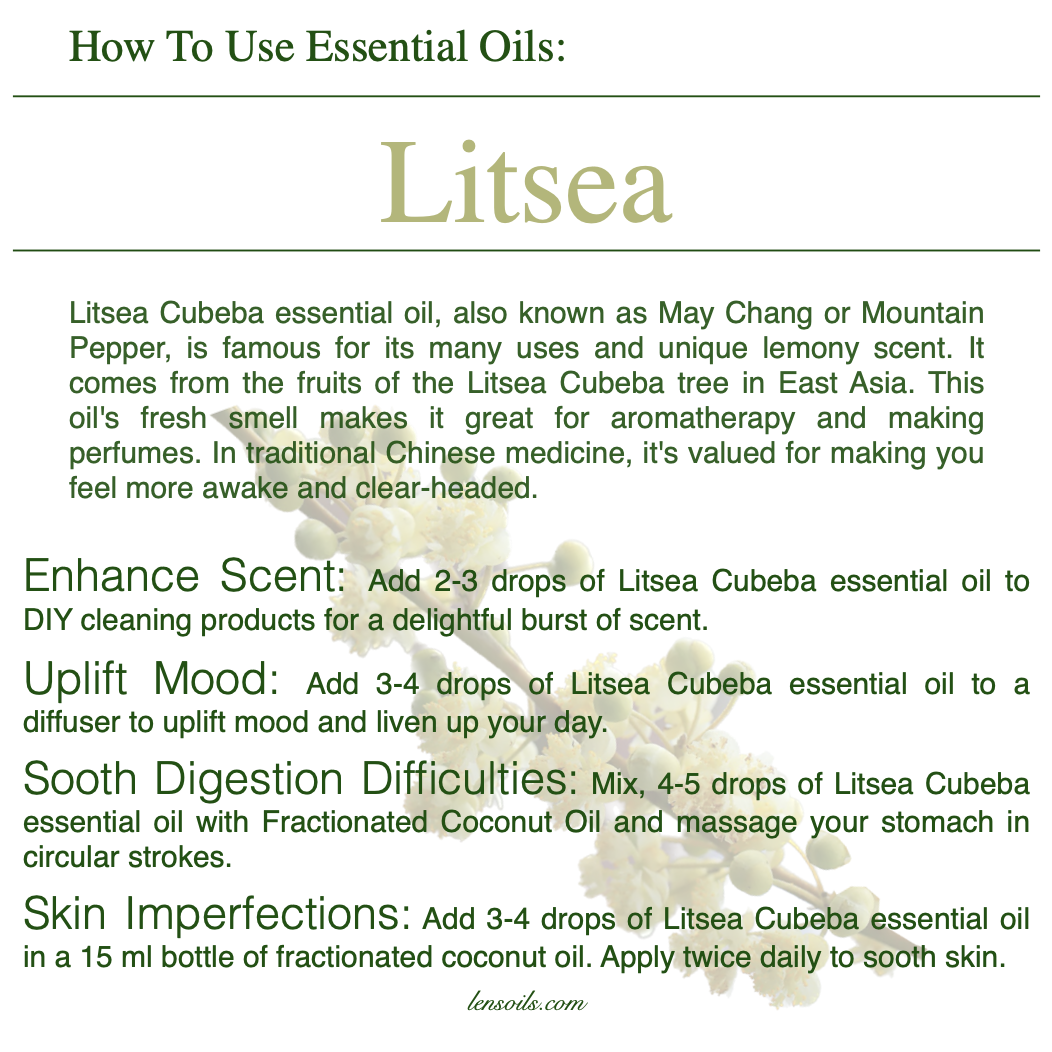
Litsea cubeba essential oil, also known as May Chang or Mountain Pepper, is well known for its bright, lemony aroma and wide range of uses. It is distilled from the fruits of the Litsea cubeba tree, native to East Asia. Its fresh, uplifting scent makes it popular in aromatherapy and natural perfumery, and in traditional Chinese practices it has long been valued for promoting alertness, mental clarity, and a refreshed state of mind.
Litsea cubeba oil is often used in both home and personal care routines. Adding 2–3 drops to DIY cleaning products provides a clean, energizing scent, while diffusing 3–4 drops can help lift mood and energize your space. For digestive discomfort, 4–5 drops diluted with fractionated coconut oil may be gently massaged over the abdomen in circular motions. To support skin with minor imperfections, 3–4 drops can be diluted in a 15 ml bottle of carrier oil and applied twice daily to help soothe and refresh the skin.
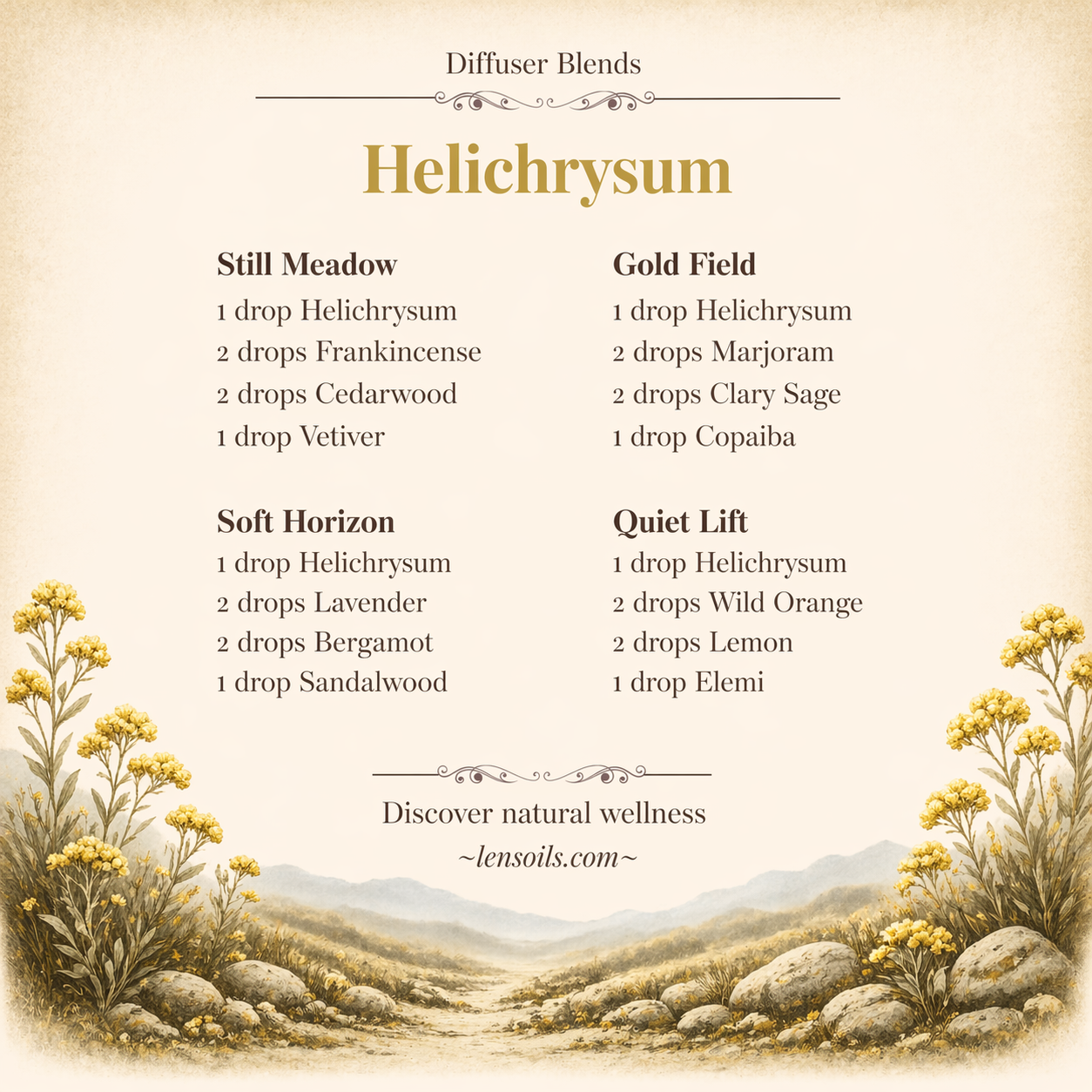
Helichrysum in a diffuser isn’t about a bright or instantly pleasing aroma—it’s about depth. Its earthy, slightly herbaceous scent can feel unusual at first, but in small amounts it acts more like an anchor than a spotlight. It softens sharp edges in a blend and brings a grounded, steady tone that helps the overall aroma feel more complete. In blends like Still Meadow or Gold Field, it supports a calm, settled atmosphere, while in Soft Horizon or Quiet Lift it quietly balances lighter, more uplifting oils so they don’t feel fleeting or scattered.
Emotionally, Helichrysum tends to speak to moments that feel heavy, reflective, or unresolved. It doesn’t try to lift you out quickly; instead, it creates space to sit with what is there without overwhelm. It can support a sense of quiet release, gentle resilience, and emotional steadiness—like standing in an open field where nothing is rushed and everything has room to breathe.
Most days aren’t won in big, dramatic moments. They’re handled in small resets, quiet pauses, and simple things that help you regroup just enough to keep going. Whether it’s a deep breath, a familiar scent, or just taking a second to steady yourself, sometimes that one “drop” is what turns a long day into something manageable—and that’s more meaningful than it sounds.


 Len's Oils