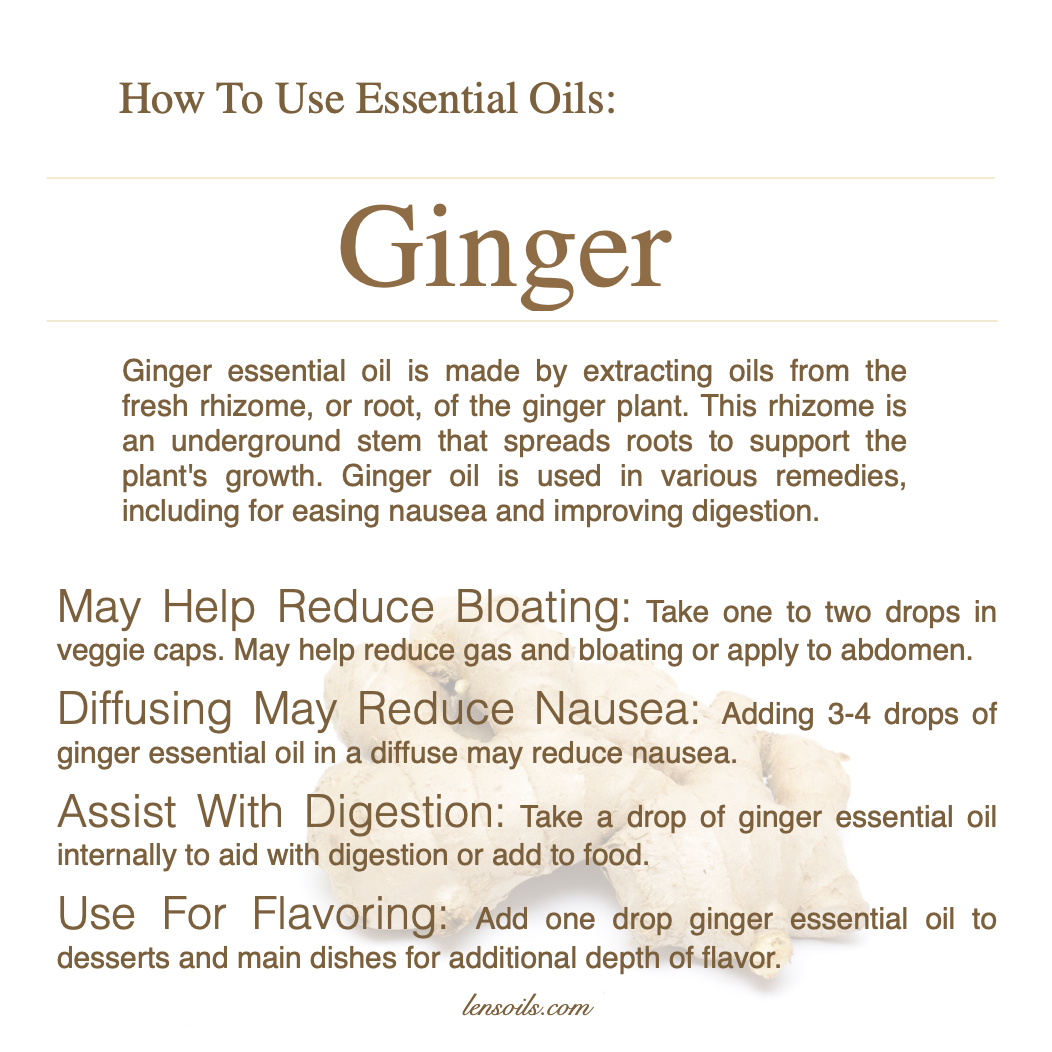
Ginger essential oil is steam-distilled from the fresh rhizome of the ginger plant, an underground stem long valued for its warming and digestive properties. For centuries, ginger has been used to support digestion and ease stomach discomfort. The oil carries that same spicy, energizing character and is often used to help reduce feelings of nausea, bloating, and general digestive unease. Diffusing three to four drops can create a warm, comforting aroma that may help settle the stomach and promote a sense of balance.
Ginger essential oil is also a versatile addition to daily wellness routines. When taken internally in a veggie cap or applied topically to the abdomen with proper dilution, it is commonly used to support digestion and reduce gas or bloating. Its bold, spicy flavor makes it useful in the kitchen as well, where a single drop can enhance desserts or savory dishes with depth and warmth. Whether used aromatically, internally, or topically, ginger essential oil is valued for its comforting and stimulating nature.
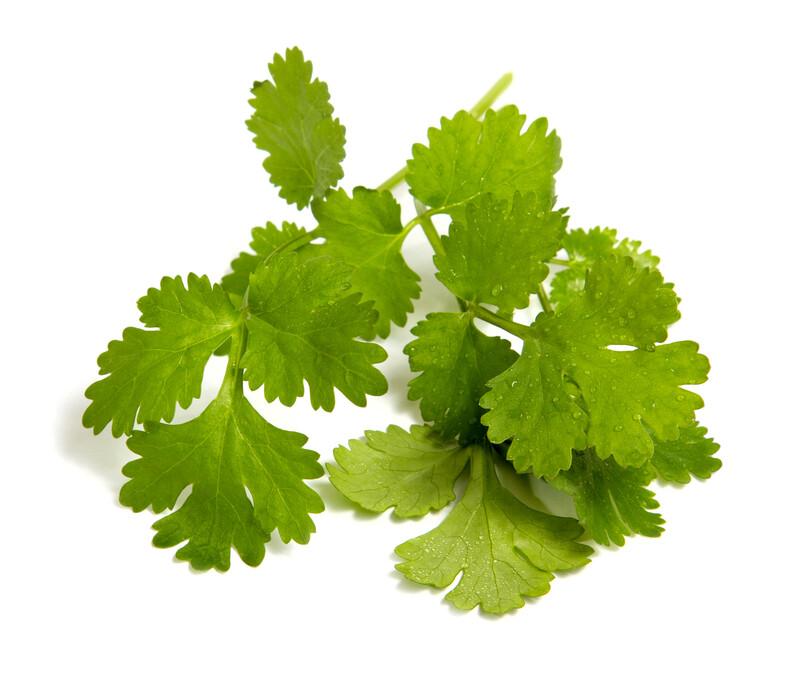
Cilantro carries wisdom from kitchens long ago, A green, bright note that helps the body flow. It settles the stomach, clears what weighs you down, A quiet cleanser wearing nature’s crown.
A single drop, a toothpick’s gentle trace, Turns simple meals into a brighter place. Too much can shout, but just a hint will sing, Small touches do a powerful thing.
After a feast that lingered just too long, Cilantro steps in, calm and strong. Mixed with water, steady and light, It helps digestion find its rhythm right.
Tucked in a veggie cap, simple and clean, It supports release, restores the in-between. Letting the body gently let go, Of what it carried longer than it should know.
In the diffuser, fresh and green, Paired with lime, crisp and keen. An herbal breeze fills open air, Clearing the mind with mindful care.
Cilantro reminds us, soft but true, That healing often comes in what we chew. Ancient, humble, quietly wise, A leafy ally in fragrant disguise.
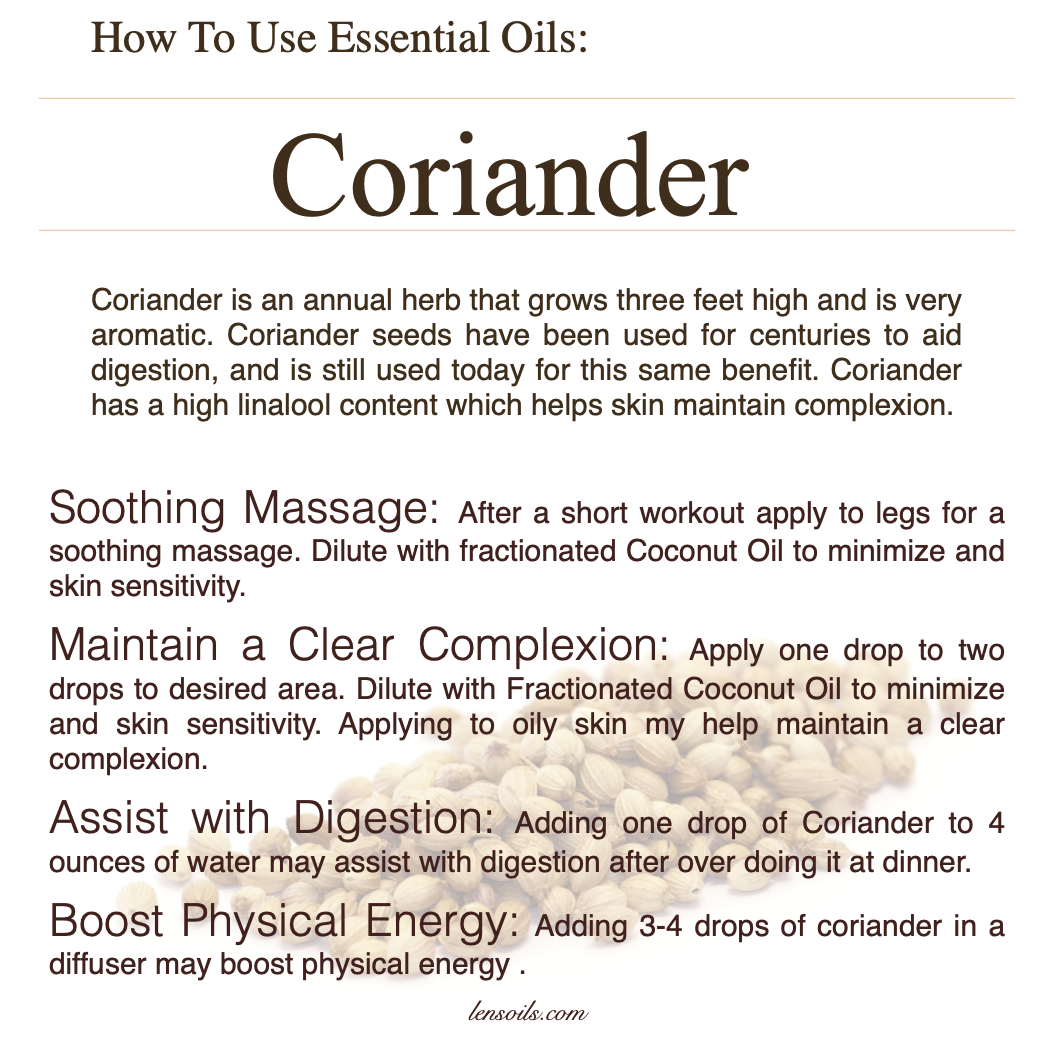
Coriander essential oil, distilled from the seeds of the Coriandrum sativum plant, has a warm, spicy, and slightly sweet aroma that differs from the fresher scent of cilantro, which comes from the leaves of the same plant. Used for centuries in both cooking and traditional wellness practices, coriander seed oil is prized for its ability to support digestion and ease occasional discomfort. Diffused, its soft and inviting fragrance can create a calming and centered atmosphere, making it a popular choice in blends that relax both the body and mind.
Beyond its aromatic qualities, coriander essential oil is often used to promote balance and tranquility. It pairs beautifully with citrus oils such as bergamot or spice oils like cardamom, creating uplifting diffuser combinations. When properly diluted, it can also be added to massage blends to comfort tired muscles and joints. With its warm yet gentle character, coriander seed oil bridges the worlds of spice and wellness, offering a versatile option for both home and self-care.
Did You Know? Coriander seeds have been discovered in ancient Egyptian tombs, showing their value as far back as 1500 B.C. The seeds were not only used in food and medicine but also in rituals and offerings. Coriander is even mentioned in the Bible—in Exodus 16:31, manna is described as being “like coriander seed.” More recently, coriander has been grown aboard the International Space Station as part of plant studies, making it one of the few herbs to journey beyond Earth.
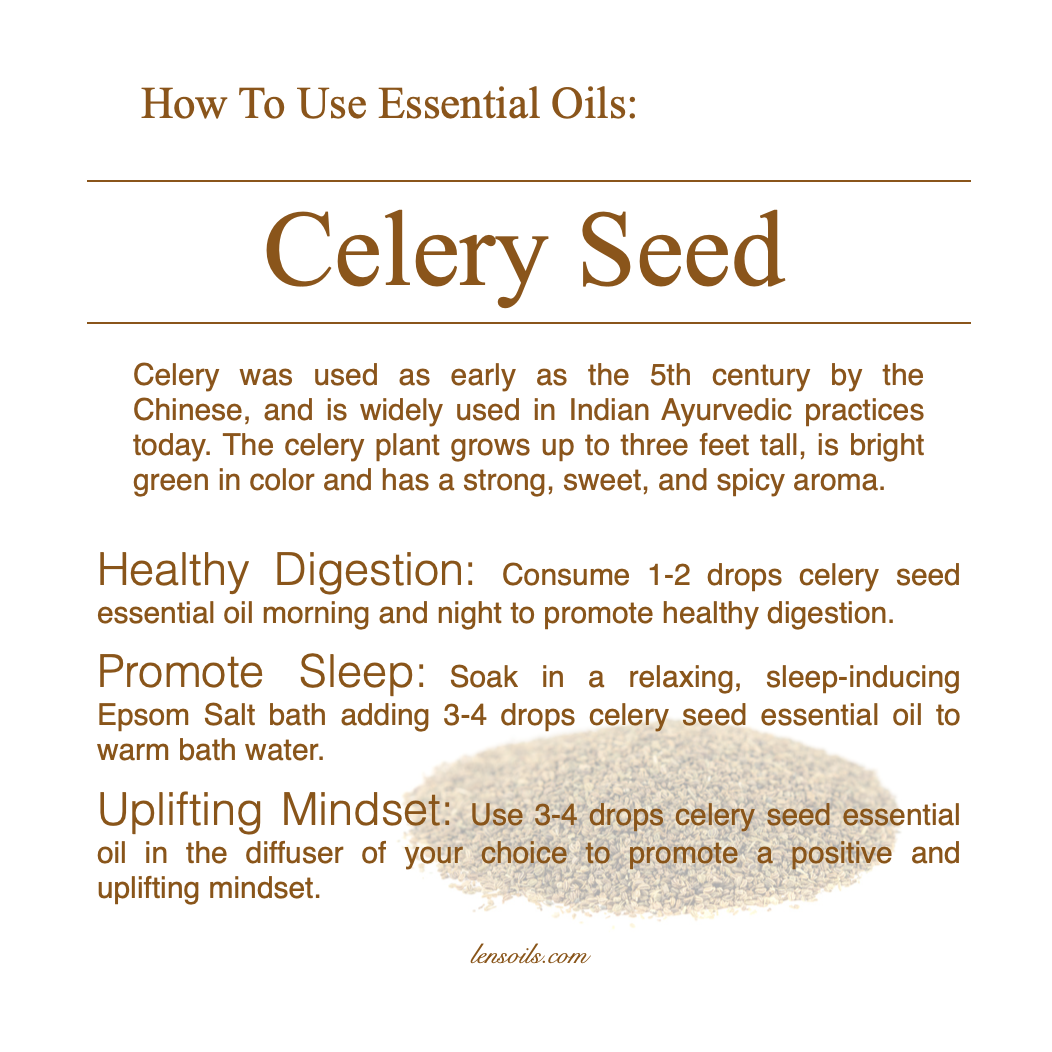
Celery (Apium graveolens) has been cultivated for centuries, with early records of its use dating back to the 5th century in Chinese medicine. It has also played a significant role in Indian Ayurvedic practices, where it is valued for its purported benefits in digestion, circulation, and overall wellness. The celery plant grows up to three feet tall, featuring bright green stalks and leaves with a strong, sweet, and spicy aroma. Celery seed essential oil, derived from the plant’s seeds, has been traditionally used to support healthy digestion. Many practitioners recommend consuming 1-2 drops of celery seed essential oil morning and night to help promote digestive balance. While historical use and anecdotal evidence support this claim, further scientific studies are needed to confirm its direct impact on digestive enzymes and gut health.
Celery seed essential oil is also commonly used in aromatherapy and relaxation techniques. Adding 3-4 drops to a warm bath with Epsom salt is believed to promote relaxation and support restful sleep. Its mild sedative effects are often attributed to phthalates, a natural compound in celery seeds, which may help with nervous tension and stress reduction. Additionally, diffusing 3-4 drops of celery seed essential oil can help create a positive and uplifting mindset, making it a favored choice for stress relief and emotional balance. While aromatherapy practitioners support these benefits, scientific research on celery seed oil’s specific effects on sleep induction and emotional well-being is still ongoing.
Beyond digestion and relaxation, celery seed essential oil is being explored for its potential role in supporting joint and muscle health. Some herbalists believe that the oil’s natural anti-inflammatory properties may help ease occasional discomfort, making it a potential addition to massage oils and topical applications. However, while celery seed extract has been studied for its antioxidant and anti-inflammatory effects, more research is needed to determine the efficacy of celery seed essential oil in pain relief and long-term musculoskeletal support. Despite these uncertainties, celery seed essential oil remains a versatile and valuable natural remedy, widely used for aromatherapy, digestive wellness, and relaxation practices.
In the bustling markets of ancient China, healers and herbalists sought remedies for ailments both great and small. They turned to roots, leaves, and seeds, blending them into tonics and teas. Among these was a particular seed, small but powerful, valued for its ability to ease digestion and bring balance to the body. By the 5th century, it had become a staple in Chinese medicine, known for its ability to cool the body and calm the mind.
Far to the west, in the heart of the Mediterranean, Greek physicians took notice. Hippocrates, the father of modern medicine, praised the seed for its medicinal properties. He saw it as more than just a spice—it was a remedy, a healer. To the Greeks, it was a symbol of good health, used to treat ailments ranging from digestive troubles to nervous tension. And so, it made its way into their diets and their medicines.
By the time the Romans rose to power, the seed had cemented its place in history. Pliny the Elder, the great Roman naturalist, wrote of its effectiveness, describing how it was used to aid digestion and purify the body. Roman soldiers carried it with them on long campaigns, believing it kept their stomachs strong and their minds sharp. It was scattered on tables, mixed into broths, and even blended into wine.
In India, Ayurvedic practitioners had long embraced the seed’s power. They believed it brought warmth to the body, aided circulation, and supported overall well-being. It was used in massages, teas, and restorative tonics. Even today, in the practice of Ayurveda, this seed is seen as a key to balance, promoting digestion and relaxation through ancient traditions that have stood the test of time.
By the 19th century, science had begun to catch up with tradition. Chemists discovered that the seed contained phthalides, compounds that supported digestion and helped maintain a sense of calm. Researchers noted its effect on the nervous system and how it could contribute to an uplifted mindset. Doctors began recommending it as a natural remedy, and its essential oil gained recognition in holistic healing.
One of those fascinated by its benefits was Dr. John Christopher, a renowned herbalist who studied plants and their effects on human health. He incorporated the seed’s oil into his practice, using it to help with digestive concerns and to encourage relaxation. His work helped bring herbal medicine into the modern age, emphasizing the value of plant-based healing.
But the seed’s influence didn’t stop at digestion. Scientists exploring its oil found that when diffused, it could promote a positive, uplifting atmosphere. Aromatherapists began blending it with other essential oils to create calming, soothing scents, ideal for relieving tension and supporting restful sleep.
Even in modern spas, its oil is recognized for its ability to promote relaxation. When added to warm bath water with Epsom salt, it creates a calming soak, easing both the body and the mind. Whether used in baths, diffusers, or herbal remedies, its effects are undeniable—it has been a quiet companion to wellness for centuries.
And now, with all the clues before you—the ancient markets, the wisdom of Hippocrates, the soldiers of Rome, and the healers of Ayurveda—you might think we’re talking about fennel or anise. But no, the timeless remedy of this story is celery seed. With its distinct aroma, digestive benefits, and calming properties, it has been a trusted remedy for generations.
Oh yarrow, herb of healing grace, In you, we find a gentle embrace, A timeless remedy, nature’s art, Healing body, mind, and heart.
Yarrow, healer of the ages past, With feathery leaves and blooms amassed, A herb that stands a meter high, Pink-white crowns reach for the sky.
In ancient times, you soothed the pain, From battle wounds to ailments’ strain, Your essence, pure, in oil refined, A myriad uses we now find.
For those who suffer hemorrhoid plight, A touch of yarrow brings relief so light, With coconut oil, a blend so fine, Applied to ease, where troubles align.
When emotions whirl like stormy seas, Yarrow in a diffuser brings peace with ease, A calming wave, a soothing balm, Restoring balance, restoring calm.
Digestive woes, discomfort’s blight, A touch of yarrow makes it right, With gentle hands, apply with care, And find relief from the burdens you bear.
For hair that’s lost its strength and sheen, Yarrow’s gift is evergreen, In shampoos mixed, it works its charm, Restoring health, protecting from harm.
The star anise tree is a type of tree that stays green all year round and is originally from southeastern Asia. Normally, these trees are not very tall, only about 14 to 20 feet, but sometimes they can grow even taller. People have been using this tree for more than 3000 years as both a spice and a medicine, especially in traditional Chinese medicine.


 Len's Oils