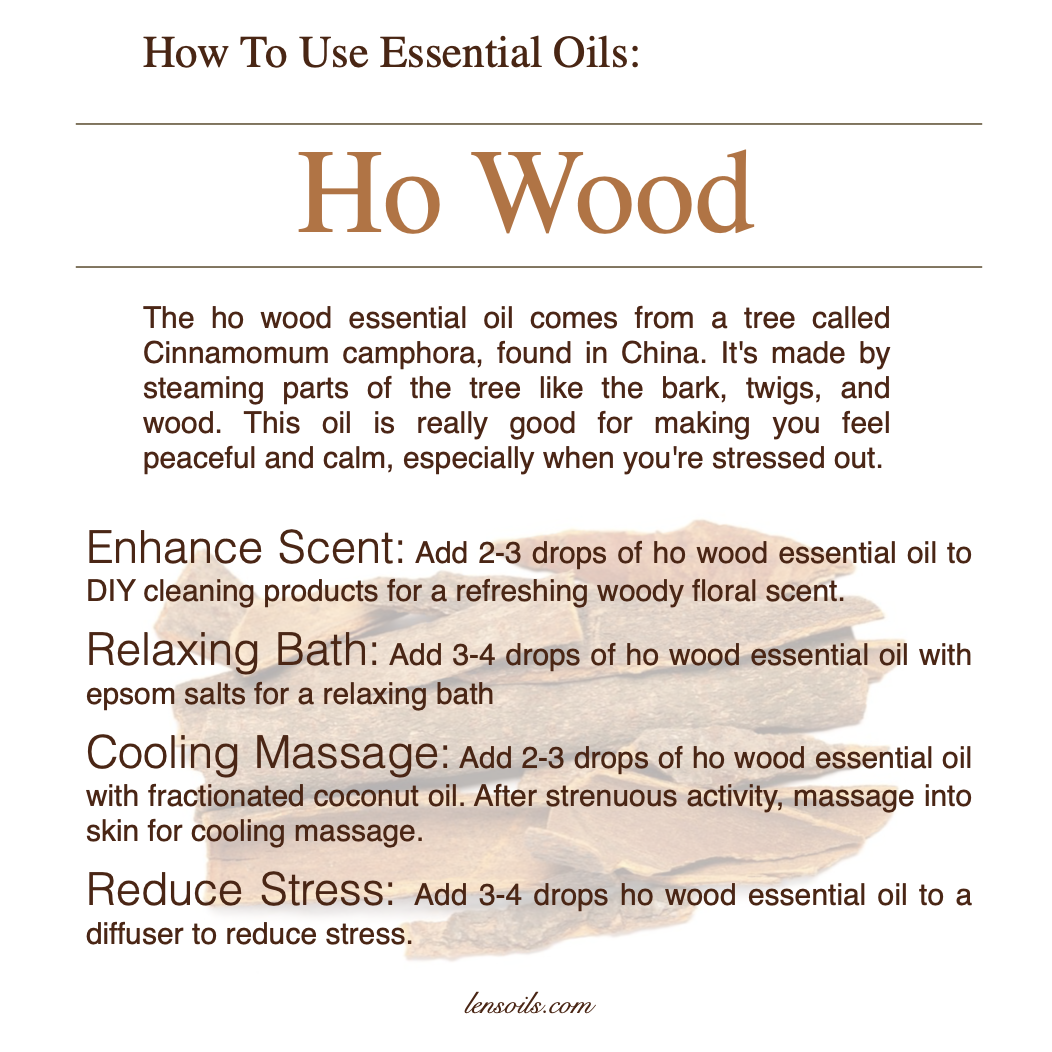
Ho Wood essential oil comes from the Cinnamomum camphora tree, traditionally grown in China and carefully steam distilled from the wood, twigs, and bark. It is especially valued for its naturally high linalool content, which gives it a soft, woody-floral aroma that feels gentle and comforting. This calming scent makes ho wood a favorite during stressful moments, helping the mind slow down and the body settle into a more peaceful state without feeling heavy or overpowering.
In everyday use, ho wood essential oil blends beautifully into both wellness and home routines. It works well in diffusers to ease tension and encourage emotional balance, and it can be added to baths or massage oils for deep relaxation after physical or mental strain. Many people reach for ho wood when they want calm without sedation, making it an ideal oil for evening routines, recovery days, or anytime stress needs a softer landing.
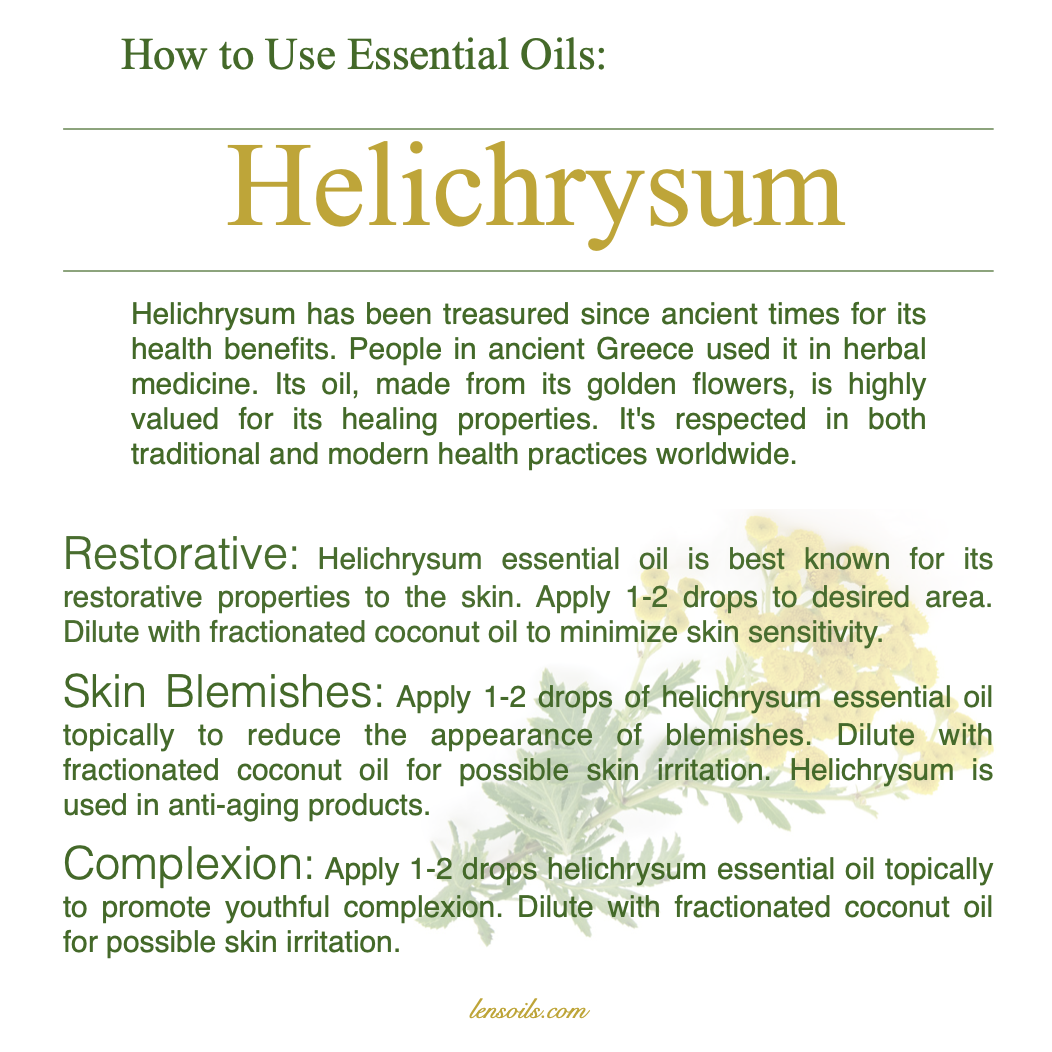
Helichrysum essential oil has been treasured since ancient times, with records showing its use in herbal practices as far back as ancient Greece. Steam distilled from its small, golden flowers, this oil has earned a strong reputation for supporting skin health and renewal. Today, it remains highly respected in both traditional and modern wellness practices around the world, especially for its gentle yet powerful restorative qualities.
Helichrysum is best known for its use in skin care routines. When diluted with fractionated coconut oil, one to two drops can be applied topically to support skin repair and promote a more youthful-looking complexion. It is commonly used to help reduce the appearance of blemishes and is a valued ingredient in many anti-aging products. With consistent, diluted use, helichrysum is appreciated for helping skin look smoother, clearer, and more refreshed.
Travel days have a way of stretching your patience, testing your plans, and reminding you that very little is actually in your control. Between rushing through terminals, watching departure boards change, and waiting to see if your luggage shows up, it helps to have simple supports that bring energy, clarity, and calm. This Travel Day Survival Guide isn’t about fixing the delays or the detours—it’s about staying steady, flexible, and relaxed enough to roll with whatever the journey brings and arrive a little more grounded than when you left.
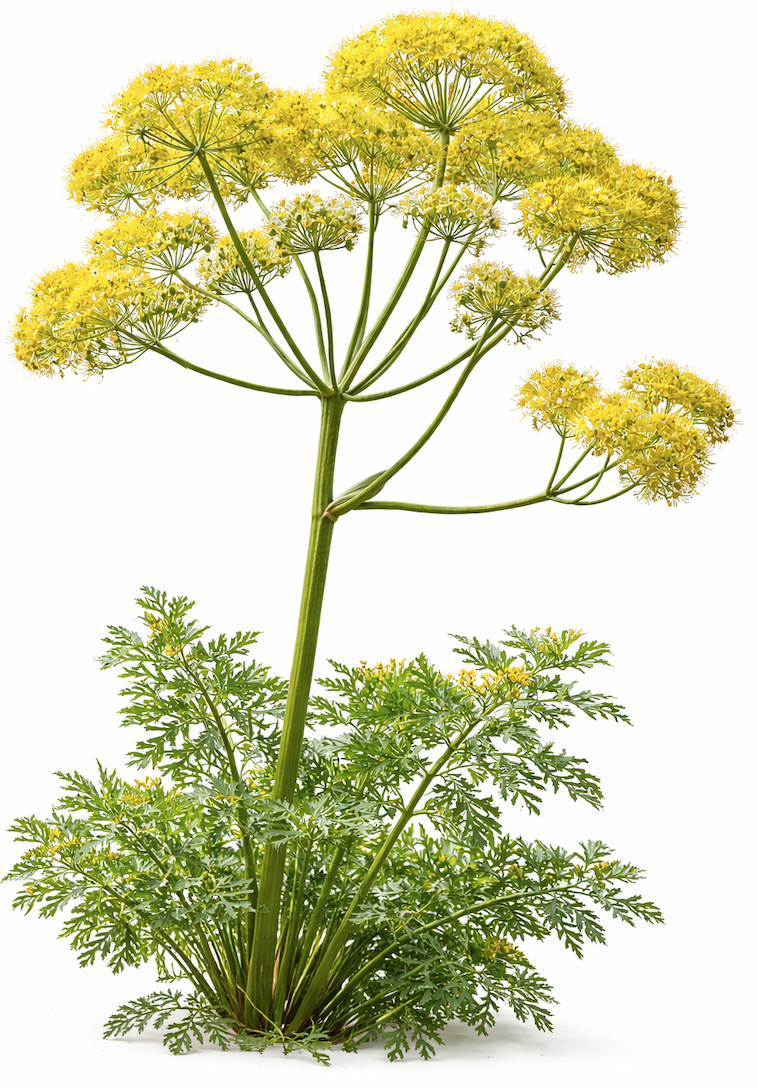
Long before people wrote recipes, laws, or letters home, they learned which plants truly mattered.Some soothed pain, some healed wounds, and some demanded immediate respect the moment they were cut.In dry lands where wind and stone shaped daily survival, a tall wild plant guarded an unusual secret.When its thick stalk was scored, a pale milky sap slowly appeared and clung stubbornly.It hardened into something unforgettable, sharp enough to stop travelers and traders alike.
Ancient traders learned quickly that not all scents were meant to charm or invite comfort. This one did not whisper politely but announced itself boldly and without apology. Strong aromas were believed to travel farther than spoken words, reaching gods, spirits, and sickness alike. People burned such substances to cleanse air, protect spaces, and steady unseen forces. Powerful smells, they believed, signaled powerful results waiting to happen.
Physicians of the ancient world paid careful attention to this persistent resin. They recorded how certain substances warmed the body and stirred systems thought to be sluggish. Greek thinkers observed its effects on breath, circulation, and physical movement within the body. They trusted plants that survived harsh terrain to perform serious internal work. Gentle cures were appreciated, but strong ones were carefully remembered and reused.
As knowledge moved westward across empires, so did this resin. Merchants carried it along dusty trade routes linking Persia with the Mediterranean world. Roman apothecaries stocked it beside oils meant for medicine, ceremony, and disciplined ritual use. It was burned in temples and mixed into salves with practical intent. This was not a scent for leisure, but for clear purpose and deliberate use.
Religious tradition eventually gave the resin a role few substances ever earn. In sacred incense formulas, it stood beside sweeter companions by deliberate design. Its presence was not optional but required for completeness. Later teachers explained it symbolized harsher parts of humanity that still belonged. Without it, the offering was considered unfinished and lacking balance within the whole.
Centuries passed, and scholars in desert libraries quietly kept the knowledge alive. Arabic and Persian physicians translated ancient texts and tested older remedies again. They used strong resins for breath, inflammation, nervous tension, and mental clarity. Trade routes ensured the substance never vanished entirely from use. Quietly, it endured while fashions and preferences rose and fell.
During the Renaissance, Europe rediscovered classical learning and old remedies together. Herbalists once again cataloged resins with careful observation and respect. They noted this one’s bitter green character and deeply grounding nature. Perfumers learned a single drop could anchor an entire fragrance structure. Too much overwhelmed the senses, while too little left something missing.
The modern era gave the resin an unexpected new stage. Twentieth-century perfumers reached for it when sweetness began to feel dishonest. They wanted clarity, sharp edges, and something unmistakably alive. This scent brought discipline and structure back into fragrance creation. It reminded the nose that beauty does not require softness to endure.
Even today, the process behind this resin has barely changed. The plant is cut, the sap collected, and the essence carefully drawn out. It appears in diffusers, massage oils, perfumes, and even household cleaners. A few drops can freshen air, ground emotions, or steady a moment. Old habits continue, simply adapted to modern bottles and everyday use.
The resin that puzzled priests, physicians, and perfumers alike is called galbanum. Used by Egyptians, Greeks, Romans, and writers of scripture, it never tried to be liked. It simply did its work faithfully, century after century, without softening its nature. Strong, honest, and unforgettable in every era it touched. And now you know the rest of the story.
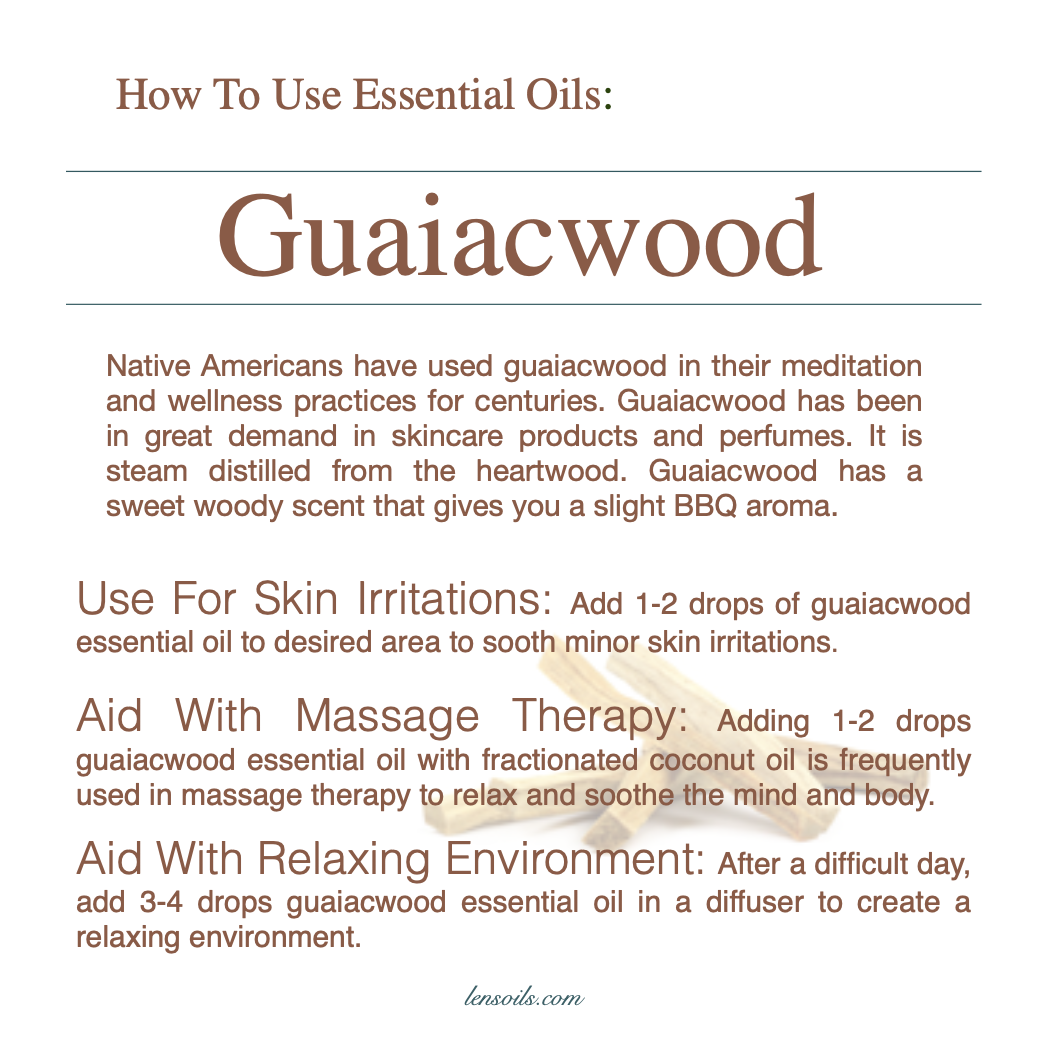
Guaiacwood essential oil has a long history of use, especially among Native American cultures that valued it for meditation and wellness practices. Steam distilled from the heartwood, this oil carries a rich, sweet, woody aroma with a subtle smoky note that many describe as gently reminiscent of a BBQ scent. Its grounding fragrance has also made it popular in perfumes and skincare products, where warmth and depth are desired.
In everyday use, guaiacwood essential oil is often chosen for its soothing qualities. When diluted and applied topically, it may help calm minor skin irritations. Blended with fractionated coconut oil, it is frequently used in massage therapy to promote relaxation of both the mind and body. Diffusing three to four drops after a long or stressful day can help create a calm, peaceful environment, making guaiacwood a comforting oil for winding down and restoring balance.
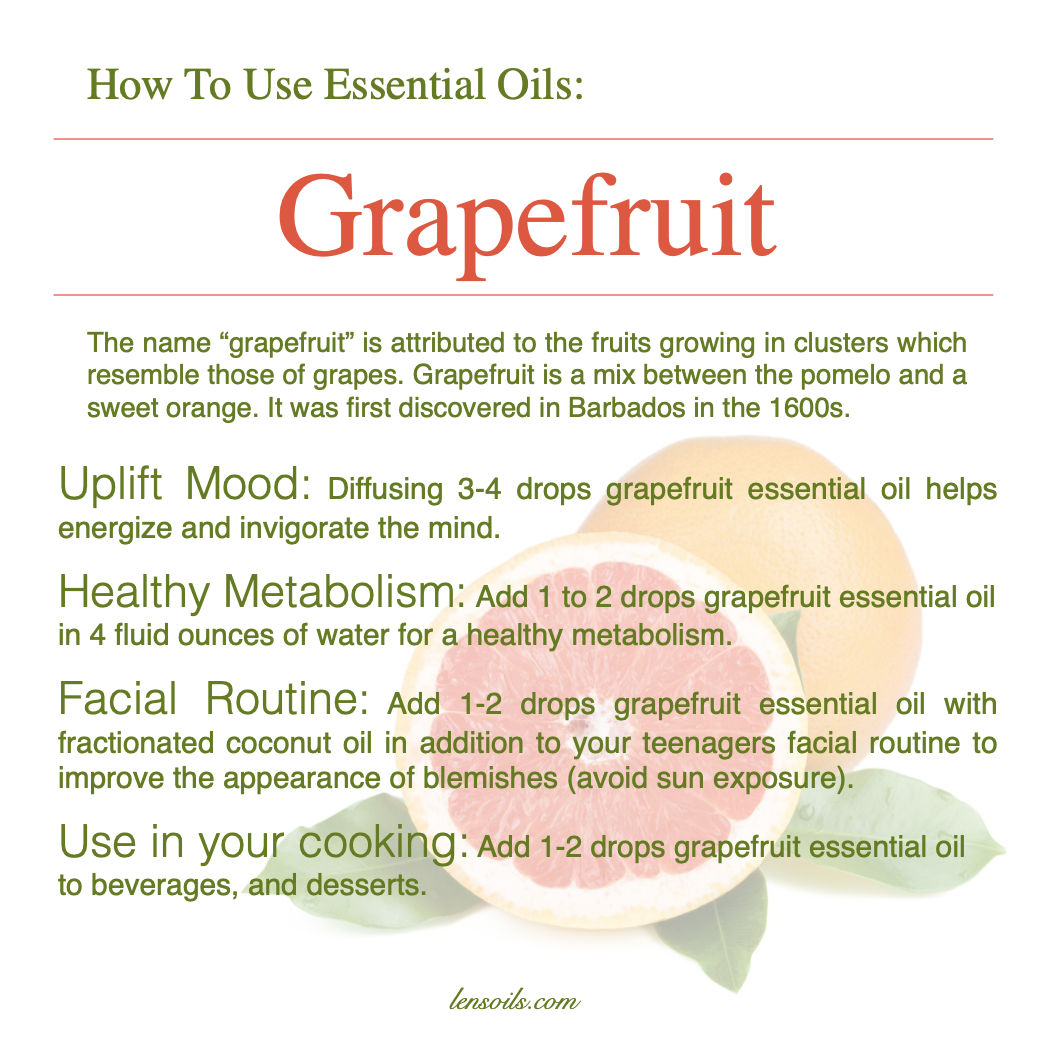
Grapefruit essential oil comes from a bright, citrus fruit that earned its name because it grows in clusters similar to grapes. A natural hybrid of pomelo and sweet orange, grapefruit was first discovered in Barbados in the 1600s and has been appreciated ever since for its fresh, energizing aroma. Diffusing three to four drops can help uplift mood, clear mental fog, and create an invigorating atmosphere that feels light and motivating.
In daily routines, grapefruit essential oil is often used to support a healthy metabolism when a drop or two is added to water. When properly diluted with fractionated coconut oil, it can also be a gentle addition to a facial routine, especially for teenagers looking to improve the appearance of blemishes. Its crisp, tangy flavor makes it a favorite in the kitchen as well, where one or two drops can brighten beverages and desserts. Because grapefruit is photosensitive, topical use should always be followed by avoiding direct sun exposure.
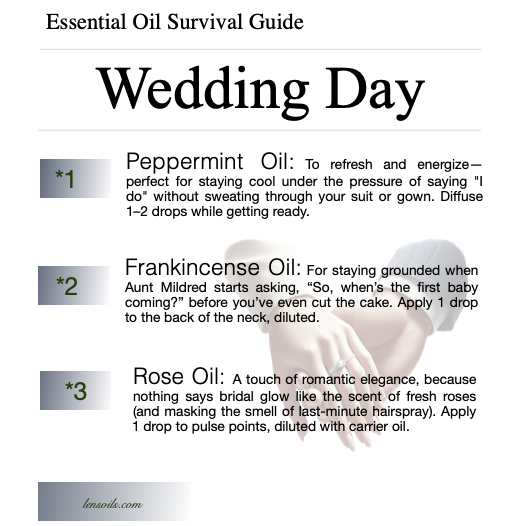
Weddings are beautiful, emotional, and just a little overwhelming all at once. Between the nerves, the questions, the timelines, and the unexpected moments, it helps to have simple tools that support calm, confidence, and connection. This Wedding Day Survival Guide isn’t about perfection—it’s about staying present, breathing through the chaos, and remembering why the day matters in the first place. When things feel rushed or emotional, a few steady scents can help you pause, smile, and step back into the moment you’ll remember forever.
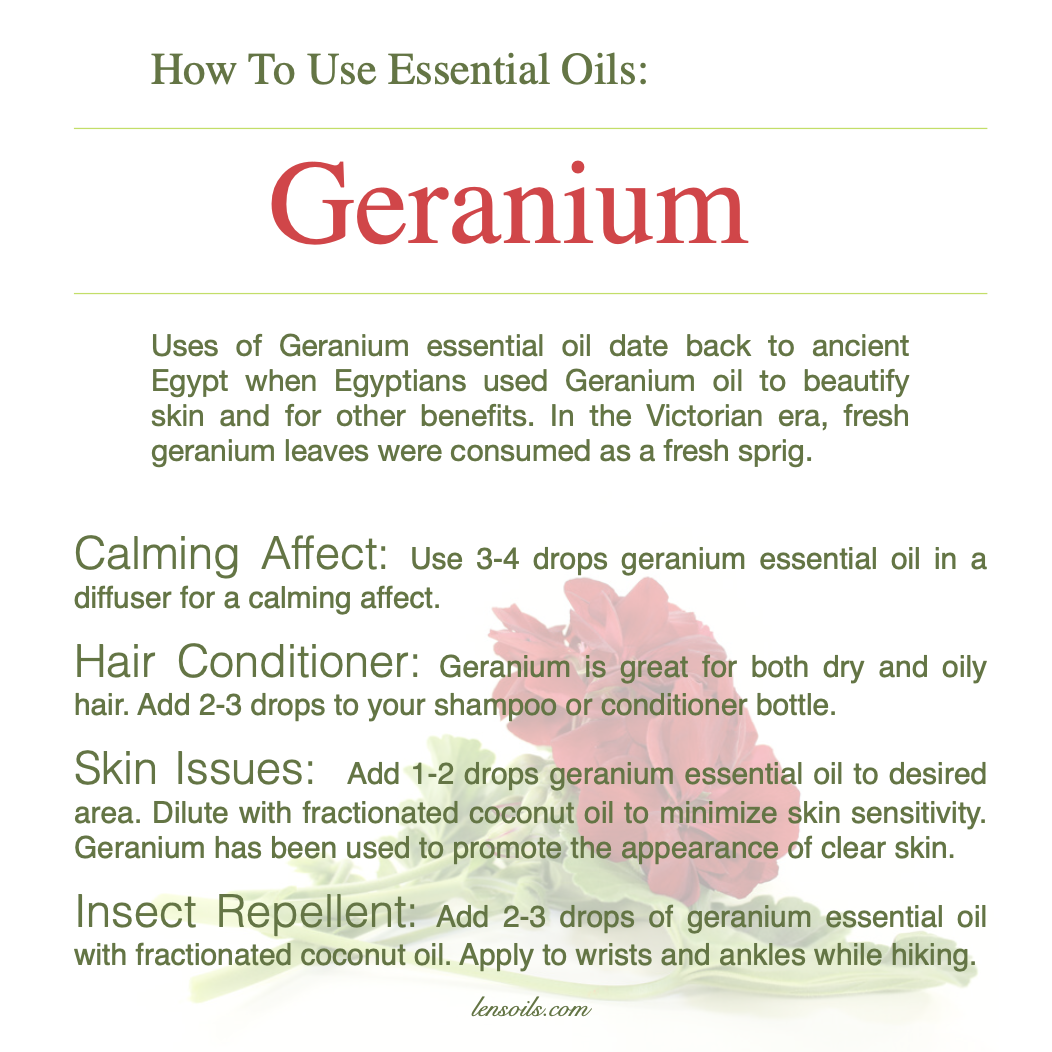
Geranium essential oil is known for its ability to bring balance, both emotionally and physically. Its soft floral aroma has a naturally calming effect, making it helpful during moments of stress or emotional tension. Diffusing a few drops can create a peaceful atmosphere while also freshening the air. Geranium has also been traditionally used for skin concerns, where it is valued for supporting the appearance of clear, healthy-looking skin when properly diluted and applied.
Beyond emotional and skin support, geranium is a practical oil for everyday use. It works as a gentle hair conditioner for both dry and oily hair, helping hair feel nourished without feeling heavy when added to shampoo or conditioner. Geranium is also commonly used as a natural insect repellent. When diluted with fractionated coconut oil and applied to areas like wrists and ankles, it can help keep insects away while outdoors, making it a versatile oil for both self-care and time spent in nature.
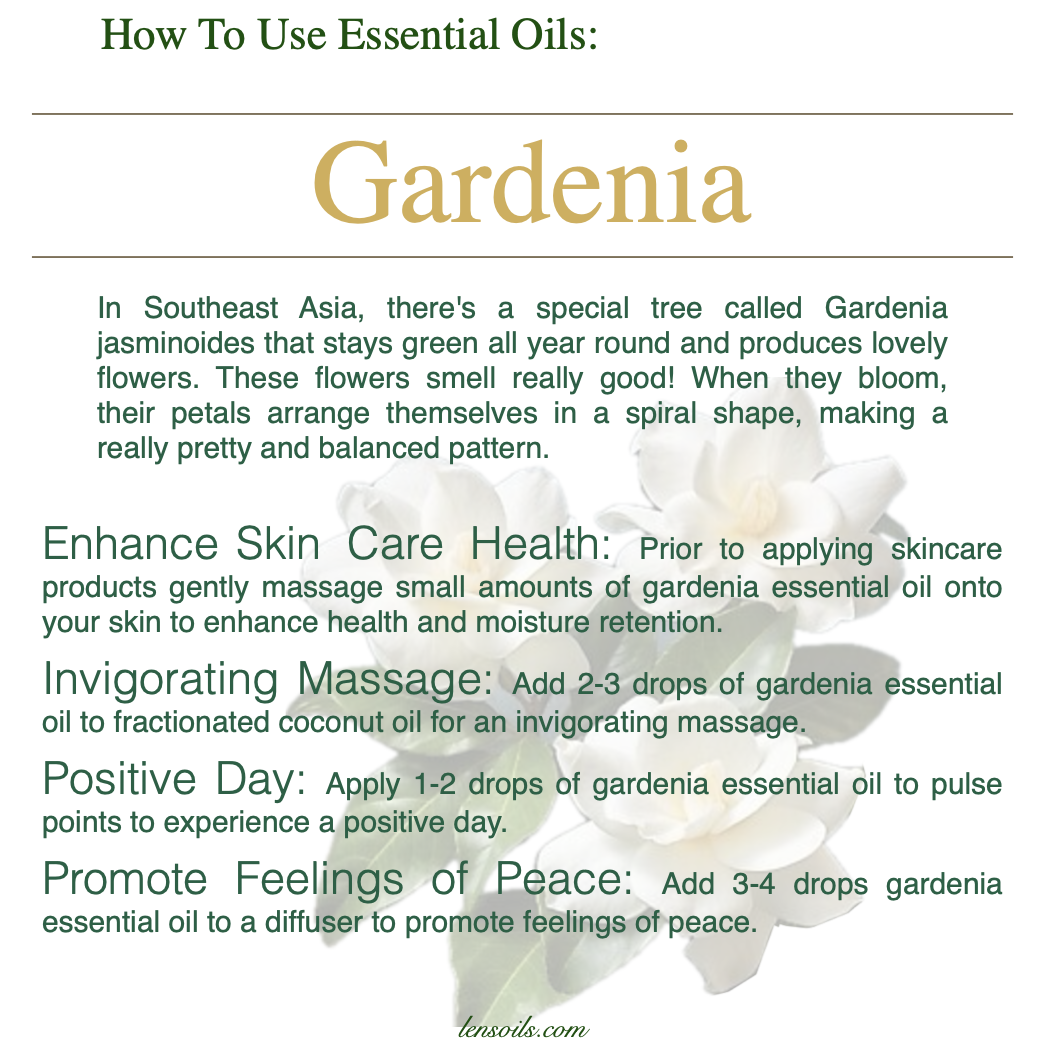
Gardenia essential oil comes from the beautifully fragrant flowers of the Gardenia jasminoides plant, an evergreen shrub native to Southeast Asia. Known for its creamy white blossoms and rich, floral aroma, gardenia has long been associated with balance, beauty, and quiet elegance. When the flowers bloom, their petals form a gentle spiral, a pattern often linked with harmony and calm, which mirrors the emotional effect many people experience when using this oil.
In skincare routines, gardenia essential oil is often used to support a healthy-looking complexion and help the skin feel soft and nourished. Gently massaging a small, well-diluted amount into the skin before applying lotions or serums can enhance moisture retention and leave the skin feeling refreshed. Its luxurious scent also adds a spa-like element to daily self-care, turning an ordinary routine into a calming ritual.
Gardenia essential oil is equally valued for emotional and aromatic use. When blended with a carrier oil for massage, it creates an uplifting and soothing experience that helps the body relax while the mind feels gently energized. Applied to pulse points, its aroma can support a positive, centered mood throughout the day. Diffused into the air, gardenia’s rich floral scent promotes feelings of peace and tranquility, making it a wonderful choice for quiet evenings, meditation, or moments when emotional balance is needed.
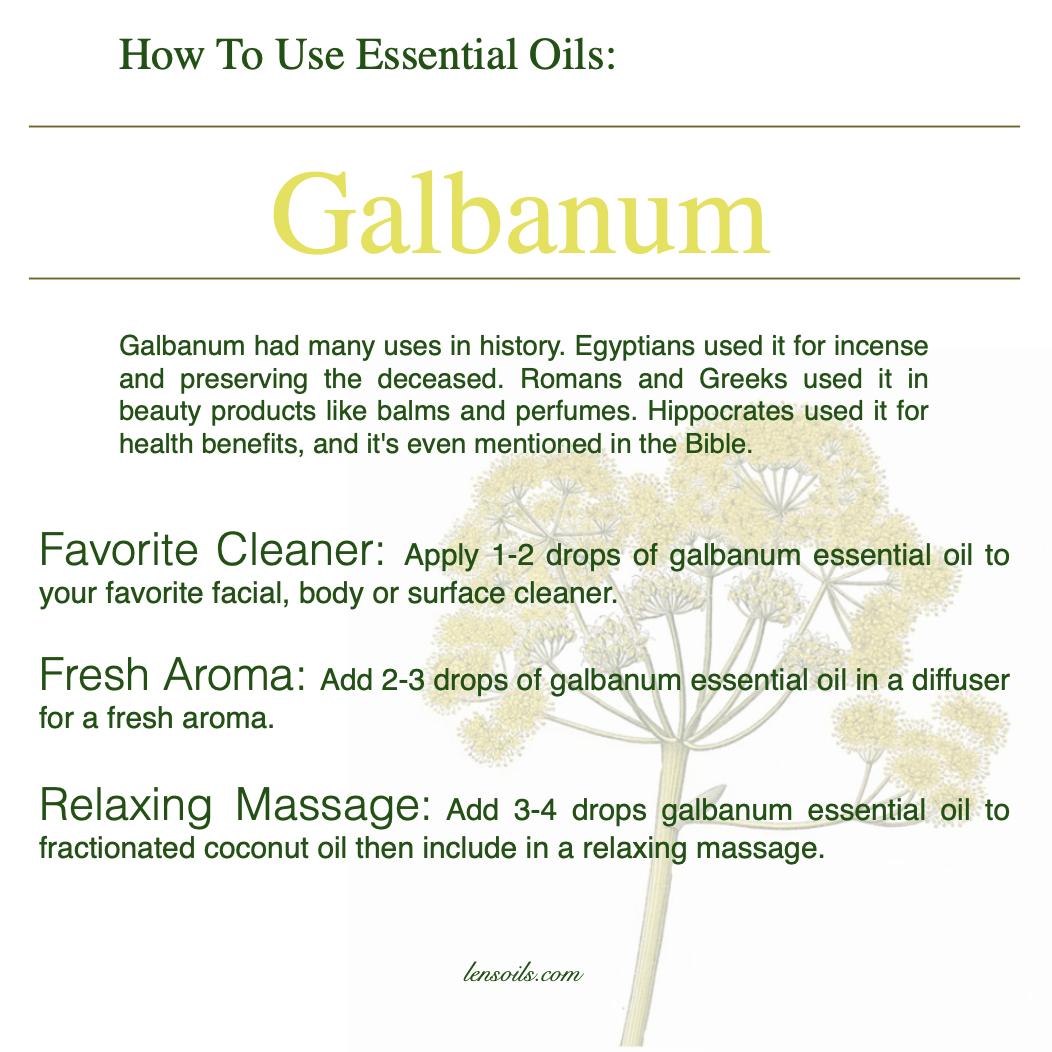
Galbanum essential oil, steam-distilled from the resin of the Ferula galbaniflua plant, has a strong, green, and earthy aroma with hints of spice and balsam. Native to the Middle East and western Asia, galbanum has been used since ancient times in incense, perfumes, and healing balms. Its unique fragrance is both grounding and stimulating, making it a distinctive choice for meditation, reflection, and spiritual practice. Diffused, galbanum creates a deep, resinous atmosphere that connects the mind and spirit.
Beyond its ancient spiritual heritage, galbanum essential oil is valued in modern aromatherapy for its calming and restorative qualities. It blends well with wood oils like cedarwood, floral oils like lavender, and other resins such as frankincense and myrrh. In perfumery, galbanum is often used as a fresh top note that adds depth, richness, and brightness to blends. In wellness practices, it is sometimes included in diluted massage oils for soothing and balancing the body.
Did You Know? Galbanum is mentioned in the Bible as one of the sacred ingredients in the holy incense described in Exodus 30:34, alongside frankincense and myrrh. Ancient Egyptians also used galbanum resin in embalming practices and temple offerings, while Roman and Greek physicians recommended it for various remedies. Today, its distinctive balsamic aroma is still prized in high-end perfumery and spiritual blends, keeping its place as one of history’s most treasured resins.

 Len's Oils