Tag Archives: Helichrysum

A Mother Goose Retelling with Essential Oils

Jack and Jill

Jack and Jill went up the hill
To fetch a pail of water.
Jack fell down and broke his crown,
And Jill came tumbling after.

There was a report from the hillside where a routine errand took an unexpected turn. Jack and Jill were observed climbing steadily to fetch a pail of water when Jack suddenly lost his footing and fell, striking his head as he rolled downward. Jill followed close behind, tumbling after him in the same sudden motion. Both are now upright and responsive, though clearly shaken. The immediate concern in moments like this is not just the fall itself, but the body’s surge of adrenaline and shock that can linger after the danger has passed.

From an essential oil standpoint, the focus now shifts immediately to calming and recovery as the dust is still settling around them. Lavender would be the first choice to help settle the nervous system and slow the shallow breathing caused by stress. Frankincense supports grounding and clear thinking as the initial shock begins to fade, helping restore emotional balance in the moment. Helichrysum is well suited for the aftermath of impact, often used when reassurance and gentle recovery are needed. As this familiar nursery rhyme scene grows quieter, the message becomes clear: setbacks happen quickly, but steady care and a calm response help everyone find their footing again.

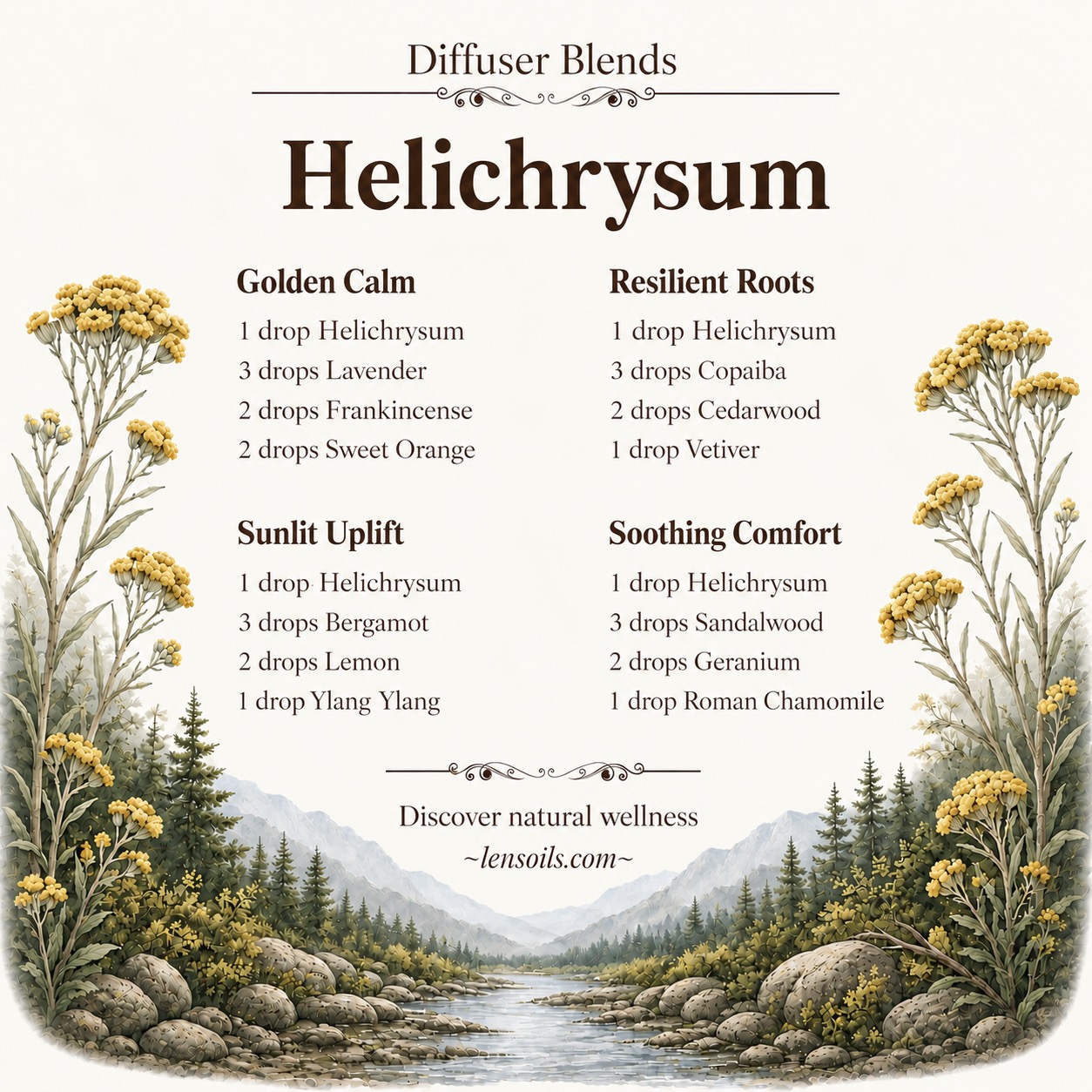
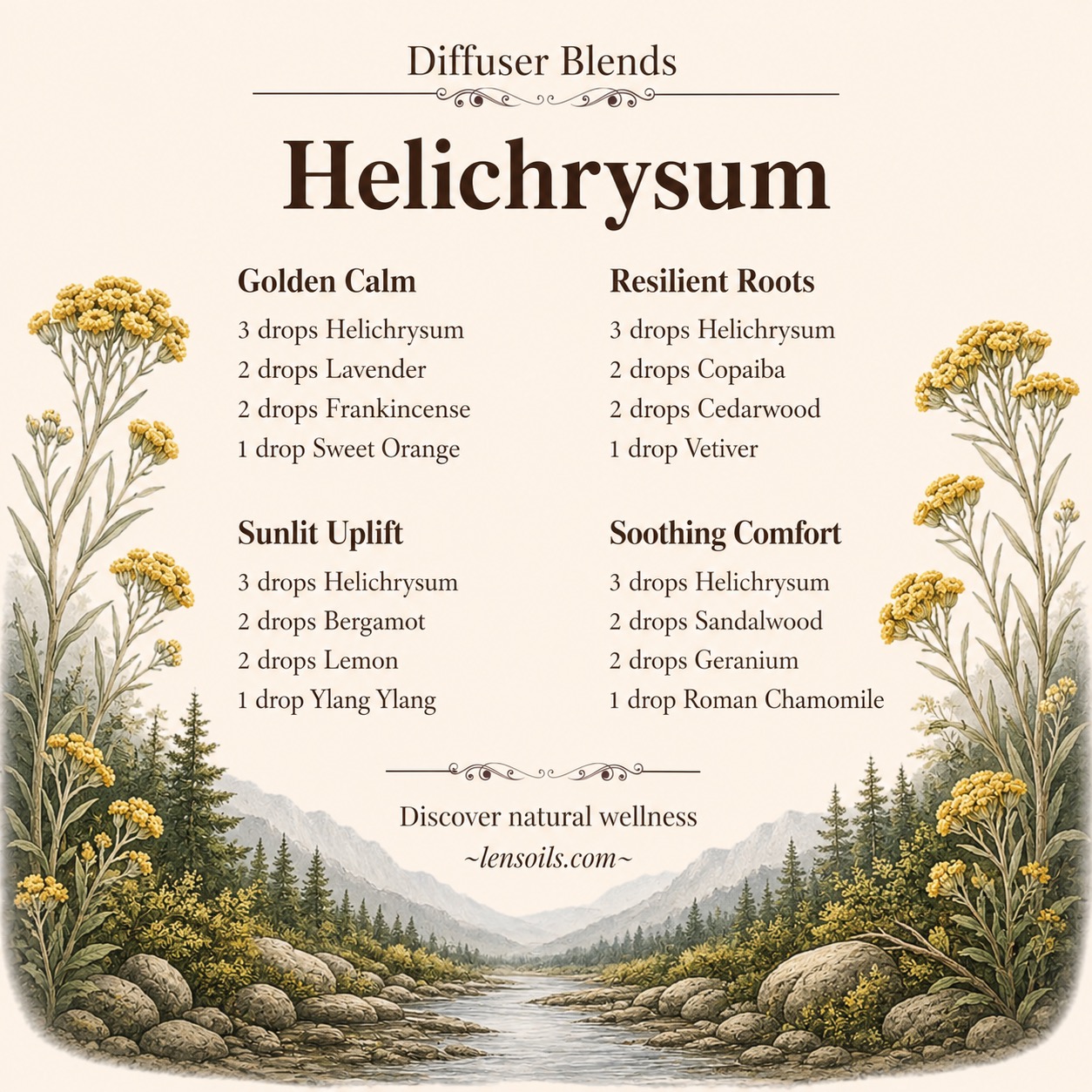
Essential Oil Diffuser Blend: Helichrysum

Helichrysum in a diffuser isn’t about a bright or instantly pleasing aroma—it’s about depth. Its earthy, slightly herbaceous scent can feel unusual at first, but in small amounts it acts more like an anchor than a spotlight. It softens sharp edges in a blend and brings a grounded, steady tone that helps the overall aroma feel more complete. In blends like Still Meadow or Gold Field, it supports a calm, settled atmosphere, while in Soft Horizon or Quiet Lift it quietly balances lighter, more uplifting oils so they don’t feel fleeting or scattered.

Emotionally, Helichrysum tends to speak to moments that feel heavy, reflective, or unresolved. It doesn’t try to lift you out quickly; instead, it creates space to sit with what is there without overwhelm. It can support a sense of quiet release, gentle resilience, and emotional steadiness—like standing in an open field where nothing is rushed and everything has room to breathe.

Essential Oil Meme

Using Helichrysum is “as obvious as the elephant in the room”… except you keep circling around it, trying everything else first, and then finally add one drop like, “fine, let’s see,”—and suddenly it all comes together. It’s that oil that quietly proves a point without saying a word, like it knew from the beginning you’d end up here anyway.

How to Use Essential Oils: Helichrysum

Helichrysum essential oil has been treasured since ancient times, with records showing its use in herbal practices as far back as ancient Greece. Steam distilled from its small, golden flowers, this oil has earned a strong reputation for supporting skin health and renewal. Today, it remains highly respected in both traditional and modern wellness practices around the world, especially for its gentle yet powerful restorative qualities.

Helichrysum is best known for its use in skin care routines. When diluted with fractionated coconut oil, one to two drops can be applied topically to support skin repair and promote a more youthful-looking complexion. It is commonly used to help reduce the appearance of blemishes and is a valued ingredient in many anti-aging products. With consistent, diluted use, helichrysum is appreciated for helping skin look smoother, clearer, and more refreshed.

How to Use Essential Oils: Spine

Essential oils can be applied along the spine to help ease back pain and relieve pressure. When massaged into the spinal column, the oils are absorbed into the skin and work to soothe discomfort by targeting muscles and nerves. This method allows the essential oils to penetrate deeply, offering potential relief for tension, stiffness, and inflammation. Many people use this technique as part of a daily routine to support spinal health and overall well-being.

For optimal results, essential oils with soothing and anti-inflammatory properties should be used. Blends that include Wintergreen, Camphor, Peppermint, Blue Tansy, and Helichrysum are particularly effective. These oils work together to relax muscles, reduce swelling, and promote better circulation. Applying them with a carrier oil and massaging them along the spine can provide lasting benefits. This method is commonly used for back problems, soreness after physical activity, or general spinal support.

In addition to its soothing effects, applying essential oils along the spine may contribute to nervous system regulation. The spine houses the spinal cord, which transmits messages between the brain and the body. Essential oils can interact with nerve endings, potentially enhancing relaxation and reducing stress. Blue Tansy (Tanacetum annuum), in particular, has been studied for its anti-inflammatory properties, making it a valuable ingredient in spinal care blends. Incorporating essential oils into a massage routine may support both physical and emotional well-being.

How to Use Essential Oils: Muscles

Essential oils can be a natural and effective way to soothe sore muscles, reduce tension, and promote relaxation. One popular method is to create a muscle-relieving massage oil by diluting essential oils in a carrier oil, such as coconut, jojoba, or almond oil. Oils like Peppermint, Eucalyptus, and Wintergreen are known for their cooling properties, which can help reduce inflammation and ease discomfort. Simply mix 3–5 drops of your chosen essential oil with a tablespoon of carrier oil and gently massage it into the affected area. For deeper relief, consider adding warming oils like Ginger or Black Pepper, which can stimulate circulation and relax tight muscles.

Another effective way to use essential oils for muscles is through a warm bath or compress. Add 5–10 drops of essential oils like Lavender, Marjoram, or Rosemary to a warm bath, combining them first with a tablespoon of Epsom salt to help the oils disperse evenly in the water. This combination not only soothes sore muscles but also promotes overall relaxation. Alternatively, create a warm compress by soaking a towel in warm water mixed with a few drops of essential oil, wringing it out, and applying it to the affected area. Whether you’re recovering from a tough workout or relieving everyday tension, essential oils provide a natural and holistic approach to muscle care.

Helichrysum-Did You Know?

Helichrysum Did you you know Helichrysum is the oil of pain? It removes pain quickly with not much effort. It helps people with difficult life circumstances, such as trauma, addiction, loss or abuse. These souls need the spiritual strength that helichrysum offers. It can help teach an individual to be thankful for their trials and face their adversities with courage. Helichrysum brings hope to the most discouraged of souls.

Helichrysum is derived from the Greek word helios meaning sun and chrysos meaning gold? This is a reference to the golden color of many of the flowers from this botanical genus. Helichrysum has been used since the time of the ancient Greeks for its great wound healing ability, and was used often after battles.

The oil of Helichrysum has been found by European researchers to generate tissue. Helichrysum is best known for its restorative properties to the skin. It is used in anti-aging products for its rejuvenating benefits to the skin, liver, and nervous system, circulatory function, helps regulate cholesterol, reduces scarring and discoloration.

Helichrysum is highly valued and sought after for its many health benefits. It’s frequently consumed to help detoxify the body. Also referred to as Everlasting or Immortal Flower. It has been studied for anticoagulant, anticatarrhal, mucolytic, expectorant, and antispasmodic properties. It has been known to help in improving certain types of hearing loss.