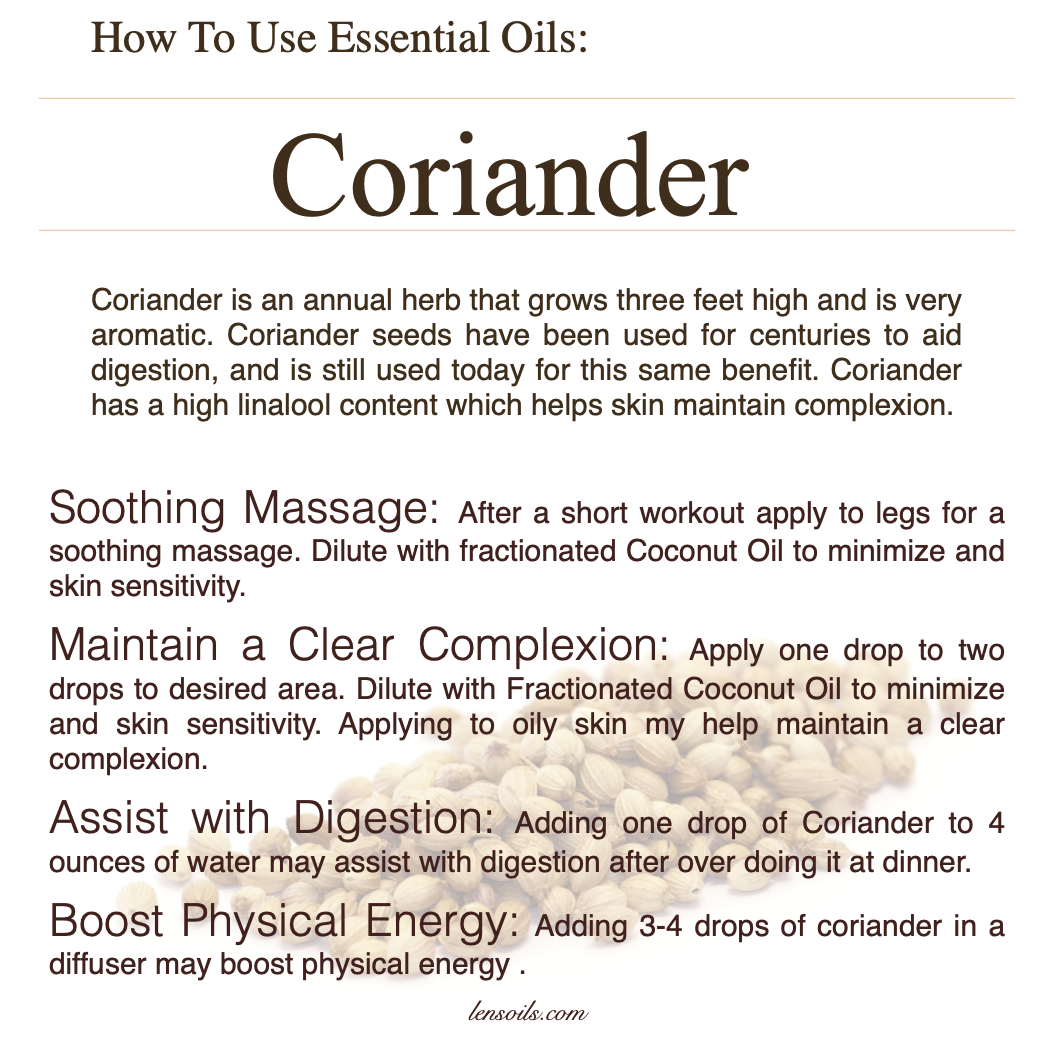
Coriander essential oil, distilled from the seeds of the Coriandrum sativum plant, has a warm, spicy, and slightly sweet aroma that differs from the fresher scent of cilantro, which comes from the leaves of the same plant. Used for centuries in both cooking and traditional wellness practices, coriander seed oil is prized for its ability to support digestion and ease occasional discomfort. Diffused, its soft and inviting fragrance can create a calming and centered atmosphere, making it a popular choice in blends that relax both the body and mind.
Beyond its aromatic qualities, coriander essential oil is often used to promote balance and tranquility. It pairs beautifully with citrus oils such as bergamot or spice oils like cardamom, creating uplifting diffuser combinations. When properly diluted, it can also be added to massage blends to comfort tired muscles and joints. With its warm yet gentle character, coriander seed oil bridges the worlds of spice and wellness, offering a versatile option for both home and self-care.
Did You Know? Coriander seeds have been discovered in ancient Egyptian tombs, showing their value as far back as 1500 B.C. The seeds were not only used in food and medicine but also in rituals and offerings. Coriander is even mentioned in the Bible—in Exodus 16:31, manna is described as being “like coriander seed.” More recently, coriander has been grown aboard the International Space Station as part of plant studies, making it one of the few herbs to journey beyond Earth.
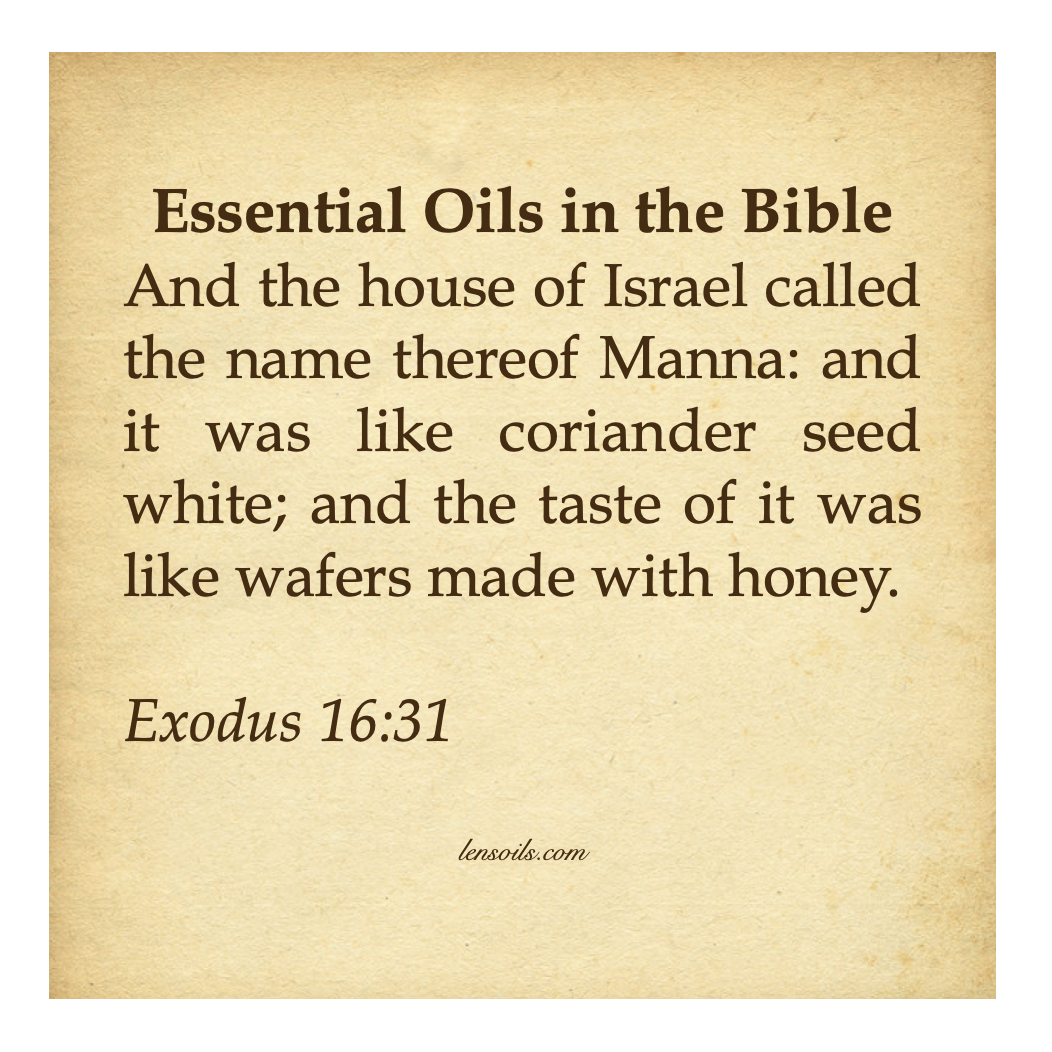
The verse in Exodus 16:31, “And the house of Israel called the name thereof Manna: and it was like coriander seed white; and the taste of it was like wafers made with honey,” recounts a miraculous provision of food from God to the Israelites during their journey through the wilderness after their escape from Egypt. The story of manna is deeply symbolic and reflects themes of trust, divine provision, and sustenance.
After fleeing Egypt and crossing the Red Sea, the Israelites faced hardships, including scarcity of food. They complained to Moses about their hunger, longing for the abundance they remembered in Egypt. In response, God provided manna—a mysterious, edible substance that appeared on the ground each morning like dew. Manna’s description as “like coriander seed, white” and tasting “like wafers made with honey” conveys its nourishing and pleasant qualities, highlighting God’s generosity.
While manna itself isn’t directly connected to essential oils, the Bible often references fragrant plants and resins like frankincense, myrrh, and spikenard, which were used in anointing, worship, and healing practices. Manna shares a similar symbolic role in providing physical and spiritual sustenance. Its sweet taste and miraculous nature reinforced the idea that God would meet the needs of His people, teaching them to rely on Him daily for provision and to obey His commandments.
In broader biblical tradition, manna became a symbol of God’s faithfulness, a lesson in gratitude, and a foreshadowing of spiritual nourishment, as referenced by Jesus in the New Testament when He referred to Himself as the “bread of life” (John 6:35). The connection between natural elements like manna and spiritual truths underscores the Bible’s recurring theme of God’s care through the gifts of creation.
While the verse in Exodus 16:31 doesn’t explicitly mention essential oils, there is a subtle connection to the biblical use of natural substances for physical and spiritual well-being. Manna is described as resembling coriander seed, a plant that is still valued today for its essential oil, known for its warming, energizing, and digestive properties. This description links manna to the natural world and its potential to provide both nourishment and healing.
In biblical times, essential oils and aromatic resins like frankincense, myrrh, and spikenard were widely used not only for anointing and worship but also for their medicinal benefits. Manna, while primarily a miraculous food, fits within this broader biblical theme of God providing sustenance and wellness through nature. The honey-like taste of manna suggests a sweet and wholesome quality, paralleling how essential oils often embody the healing and restorative properties of the plants they are derived from.
This connection can be seen as a reminder of how God’s provision extends beyond immediate needs to include elements of comfort and health. Just as manna sustained the Israelites physically and spiritually in their wilderness journey, essential oils and natural remedies can be seen as part of the divine design for maintaining well-being, echoing the care and nourishment symbolized by manna.


 Len's Oils