Tag Archives: Essential Oil

Cypress-Did You Know?

Cypress-did you knowDid you know Cypress is the oil of motion and flow? Cypress teaches our spirit how to let go of the past by going with the flow of life. Cypress gives support to people by helping them throw aside their worries and let go of control allowing them to enjoy the excitement that comes from being alive, and being fully in the present.

Mediterranean Cypress has been widely cultivated as an ornamental tree for millennia away from its native range, mainly throughout the whole Mediterranean region, and in other areas with similar hot, dry summers and mild, rainy winters. Natural forest stands of the species mainly occur in the western part of the Mediterranean region of Turkey.

It is also known for its very durable, scented wood, used most famously for the doors of St Peter’s Basilica in the Vatican City, Rome. The Mediterranean Cypress is also known as the “drama tree” because of its tendency to bend with even the slightest of breezes.

Cypress oil is known to mankind since ancient times and has been used in many traditional medicines. Aromatherapy has been another important usage of this essential oil which has been a common practice for a long time. It is also known for the cross on which Jesus was crucified was made from the wood of cypress tree.

The oil from the cypress tree assists with clear breathing. Promotes healthy respiratory function. Soothes tight, tense muscles. Supports localized blood flow. Beneficial for oily skin conditions. It has a grounding, yet stimulating effect on the emotions, making it a popular oil to diffuse during times of transition or loss.

Angelica-Did You Know?

Angelica The PlantDid you know Angelica is the oil of spiritual opening. Angelica essential oil acts as a spiritual guide. It opens the soul to spirituality by giving support to everyone that is on a path with their True Self, and with their higher power. Angelica assists in healing a wide range of spiritual issues such as lack of faith, feeling spiritually manipulated, or controlled by others, or feeling cut off from Divine love. It encourages a willingness to open the mind, and see spirituality in a new light.

According to one European legend, Angelica was shown in a dream by an angel to cure the plague. This is the reason this plant was named Angelica. All parts of the plant were believed to be effective against evil spirits and witchcraft. It was held in such high regard that it was called ’The Root of the Holy Ghost.’

Angelica is used a lot in the world of herbal medicine. It is useful in the treatment of fevers, colds, coughs, flatulent colic, and other stomach disorders. Externally it is used as a medicinal gargle for sore throats, and mouths and as a medicinal poultice for broken bones, swellings, itching, and rheumatism. It has been studied for antibacterial properties which help to prevent the growth of various bacteria. Angelica should not be taken in large quantities by pregnant women.

Myrtle-Did You Know?


MyrtleDid you know Myrtle is the oil of adaptability? Myrtle instills the soul with qualities helping you to adjust to new conditions, capable of being flexible, and recovering quickly from difficult conditions. Myrtle helps brings joy to the heart allowing things to flow naturally. It is helpful during difficult and challenging times.

The Ancient Egyptians knew of the therapeutic properties of myrtle, macerating the leaves in wine to counter fever and infection. The best and most fragrant myrtle trees came from Egypt. In Biblical times, Jewish women wore garlands of myrtle on their heads on their wedding day as a symbol of love, and to bring them happiness. In 1876, Dr Delioux de Savignac advocated the use of myrtle for bronchial infections, for problems of the urinary and reproductive system, and for hemorrhoids.

A study shows that myrtle oil kills Salmonella on fresh fruits and vegetables. Scientists intentionally inoculated fresh tomatoes, and iceberg lettuce with a strain of Salmonella. Then they used a cleaning solution that had a dilution rate of 1 to 1000 containing myrtle leaf oil to test if it would kill the bacteria. The results suggest that the use of myrtle can be an effective alternative to the use of chlorine or other disinfectants on fruits and vegetables.

Myrtle lowers blood sugar and has been traditionally used in Iran for the treatment of Malaria. It is also known for its ability to repel mosquitoes, and kills fungus, and mold. In some cultures myrtle is used to heal mouth ulcers, warts, and acne.

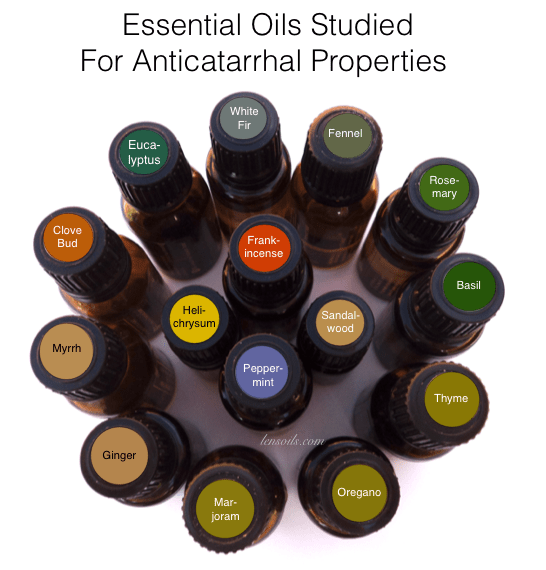
Essential Oils Studied For Anticatarrhal Properties

Studied for Anticatarrhal PropertiesThe term anticatarrhal refers to an agent that helps remove excess mucus from the respiratory system. The oils listed have been studied for properties that help dissolve and eliminate, as well as prevent the formation of mucus and inflammation of the mucus membrane.

Basil Essential Oil
Basil is cooling to the skin, and can be used to soothe minor irritations. When diffused, Basil helps promote clear breathing, and healthy respiratory function while sharpening focus, and lessening stress.
Learn More

Clove Essential Oil
Clove has been used for years in dental preparations,candy, and gum for its flavor and ability to promote oral health, yet it provides a myriad of health benefits.
Learn More

Eucalyptus Essential Oil
Eucalyptus oil is best known for respiratory health and works great when massaged over the chest and throat. Can be applied without diluting.
Learn More

Fennel Essential Oil
Fennel is best known for its distinct licorice aroma and taste, yet its ability to ease digestive troubles and monthly menstrual cycles are equally noteworthy.
Learn More

Frankincense Essential Oil
Frankincense is known to promote cellular health and immunity. It’s soothing and beautifying properties are used to rejuvenate skin and reduce the appearance of scars and stretch marks.
Learn More

Ginger Essential Oil
Ginger can lessen motion sickness, soothe an upset stomach, and help digest food after a large meal. Ginger essential oil can also be applied topically or inhaled to help with digestion issues.
Learn More

Helichrysum Essential Oil

Helichrysum is highly valued and sought after for its many health benefits. It’s frequently consumed to help detoxify the body.
Learn More

Marjoram Essential Oil
Marjoram oil is noted for it’s calming properties, can be taken internally, or used topically, although sensitive skin may want to dilute and it. One drop of essential oil is equivalent to 2 tsp. of dried herbs.
Learn More

Myrrh Essential Oil

Myrrh is valued as an expectorant, which means it promotes the expulsion of mucus in cases of bronchitis and lung congestion. Myrrh is best for chronic conditions, because it contains tannins and resins, it has an astringent effect on tissues.
Learn More

Oregano Essential Oil
Oregano is one of the most potent essential oils. It must be diluted (3 drops of carrier oil to 1 drop of Oregano essential oil when used topically). Apply to reflex points. It can be used as a flavoring in cooking.
Learn More

Peppermint Essential Oil
Peppermint is very pleasing to the taste buds (you can add the oil to tea or water), but is powerfully soothing to the digestive system. You can usually apply it without diluting, inhale for nausea, or take internally as suggested.
Learn More

Rosemary Essential Oil

Rosemary supports healthy digestion and helps soothe sore muscles and joints. This oil also helps reduce nervous tension and fatigue.
Learn More

Sandalwood Essential Oil

Sandalwood has a sweet, woody aroma that can enhance mood and is frequently used in meditation for its grounding effects.
Learn More


Thyme Essential Oil

Thyme makes a great defense against many concerns, although it should always be diluted (4 drops carrier oil to 1 drop thyme). You can also cook with it.
Learn More

White Fir Essential Oil
White Fir essential oil is most noted for soothing sore muscles and joints and supporting It can be stimulating to the mind while helping the body to relax. clear breathing.
Learn More

Rosemary-Did You Know?

Screen shot 2015-05-21 at 8.59.00 PMDid you know rosemary assists in the development of true knowledge and true intelligence? Rosemary is the essential oil of knowledge and transition. It challenges people to look deeper than they normally would, and ask more soul searching questions so they may receive more inspired answers. Rosemary also aids in times of transition and change, such as adjusting to a new house, school, or a relationship.

Rosemary is actually a bush perennial that grows in abundance in the Mediterranean area (Spain, Italy, Portugal, Southern France, Greece and North Africa as well as in isolated areas of Turkey, Lebanon and Egypt). It is one of the most common aromatic wild plants of the Mediterranean landscape, especially in rocky limestone hillsides adjoining the seaside.

Rosemary was relocated to England by the Romans in the eighth century, primarily in the southern part of the country. Rosemary branches were placed on the floors of medieval homes to combat diseases during the “black plague.” Because of the fragrance the plant gives off, it was a used as an incense. It was introduced to the New World by early immigrants, but in the northern regions they must be protected in the winter months.

Rosemary is an aromatic, evergreen shrub whose leaves are frequently used to flavor foods such as stuffings and roast lamb, pork, chicken, and turkey. When you add rosemary to spaghetti sauce it will bring out the flavor of other ingredients. It is a very nice addition to tomato-based soups, stews, and sauces. Along with its culinary applications, Rosemary has many health benefits.

Rosemary supports healthy digestion and helps soothe sore muscles and joints. Long revered by healers, rosemary was considered sacred by the ancient Greek, Roman, Egyptian, and Hebrew cultures. Rosemary’s herbaceous and energizing scent is frequently used in aromatherapy to combat nervous tension, fatigue, and has antioxidant properties.

Spearmint-Did You Know?


Spearmint

Did you know Spearmint is the oil of confident speech? Spearmint inspires someone to be clear of thought and mutual verbal expression. The people in need of Spearmint may hide their opinions, thoughts, and ideas by keeping their voice silent. Spearmint promotes confidence when speaking, especially in front of a large group of people.

Spearmint has been cultivated for many years. Some believe it would be almost impossible to find it growing in its original form in nature. This species of mint is also known as “Mackerel Mint” The name, spear or spire, refers to the spiry form of its floral blossoming.

Before the invention of the refrigerator, spearmint was once macerated and added to milk because it appeared to lengthen the shelf-life of milk and keep it from curdling. It was also recommended for use by people with poor health or young children with sensitive digestive issues.

Spearmint oil is less used than it’s stronger cousin peppermint. The mint sauces, and jellies that usually accompany lamb dishes are made of the milder-flavored spearmint. It was once recommended as a treatment for hiccups, flatulence as well as indigestion. Spearmint essential oil cleanses, and purifies skin, and has an uplifting scent that can lessen mental, and physical fatigue.

Lime-Did You Know?

lime

Did you know Lime essential oil is the oil of zest for life? Lime permeates the soul with enthusiasm for life, when a person has been overwhelmed by discouragement or deep sorrow. Lime elevates them above their difficulties, and reminds them to have gratitude for the gift of life. This oil encourages balance between the heart, and mind.

Limes probably originated in Indonesia or the nearby mainland of Asia? Limes were introduced to the western Mediterranean countries by returning crusaders in the 12th and 13th centuries. Columbus took citrus-fruit seed, probably including limes, to the West Indies on his second voyage in 1493, and the trees soon became widely distributed in the West Indies, Mexico, and Florida.

Scottish naval surgeon Sir James Lind discovered by his observation of long-haul sailors that citrus fruits wiped out the horrible scurvy. This disease is caused by a lack of vitamin C, which had destroyed the British navy more than any enemy. It was noted that seamen that drank lime juice dramatically reduced their mortality rate.

Cold-pressed from the peel of fresh limes, Lime essential oil is refreshing, and energizing in both aroma, and taste. Limes are frequently used in entrées, and beverages for their fresh, citrus flavor. Lime essential oil contains powerful antioxidants that ward off free radicals, and enhance immunity.

Due to its high limonene content, Lime provides internal cleansing benefits, and can be diffused to help purify the air. It’s also an effective and natural surface cleaner. Lime is known for its ability to uplift mood, and balance and energize the mind, and body. Lime is frequently used in facial and body cleansers for its purifying properties, and uplifting scent.


Rose-Did You Know?

Red roseDid you know rose oil holds a higher frequency than any other oil on the planet? Rose essential oil is the Oil of Divine Love. It is a powerful healer of the heart. It supports a person in reaching toward heaven, and connecting with Divine love. Rose teaches the necessary need for Divine grace, and intervention in the healing process.

Roses have a long and beautiful history. They have been symbols of beauty, love, and war. According to fossil evidence, the rose is 35 million years old. In nature the genus Rosa has some 150 species spread throughout the Northern Hemisphere. Roses started appearing in gardens 5000, years ago in China and the Middle East.

Before the sun greets the morning, workers can be found in fields harvesting the delicate bloom of the Rosa damascena. The labor-intensive production process has a very low yield; it takes approximately 1,160,000 freshly picked rose petals to produce only one ounce (30 mL) of Rose essential oil. Because the petals are so delicate, the distillation process must happen the same day that the flower is harvested. But from this labor comes an essential oil known for its hydrating properties.

Rose essential oil not only helps balance moisture levels in skin, but also supports the skin’s elasticity, reduces the appearance of skin imperfections, and promotes healthy and even skin tone. The uplifting aroma of Rose is an intriguing mixture of depth, and complex sweetness. Diffuse in the morning to promote energy and vitality.

Cumin-Did You Know?

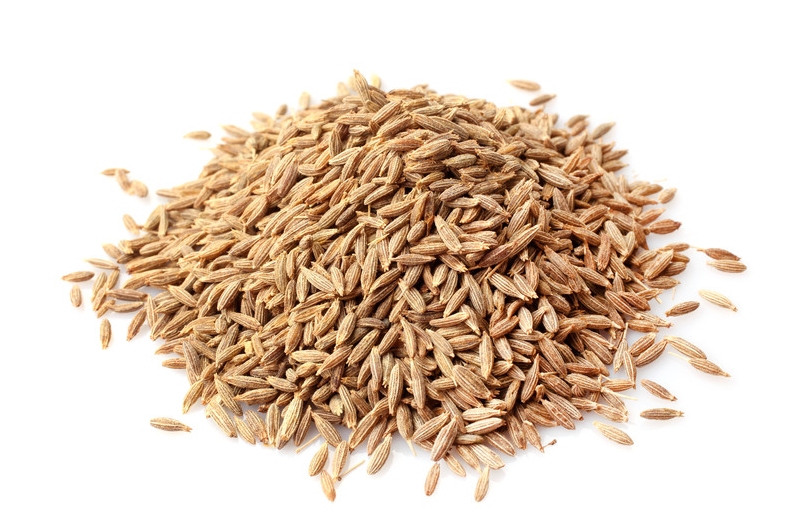
Cumin The Did You Know GuyDid you know Cumin was used in the ancient Egyptian mummification process? Marcus Antoninus 16th emperor of Rome was given a nickname that referenced the herb as someone miserly must have eaten cumin, and symbolized excessive desire. Pliny the Elder, a Roman naturalist who lived between 23 AD and 79 AD was said to have listed Cumin as “the best appetizer of all condiments.”

The history of Cumin goes back over 5000 years. from Iran and the Mediterranean. Cumin is a small seed that comes from the Cuminum cyminum herb, a member of the parsley family. This seed has a distinct flavor, and warm aroma. It is a major ingredient in chili powder as well as curry powder. According to the Bible, Cumin had such a powerful medicinal value that it could be used as money!

Cumin has an overpowering smell and should be used very sparingly. Yet it is considered non-toxic, non-irritant and non-sensitizing. It does have photo-toxic qualities, so it should not be used when the skin will be exposed to sunlight. Photosensitization, and photo-toxicity can occur when certain essential oils react when exposed to Ultraviolet UVA light. Inflammation, blistering, and reddening/burning of the skin are common.

Cumin is useful as a warming oil and helps relieve muscular pains and osteoarthritis. In the digestive system, it is a stimulant that helps with colic, dyspepsia, flatulence, bloating and indigestion. For the nervous system, it is a tonic, and has a beneficial effect on headaches, migraines, and nervous exhaustion.

Melaleuca-Did you Know?

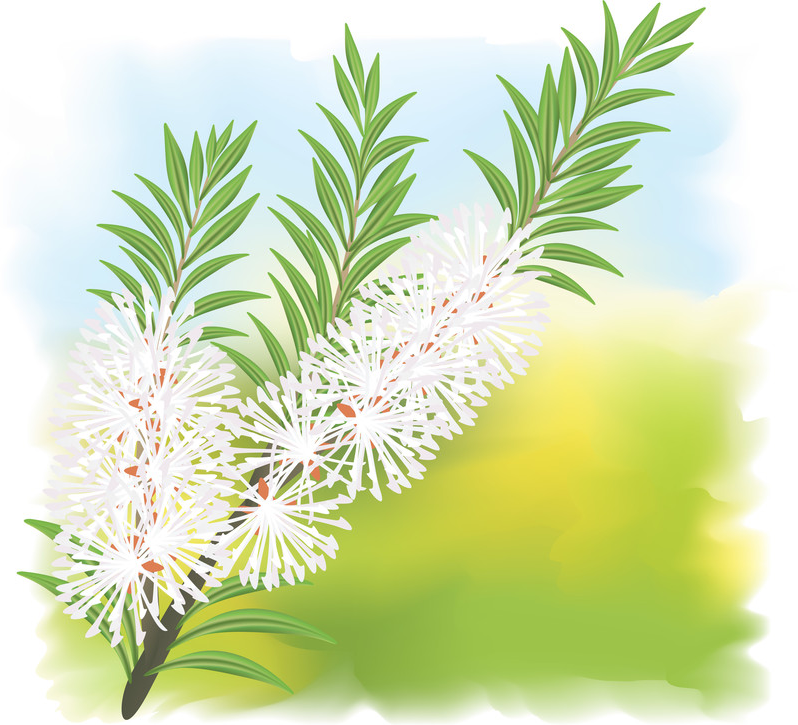
Melaleuca (Tea Tree)Did you know melaleuca essential oil has over 92 different compounds and limitless applications? Melaleuca is the oil of energetic boundaries. A natural disinfectant, Melaleuca clears the baggage from the negative energy. It clearly releases codependent and toxic relationships. Melaleuca encourages people to connect with each other in a positive way.

For many centuries, the native Aborigines of Australia used the therapeutic oil of the Melaleuca trees for a wide range of topical and oral applications. They crushed the leaves to use as rubbing mediums and mixed them with clay to form poultices, and even bathed in the water that had collected under the trees. When the white settlers came, they watched and learned how to use the leaves for their own healing purposes.

It was most unfortunate for people in the west that there was no documented evidence of the use of Melaleuca oil. It was to remain confined to Australia, as a bush remedy, for the next 150 years. In 1922, however, an Australian chemist, Arthur Penfold and his team, distilled the oil from the Melaleuca alternifolia, and subsequently published a paper stating that it had a wide-rang of antibacterial and anti-fungal activity.

During the Second World War Melaleuca oil was in such short supply that all the available supplies of oil were used to help stop infections from the unavoidable war wounds, both in soldiers and munitions workers that were helping with the war effort. Soon it was considered necessary that a cheaper, more readily available, alternative should be manufactured to help stop the spread of germs. The once thriving industry went into a steep decline until recently. Over the past few years it has made a huge come back.

Melaleuca is best known for its purifying properties. It can be used to cleanse and purify the skin, nails, and to promote a clear, healthy complexion. Taken internally, Melaleuca enhances immunity when seasonal threats are high, and Melaleuca can be used on surfaces throughout the home to protect against environmental threats. Melaleuca is frequently used on minor skin irritations to soothe the skin, and help it recover quickly. Diffusing Melaleuca will help purify, and freshen the air.