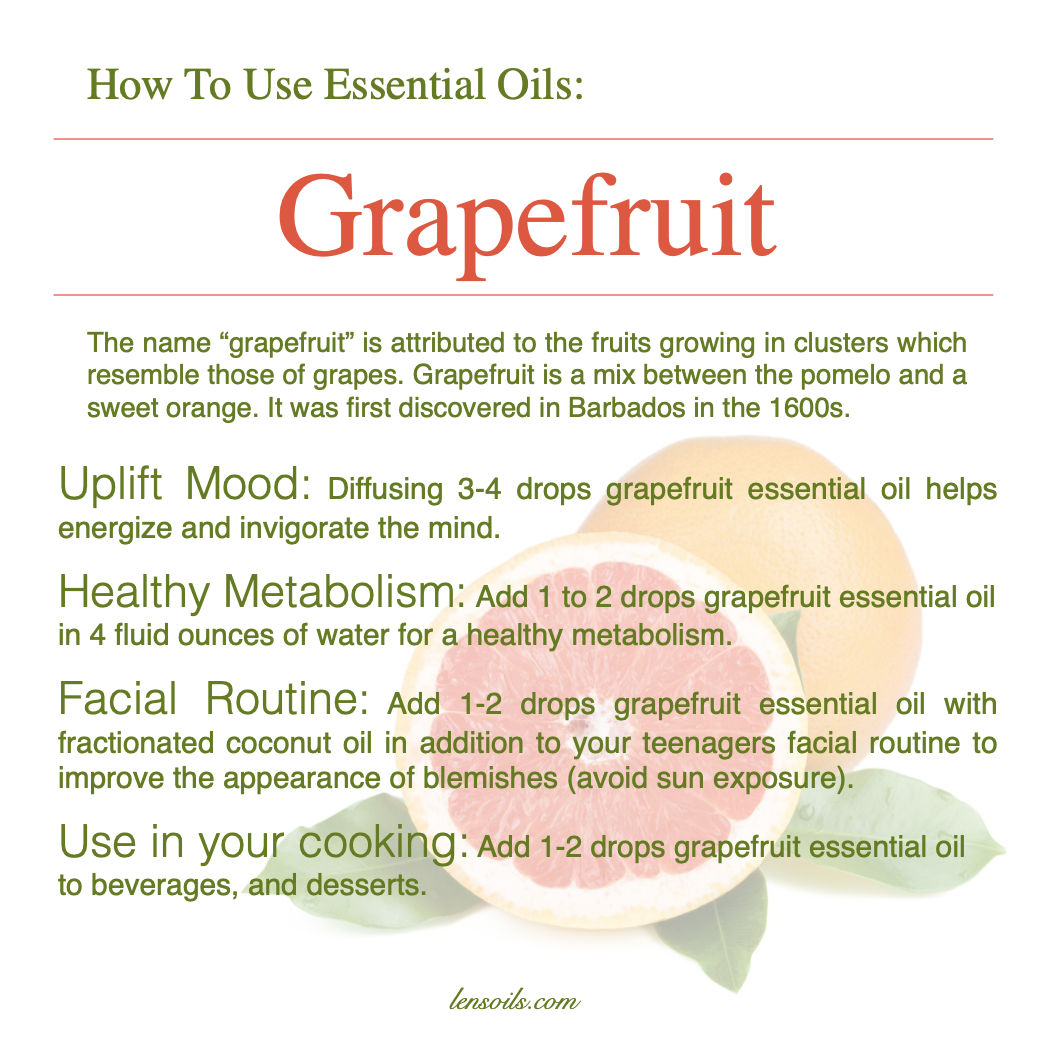
Grapefruit essential oil comes from a bright, citrus fruit that earned its name because it grows in clusters similar to grapes. A natural hybrid of pomelo and sweet orange, grapefruit was first discovered in Barbados in the 1600s and has been appreciated ever since for its fresh, energizing aroma. Diffusing three to four drops can help uplift mood, clear mental fog, and create an invigorating atmosphere that feels light and motivating.
In daily routines, grapefruit essential oil is often used to support a healthy metabolism when a drop or two is added to water. When properly diluted with fractionated coconut oil, it can also be a gentle addition to a facial routine, especially for teenagers looking to improve the appearance of blemishes. Its crisp, tangy flavor makes it a favorite in the kitchen as well, where one or two drops can brighten beverages and desserts. Because grapefruit is photosensitive, topical use should always be followed by avoiding direct sun exposure.
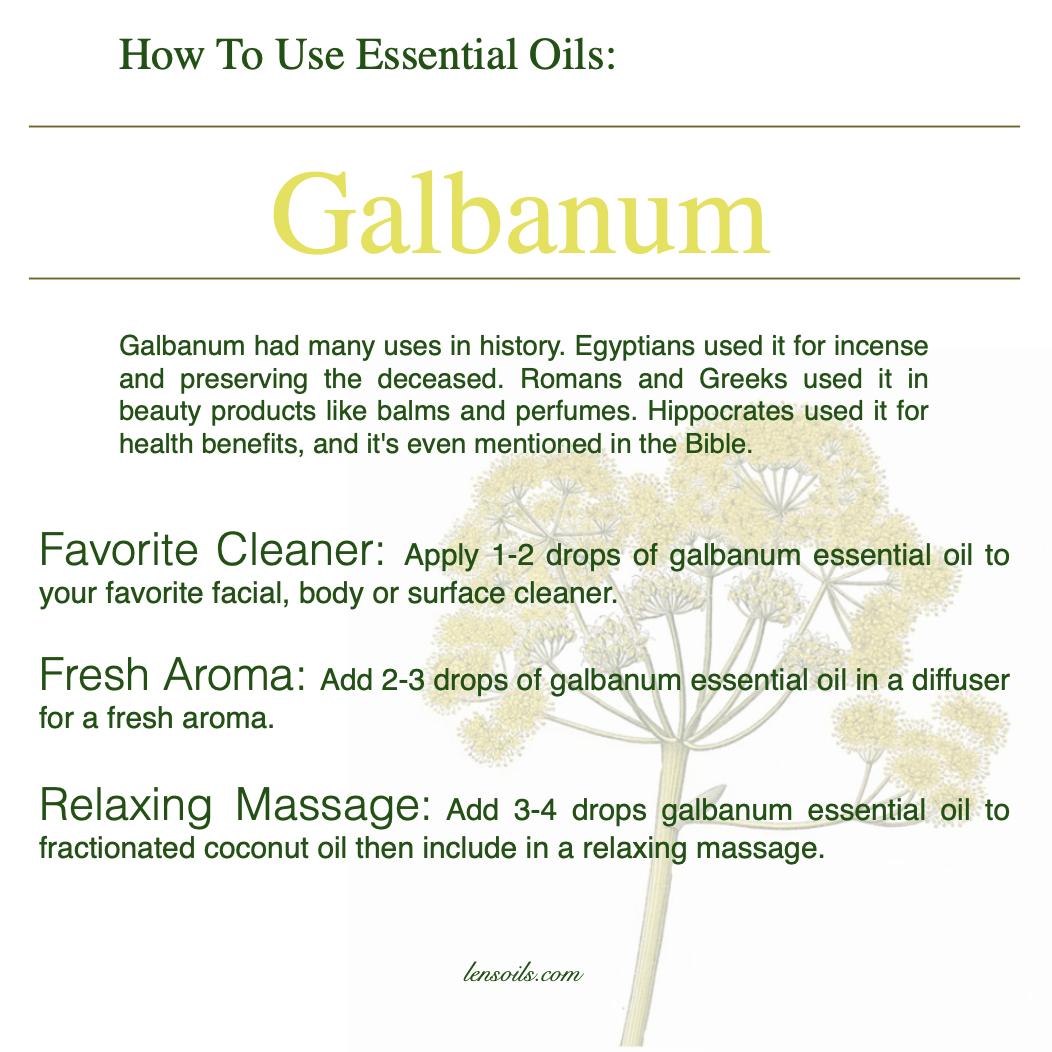
Galbanum essential oil, steam-distilled from the resin of the Ferula galbaniflua plant, has a strong, green, and earthy aroma with hints of spice and balsam. Native to the Middle East and western Asia, galbanum has been used since ancient times in incense, perfumes, and healing balms. Its unique fragrance is both grounding and stimulating, making it a distinctive choice for meditation, reflection, and spiritual practice. Diffused, galbanum creates a deep, resinous atmosphere that connects the mind and spirit.
Beyond its ancient spiritual heritage, galbanum essential oil is valued in modern aromatherapy for its calming and restorative qualities. It blends well with wood oils like cedarwood, floral oils like lavender, and other resins such as frankincense and myrrh. In perfumery, galbanum is often used as a fresh top note that adds depth, richness, and brightness to blends. In wellness practices, it is sometimes included in diluted massage oils for soothing and balancing the body.
Did You Know? Galbanum is mentioned in the Bible as one of the sacred ingredients in the holy incense described in Exodus 30:34, alongside frankincense and myrrh. Ancient Egyptians also used galbanum resin in embalming practices and temple offerings, while Roman and Greek physicians recommended it for various remedies. Today, its distinctive balsamic aroma is still prized in high-end perfumery and spiritual blends, keeping its place as one of history’s most treasured resins.
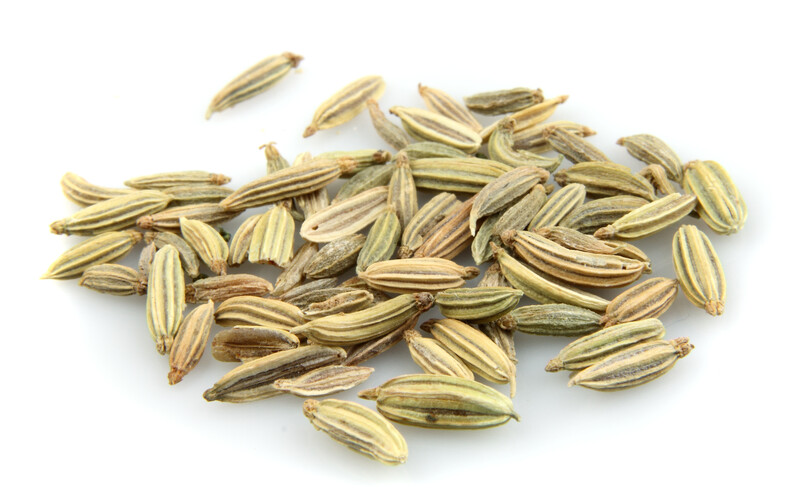
It began in sun-drenched fields, where soft feathery stalks swayed in the breeze and the air smelled faintly of licorice and earth. Long before maps had borders and names, this plant grew wild along the shores of the Mediterranean. Ancient hands didn’t call it medicine or spice—they just knew that chewing a few seeds settled the stomach and brightened the senses. The knowledge didn’t come from books. It came from experience.
Through wars and winters, the plant remained. Roman soldiers chewed its seeds for courage. Midwives in medieval villages gave it to new mothers for strength. In some places, it was hung over doorways to ward off unwelcome spirits. In others, it was ground into food to flavor feasts and help with digestion after. It became a plant of the people, simple, strong, enduring and always nearby.
As centuries turned, apothecaries and herbalists began boiling the seeds, pressing the oils, and steeping the leaves. And when modern distillation arrived, something even more concentrated emerged. The scent was sweet but strong—like anise and black licorice, with something warm beneath. People began to use it for clarity, for confidence, for calming unsettled thoughts. No one needed permission. They just liked how it made them feel.
Today, the steam distillers run quietly in rural hillsides where the tradition is still alive. The seeds are collected when they’re rich in oil, their pale green shells holding a powerful secret. In small villages, farmers still know which rows produce the boldest flavor, and which seasons yield the brightest scent. And companies like doTERRA have chosen to partner with these growers—preserving not just the oil, but the hands and heritage behind it.
That light-green plant, with feathery leaves and tiny seeds that shimmer in the sun, has flavored food, soothed spirits, and sharpened minds for thousands of years. It was trusted by mothers, soldiers, and healers alike. Its name? That came later—borrowed from Latin, carried across languages, and eventually distilled into something more than a spice. This is Fennel. Now you know the rest of the story.
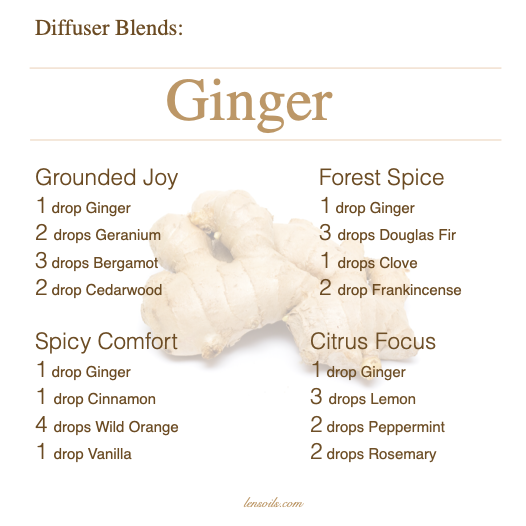
Ginger adds a warm, steady pulse to these blends, bringing both comfort and quiet motivation without stealing the spotlight. Grounded Joy feels balanced and emotionally lifting, where ginger gently anchors the florals and citrus, while Spicy Comfort is cozy and reassuring, like warmth spreading from the inside out. Forest Spice is especially grounding, blending ginger’s gentle heat with deep woods and resin to create a calm, reflective atmosphere. And Citrus Focus shows ginger’s energizing side, smoothing the sharper edges of lemon, peppermint, and rosemary so the blend feels clear, focused, and sustained rather than rushed.
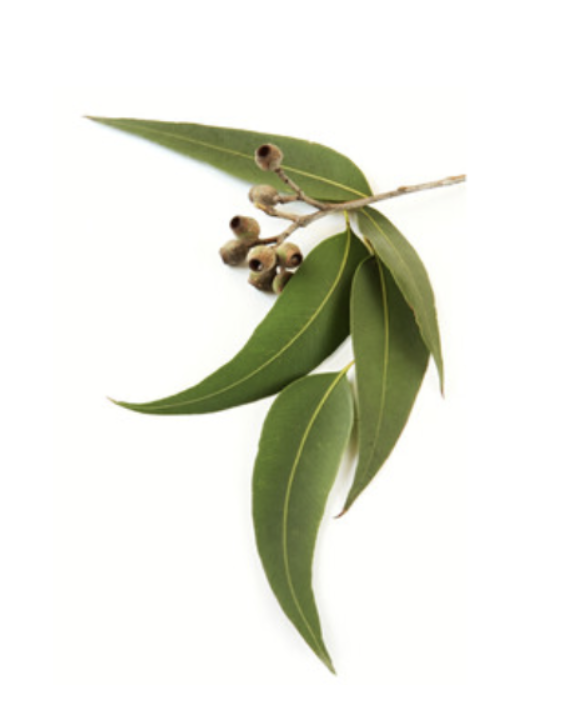
It began in a place where sunlight dances through the haze and the ground steams after the rain. Where the scent in the air is so clean, so crisp, you’d swear it could sweep the dust from your thoughts. Travelers in the southern hemisphere once followed that aroma through dense groves, not knowing its name—only that breathing felt easier, and the world a little clearer, beneath those tall blue-tinged trees.
For generations, the people who lived among them knew what the trees could do. They gathered the long, narrow leaves and hung them in doorways and corners of the home. When someone caught a chill, they boiled them into strong-smelling teas. If a head felt heavy, they’d crush the leaves and breathe in deeply. They never took credit. They just called it wisdom passed down—and they respected what the trees gave them.
When colonists and settlers arrived, they too noticed the power in the air. Soldiers tucked leaves into their packs. Homesteaders burned branches over smoky fires. Doctors began to carry little bottles filled with strong, clear oil—used for cleaning, cooling, or clearing the head. It became known as “fever tree” in some parts, though no one could quite agree on what it cured. They only knew they felt better when it was nearby.
Over time, the oil was drawn more carefully. The leaves were distilled with steam, and the vapor captured in bottles. It had a cooling effect, a camphor-like strength that reminded people of crisp mornings and clean linen. While scientists would eventually study its compounds and its properties, most people didn’t wait for the footnotes. They added a few drops to hot water, rubbed it into tired muscles, or let it drift through a room like a fresh breeze after rain.
To this day, the practice remains. Harvesters still rise early, walking among tall, slender trunks with shears in hand, gathering leaves warmed by the sun. The scent is unmistakable even before the oil is extracted. In places like Australia, parts of Africa, and beyond, this tradition has become an industry—one that doTERRA now supports through responsible sourcing and long-term relationships with local growers. The oil is still crafted with care, bottle by bottle, so it reaches homes around the world as pure as it began.
That tall tree with silvery bark and narrow blue-green leaves? It has eased breathing, cleared minds, and freshened homes for centuries. Its name wasn’t always known, but its gifts were felt long before they were labeled. It was first discovered by native people, later admired by explorers, and eventually carried across oceans in little brown bottles. This tree is Eucalyptus. Now you know the rest of the story.
Dill essential oil, distilled from the seeds or the whole herb of the Anethum graveolens plant, carries a fresh, sweet, and herbaceous aroma. Native to the Mediterranean and western Asia, dill has been used for thousands of years in both cooking and traditional wellness practices. Its essential oil is often valued for digestive support, helping to ease occasional discomfort and promote a sense of balance after meals. Diffused, its gentle aroma provides a clean, uplifting atmosphere that encourages relaxation and calm.
Beyond its culinary and digestive benefits, dill essential oil has been used to support feelings of focus and clarity. Blended with citrus oils like lemon or lime, it takes on a brighter, more refreshing quality, while pairing it with floral oils like lavender can create a soothing, comforting diffuser blend. In topical blends, dill is sometimes used in massage oils or diluted in carrier oils to promote a sense of ease and overall wellness. Its fresh, herbal fragrance makes it versatile in both household and personal care routines.
Did You Know? Dill has been prized since ancient times—records show it was used by the Egyptians around 1500 B.C. as both a medicinal herb and a food seasoning. In ancient Greece and Rome, dill was considered a symbol of wealth and was often used to crown heroes and decorate banquet tables. Even the word dill comes from the Old Norse “dylla,” meaning “to soothe.” Old Norse was the language of the Vikings, spoken from the 8th to the 14th century, and is the ancestor of modern Scandinavian languages as well as the source of many words in English.
From tropic soil where spices grow, Cardamom seeds in warm winds flow. Distilled with care, their oils release, A fragrant gift of calm and peace.
Called “Queen of Spices” long ago, From India’s hills to Guatemala’s glow. A sweet and spicy breath it brings, A treasure prized by queens and kings.
It soothes the stomach, lightens care, A gentle aid for troubles there. In kitchens, hearts, and homes it stays, A friend through nights and brighter days.
Diffused, its scent uplifts the mind, Clarity and focus you will find. For study hours or quiet prayer, Its grounding touch is always there.
When seasons shift and breath feels tight, Cardamom lends a steady light. Its vapors clear, the chest feels free, A comfort shared through history.
Egypt’s halls and India’s tea, Whispers of cardamom still roam free. A spice, a song, a timeless balm, Forever fragrant, warm, and calm.
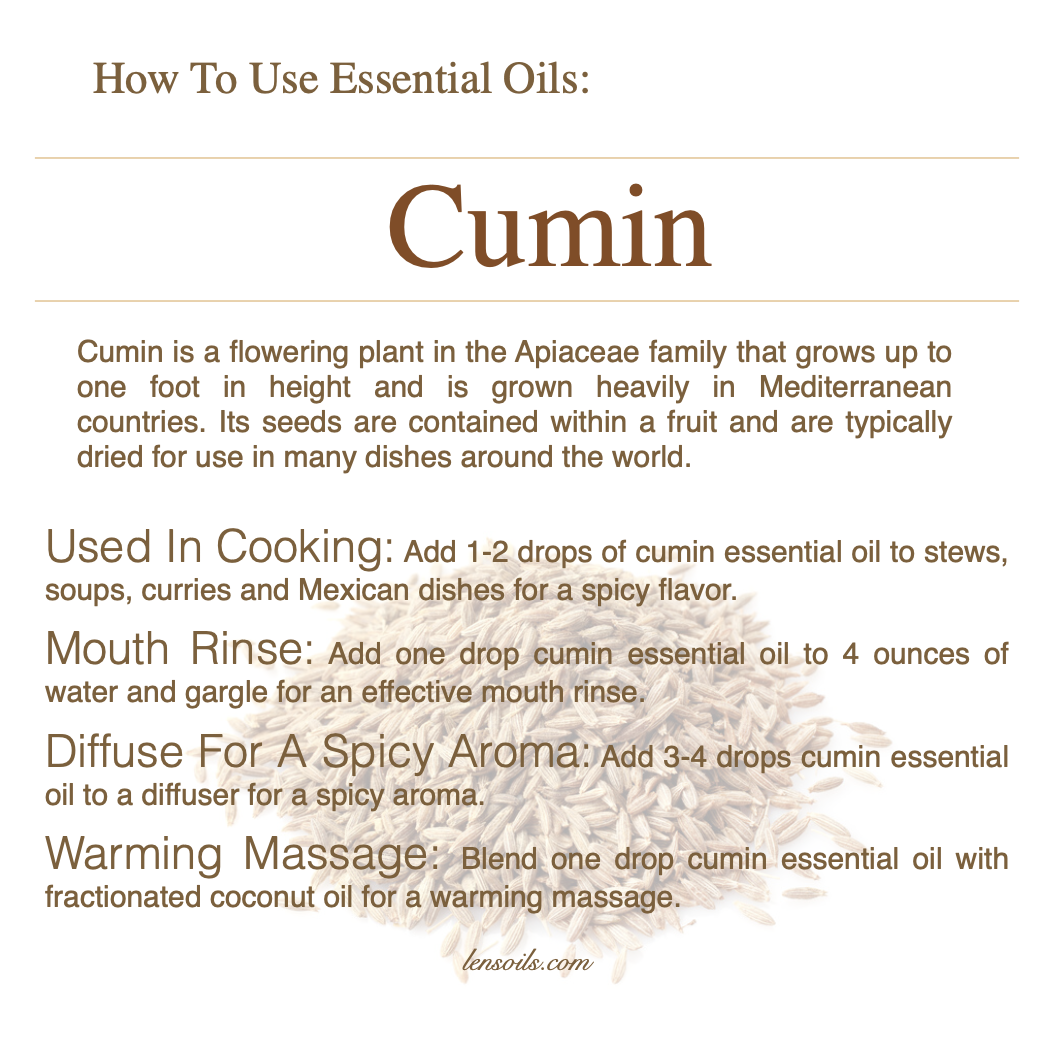
Cumin essential oil, distilled from the seeds of the Cuminum cyminum plant, carries a warm, spicy, and slightly earthy aroma that has been valued for thousands of years. Native to the Mediterranean and parts of the Middle East, cumin has been used both as a culinary spice and a traditional remedy. In essential oil form, it is often appreciated for its digestive support and its ability to bring depth and richness to blends. Diffused in small amounts, cumin’s strong scent can create a grounding and comforting atmosphere.
Beyond its culinary heritage, cumin essential oil is sometimes used to help promote relaxation after heavy meals or to ease occasional feelings of tension. When blended with citrus oils such as orange or lemon, it takes on a brighter, more refreshing quality, balancing its deep, spicy base. Properly diluted, cumin oil may also be added to massage blends to help comfort muscles and joints, though its potency means it is used sparingly. Its distinct aroma makes it a bold addition to both diffuser recipes and wellness routines.
Did You Know? Cumin seeds have been discovered in ancient Egyptian pyramids, showing they were treasured as far back as 2000 B.C. The seeds were used in cooking, medicine, and even as part of the mummification process. Cumin is also mentioned in the Bible—in Isaiah 28:25–27, it is noted as one of the spices carefully sown and harvested by farmers. Today, India produces the majority of the world’s cumin, highlighting its continued importance in both global cuisine and cultural traditions.
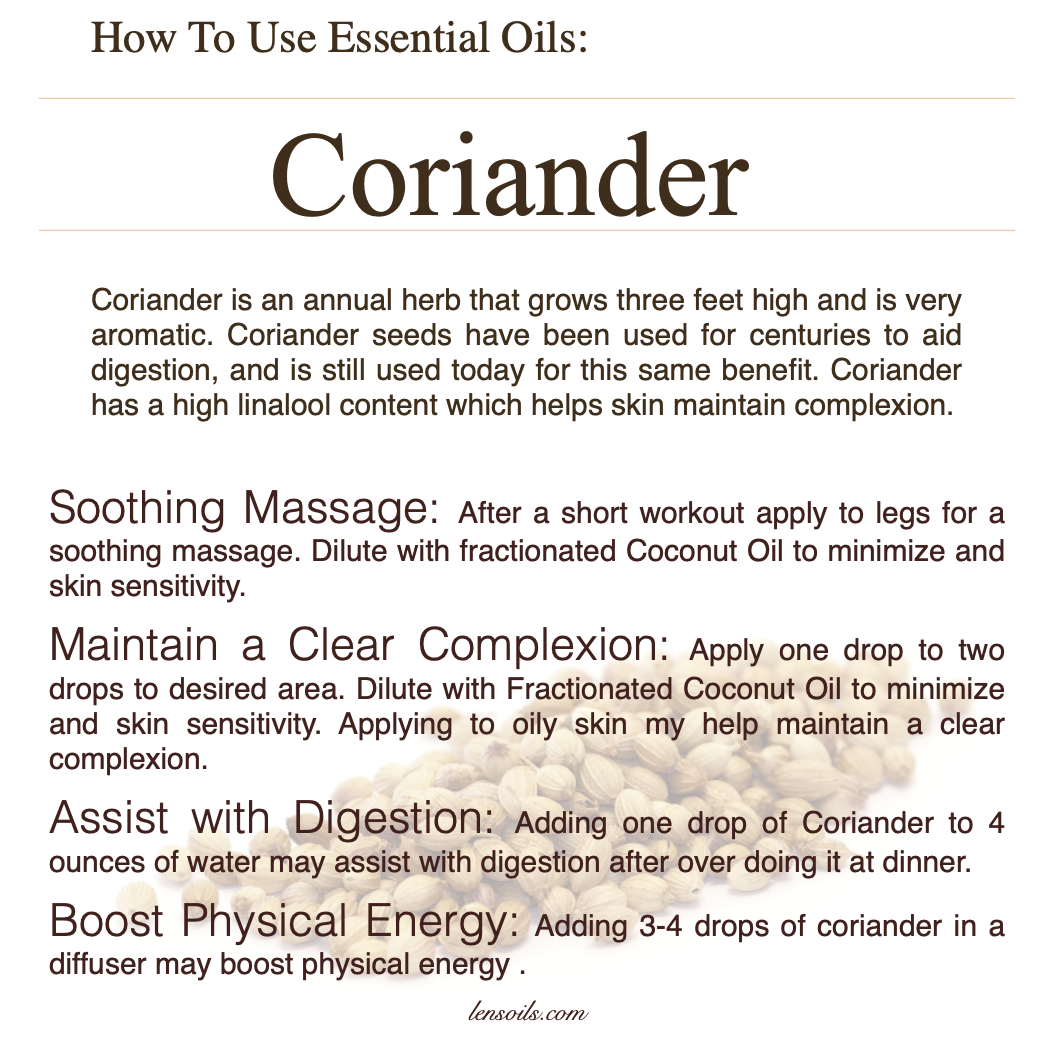
Coriander essential oil, distilled from the seeds of the Coriandrum sativum plant, has a warm, spicy, and slightly sweet aroma that differs from the fresher scent of cilantro, which comes from the leaves of the same plant. Used for centuries in both cooking and traditional wellness practices, coriander seed oil is prized for its ability to support digestion and ease occasional discomfort. Diffused, its soft and inviting fragrance can create a calming and centered atmosphere, making it a popular choice in blends that relax both the body and mind.
Beyond its aromatic qualities, coriander essential oil is often used to promote balance and tranquility. It pairs beautifully with citrus oils such as bergamot or spice oils like cardamom, creating uplifting diffuser combinations. When properly diluted, it can also be added to massage blends to comfort tired muscles and joints. With its warm yet gentle character, coriander seed oil bridges the worlds of spice and wellness, offering a versatile option for both home and self-care.
Did You Know? Coriander seeds have been discovered in ancient Egyptian tombs, showing their value as far back as 1500 B.C. The seeds were not only used in food and medicine but also in rituals and offerings. Coriander is even mentioned in the Bible—in Exodus 16:31, manna is described as being “like coriander seed.” More recently, coriander has been grown aboard the International Space Station as part of plant studies, making it one of the few herbs to journey beyond Earth.


 Len's Oils