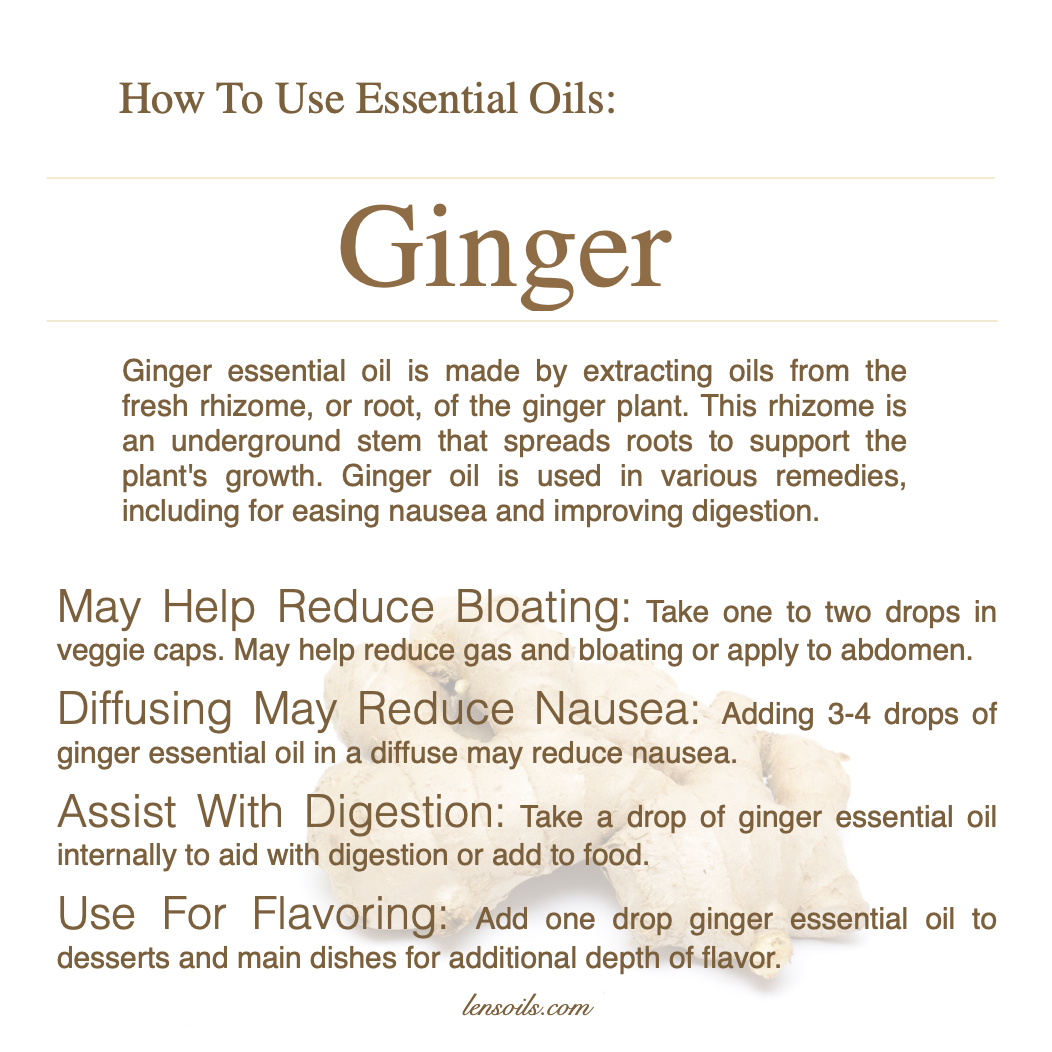
Ginger essential oil is steam-distilled from the fresh rhizome of the ginger plant, an underground stem long valued for its warming and digestive properties. For centuries, ginger has been used to support digestion and ease stomach discomfort. The oil carries that same spicy, energizing character and is often used to help reduce feelings of nausea, bloating, and general digestive unease. Diffusing three to four drops can create a warm, comforting aroma that may help settle the stomach and promote a sense of balance.
Ginger essential oil is also a versatile addition to daily wellness routines. When taken internally in a veggie cap or applied topically to the abdomen with proper dilution, it is commonly used to support digestion and reduce gas or bloating. Its bold, spicy flavor makes it useful in the kitchen as well, where a single drop can enhance desserts or savory dishes with depth and warmth. Whether used aromatically, internally, or topically, ginger essential oil is valued for its comforting and stimulating nature.
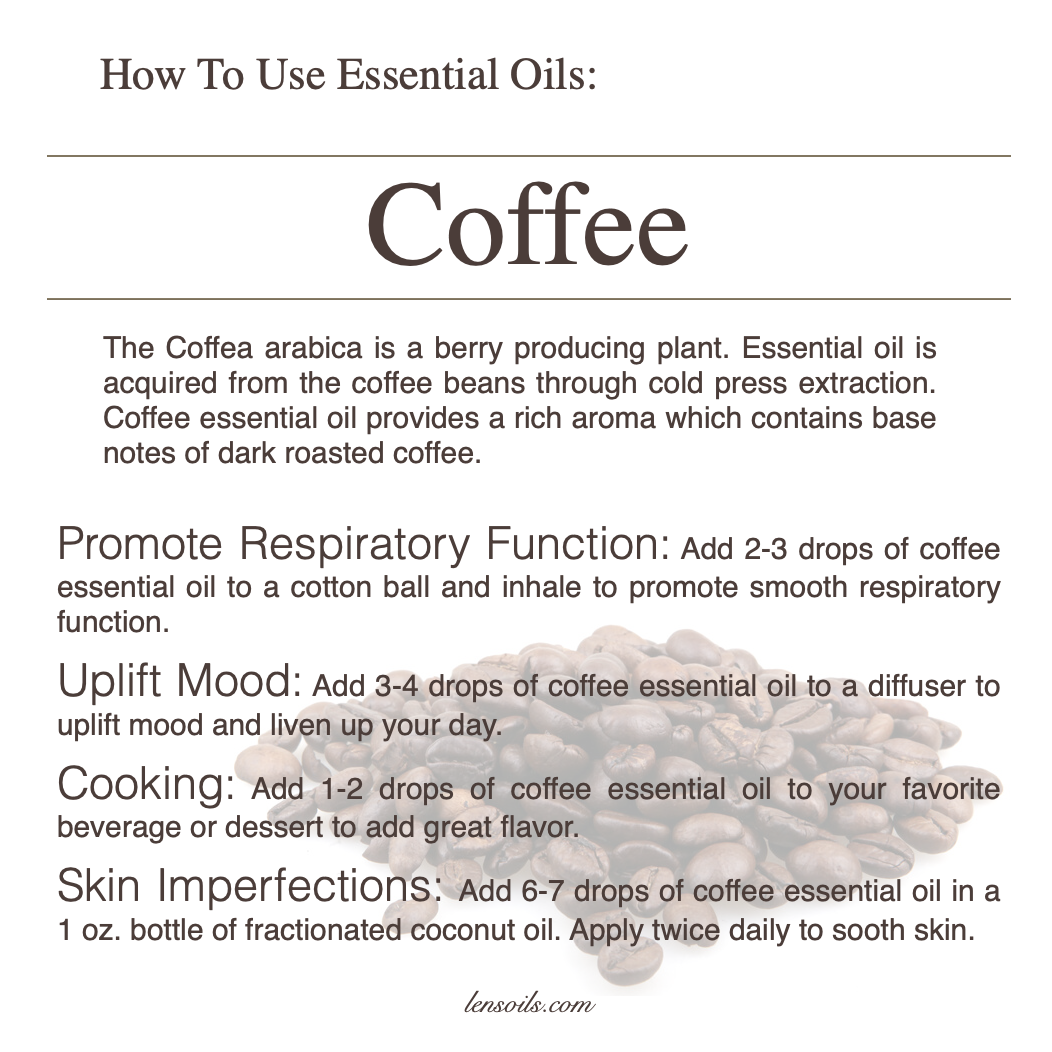
Coffee essential oil, cold-pressed from roasted coffee beans, is known for its bold, roasted aroma that instantly awakens the senses. Just like a freshly brewed cup, this oil carries a warm, rich scent that can energize and uplift the mood. Diffused, it creates a cozy environment perfect for mornings, study sessions, or creative work. Its aroma has been linked to feelings of alertness and comfort, making it a unique addition to diffuser blends.
In addition to its energizing fragrance, coffee essential oil contains antioxidants that can support healthy-looking skin when used in diluted topical blends. Some people use it in massage oils or body scrubs for its invigorating effect on both skin and spirit. Paired with vanilla, cocoa, or spice oils like cinnamon, coffee essential oil adds depth and richness to blends for both personal care and home fragrance.
Did You Know? Coffee is one of the most traded commodities in the world, second only to crude oil. While most people enjoy it as a beverage, coffee essential oil is a relatively new addition to aromatherapy, prized for its ability to capture the comforting scent of coffee in a concentrated form without caffeine.
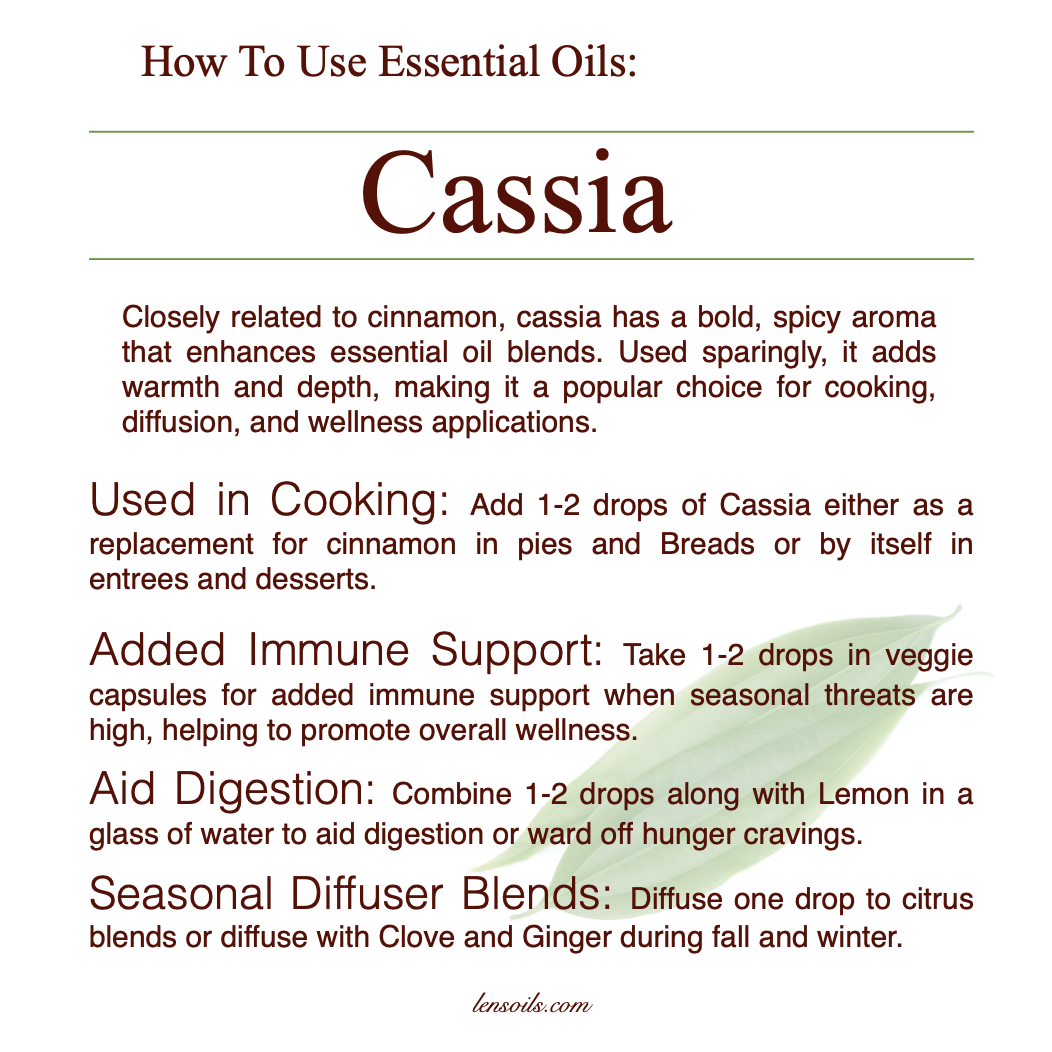
Cassia (Cinnamomum cassia), a close relative of cinnamon, is known for its warm, spicy aroma and strong flavor. Native to China and Southeast Asia, cassia has been used for centuries in traditional medicine and culinary applications. Its essential oil is highly concentrated, and only small amounts are needed to enhance recipes or blends. In cooking, 1-2 drops of cassia essential oil can be used as a substitute for cinnamon in pies, breads, and desserts or as a standalone spice in savory dishes. Due to its intense potency, it should be used sparingly. While cassia is recognized for its aromatic and culinary benefits, research on whether cassia essential oil retains the same digestive and metabolic effects as whole cassia bark is still limited.
Cassia is also commonly used for immune support and seasonal wellness. Many essential oil practitioners recommend taking 1-2 drops in a veggie capsule to help support the immune system, particularly during seasonal changes. Some preliminary studies suggest that cassia contains antimicrobial properties, but more research is needed to determine its direct impact on immune function. Additionally, combining cassia with lemon essential oil in a glass of water is thought to aid digestion and curb hunger cravings, though scientific validation on cassia oil’s role in appetite suppression remains inconclusive. While cassia essential oil may offer digestive support, it is highly concentrated and should always be diluted properly before ingestion.
Cassia’s bold, warming scent makes it a popular choice for diffuser blends, particularly in fall and winter. Just one drop blended with citrus oils or paired with clove and ginger can create a cozy, inviting atmosphere. Some believe that diffusing cassia may also help support respiratory function, but further studies are needed to confirm these benefits. While cassia essential oil has strong antimicrobial and aromatic properties, its direct effects on digestion, immune support, and respiratory health require additional scientific validation. Nevertheless, cassia remains a versatile and powerful essential oil for culinary, aromatic, and occasional wellness applications.
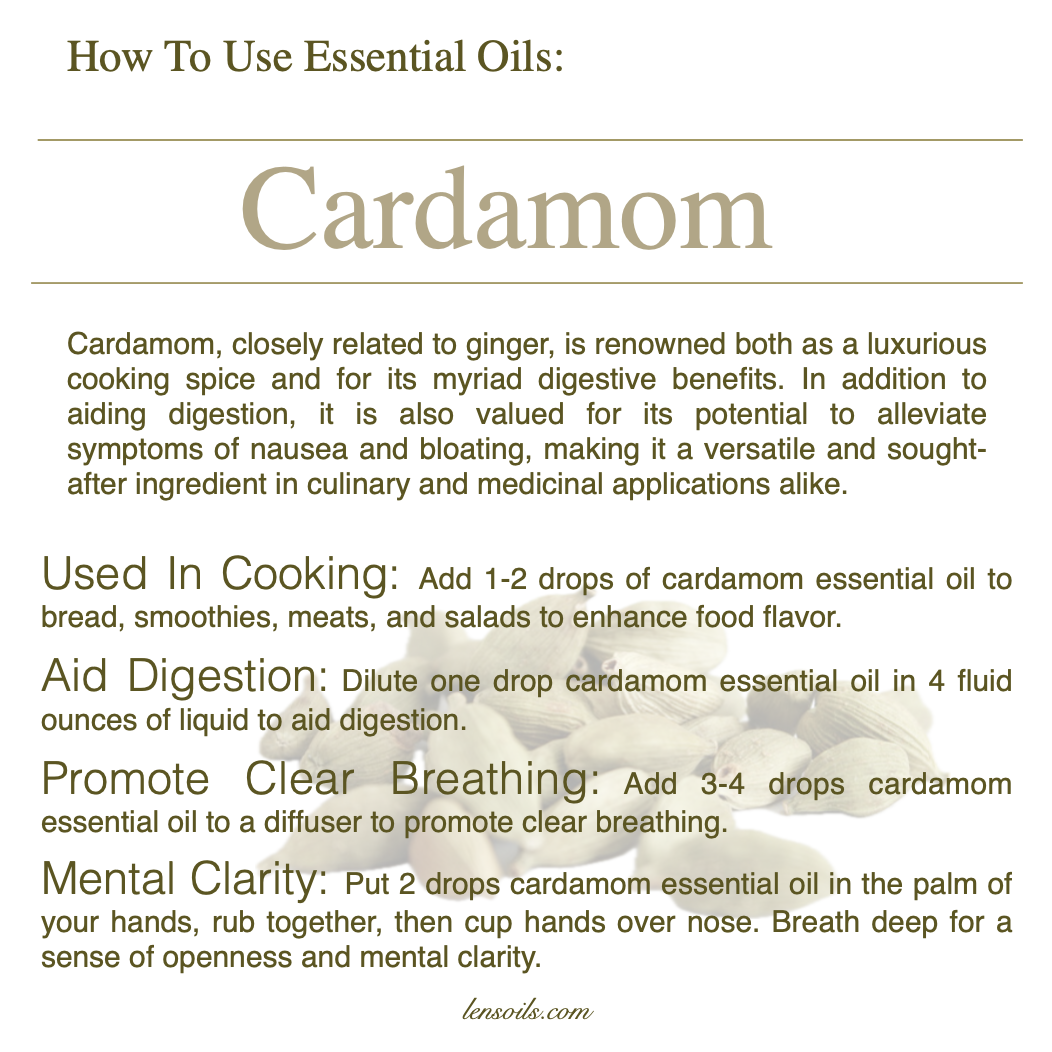
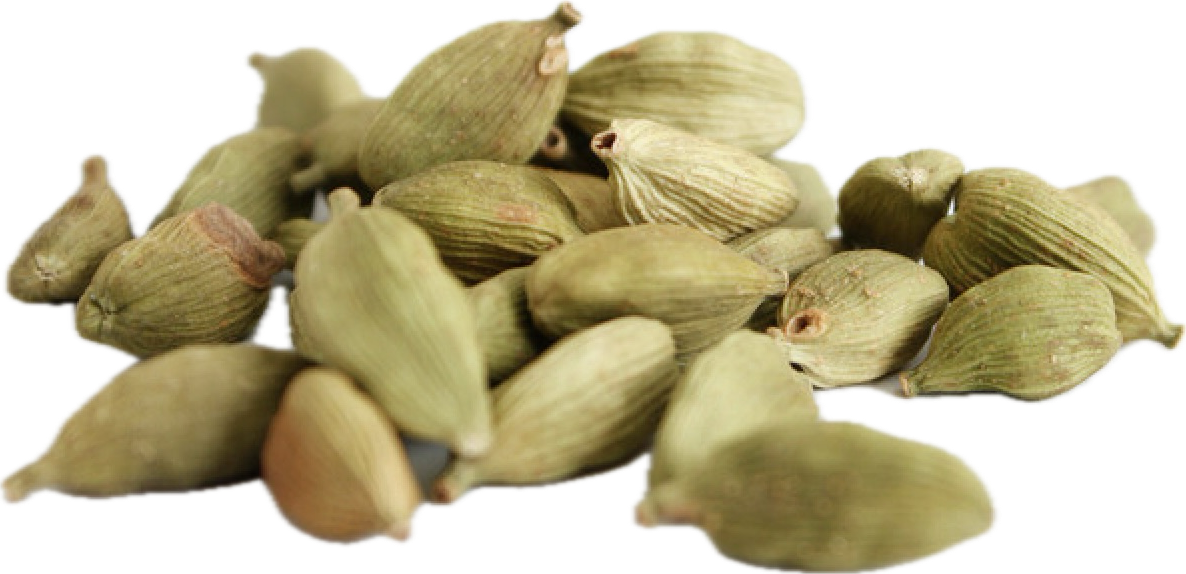
Cardamom (Elettaria cardamomum), a close relative of ginger, has been prized for centuries as both a luxurious culinary spice and a natural digestive aid. Historically, it has been used in Middle Eastern, Indian, and Scandinavian cuisine, where its warm, slightly sweet flavor enhances a variety of dishes. Beyond its culinary appeal, cardamom is known for its digestive benefits, traditionally used to ease bloating, indigestion, and occasional nausea. Adding 1-2 drops of cardamom essential oil to foods such as breads, smoothies, meats, and salads enhances their flavor while also supporting digestion. Additionally, cardamom essential oil can be diluted in 4 fluid ounces of liquid to help aid digestion naturally. While these traditional uses are well-documented, further scientific research is needed to confirm the full extent of cardamom essential oil’s role in gut health and digestive enzyme activation.
Beyond digestion, cardamom essential oil is often used in aromatherapy to promote respiratory health. Adding 3-4 drops to a diffuser can help create an atmosphere that supports clear breathing and soothes airways, making it useful during seasonal changes. Additionally, cardamom oil is said to promote mental clarity—placing 2 drops in the palms, rubbing hands together, and inhaling deeply is believed to provide a sense of openness and focus. Some studies suggest that certain compounds in cardamom may have calming effects, which could support mental well-being, though more clinical research is needed to determine its direct impact on stress reduction and cognitive function.
Among its various applications, cardamom essential oil is sometimes considered beneficial for oral health and detoxification, though these claims require more scientific validation. While cardamom has been used in traditional medicine for freshening breath and cleansing the mouth, research on its effectiveness in preventing bacteria-related oral issues remains limited. Additionally, some practitioners believe that cardamom essential oil may support natural detoxification, but further studies are needed to substantiate these claims. Regardless, cardamom remains a versatile and highly valued essential oil, offering culinary, digestive, and aromatic benefits, making it a staple in both traditional and modern wellness practices.
Caraway (Carum carvi), a member of the carrot family, has been cultivated for centuries and holds a significant place in both culinary and medicinal traditions. The name caraway is believed to have originated from its early use in Asia and the Mediterranean region. Caraway seeds have historically been used for their digestive benefits and as a natural breath freshener. In biblical times, bread containing caraway seeds was eaten, and there was a superstition that anything containing caraway seeds could not be stolen. This belief made caraway a symbol of protection in European folklore. While these historical uses are well-documented, the scientific basis for caraway preventing theft remains purely anecdotal and rooted in superstition.
Today, caraway seed essential oil is widely used for digestive and oral health benefits. It is often blended with fractionated coconut oil for abdominal massage support, as 2-3 drops may help with occasional stomach discomfort. Caraway seed oil is also used for oral care, with many people adding a drop to their toothbrush or a daily mouth rinse to support fresh breath and dental hygiene. A combination of caraway seed and clove essential oil is sometimes used as a natural cleansing rinse, but while caraway oil has antimicrobial properties, more scientific research is needed to confirm its effectiveness in preventing cavities or gum disease.
Beyond digestion and oral care, caraway seed essential oil is recognized for its calming and relaxing properties. A warm bath infused with one drop of caraway seed essential oil and three drops of lavender essential oil may provide a soothing and aromatic experience. Some studies suggest that caraway seed oil contains antioxidants that may contribute to overall wellness, but further research is needed to determine its full range of health benefits. While many of its traditional applications are well-supported, its effectiveness in areas such as relaxation, stress relief, and long-term antioxidant support requires more clinical validation. Nevertheless, caraway seed essential oil remains a versatile and beneficial addition to natural health and aromatherapy practices.
Black pepper essential oil is rich in monoterpenes and sesquiterpenes, powerful compounds known for their antioxidant properties. These compounds help the body combat environmental and seasonal challenges by supporting overall immune function. Beyond its internal benefits, black pepper essential oil is commonly used to promote circulation and soothe sore muscles. Its warming properties make it a popular choice for massage therapy when combined with a carrier oil, helping to relax tense muscles and joints. Historically, black pepper has been valued not only as a prized spice but also for its medicinal benefits in traditional healing practices.
Incorporating black pepper essential oil into a daily routine can offer multiple benefits. Taking 1-2 drops in a veggie cap can provide support during times of seasonal threats, while adding a drop to meals enhances the flavor of meats, soups, and entrées. It is also known for its ability to soothe anxious feelings, as inhaling its warm, spicy aroma can help promote emotional balance. Additionally, black pepper oil can aid digestion when taken internally, helping to stimulate digestive enzymes and improve nutrient absorption. Its ability to support gut health makes it a useful tool for those looking to improve overall digestive function naturally.
Among these uses, black pepper essential oil is also recognized for its potential role in supporting nicotine withdrawal. Research suggests that inhaling black pepper essential oil may help reduce cravings and withdrawal symptoms for those trying to quit smoking. The oil’s stimulating properties can mimic the sensation of inhaling tobacco, which may help curb the urge to smoke. This makes black pepper essential oil a valuable tool not only in cooking and wellness but also in lifestyle changes aimed at promoting better health.
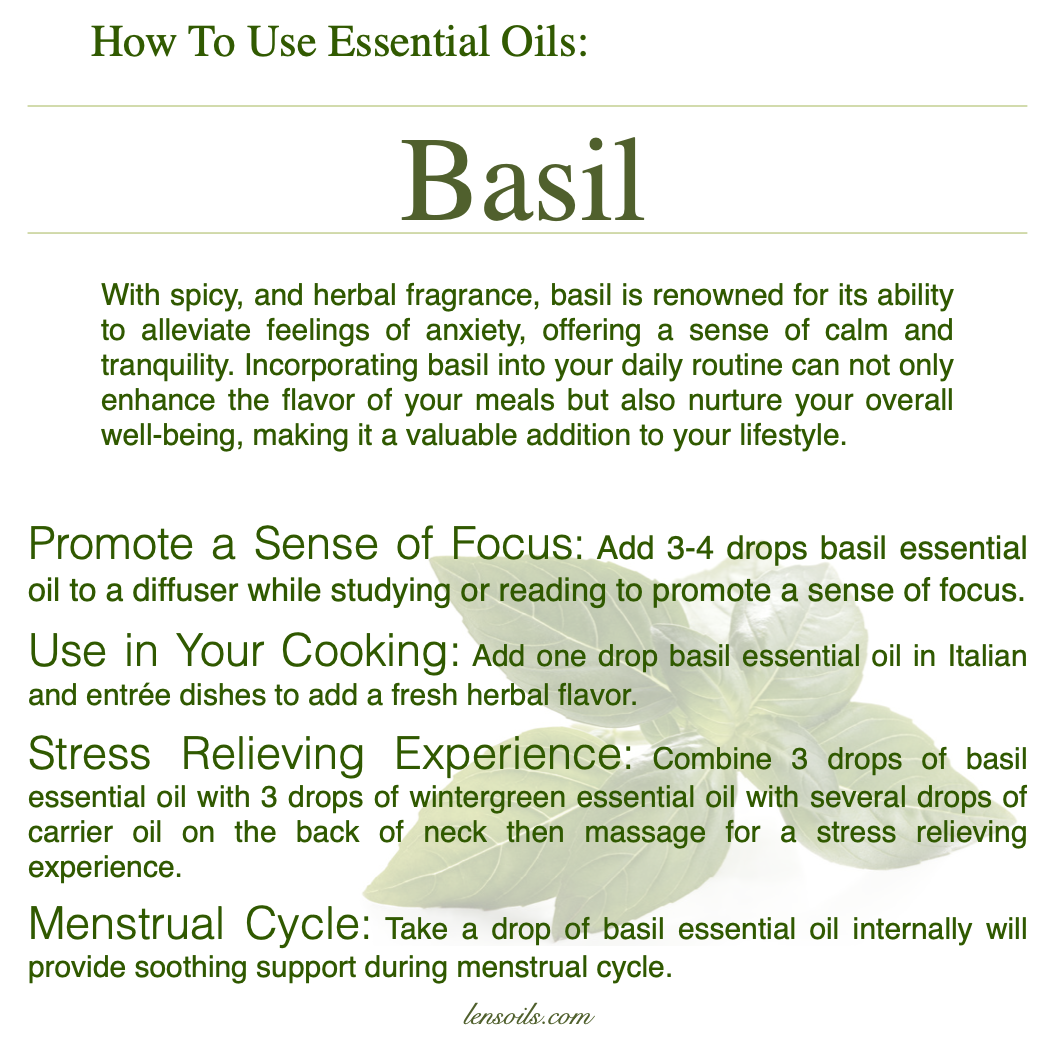
Basil essential oil, with its spicy and herbal fragrance, is well known for its calming properties. It is particularly effective in alleviating feelings of anxiety, promoting a sense of calm and tranquility. Incorporating basil into daily routines can provide both emotional and physical benefits, making it a valuable addition to self-care practices. Whether diffused for relaxation or applied topically for stress relief, basil oil can help enhance overall well-being while also offering its signature fresh scent.
Beyond its calming effects, basil essential oil is widely used to promote focus and mental clarity. Adding 3-4 drops to a diffuser while studying or reading can create a stimulating environment that enhances concentration. In the kitchen, basil essential oil can bring a burst of fresh herbal flavor to Italian dishes, soups, and entrees. For stress relief, combining 3 drops of basil essential oil with 3 drops of wintergreen oil and a carrier oil can create a soothing neck massage blend. Additionally, taking a drop of basil essential oil internally may provide comfort and support during the menstrual cycle, helping to ease occasional discomfort.
Basil essential oil also offers benefits for respiratory health. When inhaled, it can help open airways and promote clearer breathing, making it useful for seasonal changes or congestion. One simple way to use basil oil for respiratory support is to add a few drops to a bowl of steaming water, cover the head with a towel, and inhale deeply. This method can help ease breathing discomfort and provide a refreshing, invigorating experience. With its diverse applications, basil essential oil is a versatile and beneficial oil for both wellness and culinary use.
Oh, cardamom, spice of tales untold, With fragrant notes both warm and bold. A treasure cherished in kitchens near, Your essence travels far and clear.
In the kitchen, you claim your space, Enhancing dishes with subtle grace. One drop or two in bread or stew, Transforms a meal, makes flavors true.
In smoothies, salads, your taste refines, You grace the palate with rich designs. For digestive peace, you lend your art, With liquid mixed, you play your part.
A drop in water, ounces four, Soothes the belly, it aches no more. To breathe with ease, to lungs bring light, A diffuser spreads your calm through night.
Three drops or four, a tranquil stream, Cardamom clears, like a soothing dream. When thoughts are tangled, the mind confined, Two drops bring clarity, well-defined.
Rub hands together, cup near the face, Breathe in deeply, find mental space. Oh, cardamom oil, with gifts so true, For heart and soul, we turn to you.
Long ago, deep in the tropical forests of southern India, there thrived a plant shrouded in mystery. Its tall, slender stems reached skyward, while its seeds lay hidden within small, green pods. To those who cultivated it, this plant was a treasure, not just for its unique taste but for its remarkable ability to heal and uplift. For centuries, it was used in rituals and remedies, cherished as both a culinary delight and a soothing balm.
The seeds were painstakingly harvested by hand, dried under the sun, and carried across ancient trade routes. They reached the hands of kings and emperors, their value rivaling that of gold. Traders guarded its secrets fiercely, knowing its essence would fetch the highest prices in the spice markets of Europe and Asia. In every corner of the world, this fragrant seed found its place—infused into teas, ground into powders, and distilled into potent oils.
Legends grew around its powers. Ancient physicians praised it for its ability to calm an upset stomach, soothe nausea, and invigorate the senses. It became a favorite of royalty; Cleopatra herself is said to have used its scent to enchant her guests. The seed’s uses expanded as knowledge traveled, blending into the culinary traditions of countless cultures and the healing practices of generations.
Over time, its cultivation expanded beyond its native India. Farmers in the rainforests of South America began to grow the plant, taking advantage of the warm, humid climate to nurture its delicate pods. This new chapter in its journey spread its reach even further, making its fragrant seeds more accessible to people across the world. Each new region added its own traditions to the plant’s legacy, embedding it deeper into the cultural fabric of humanity.
Today, modern science continues to validate what ancient healers knew. Its oil, extracted through steam distillation, is celebrated for its digestive benefits, its ability to clear the mind, and its aromatic richness. It remains a cornerstone in kitchens and apothecaries alike, revered for its versatility and purity.
And now, cardamom, the unassuming seed from the forests of India and the rainforests of South America, lives on as a timeless treasure. From enhancing the flavors of bread and stews to promoting clear breathing with a diffuser’s gentle mist, it serves as both a culinary marvel and a source of well-being. Its journey through history, carried by the hands of explorers and traders, has secured its place in homes across the globe. A gift of nature, cardamom continues to connect us to the past while enriching our present, offering its fragrant magic to generations yet to come.
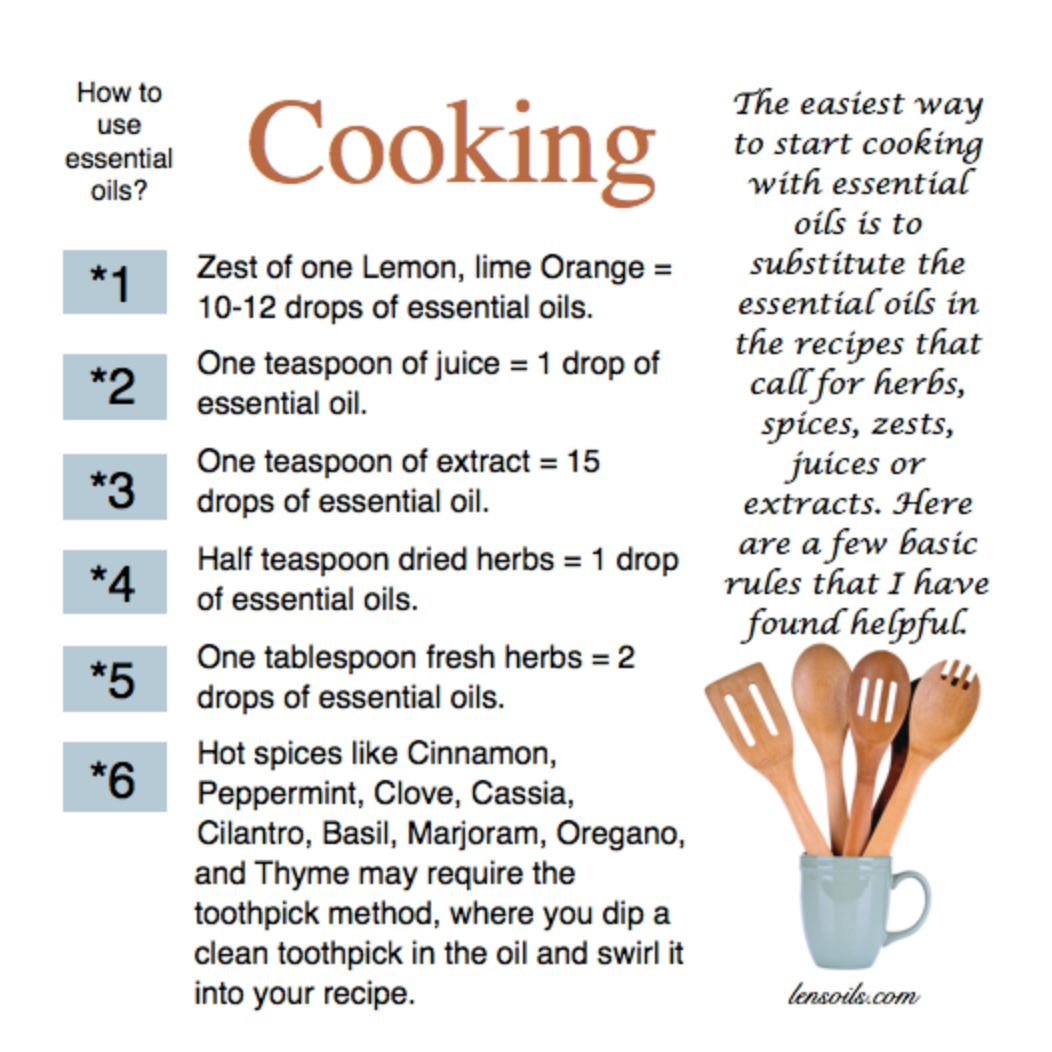
Cooking with essential oils is a flavorful and creative way to elevate your dishes, but it’s important to use them correctly for the best results. Here’s a simple guide to help you incorporate essential oils into your culinary adventures:
Cooking with Essential Oils: Basic Rules
Zest Substitutes
Zest of one lemon, lime, or orange = 10-12 drops of essential oil.
Juice Substitutes
One teaspoon of juice = 1 drop of essential oil.
Extract Substitutes
One teaspoon of extract = 15 drops of essential oil.
Dried Herbs Substitutes
Half teaspoon of dried herbs = 1 drop of essential oil.
Fresh Herbs Substitutes
One tablespoon of fresh herbs = 2 drops of essential oil.
For Potent or Hot Spices
Oils like cinnamon, peppermint, clove, cassia, cilantro, basil, marjoram, oregano, and thyme are very concentrated.
Use the toothpick method: Dip a clean toothpick into the oil and swirl it into your recipe. Add more as needed.
Quick Tips for Cooking with Essential Oils
Start Small: Essential oils are highly concentrated, so begin with a small amount and adjust to taste.
Mix with Fat or Liquid: Blend oils with a fat (butter, oil) or liquid (broth, sauce) to distribute the flavor evenly.
Add at the Right Time: For strong flavors, like oregano or thyme, add early in cooking. For delicate oils, like citrus or basil, add just before serving.
Avoid Overheating: Essential oils can lose their potency with excessive heat. When possible, add them to warm (not boiling) dishes.
Substitute and Elevate
The easiest way to start cooking with essential oils is to replace herbs, spices, zests, juices, or extracts with essential oils. They’re especially great for sauces, marinades, baked goods, beverages, and dressings!
Why Cook with Essential Oils?
They provide a fresh, potent flavor.
They’re often more cost-effective than buying fresh or dried herbs regularly.
A single drop delivers the health benefits of the plant, enhancing both flavor and wellness.
With these guidelines, you can turn simple recipes into culinary masterpieces while enjoying the aromatic and therapeutic benefits of essential oils. Start experimenting with your favorite dishes today!



 Len's Oils