Tag Archives: Aromatherapy

Top Essential Oil Leader: Julia Lawless

Julia Lawless is a renowned authority in the field of aromatherapy and essential oils, celebrated for her extensive contributions as an author, educator, and entrepreneur. Her seminal work, The Encyclopedia of Essential Oils, first published in 1992, has become a cornerstone reference for both practitioners and enthusiasts. This comprehensive guide offers detailed insights into the properties, uses, and applications of a wide array of essential oils, solidifying its place as an indispensable resource in aromatherapy literature.

In 1978, Julia’s mother, Kerttu, a Finnish biochemist, founded a company specializing in essential oils. Building upon this legacy, Julia established Aqua Oleum in 1988, a brand dedicated to providing high-quality, pure essential oils and aromatherapy products. Under her leadership, Aqua Oleum has maintained a commitment to purity and sustainability, ensuring that their products are both ethically sourced and environmentally friendly.

Julia’s passion for essential oils was kindled during her childhood. Growing up in a family with a strong herbal tradition, she was influenced by her mother’s research in aromatic oils. This early exposure instilled in her a deep appreciation for the therapeutic potential of plants and set the foundation for her future endeavors in the field.

Beyond her work with Aqua Oleum, Julia has dedicated herself to educating the public about the benefits and safe use of essential oils. She has authored numerous books, including The Complete Illustrated Guide to Aromatherapy and The Aromatherapy Garden, which provide accessible information to readers of all levels. Her writings emphasize the importance of understanding the holistic relationship between plants and human health, encouraging a balanced and informed approach to aromatherapy.

In addition to her writing, Julia is a qualified aromatherapist and has studied both Western and Tibetan herbal medicine. Her diverse training allows her to integrate various healing traditions into her practice, enriching her approach to aromatherapy. She has also created several aromatic gardens, exploring the cultivation of plants in relation to climate change and sustainability.

Julia’s influence extends to her role as a consultant within the industry. She is responsible for the selection and quality control of all essential oils and products sold by Aqua Oleum, ensuring that they meet stringent standards. Her expertise is sought after by other brands developing their own lines, highlighting her status as a trusted authority in the field.

Throughout her career, Julia has appeared on television and radio, sharing her knowledge and passion for aromatherapy with a broader audience. She also offers online courses, such as An Introduction to Home Aromatherapy, making her teachings accessible to individuals seeking to incorporate essential oils into their daily lives.

Today, Julia Lawless continues to inspire and educate through her ongoing work with Aqua Oleum and her contributions to aromatherapy literature. Her dedication to providing accurate, accessible information has empowered countless individuals to explore the benefits of essential oils, fostering a greater appreciation for the natural world and its healing potential.

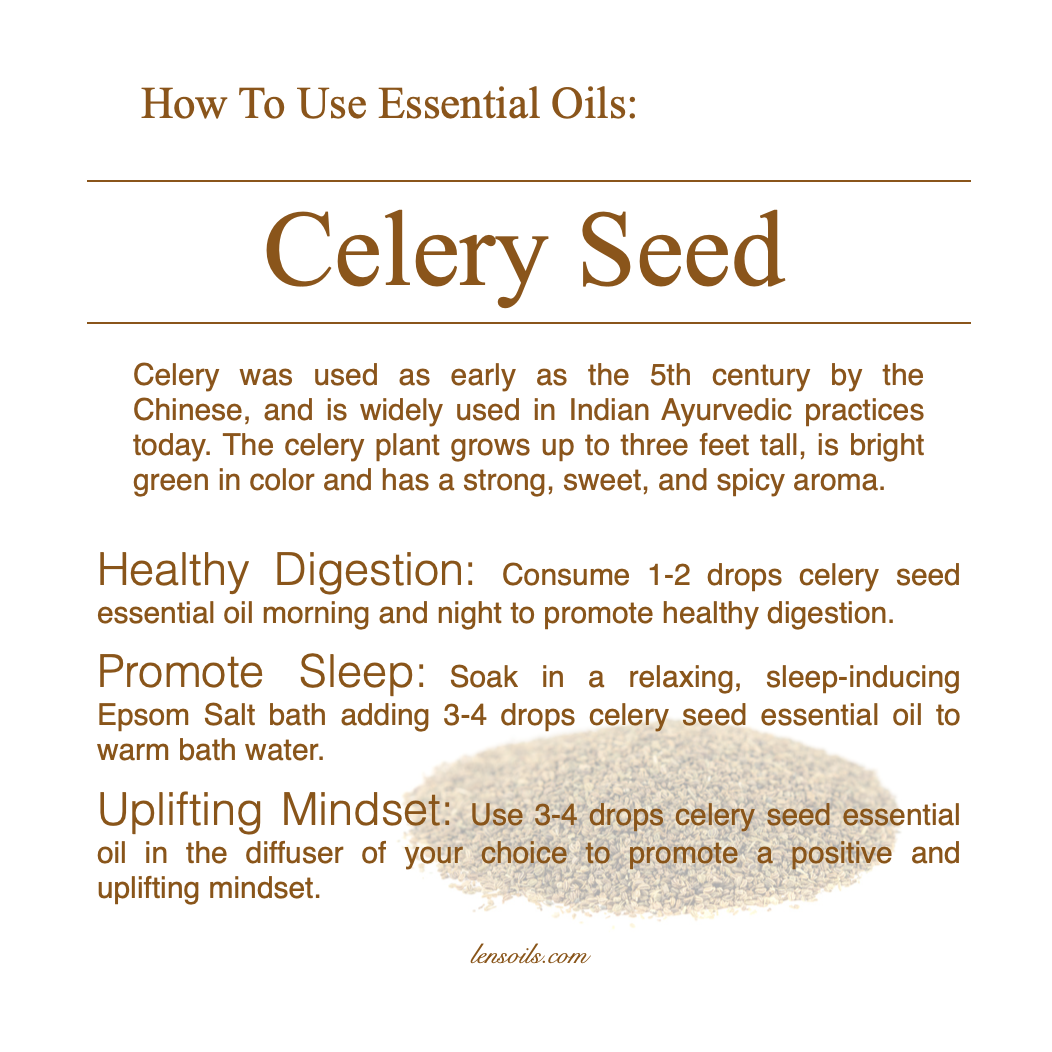
How to Use Essential Oils: Celery Seed

Celery (Apium graveolens) has been cultivated for centuries, with early records of its use dating back to the 5th century in Chinese medicine. It has also played a significant role in Indian Ayurvedic practices, where it is valued for its purported benefits in digestion, circulation, and overall wellness. The celery plant grows up to three feet tall, featuring bright green stalks and leaves with a strong, sweet, and spicy aroma. Celery seed essential oil, derived from the plant’s seeds, has been traditionally used to support healthy digestion. Many practitioners recommend consuming 1-2 drops of celery seed essential oil morning and night to help promote digestive balance. While historical use and anecdotal evidence support this claim, further scientific studies are needed to confirm its direct impact on digestive enzymes and gut health.

Celery seed essential oil is also commonly used in aromatherapy and relaxation techniques. Adding 3-4 drops to a warm bath with Epsom salt is believed to promote relaxation and support restful sleep. Its mild sedative effects are often attributed to phthalates, a natural compound in celery seeds, which may help with nervous tension and stress reduction. Additionally, diffusing 3-4 drops of celery seed essential oil can help create a positive and uplifting mindset, making it a favored choice for stress relief and emotional balance. While aromatherapy practitioners support these benefits, scientific research on celery seed oil’s specific effects on sleep induction and emotional well-being is still ongoing.

Beyond digestion and relaxation, celery seed essential oil is being explored for its potential role in supporting joint and muscle health. Some herbalists believe that the oil’s natural anti-inflammatory properties may help ease occasional discomfort, making it a potential addition to massage oils and topical applications. However, while celery seed extract has been studied for its antioxidant and anti-inflammatory effects, more research is needed to determine the efficacy of celery seed essential oil in pain relief and long-term musculoskeletal support. Despite these uncertainties, celery seed essential oil remains a versatile and valuable natural remedy, widely used for aromatherapy, digestive wellness, and relaxation practices.

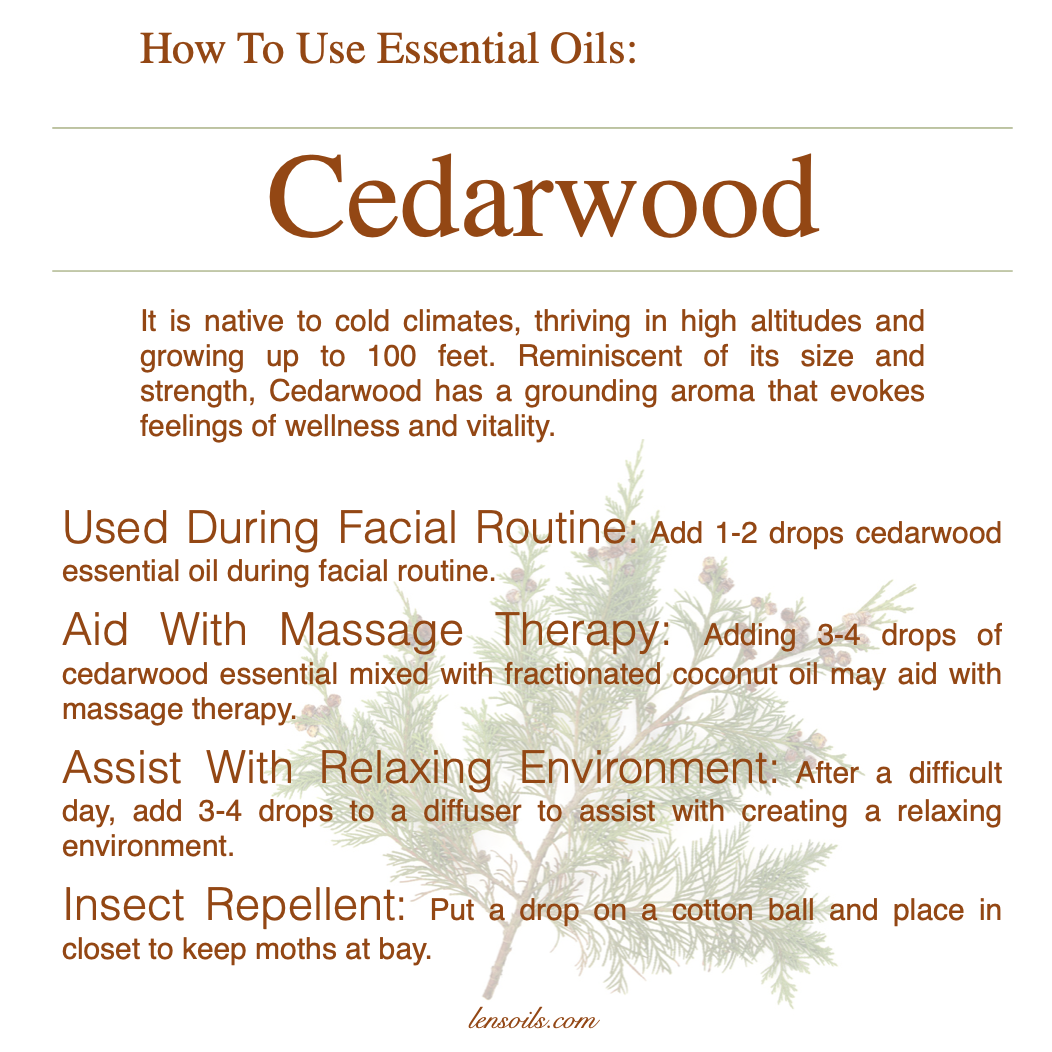
How to Use Essential Oils: Cedarwood

Cedarwood (Cedrus spp.) is a towering evergreen tree native to cold climates, thriving in high altitudes and reaching heights of up to 100 feet. Known for its durability and resilience, cedarwood has been used throughout history in construction, medicine, and spiritual practices. The essential oil, derived from the wood of the tree, carries a rich, grounding aroma that promotes a sense of wellness and vitality. In skincare, adding 1-2 drops of cedarwood essential oil to a facial routine may help promote clear and balanced skin due to its purifying and astringent properties. Additionally, cedarwood is widely used in massage therapy, where 3-4 drops blended with fractionated coconut oilcan provide a calming and muscle-relaxing effect. While historical and anecdotal evidence support these uses, more scientific research is needed to confirm its full range of skin-enhancing and muscle-soothing benefits.

Beyond personal care, cedarwood essential oil is commonly used in aromatherapy to promote relaxation and emotional balance. Adding 3-4 drops to a diffuser can help create a calming environment, particularly after a stressful day. Cedarwood is also known for its insect-repellent properties—placing a drop on a cotton ball and leaving it in a closet may help keep moths at bay. This traditional use is supported by the presence of sesquiterpenes and cedrol, compounds that may have natural insect-deterring effects. However, while cedarwood has been traditionally used as a natural moth repellent, scientific studies on its effectiveness compared to chemical alternatives are still ongoing.

In addition to its well-known uses, cedarwood essential oil has been explored for its potential role in improving sleep quality. Some research suggests that cedrol, a primary component in cedarwood, may have mild sedative effects, which could help support relaxation and restful sleep. Many individuals use cedarwood oil in nighttime diffuser blends or apply a diluted amount to pulse points before bed to encourage a sense of calm. While early findings are promising, more clinical research is needed to confirm its direct impact on sleep disorders or long-term sleep improvement. Regardless, cedarwood essential oil remains a versatile and widely used natural remedy, valued for its aromatic, therapeutic, and protective benefits.

The Treasure in the Jungle and the Rest of the Story

Deep in the humid jungles of Central America, a tree stood unlike any other. It wasn’t the tallest, nor did it bear the most beautiful flowers. Its fruit, a rough, oval-shaped pod, clung stubbornly to its branches, concealing a secret within. But for those who understood its value, this tree was more precious than gold.

Ancient civilizations revered it. The Maya, Toltecs, and Aztecs believed its seeds held divine power. They harvested them, dried them, and used them in ways that stretched beyond mere nourishment. These small, unassuming beans were valuable enough to be used as currency, exchanged for goods like food and clothing. They also became the foundation of a rich, bitter drink—one thought to bring strength, vitality, and even wisdom, making it highly prized by rulers and warriors.

Markets thrived on their trade. With enough of these beans, one could buy textiles, fresh produce, or even livestock. The value of this crop was unmatched, and entire civilizations depended on its steady cultivation. Little did they know, its influence would one day stretch far beyond their temples and pyramids.

Centuries later, explorers arrived from across the ocean, drawn to the exotic riches of the New World. Among the many treasures they carried back to Europe, this bitter bean intrigued them the most. At first, its earthy, bitter taste was unfamiliar to European palates, but with the addition of sugar and spices, it quickly became a prized delicacy. No longer just a drink for the elite, it spread across continents, captivating both kings and commoners.

Today, its uses extend beyond indulgence. Its rich, comforting aroma is a staple in aromatherapy, helping to reduce anxiety and stress. When blended with vanilla and ylang-ylang, it creates a fragrance that soothes the senses. A few drops of its absolute in a diffuser can calm the mind, while mixing it with coconut oil provides a relaxing massage that melts away tension. From luxury spas to home kitchens, it remains as treasured now as it was centuries ago.

Despite its transformation into an everyday pleasure, its history is deeply woven into the cultures that first revered it. It once fueled the economies of empires, empowered warriors, and was honored as a gift from the gods. It traveled the world, was refined, sweetened, and shared, yet never lost its essence.

One man, in particular, changed its course forever. Coenraad Van Houten, a Dutch chemist in the 19th century, refined a method to press these beans, removing excess fat and creating a fine powder that made it easier to mix into liquids and pastries. His innovation made it more accessible than ever before, paving the way for modern chocolate production. From that point forward, what was once an elite commodity became a staple in homes and industries worldwide.

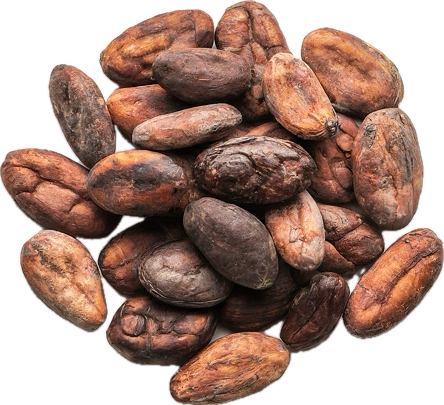
The treasure hidden in the jungle? Cocoa Bean. A simple seed that became currency, comfort, and one of the world’s greatest pleasures. It has warmed hands on cold nights, been the highlight of celebrations, and played a role in both indulgence and wellness. Whether in a cup of rich hot chocolate, a decadent dessert, or a calming massage oil, its influence is undeniable. Its journey from sacred currency to beloved treat is a testament to its enduring power. And now, you know the rest of the story.

Essential oils in the Bible: Ezekiel 47:12

Essential Oils in Ezekiel 47:12

In Ezekiel 47:12, the prophet describes a vision of a life-giving river flowing from God’s temple, nourishing the land and producing trees that bear fruit for food and leaves for medicine. This passage reflects God’s provision for both physical nourishment and healing, emphasizing the natural gifts He has placed in creation. The leaves used for medicine suggest the historical use of plants and their extracts, including essential oils, in healing practices.

Throughout history, many ancient cultures, including the Hebrews, Egyptians, and Greeks, used plant-based remedies for healing, anointing, and spiritual purposes. Essential oils, which are concentrated extracts from plants, were often made by crushing leaves, flowers, and bark to release their healing properties. Oils like myrrh, frankincense, and cedarwood were used for their medicinal, aromatic, and antiseptic qualities. In biblical times, these natural remedies were part of daily life, used for treating wounds, anointing kings and priests, and even preparing the dead for burial.

This passage in Ezekiel reminds us that God provides natural healing through the plants and trees He created. Even today, people use essential oils for health and wellness, much like the ancients did. Whether in aromatherapy, skincare, or traditional medicine, these plant extracts continue to be valued for their benefits. Just as the river in Ezekiel’s vision brings life to the land, the natural world offers us God’s healing gifts, showing His care for both our bodies and spirits.

The Power in a Tiny Bud and the Rest of the Story

For centuries, a tiny, dried bud held secrets far greater than its size suggested. Its deep, rich aroma was unmistakable—bold, warm, and slightly sweet. It had a way of lingering in the air, filling kitchens, apothecaries, and even the chambers of royalty. Some knew it as a key ingredient in their favorite confections, while others used it for far more than just taste.

Its value was once so great that wars were fought over it. Traders risked treacherous ocean voyages to secure it, knowing that those who controlled its supply controlled power. This little bud, often found in spice racks today, was once worth its weight in gold. It was cultivated in lands far from Europe, where the soil and climate allowed it to flourish. When crushed, it released an oil so potent that it became a prized remedy in medicine, dentistry, and even perfumery.

Its benefits extended beyond the kitchen. Healers discovered that it possessed remarkable properties—it could soothe a troubled stomach, ease aching muscles, and even help cleanse wounds. Over time, doctors found a particularly important use for it in dental care, where it provided relief from the agony of toothaches. It became a common ingredient in oral preparations, earning a reputation not just for freshening breath but for supporting overall health.

As trade routes expanded, so did knowledge of this remarkable spice. Apothecaries recommended it for digestion, cooks infused it into desserts, and even sailors carried it on long voyages, believing it helped preserve health during months at sea. Some even mixed a drop of its oil into coconut oil for a warming massage that brought relief to aching joints. Its versatility was astounding—whether in food, medicine, or self-care, it remained a cherished commodity.

But one man in particular changed how the world viewed this spice. Dr. Joseph Lawrence, a chemist in the 19th century, understood its potential beyond the kitchen. Inspired by its cleansing properties, he included its oil in the formula for a now-famous antiseptic mouthwash, ensuring that its legacy as a powerful health aid would endure. Thanks to his work, millions of people unknowingly benefit from its properties every day.

Even today, its uses continue to grow. A single drop of its essential oil added to toothpaste can help clean teeth and gums. Mixed into a capsule, it supports cardiovascular health. Infused into warm desserts, it enhances both aroma and well-being. It has even been used to flavor gum, leaving a distinctive tingle long after the last chew. Though it was once hoarded and fought over, it is now a household staple, readily available to those who seek its benefits.

It is a spice, a medicine, a healer, and a warrior in the fight against inflammation. It is found in everything from traditional remedies to modern health trends, proving that the wisdom of the past often holds the key to the future. Few people know just how many ways this tiny dried bud has shaped history, but its impact is undeniable.

The spice that transformed dental care, enhanced cuisine, and fueled trade for centuries? Clove. This small but mighty bud has healed wounds, calmed nerves, and added warmth to both food and medicine. It continues to be used in natural wellness, offering relief, protection, and comfort to those who embrace its power. Whether in a steaming cup of tea, a soothing massage oil, or a trusted bottle of mouthwash, it remains one of nature’s most remarkable gifts. And now, you know the rest of the story.

How to Use Essential Oils

Caraway (Carum carvi), a member of the carrot family, has been cultivated for centuries and holds a significant place in both culinary and medicinal traditions. The name caraway is believed to have originated from its early use in Asia and the Mediterranean region. Caraway seeds have historically been used for their digestive benefits and as a natural breath freshener. In biblical times, bread containing caraway seeds was eaten, and there was a superstition that anything containing caraway seeds could not be stolen. This belief made caraway a symbol of protection in European folklore. While these historical uses are well-documented, the scientific basis for caraway preventing theft remains purely anecdotal and rooted in superstition.

Today, caraway seed essential oil is widely used for digestive and oral health benefits. It is often blended with fractionated coconut oil for abdominal massage support, as 2-3 drops may help with occasional stomach discomfort. Caraway seed oil is also used for oral care, with many people adding a drop to their toothbrush or a daily mouth rinse to support fresh breath and dental hygiene. A combination of caraway seed and clove essential oil is sometimes used as a natural cleansing rinse, but while caraway oil has antimicrobial properties, more scientific research is needed to confirm its effectiveness in preventing cavities or gum disease.

Beyond digestion and oral care, caraway seed essential oil is recognized for its calming and relaxing properties. A warm bath infused with one drop of caraway seed essential oil and three drops of lavender essential oil may provide a soothing and aromatic experience. Some studies suggest that caraway seed oil contains antioxidants that may contribute to overall wellness, but further research is needed to determine its full range of health benefits. While many of its traditional applications are well-supported, its effectiveness in areas such as relaxation, stress relief, and long-term antioxidant support requires more clinical validation. Nevertheless, caraway seed essential oil remains a versatile and beneficial addition to natural health and aromatherapy practices.

Top Essential Oil Leaders: Gabriel Mojay

Gabriel Mojay is a highly respected educator, author, and practitioner in the field of aromatherapy and traditional medicine. He is best known for integrating aromatherapy with traditional Chinese medicine (TCM), offering a unique approach to holistic healing that considers both the physical and emotional well-being of individuals. His work has helped bridge the gap between Eastern and Western healing traditions, bringing greater depth to the practice of essential oil therapy. Through his research, writing, and teaching, Mojay has significantly influenced the development of professional aromatherapy standards worldwide.

Born and raised in the United Kingdom, Mojay developed an early interest in natural healing and traditional medicine. His academic journey led him to study both acupuncture and aromatherapy, laying the foundation for his later work in integrative medicine. His deep curiosity about Eastern healing philosophies, particularly the meridian system and the concept of Qi (life energy), inspired him to explore how essential oils could be used to balance the body’s energy and emotions. This early exposure shaped his approach to aromatherapy, distinguishing him from other practitioners who focused primarily on the physical effects of essential oils.

One of Mojay’s most significant contributions to the field was co-founding the International Federation of Professional Aromatherapists (IFPA). The IFPA is a leading organization dedicated to upholding high educational and professional standards for aromatherapists. Through his work with the IFPA, Mojay has helped establish rigorous training programs, ethical guidelines, and certification standards that ensure practitioners receive comprehensive education in both the science and art of aromatherapy. His leadership has played a crucial role in advancing aromatherapy as a credible and respected discipline.

In addition to his work with the IFPA, Mojay is the author of the widely acclaimed book Aromatherapy for Healing the Spirit. This book is one of the first to explore the connection between aromatherapy and TCM, providing readers with a framework for using essential oils not just for their physical benefits but also for emotional and energetic healing. The book outlines how essential oils correspond to specific meridians and organ systems in Chinese medicine, making it a valuable resource for both practitioners and those interested in holistic wellness.

Beyond his writing, Mojay has been an influential educator, sharing his knowledge through lectures, workshops, and international conferences. His ability to convey complex concepts in an accessible and practical way has made him a sought-after speaker in the fields of aromatherapy and integrative medicine. Through his teachings, he has trained countless professionals who have gone on to incorporate his methods into their own practices, further spreading the influence of his work.

Mojay’s contributions to the field have earned him a strong reputation within the holistic health community. While he may not have mainstream celebrity status, his impact among professionals and dedicated practitioners is profound. His approach to aromatherapy, which emphasizes emotional and energetic healing, has been particularly influential in expanding the understanding of how essential oils can be used beyond simple relaxation or symptom relief.

Despite his significant contributions, Mojay has remained more focused on education and professional development than commercial ventures. His commitment to maintaining high standards in the field has ensured that aromatherapy continues to be practiced with integrity and depth. His work with the IFPA and his integration of TCM principles into aromatherapy have set a precedent for future generations of practitioners who seek to combine science with traditional healing wisdom.

As he continues to write, teach, and contribute to the field, Gabriel Mojay’s legacy as a pioneer in education and traditional medicine integration remains strong. His dedication to bridging the gap between aromatherapy and TCM has enriched the practice of holistic healing, ensuring that essential oil therapy is viewed not just as a complementary practice but as a sophisticated and deeply rooted system of wellness. His influence will undoubtedly continue to shape the field for years to come.

How to Use Essential Oils:

The Blue Lotus Flower (Nymphaea caerulea) has held deep symbolic and spiritual significance since ancient Egyptian times. Often associated with rebirth and the sun, the flower was depicted in art and religious texts, representing renewal and enlightenment. In Buddhism, the blue lotus symbolizes victory of the spirit over material desires, signifying wisdom and knowledge. Beyond its symbolic meaning, the flower has been valued for its aromatic and therapeutic properties. Today, blue lotus flower essential oil is used in personal care and wellness routines, offering both emotional and physical benefits. The flower contains apomorphine, a natural compound that can act on dopamine receptors, potentially promoting relaxation and mood enhancement. While historical and anecdotal evidence suggests that Blue Lotus has been used to enhance sensuality and intimacy, there is limited modern scientific research confirming its direct aphrodisiac effects.

As an essential oil, blue lotus flower is often diffused for its delicate, floral fragrance, creating a calming and personal aromatic experience. It has also been traditionally used to promote relaxation, with many incorporating it into warm baths before bedtime. Additionally, blue lotus is highly regarded in skincare, as its oil can be blended with fractionated coconut oil or other skin products to help reduce the appearance of imperfections and promote a radiant complexion. The oil’s historical connection to beauty and spirituality makes it a sought-after ingredient in personal wellness rituals, whether for aromatherapy, relaxation, or skin enhancement. While scientific validation for some claims is ongoing, its long-standing use in ancient and modern holistic practices continues to make it a popular choice in essential oil applications.

Among those influencing the modern accessibility of blue lotus flower essential oil, Emily Wright has played a significant role through her work in the essential oil industry. As a co-founder of dōTERRA, Wright has been instrumental in promoting the sourcing and production of high-quality essential oils, ensuring sustainable and ethical practices in the industry. While her direct role in the widespread distribution of Blue Lotus essential oil is not extensively documented, her influence in dōTERRA’s leadership and product development has contributed to making rare, high-quality essential oils more widely available. With its historical roots in ancient healing traditions and its continued relevance in aromatherapy and skincare, blue lotus flower essential oil remains a luxurious and valued addition to modern wellness practices.

Top Essential Oil Leader: Jean Valnet

Jean Valnet: Pioneer of Modern Aromatherapy

Dr. Jean Valnet was born on July 26, 1920, in the French commune of Châlons-sur-Marne (now Châlons-en-Champagne). Growing up in a small, rural town, Valnet was exposed to the natural world from an early age. His childhood was marked by a keen curiosity about plants and their uses, which was nurtured by the lush countryside surrounding his home. While his family had modest means, they valued education and encouraged Jean to pursue his academic interests. This support laid the foundation for his future as a medical doctor and pioneer in essential oils.

Valnet’s connection to essential oils began during his medical training, but it was his experiences as a military surgeon during World War II that cemented his belief in their therapeutic potential. Faced with limited medical supplies on the battlefield, Valnet turned to natural remedies, including essential oils, to treat wounded soldiers. He found that certain oils were effective in preventing infections, alleviating pain, and promoting healing. These experiences ignited his passion for studying and documenting the medicinal properties of plants.

After the war, Valnet deepened his study of essential oils, drawing on both traditional herbal knowledge and emerging scientific research. He was particularly inspired by the work of René-Maurice Gattefossé, the father of modern aromatherapy, whose discoveries on the healing properties of lavender influenced Valnet’s own investigations. Building on Gattefossé’s legacy, Valnet sought to integrate essential oils into mainstream medicine, advocating for their use in hospitals and clinical settings.

In 1964, Valnet published his groundbreaking book, The Practice of Aromatherapy. This work introduced a broader audience to the benefits of essential oils, combining historical insights with scientific evidence. The book detailed practical applications of oils for various conditions, from respiratory issues to skin infections, and provided guidance on blending oils for maximum efficacy. Valnet’s emphasis on scientific rigor helped establish aromatherapy as a credible and respected discipline.

Valnet was also a strong advocate for blending tradition with modernity. He respected the centuries-old knowledge of herbalists while recognizing the need for scientific validation of their practices. This dual approach earned him the respect of both traditional healers and contemporary medical professionals. Valnet’s work highlighted the importance of using high-quality, pure essential oils, setting standards that continue to influence the industry today.

One of Valnet’s most notable contributions was his development of therapeutic protocols using essential oils. He outlined specific methods for applying oils, such as inhalation, topical use, and dilution, to ensure safety and effectiveness. His guidelines became a cornerstone of aromatherapy education and are still referenced by practitioners worldwide.

In addition to his medical contributions, Valnet was a passionate educator. He lectured extensively, sharing his findings with doctors, pharmacists, and students. His ability to convey complex scientific concepts in an accessible manner made him a popular and effective advocate for aromatherapy. Through his teaching, Valnet inspired a new generation of professionals to explore the potential of essential oils.

Valnet’s influence extended beyond France, as his work gained recognition in Europe and eventually around the world. His advocacy for the medical use of essential oils helped pave the way for their integration into wellness practices globally. Today, many of the techniques and principles he pioneered are considered foundational in the field of aromatherapy.

Jean Valnet’s legacy endures through his writings, teachings, and the countless individuals who have benefited from his work. By bridging the gap between traditional herbal medicine and modern science, he helped elevate aromatherapy from a niche practice to a respected field of study. His emphasis on evidence-based applications continues to inspire researchers, practitioners, and enthusiasts.

Valnet passed away in 1995, but his contributions to the world of essential oils remain timeless. His vision of a harmonious blend of nature and science lives on, ensuring that his work will continue to guide and inspire future generations in the field of aromatherapy.