Tag Archives: used in cooking

How to Use Essential Oils: Dill

Dill essential oil, distilled from the seeds or the whole herb of the Anethum graveolens plant, carries a fresh, sweet, and herbaceous aroma. Native to the Mediterranean and western Asia, dill has been used for thousands of years in both cooking and traditional wellness practices. Its essential oil is often valued for digestive support, helping to ease occasional discomfort and promote a sense of balance after meals. Diffused, its gentle aroma provides a clean, uplifting atmosphere that encourages relaxation and calm.

Beyond its culinary and digestive benefits, dill essential oil has been used to support feelings of focus and clarity. Blended with citrus oils like lemon or lime, it takes on a brighter, more refreshing quality, while pairing it with floral oils like lavender can create a soothing, comforting diffuser blend. In topical blends, dill is sometimes used in massage oils or diluted in carrier oils to promote a sense of ease and overall wellness. Its fresh, herbal fragrance makes it versatile in both household and personal care routines.

Did You Know? Dill has been prized since ancient times—records show it was used by the Egyptians around 1500 B.C. as both a medicinal herb and a food seasoning. In ancient Greece and Rome, dill was considered a symbol of wealth and was often used to crown heroes and decorate banquet tables. Even the word dill comes from the Old Norse “dylla,” meaning “to soothe.” Old Norse was the language of the Vikings, spoken from the 8th to the 14th century, and is the ancestor of modern Scandinavian languages as well as the source of many words in English.
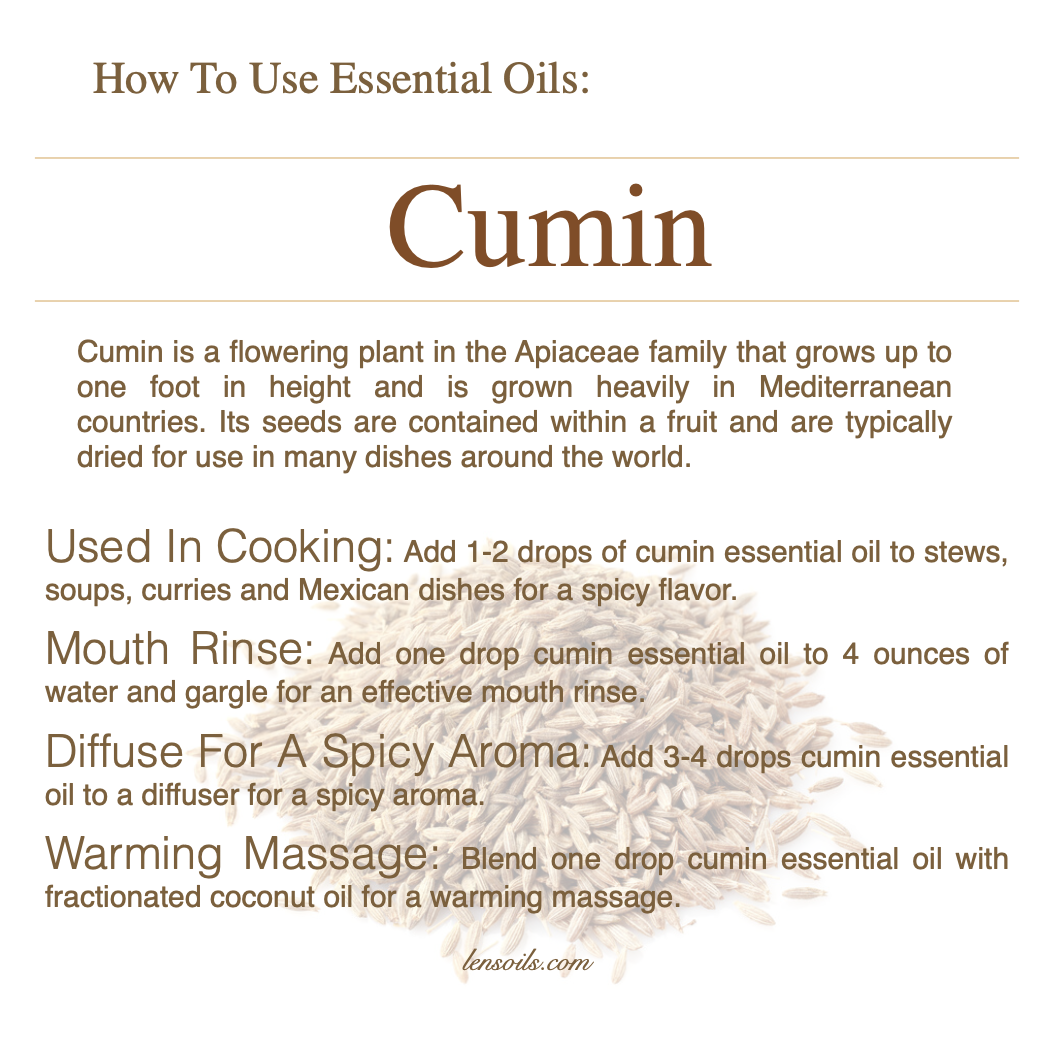
How to Use Essential Oils: Cumin

Cumin essential oil, distilled from the seeds of the Cuminum cyminum plant, carries a warm, spicy, and slightly earthy aroma that has been valued for thousands of years. Native to the Mediterranean and parts of the Middle East, cumin has been used both as a culinary spice and a traditional remedy. In essential oil form, it is often appreciated for its digestive support and its ability to bring depth and richness to blends. Diffused in small amounts, cumin’s strong scent can create a grounding and comforting atmosphere.

Beyond its culinary heritage, cumin essential oil is sometimes used to help promote relaxation after heavy meals or to ease occasional feelings of tension. When blended with citrus oils such as orange or lemon, it takes on a brighter, more refreshing quality, balancing its deep, spicy base. Properly diluted, cumin oil may also be added to massage blends to help comfort muscles and joints, though its potency means it is used sparingly. Its distinct aroma makes it a bold addition to both diffuser recipes and wellness routines.

Did You Know? Cumin seeds have been discovered in ancient Egyptian pyramids, showing they were treasured as far back as 2000 B.C. The seeds were used in cooking, medicine, and even as part of the mummification process. Cumin is also mentioned in the Bible—in Isaiah 28:25–27, it is noted as one of the spices carefully sown and harvested by farmers. Today, India produces the majority of the world’s cumin, highlighting its continued importance in both global cuisine and cultural traditions.

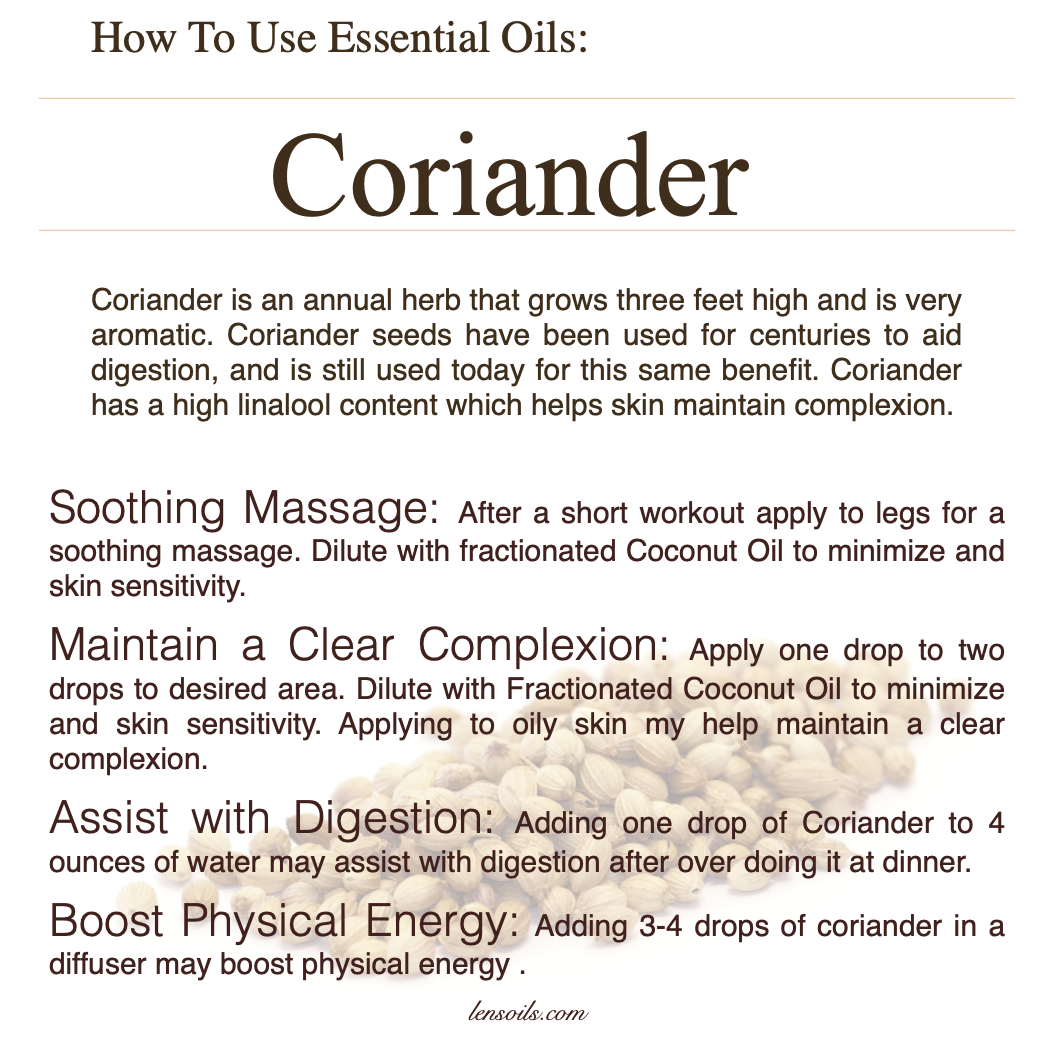
How to Use Essential Oils: Coriander

Coriander essential oil, distilled from the seeds of the Coriandrum sativum plant, has a warm, spicy, and slightly sweet aroma that differs from the fresher scent of cilantro, which comes from the leaves of the same plant. Used for centuries in both cooking and traditional wellness practices, coriander seed oil is prized for its ability to support digestion and ease occasional discomfort. Diffused, its soft and inviting fragrance can create a calming and centered atmosphere, making it a popular choice in blends that relax both the body and mind.

Beyond its aromatic qualities, coriander essential oil is often used to promote balance and tranquility. It pairs beautifully with citrus oils such as bergamot or spice oils like cardamom, creating uplifting diffuser combinations. When properly diluted, it can also be added to massage blends to comfort tired muscles and joints. With its warm yet gentle character, coriander seed oil bridges the worlds of spice and wellness, offering a versatile option for both home and self-care.

Did You Know? Coriander seeds have been discovered in ancient Egyptian tombs, showing their value as far back as 1500 B.C. The seeds were not only used in food and medicine but also in rituals and offerings. Coriander is even mentioned in the Bible—in Exodus 16:31, manna is described as being “like coriander seed.” More recently, coriander has been grown aboard the International Space Station as part of plant studies, making it one of the few herbs to journey beyond Earth.

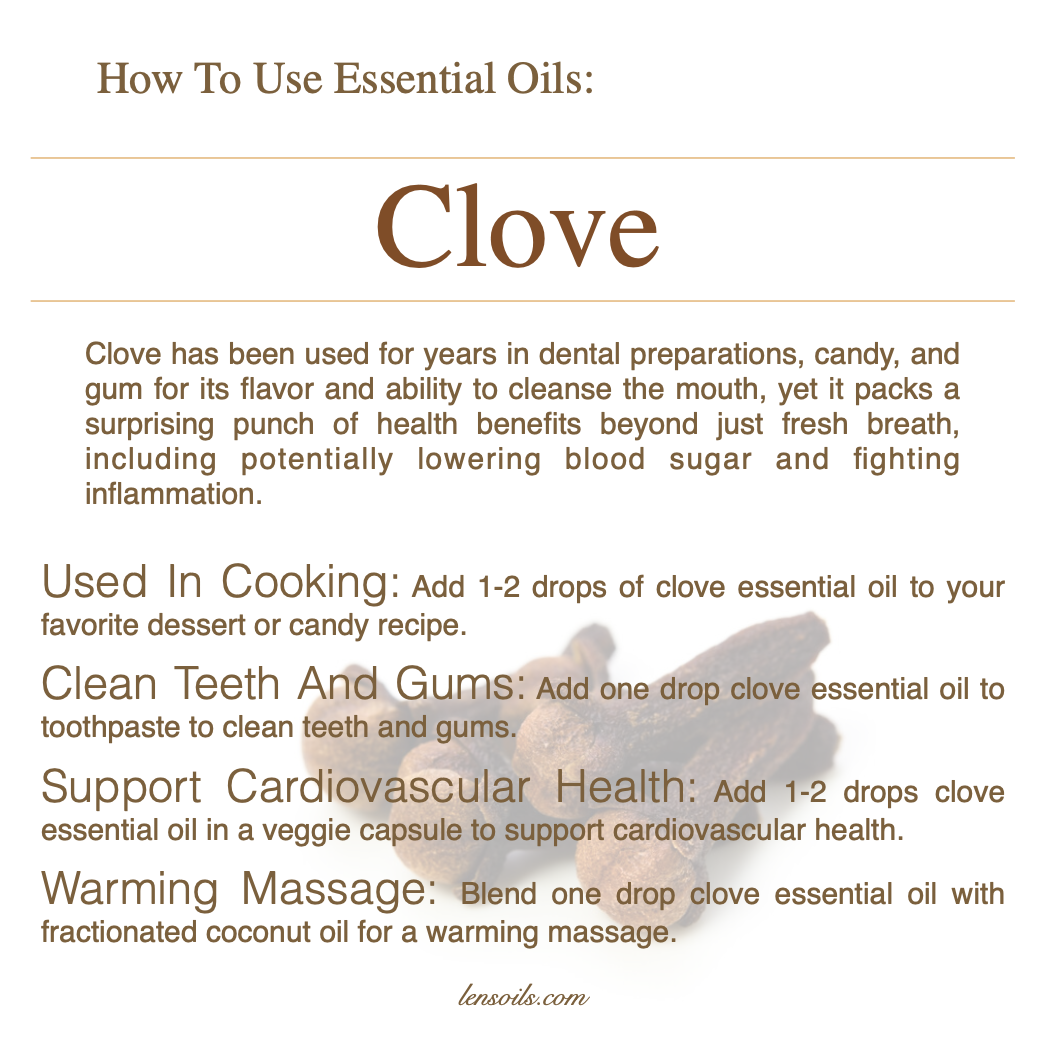
How to Use Essential Oils: Clove

Clove essential oil, distilled from the dried flower buds of the clove tree, is instantly recognizable for its warm, spicy, and slightly sweet aroma. Native to the Maluku Islands of Indonesia, clove has been treasured for centuries as both a culinary spice and a traditional remedy. In essential oil form, it is often used to freshen the air, uplift the mood, and provide a comforting, cozy atmosphere when diffused. Its bold fragrance makes it a favorite in seasonal blends, especially during autumn and winter.

Beyond its inviting scent, clove oil is known for its high eugenol content, a compound with notable cleansing and soothing properties. It has long been used in oral care products, such as toothpastes and mouthwashes, to support fresh breath and maintain oral health. Around the home, clove oil can be added in small amounts to natural cleaning solutions for its purifying effect. When used with care and proper dilution, it serves as both a practical and aromatic addition to wellness routines.

Did You Know? During the spice trade era, cloves were so highly prized that entire wars were fought over control of their production and trade routes. In fact, European demand for cloves and other spices helped drive the Age of Exploration. Today, the world’s largest producers of cloves are still in Southeast Asia, with Madagascar and Tanzania also contributing significantly to global supply. The oil’s enduring value comes not only from its unique flavor and aroma but also from its wide-ranging applications in health and home.

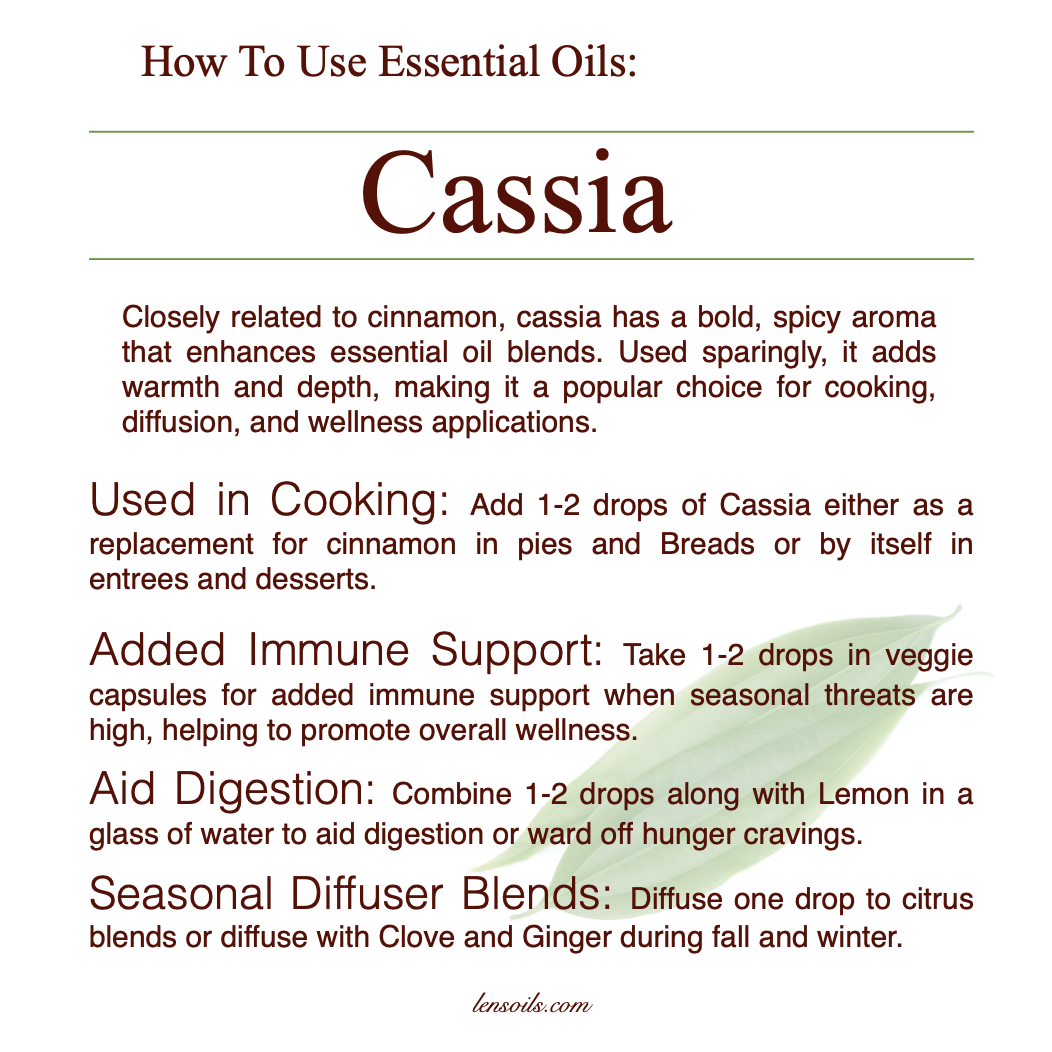
How to Use Essential Oils: Cassia

Cassia (Cinnamomum cassia), a close relative of cinnamon, is known for its warm, spicy aroma and strong flavor. Native to China and Southeast Asia, cassia has been used for centuries in traditional medicine and culinary applications. Its essential oil is highly concentrated, and only small amounts are needed to enhance recipes or blends. In cooking, 1-2 drops of cassia essential oil can be used as a substitute for cinnamon in pies, breads, and desserts or as a standalone spice in savory dishes. Due to its intense potency, it should be used sparingly. While cassia is recognized for its aromatic and culinary benefits, research on whether cassia essential oil retains the same digestive and metabolic effects as whole cassia bark is still limited.

Cassia is also commonly used for immune support and seasonal wellness. Many essential oil practitioners recommend taking 1-2 drops in a veggie capsule to help support the immune system, particularly during seasonal changes. Some preliminary studies suggest that cassia contains antimicrobial properties, but more research is needed to determine its direct impact on immune function. Additionally, combining cassia with lemon essential oil in a glass of water is thought to aid digestion and curb hunger cravings, though scientific validation on cassia oil’s role in appetite suppression remains inconclusive. While cassia essential oil may offer digestive support, it is highly concentrated and should always be diluted properly before ingestion.

Cassia’s bold, warming scent makes it a popular choice for diffuser blends, particularly in fall and winter. Just one drop blended with citrus oils or paired with clove and ginger can create a cozy, inviting atmosphere. Some believe that diffusing cassia may also help support respiratory function, but further studies are needed to confirm these benefits. While cassia essential oil has strong antimicrobial and aromatic properties, its direct effects on digestion, immune support, and respiratory health require additional scientific validation. Nevertheless, cassia remains a versatile and powerful essential oil for culinary, aromatic, and occasional wellness applications.

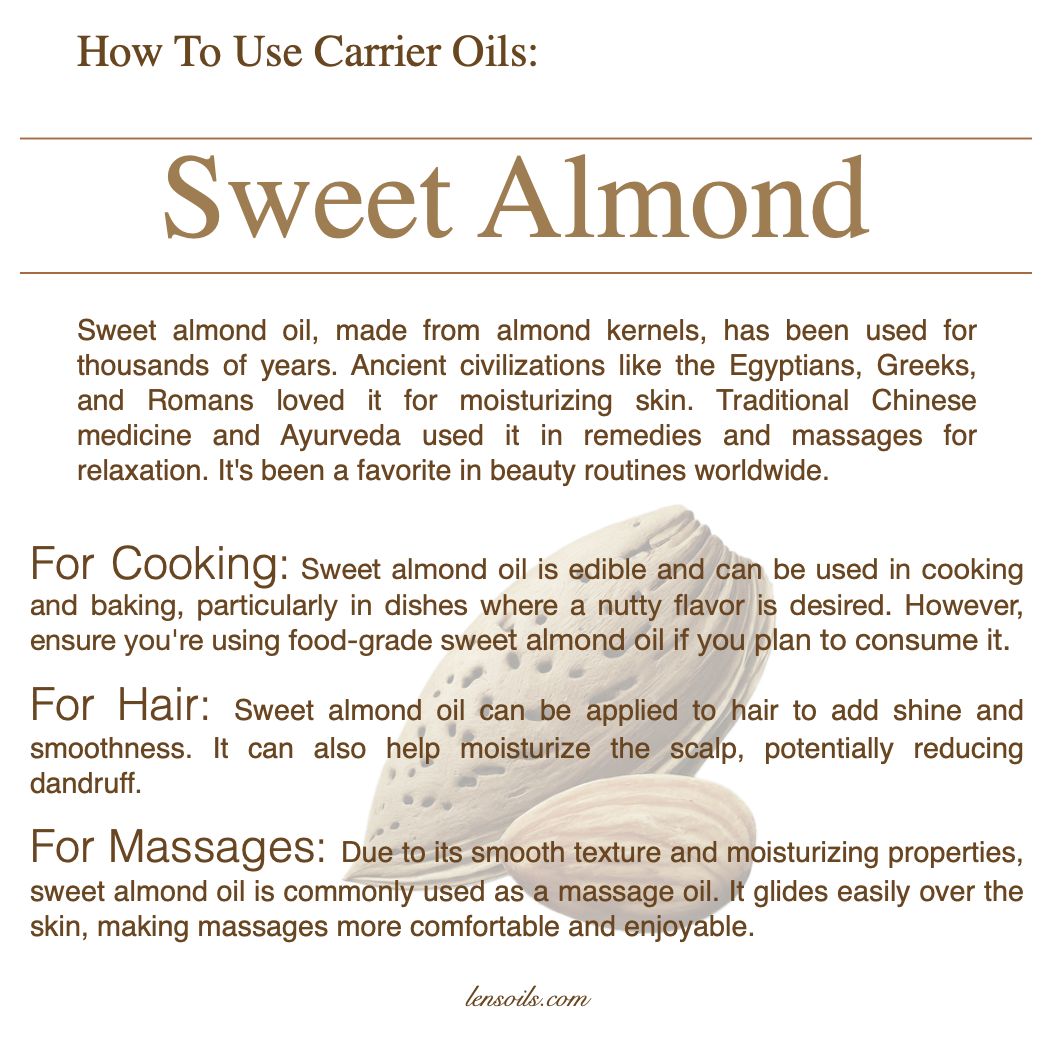
How to Use Carrier Oils: Sweet Almond

Sweet almond oil, derived from the kernels of almonds, has been valued for thousands of years across cultures for its skin-nourishing qualities. Ancient Egyptians, Greeks, and Romans used it as a natural moisturizer to soften and protect skin, a tradition that continues today. In traditional Chinese medicine and Ayurveda, sweet almond oil was also widely applied in therapeutic massages, as it is thought to have relaxation-promoting properties. Documented benefits of sweet almond oil include its high levels of vitamin E, fatty acids, and antioxidants, which contribute to its moisturizing and protective effects on the skin.

Beyond skincare, sweet almond oil is edible and used in cooking, particularly in dishes where a mild, nutty flavor enhances the recipe. However, only food-grade sweet almond oil should be consumed. In hair care, this oil is applied to add shine, smoothness, and scalp hydration, which may help reduce dandruff. Additionally, its smooth texture and ease of absorption make it a popular massage oil, offering both moisturizing effects and a gentle glide over the skin.

How to Use Essential Oils: Tangerine

Tangerine has been used for a long time in Chinese culture and traditional medicine for staying healthy. The oil from tangerines has special substances called antioxidants, which are good for your health. One of these antioxidants, called limonene, is especially powerful.