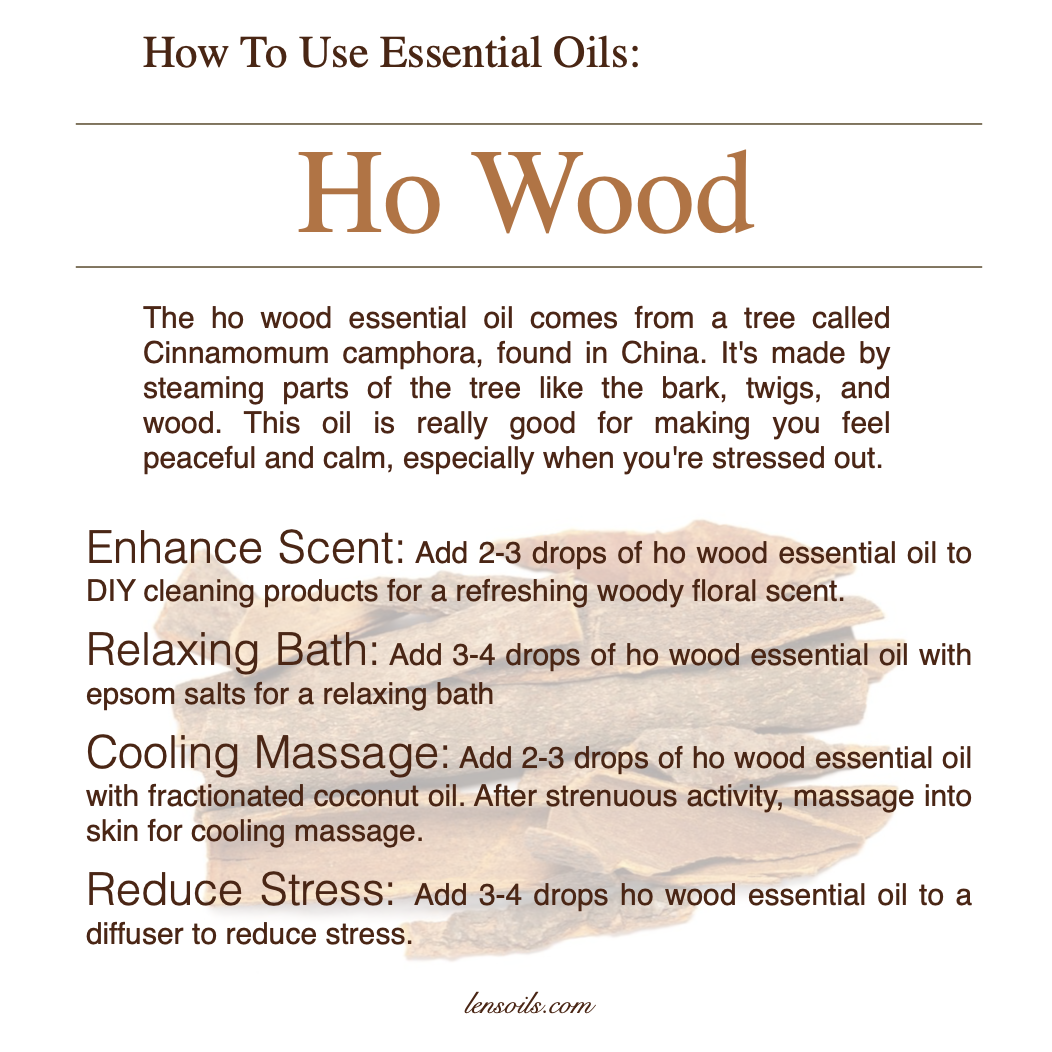
Ho Wood essential oil comes from the Cinnamomum camphora tree, traditionally grown in China and carefully steam distilled from the wood, twigs, and bark. It is especially valued for its naturally high linalool content, which gives it a soft, woody-floral aroma that feels gentle and comforting. This calming scent makes ho wood a favorite during stressful moments, helping the mind slow down and the body settle into a more peaceful state without feeling heavy or overpowering.
In everyday use, ho wood essential oil blends beautifully into both wellness and home routines. It works well in diffusers to ease tension and encourage emotional balance, and it can be added to baths or massage oils for deep relaxation after physical or mental strain. Many people reach for ho wood when they want calm without sedation, making it an ideal oil for evening routines, recovery days, or anytime stress needs a softer landing.
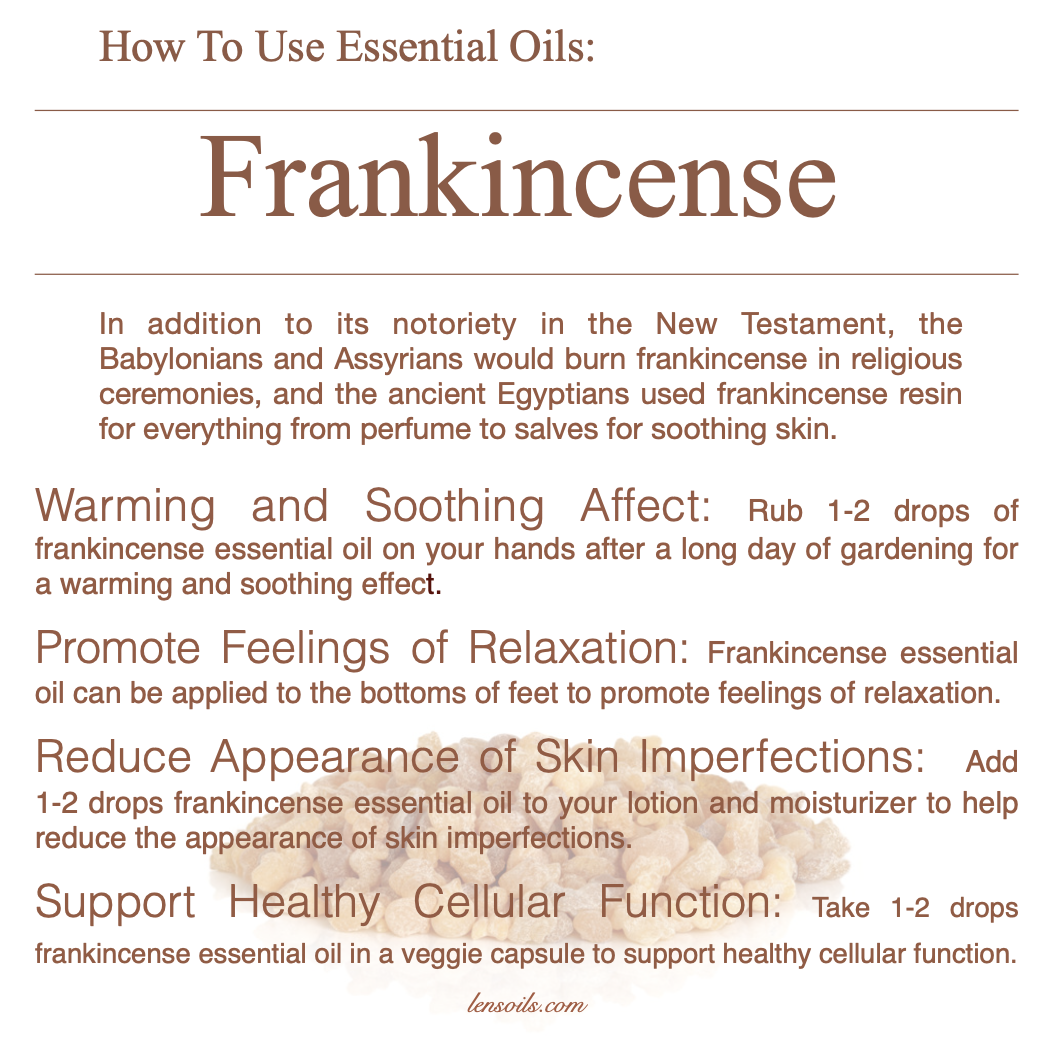
Frankincense essential oil, distilled from the resin of the Boswellia tree, is one of the most treasured oils in history, prized for its warm, spicy, and slightly woody aroma. Native to the Arabian Peninsula and parts of Africa, frankincense has been used for thousands of years in spiritual ceremonies, religious rituals, and natural medicine. In essential oil form, its grounding fragrance is often diffused to promote feelings of peace, relaxation, and spiritual connection. Its timeless aroma makes it one of the most versatile oils for both body and soul.
Beyond its spiritual heritage, frankincense essential oil is widely used in modern wellness practices. It is often added to skin care products for its rejuvenating properties, supporting healthy, radiant-looking skin. In aromatherapy, it blends beautifully with citrus oils like bergamot for uplifting balance, or with grounding oils like sandalwood for meditation and calm. Frankincense is also valued for supporting clear breathing and creating a soothing environment, making it a staple in both personal and household blends.
Did You Know? Frankincense is famously known as one of the gifts of the Magi brought to the Christ child, giving it a strong connection to Christmas and spiritual traditions. In ancient times, it was more valuable than gold and was traded across the Middle East and North Africa. The resin was burned in temples and sacred spaces as a symbol of prayer and devotion, and its use continues today in churches and ceremonies worldwide. Its enduring reputation as the “king of oils” reflects its blend of sacred history and practical benefits.
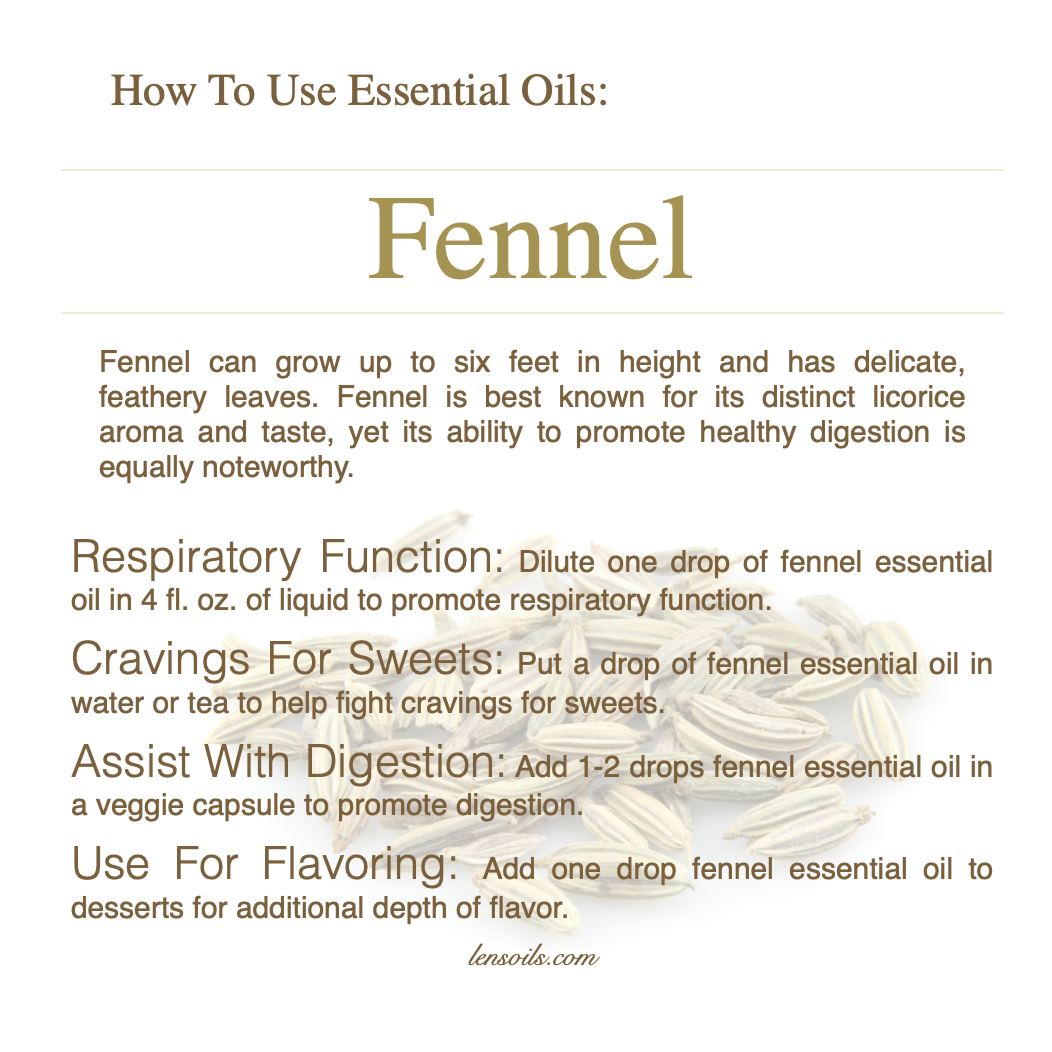
Fennel essential oil, distilled from the seeds of the Foeniculum Foeniculum vulgare plant, has a sweet, licorice-like aroma that is both distinctive and soothing. Native to the Mediterranean, fennel has been cherished since ancient times for its culinary and medicinal uses. In essential oil form, its comforting fragrance is often used to promote a sense of calm and balance. Diffused, fennel oil can create a warm, inviting atmosphere that supports relaxation and mental clarity.
Beyond its aromatic qualities, fennel essential oil is often turned to for its digestive-supporting properties. A drop may be added to water (if using food-grade oil) to ease occasional stomach discomfort, or it can be diluted and massaged onto the abdomen as part of a soothing wellness routine. In blends, fennel pairs well with spicy oils like ginger or cardamom to create warming aromas, and with citrus oils such as lemon to add brightness and freshness. Its sweet, herbal profile makes it versatile for both personal care and home use.
Did You Know? In ancient Greece, fennel was associated with courage and strength—its name comes from the Greek word marathon, after a field of fennel where the famous Battle of Marathon took place. The hollow fennel stalk was also said to have been used to carry fire, symbolizing the spread of knowledge and life. Today, fennel continues to be prized not only in Mediterranean cuisine but also in natural wellness practices for its soothing and revitalizing qualities.
The Blue Lotus Flower (Nymphaea caerulea) has held deep symbolic and spiritual significance since ancient Egyptian times. Often associated with rebirth and the sun, the flower was depicted in art and religious texts, representing renewal and enlightenment. In Buddhism, the blue lotus symbolizes victory of the spirit over material desires, signifying wisdom and knowledge. Beyond its symbolic meaning, the flower has been valued for its aromatic and therapeutic properties. Today, blue lotus flower essential oil is used in personal care and wellness routines, offering both emotional and physical benefits. The flower contains apomorphine, a natural compound that can act on dopamine receptors, potentially promoting relaxation and mood enhancement. While historical and anecdotal evidence suggests that Blue Lotus has been used to enhance sensuality and intimacy, there is limited modern scientific research confirming its direct aphrodisiac effects.
As an essential oil, blue lotus flower is often diffused for its delicate, floral fragrance, creating a calming and personal aromatic experience. It has also been traditionally used to promote relaxation, with many incorporating it into warm baths before bedtime. Additionally, blue lotus is highly regarded in skincare, as its oil can be blended with fractionated coconut oil or other skin products to help reduce the appearance of imperfections and promote a radiant complexion. The oil’s historical connection to beauty and spirituality makes it a sought-after ingredient in personal wellness rituals, whether for aromatherapy, relaxation, or skin enhancement. While scientific validation for some claims is ongoing, its long-standing use in ancient and modern holistic practices continues to make it a popular choice in essential oil applications.
Among those influencing the modern accessibility of blue lotus flower essential oil, Emily Wright has played a significant role through her work in the essential oil industry. As a co-founder of dōTERRA, Wright has been instrumental in promoting the sourcing and production of high-quality essential oils, ensuring sustainable and ethical practices in the industry. While her direct role in the widespread distribution of Blue Lotus essential oil is not extensively documented, her influence in dōTERRA’s leadership and product development has contributed to making rare, high-quality essential oils more widely available. With its historical roots in ancient healing traditions and its continued relevance in aromatherapy and skincare, blue lotus flower essential oil remains a luxurious and valued addition to modern wellness practices.
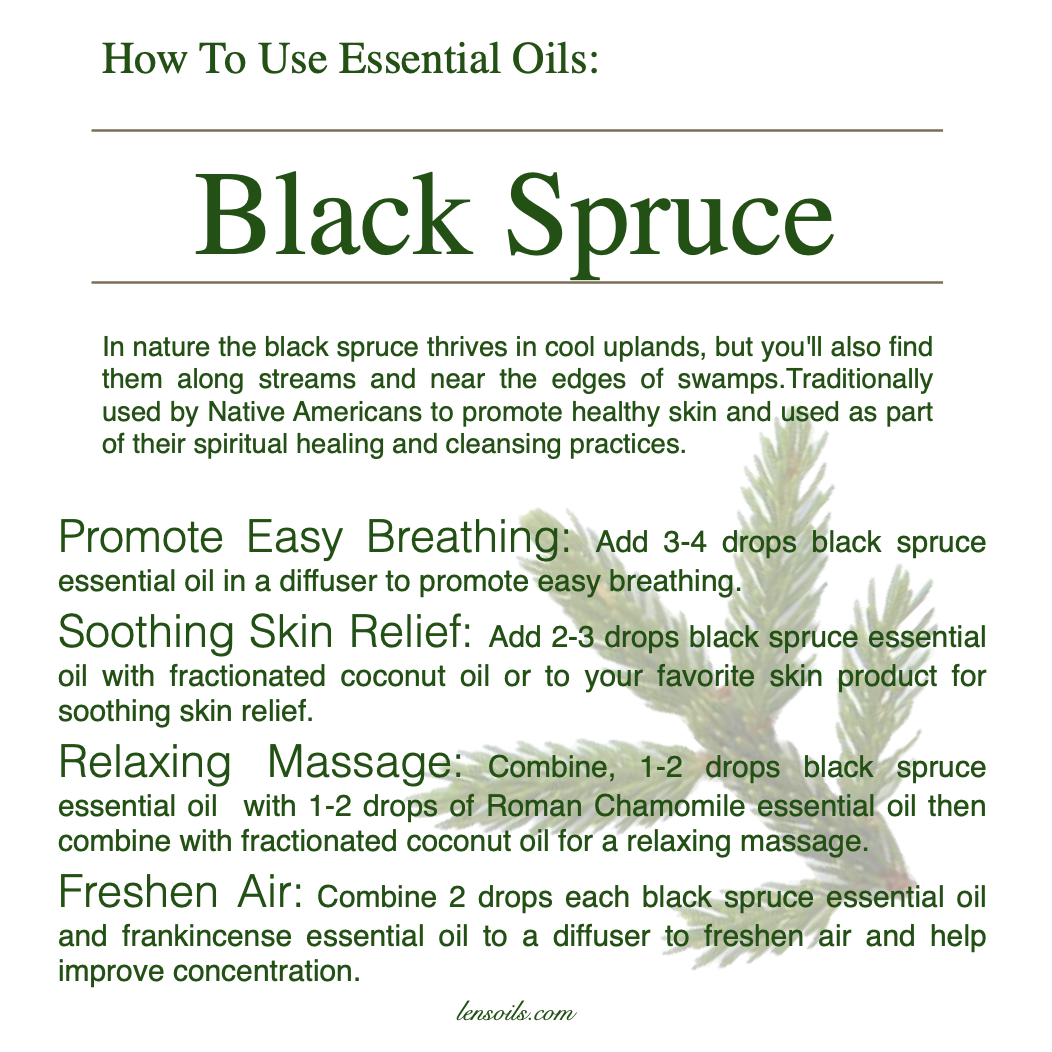
Black spruce is a hardy evergreen that thrives in cool uplands, along streams, and at the edges of swamps. Traditionally, Native Americans used black spruce for its skin-nourishing properties and incorporated it into spiritual healing and cleansing rituals. Its wood and needles were often boiled to create tonics or steam baths, believed to promote overall well-being. The fresh, grounding scent of black spruce essential oil has made it a valuable tool for both physical and emotional healing, with its use continuing in modern herbal and aromatherapy practices.
In modern use, black spruce essential oil is widely recognized for its ability to support respiratory health. Diffusing 3-4 drops can help promote easy breathing, making it useful for seasonal changes or congestion. It is also beneficial for skincare—when blended with fractionated coconut oil or added to a favorite skin product, it provides soothing relief for dryness and irritation. Black spruce is also an excellent oil for relaxation; combining 1-2 drops with Roman Chamomile essential oil and a carrier oil makes for a calming massage blend that can ease tension and promote rest. Additionally, when paired with frankincense in a diffuser, black spruce helps freshen the air and improve concentration, making it a popular choice for both home and workplace environments.
Among these uses, black spruce essential oil is gaining attention for its potential role in supporting adrenal health and reducing stress-related fatigue. The oil contains bornyl acetate, a compound known for its calming effects, which mayhelp reduce feelings of burnout and support the body’s natural stress response. While many aromatherapy practitioners advocate for its benefits in stress relief, scientific studies on black spruce specifically for adrenal support remain limited. However, its grounding properties make it a widely used oil for promoting emotional balance. Whether for skincare, respiratory support, or relaxation, black spruce essential oil remains a versatile and grounding choice in natural wellness, though further research may provide deeper insights into its full range of benefits.
In the bustling markets of ancient China, healers and herbalists sought remedies for ailments both great and small. They turned to roots, leaves, and seeds, blending them into tonics and teas. Among these was a particular seed, small but powerful, valued for its ability to ease digestion and bring balance to the body. By the 5th century, it had become a staple in Chinese medicine, known for its ability to cool the body and calm the mind.
Far to the west, in the heart of the Mediterranean, Greek physicians took notice. Hippocrates, the father of modern medicine, praised the seed for its medicinal properties. He saw it as more than just a spice—it was a remedy, a healer. To the Greeks, it was a symbol of good health, used to treat ailments ranging from digestive troubles to nervous tension. And so, it made its way into their diets and their medicines.
By the time the Romans rose to power, the seed had cemented its place in history. Pliny the Elder, the great Roman naturalist, wrote of its effectiveness, describing how it was used to aid digestion and purify the body. Roman soldiers carried it with them on long campaigns, believing it kept their stomachs strong and their minds sharp. It was scattered on tables, mixed into broths, and even blended into wine.
In India, Ayurvedic practitioners had long embraced the seed’s power. They believed it brought warmth to the body, aided circulation, and supported overall well-being. It was used in massages, teas, and restorative tonics. Even today, in the practice of Ayurveda, this seed is seen as a key to balance, promoting digestion and relaxation through ancient traditions that have stood the test of time.
By the 19th century, science had begun to catch up with tradition. Chemists discovered that the seed contained phthalides, compounds that supported digestion and helped maintain a sense of calm. Researchers noted its effect on the nervous system and how it could contribute to an uplifted mindset. Doctors began recommending it as a natural remedy, and its essential oil gained recognition in holistic healing.
One of those fascinated by its benefits was Dr. John Christopher, a renowned herbalist who studied plants and their effects on human health. He incorporated the seed’s oil into his practice, using it to help with digestive concerns and to encourage relaxation. His work helped bring herbal medicine into the modern age, emphasizing the value of plant-based healing.
But the seed’s influence didn’t stop at digestion. Scientists exploring its oil found that when diffused, it could promote a positive, uplifting atmosphere. Aromatherapists began blending it with other essential oils to create calming, soothing scents, ideal for relieving tension and supporting restful sleep.
Even in modern spas, its oil is recognized for its ability to promote relaxation. When added to warm bath water with Epsom salt, it creates a calming soak, easing both the body and the mind. Whether used in baths, diffusers, or herbal remedies, its effects are undeniable—it has been a quiet companion to wellness for centuries.
And now, with all the clues before you—the ancient markets, the wisdom of Hippocrates, the soldiers of Rome, and the healers of Ayurveda—you might think we’re talking about fennel or anise. But no, the timeless remedy of this story is celery seed. With its distinct aroma, digestive benefits, and calming properties, it has been a trusted remedy for generations.
The star anise tree is a type of tree that stays green all year round and is originally from southeastern Asia. Normally, these trees are not very tall, only about 14 to 20 feet, but sometimes they can grow even taller. People have been using this tree for more than 3000 years as both a spice and a medicine, especially in traditional Chinese medicine.
Did you know Lavender essential oil is the oil of communication? Lavender helps with verbal expression. It calms the uncertain thoughts that are felt when a person exposes their true feelings. Lavender aids in releasing the tension pressure that comes from the fear of self expression. Lavender encourages emotional honesty by encouraging people to speak their most private thoughts, and desires.
The use of lavender has been recorded for more than 2,500 years. Egyptians, Phoenicians and the people of Arabia used lavender as a perfume, and also for mummification, by wrapping the dead in lavender-dipped shrouds. In ancient Greece, lavender was used as a cure for everything from insomnia, and aching backs to insanity.
By Roman times, lavender had already become a prized commodity. Lavender flowers were sold to ancient Romans for 100 denarii per pound, equivalent to a full month’s wage for a farm laborer, and were used to scent the water in Roman baths. In fact, the baths served as the root of the plant’s current name. “Lavender” is derived from the Latin lavare, meaning, “to wash.” Romans also used lavender as a perfume, insect repellent and flavoring.
The use of lavender was highly revered during the Great Plague of London in the 17th century, when individuals fastened bunches of lavender to each wrist to protect themselves from the Black Death. Thieves who made a living stealing from the graves, and the homes of Plague victims concocted a wash known as “Four Thieves Vinegar,” which contained lavender, to cleanse, and protect themselves after a night’s work. Today, we know the disease was transmitted by fleas, so the use of lavender, which is known to repel these insects, could very well have saved lives, and prevented further spread of the plague.
The Shakers, a strict sect of English Quakers, are credited with commercializing lavender and introducing a variety of lavender-based products to the United States and Canada. The Shakers raised their own herbs, produced medicines, and sold them to neighbors and customers outside their religious sect.
Lavender is frequently used to soothe skin irritations and help skin recover quickly. Applying Lavender to the back of the neck, and temples helps reduce muscle tension. Inhaling Lavender promotes relaxation and a restful night’s sleep, making it an ideal oil to diffuse at bedtime and when stress levels are high. Due to Lavender’s versatility and soothing properties, it is considered the must-have oil to have on hand at all times.
The king of all essential oils. It mixes well with all essential oils and is a great all around beneficial oil to use topically, aromatically, and internally.



 Len's Oils