Tag Archives: Lemongrass

How to Use Essential Oils: Muscles

Essential oils can be a natural and effective way to soothe sore muscles, reduce tension, and promote relaxation. One popular method is to create a muscle-relieving massage oil by diluting essential oils in a carrier oil, such as coconut, jojoba, or almond oil. Oils like Peppermint, Eucalyptus, and Wintergreen are known for their cooling properties, which can help reduce inflammation and ease discomfort. Simply mix 3–5 drops of your chosen essential oil with a tablespoon of carrier oil and gently massage it into the affected area. For deeper relief, consider adding warming oils like Ginger or Black Pepper, which can stimulate circulation and relax tight muscles.

Another effective way to use essential oils for muscles is through a warm bath or compress. Add 5–10 drops of essential oils like Lavender, Marjoram, or Rosemary to a warm bath, combining them first with a tablespoon of Epsom salt to help the oils disperse evenly in the water. This combination not only soothes sore muscles but also promotes overall relaxation. Alternatively, create a warm compress by soaking a towel in warm water mixed with a few drops of essential oil, wringing it out, and applying it to the affected area. Whether you’re recovering from a tough workout or relieving everyday tension, essential oils provide a natural and holistic approach to muscle care.

How to Use Essential Oils: Hot

When using essential oils, it’s essential to understand that everyone’s sensitivity differs. What feels “hot” to one person may not feel the same to another. A “hot” oil refers to an essential oil that may cause a warming or burning sensation on the skin, feel spicy if consumed, or cause discomfort if it comes into contact with sensitive areas like the eyes. To avoid irritation, always dilute “hot” oils with a carrier oil, typically in an 8:2 ratio (8 parts carrier oil to 2 parts essential oil).

Exercise caution when using “hot” oils such as Cassia, Cinnamon Bark, Clove, Hyssop, Lemongrass, Ocotea, Oregano, and Thyme. Proper dilution is crucial to ensure safety and comfort during use. Additionally, be mindful when applying essential oils to sensitive areas or ingesting them, as undiluted use can lead to discomfort or irritation. Always follow recommended guidelines and test oils on a small patch of skin to check for reactions before broader application.

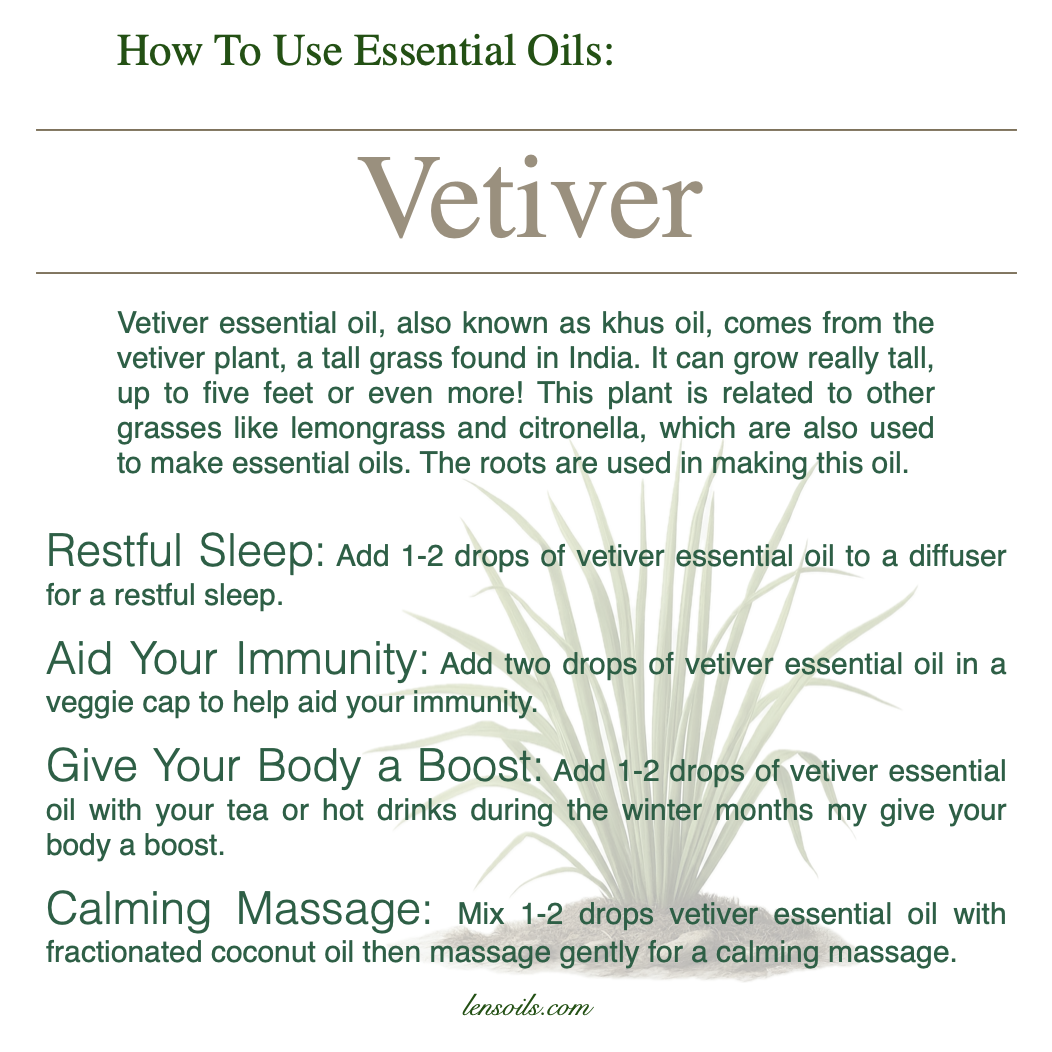
How to Use Essential Oils: Vetiver

Vetiver essential oil, also called khus oil, comes from a plant called vetiver, which is a tall grass found in India. This grass can grow very tall, sometimes reaching over five feet! It’s similar to other plants like lemongrass and citronella, which are also used to make essential oils. The oil is made from the roots of the vetiver plant.