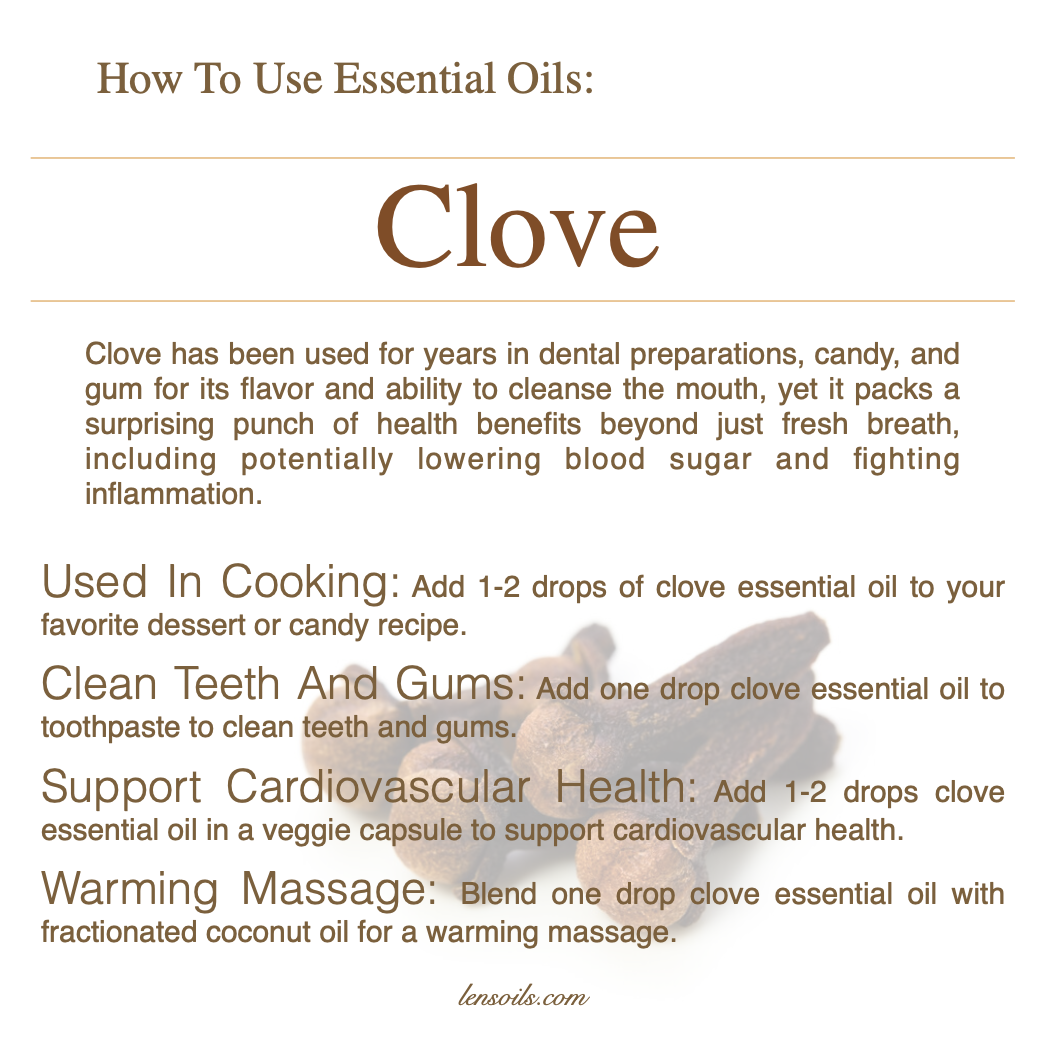
Clove essential oil, distilled from the dried flower buds of the clove tree, is instantly recognizable for its warm, spicy, and slightly sweet aroma. Native to the Maluku Islands of Indonesia, clove has been treasured for centuries as both a culinary spice and a traditional remedy. In essential oil form, it is often used to freshen the air, uplift the mood, and provide a comforting, cozy atmosphere when diffused. Its bold fragrance makes it a favorite in seasonal blends, especially during autumn and winter.
Beyond its inviting scent, clove oil is known for its high eugenol content, a compound with notable cleansing and soothing properties. It has long been used in oral care products, such as toothpastes and mouthwashes, to support fresh breath and maintain oral health. Around the home, clove oil can be added in small amounts to natural cleaning solutions for its purifying effect. When used with care and proper dilution, it serves as both a practical and aromatic addition to wellness routines.
Did You Know? During the spice trade era, cloves were so highly prized that entire wars were fought over control of their production and trade routes. In fact, European demand for cloves and other spices helped drive the Age of Exploration. Today, the world’s largest producers of cloves are still in Southeast Asia, with Madagascar and Tanzania also contributing significantly to global supply. The oil’s enduring value comes not only from its unique flavor and aroma but also from its wide-ranging applications in health and home.
Dr. Daniel Pénoël’s journey into the world of essential oils began long before his professional career, rooted in a childhood filled with curiosity about nature and science. Growing up in the picturesque countryside of France, he was surrounded by fragrant lavender fields and the gentle hum of bees. His early years were spent exploring the natural world, collecting wildflowers, and observing the rhythms of the environment. Encouraged by his parents, who valued both education and the beauty of nature, young Daniel developed a fascination with the healing properties of plants. This passion for understanding the natural world laid the foundation for his future as a pioneer in the study and application of essential oils.
As Dr. Pénoël pursued higher education, his academic path led him to medicine, where he excelled in both traditional and holistic approaches to health. He graduated with a medical degree from France’s esteemed Faculty of Medicine in Montpellier, one of the oldest medical schools in the world. His training in conventional medicine gave him a firm understanding of the human body, but he quickly realized there was more to healing than pharmaceuticals. His passion for natural therapies, particularly the use of plant-based remedies, steered him toward aromatherapy and essential oils—a field he would come to revolutionize.
Dr. Pénoël’s research into essential oils began with a desire to bridge the gap between science and nature. He was fascinated by the idea that essential oils, with their complex chemical compositions, could offer profound therapeutic benefits. He devoted years to studying the biochemistry of essential oils, analyzing their components and how they interact with the human body. This scientific rigor set him apart, as he sought to bring evidence-based practices to a field that was often dismissed by the medical establishment.
Through his studies, Dr. Pénoël discovered the wide-ranging applications of essential oils, from supporting emotional well-being to addressing chronic physical conditions. He became particularly interested in the antimicrobial properties of oils like oregano and thyme, as well as the calming effects of lavender. His research demonstrated how essential oils could be used not only to alleviate symptoms but also to address underlying imbalances in the body, offering a truly holistic approach to health.
In addition to his groundbreaking research, Dr. Pénoël was a gifted educator. He traveled the world, sharing his knowledge with healthcare professionals and aromatherapy enthusiasts alike. His lectures combined scientific depth with practical application, making complex topics accessible to diverse audiences. He believed in empowering others with the knowledge to use essential oils safely and effectively, fostering a global community of informed practitioners.
Dr. Pénoël’s work extended beyond academia and lectures; he was also a prolific author. His books, including L’Aromathérapie Exactement (Aromatherapy Exactly), became essential resources for anyone serious about essential oils. These works provided a detailed exploration of the therapeutic potential of essential oils, supported by scientific evidence and real-world case studies. His writing not only educated but also inspired, sparking a deeper appreciation for the synergy between science and nature.
As a clinician, Dr. Pénoël integrated essential oils into his medical practice, using them alongside conventional treatments to address a wide range of health issues. He demonstrated how essential oils could complement traditional medicine, whether in managing infections, reducing inflammation, or promoting emotional resilience. His success in combining these approaches earned him the respect of both his patients and his peers, further cementing his reputation as a pioneer in the field.
One of Dr. Pénoël’s most significant contributions was his role in developing quality standards for essential oils. He worked tirelessly to ensure that the oils used in therapy were pure, unadulterated, and sourced ethically. His advocacy for transparency and accountability in the industry helped raise the bar for essential oil production and usage, ensuring better outcomes for consumers and practitioners alike.
Dr. Pénoël’s holistic philosophy extended beyond essential oils to embrace the interconnectedness of health and the environment. He emphasized the importance of sustainability and ethical sourcing, advocating for practices that respected both the planet and the people involved in producing essential oils. This vision of harmony between human health and environmental stewardship became a cornerstone of his work.
Today, Dr. Daniel Pénoël’s influence can be felt across the world of aromatherapy and natural medicine. His research, education, and advocacy have transformed essential oils from a niche interest into a respected tool for holistic health. Through his dedication and vision, he has inspired countless individuals to explore the power of nature in healing, leaving a legacy that continues to shape the field of aromatherapy.
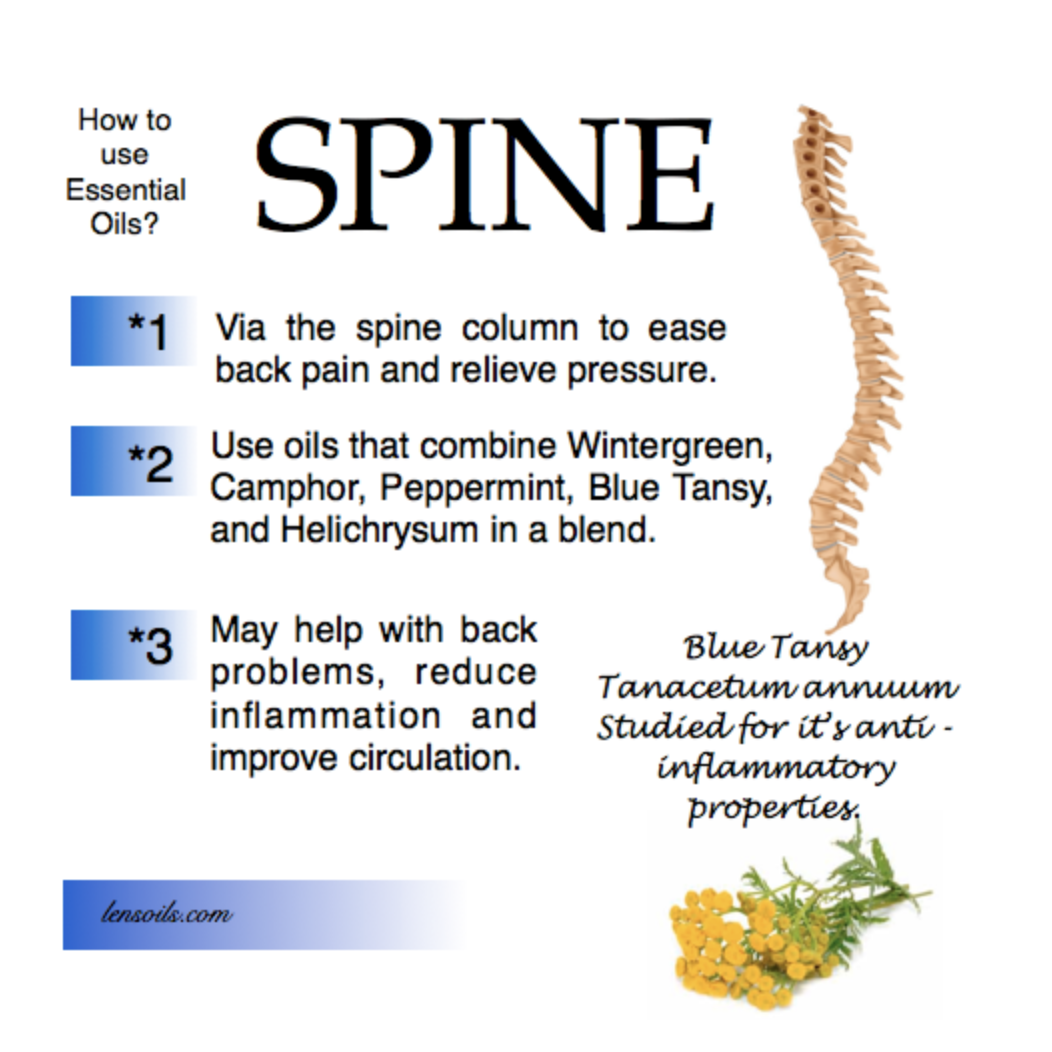
Essential oils can be applied along the spine to help ease back pain and relieve pressure. When massaged into the spinal column, the oils are absorbed into the skin and work to soothe discomfort by targeting muscles and nerves. This method allows the essential oils to penetrate deeply, offering potential relief for tension, stiffness, and inflammation. Many people use this technique as part of a daily routine to support spinal health and overall well-being.
For optimal results, essential oils with soothing and anti-inflammatory properties should be used. Blends that include Wintergreen, Camphor, Peppermint, Blue Tansy, and Helichrysum are particularly effective. These oils work together to relax muscles, reduce swelling, and promote better circulation. Applying them with a carrier oil and massaging them along the spine can provide lasting benefits. This method is commonly used for back problems, soreness after physical activity, or general spinal support.
In addition to its soothing effects, applying essential oils along the spine may contribute to nervous system regulation. The spine houses the spinal cord, which transmits messages between the brain and the body. Essential oils can interact with nerve endings, potentially enhancing relaxation and reducing stress. Blue Tansy (Tanacetum annuum), in particular, has been studied for its anti-inflammatory properties, making it a valuable ingredient in spinal care blends. Incorporating essential oils into a massage routine may support both physical and emotional well-being.
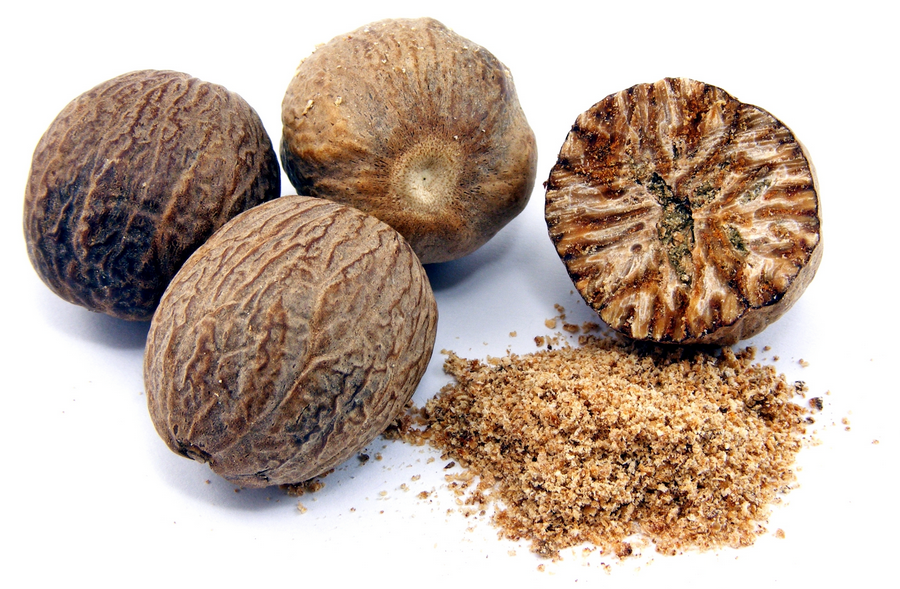
Did You know Nutmeg comes from the fruit of a 50 ft (15 m) tall tropical evergreen tree? Nutmeg is most commonly used as a cooking spice. The tree grows in Indonesia, New Guinea, and the West Indies. The dried nut and essential oil are both used to enhance your health.
Nutmeg is used in both Western and Chinese herbal medicine. It is most popular as a spice in food and drinks, and is also used in cosmetics and soaps. In ancient Greece, and Rome, nutmeg was highly valued and expensive. People were convinced it stimulated the brain. The Arabs have used nutmeg for centuries.
Nutmeg relaxes the muscles, and helps remove gas from the digestive track. It is most commonly used for stomach problems such as discomfort with indigestion. It is also used for chronic nervous disorders, kidney disorders, and to help with nausea, and vomiting. In Chinese medicine, nutmeg is used to treat abdominal pain, diarrhea, inflammation, impotence, liver disease, and vomiting. Some cultures have been know to use nutmeg as an aphrodisiac.
Did you know Birch is the oil of support? Birch offers support to the unsupported. When a person is feeling unsupported or attacked by friends or family, Birch offers courage to help you move in a positive direction alone. It helps assist people overcome negative generation patterns especially when you are being rejected for choosing another path.
Birch trees have been important to many indigenous people in the northern latitudes. Historically, Birch (Betula papyrifera) as well as other species, were possibly the most important trees for survival. This tree increased the quality of life of people for thousands of years. The fact that the Birch tree varies in thickness and can be split in numerous layers, and that it has a resinous inner bark, which makes it waterproof and resistant to decay. This makes the birch tree extremely versatile.
One of its great uses was for shelter. Native people of what is now the United States, used Birch to make Wigwams, Tee-pees and other structures for living. The inner bark of Paper Birch was used extensively to repel water from structures. Probably the most well know use of Birch is its use in making canoes. Canoes have been a part of cultures around the world for many hundreds of years.
In Russia, an old folk remedy for rheumatism was to completely cover the afflicted person with Birch leaves, which resulted in a cleansing sweat and subsequent relief. Native Americans prepared a mushy paste by boiling and pounding the bark, so it could be spread on inflammatory skin conditions, ulcers cuts and wounds. The French have used Birch oil for rheumatism, muscular pain, tendonitis and inflammation.
Birch is very effective in promoting circulation, making it ideal for massage therapy and to soothe sore joints and muscles. Diffusing and inhaling Birch supports clear airways and breathing while stimulating the mind and enhancing focus. Birch can be applied topically and is beneficial in purifying the skin and maintaining a clear, healthy complexion.
Did You know Nutmeg comes from the fruit of a 50 ft (15 m) tall tropical evergreen tree? Nutmeg is most commonly used as a cooking spice. The tree grows in Indonesia, New Guinea, and the West Indies. The dried nut and essential oil are both used to enhance your health.
Nutmeg is used in both Western and Chinese herbal medicine. It is most popular as a spice in food and drinks, and is also used in cosmetics and soaps. In ancient Greece, and Rome, nutmeg was highly valued and expensive. People were convinced it stimulated the brain. The Arabs have used nutmeg for centuries.
Nutmeg relaxes the muscles, and helps remove gas from the digestive track. It is most commonly used for stomach problems such as discomfort with indigestion. It is also used for chronic nervous disorders, kidney disorders, and to help with nausea, and vomiting. In Chinese medicine, nutmeg is used to treat abdominal pain, diarrhea, inflammation, impotence, liver disease, and vomiting. Some cultures have been know to use nutmeg as an aphrodisiac.
Did you know Peppermint is the oil of a buoyant heart? Peppermint brings happiness, and optimism to the heart and soul. It gives strength to the body, mind and spirit, and reminds us that life can be filled with happiness, and there is nothing to fear. When a person uses Peppermint they feel as though they are moving smoothly through life.
Peppermint (Mentha piperita) is one of hundreds of species in the genus Mentha which also includes spearmint, water mint and forest mint originating in North America and the Mediterranean area of Europe. Peppermint is actually believed to be a naturally occurring hybrid of spearmint and water mint. While some claim peppermint was not hybridized and cultivated until the 18th century in England, peppermint is referenced in ancient texts.
Peppermint oil can also calm the spasms that cause muscle cramps? Menthol which is in peppermint provides effective relief from many respiratory problems including nasal congestion, sinusitis, asthma, bronchitis and the common cold and cough. It is often included as an ingredient in natural chest rubs to help with congestion.

 Did You know Nutmeg comes from the fruit of a 50 ft (15 m) tall tropical evergreen tree? Nutmeg is most commonly used as a cooking spice. The tree grows in Indonesia, New Guinea, and the West Indies. The dried nut and essential oil are both used to enhance your health.
 Did you know Birch is the oil of support? Birch offers support to the unsupported. When a person is feeling unsupported or attacked by friends or family, Birch offers courage to help you move in a positive direction alone. It helps assist people overcome negative generation patterns especially when you are being rejected for choosing another path.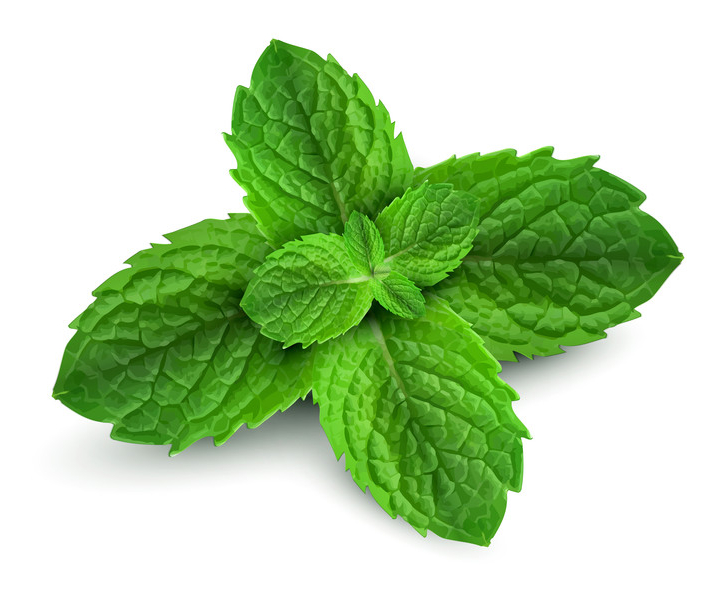
 Len's Oils