Tag Archives: Herb

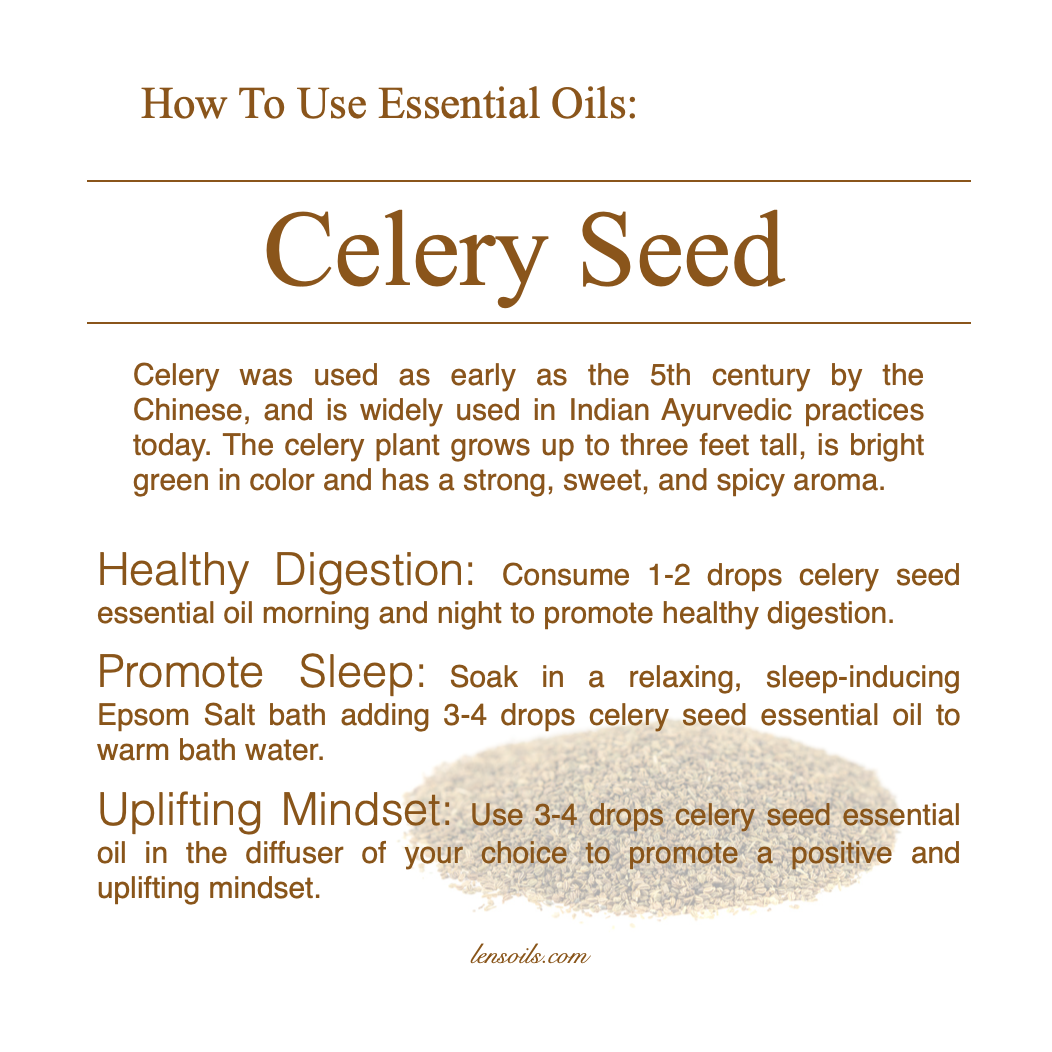
How to Use Essential Oils: Celery Seed

Celery (Apium graveolens) has been cultivated for centuries, with early records of its use dating back to the 5th century in Chinese medicine. It has also played a significant role in Indian Ayurvedic practices, where it is valued for its purported benefits in digestion, circulation, and overall wellness. The celery plant grows up to three feet tall, featuring bright green stalks and leaves with a strong, sweet, and spicy aroma. Celery seed essential oil, derived from the plant’s seeds, has been traditionally used to support healthy digestion. Many practitioners recommend consuming 1-2 drops of celery seed essential oil morning and night to help promote digestive balance. While historical use and anecdotal evidence support this claim, further scientific studies are needed to confirm its direct impact on digestive enzymes and gut health.

Celery seed essential oil is also commonly used in aromatherapy and relaxation techniques. Adding 3-4 drops to a warm bath with Epsom salt is believed to promote relaxation and support restful sleep. Its mild sedative effects are often attributed to phthalates, a natural compound in celery seeds, which may help with nervous tension and stress reduction. Additionally, diffusing 3-4 drops of celery seed essential oil can help create a positive and uplifting mindset, making it a favored choice for stress relief and emotional balance. While aromatherapy practitioners support these benefits, scientific research on celery seed oil’s specific effects on sleep induction and emotional well-being is still ongoing.

Beyond digestion and relaxation, celery seed essential oil is being explored for its potential role in supporting joint and muscle health. Some herbalists believe that the oil’s natural anti-inflammatory properties may help ease occasional discomfort, making it a potential addition to massage oils and topical applications. However, while celery seed extract has been studied for its antioxidant and anti-inflammatory effects, more research is needed to determine the efficacy of celery seed essential oil in pain relief and long-term musculoskeletal support. Despite these uncertainties, celery seed essential oil remains a versatile and valuable natural remedy, widely used for aromatherapy, digestive wellness, and relaxation practices.
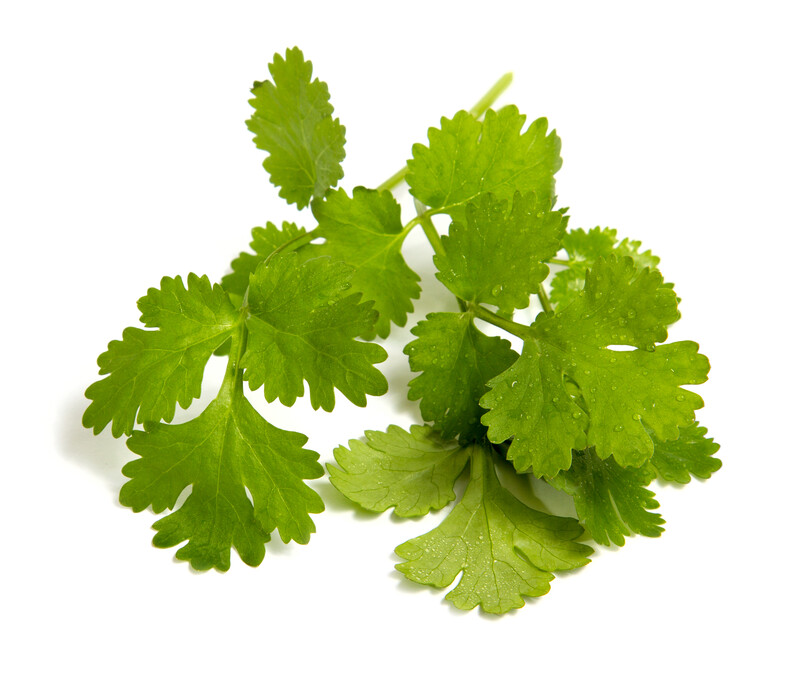
The Herb of Two Opinions and the Rest of the Story

For centuries, an unassuming green herb has graced tables across the world, its fragrance as distinct as its flavor. It has been crushed into pastes, steeped into teas, and scattered atop dishes from Mexico to India. Ancient civilizations knew of its powers long before modern science confirmed its worth. Traces of it have been found in the tombs of Egyptian pharaohs, nestled alongside gold and sacred artifacts, hinting at a value that extended far beyond the kitchen. Hippocrates, the father of medicine, spoke of its medicinal properties, while Chinese healers used it to rid the body of toxins.

In the Middle Ages, it was rumored to hold mystical qualities, a belief likely rooted in its ability to purify and restore. Traders carried its seeds along the Silk Road, sharing its secret with distant lands. The Spanish conquistadors ensured its presence in the New World, where it flourished in the warm, fertile soils of the Americas. Today, it is a staple in kitchens worldwide, yet it remains one of the most polarizing ingredients in culinary history—beloved by some and despised by others.

Its scent, bright and citrusy to some, is curiously soapy to others, a perception dictated by genetics. Charles J. Wysocki, a behavioral neuroscientist, uncovered the genetic link that determines whether one will relish its fresh, tangy bite or recoil at its pungency. This divisive reaction is rooted in olfactory receptors, proving that taste, at times, is simply a matter of biology. But beyond its flavor, it harbors an arsenal of benefits that modern science has only begun to unravel.

Dr. Ellen Silbergeld, a toxicologist renowned for her work in environmental health, found that this little leaf could do what few other plants could—it binds to heavy metals in the body, aiding in their safe removal. Its detoxifying properties have made it a subject of research in holistic medicine, where it is lauded for its ability to cleanse the bloodstream and support liver function. Some have even referred to it as nature’s own “chelation therapy.”

Not just a detoxifier, this herb is a digestive ally. Its essential oils contain compounds that soothe the gut, reducing bloating and discomfort after a heavy meal. A single drop of its concentrated essence, mixed into water, can help the body process rich or indulgent foods. For those who prefer its raw form, adding it to meals not only enhances flavor but also promotes gut health.

Its uses extend beyond digestion and detoxification. Researchers have found that its antioxidant properties may support the body’s defenses against oxidative stress. With a rich profile of vitamins A, C, and K, it contributes to skin health, immune support, and overall well-being. And when paired with lime in a diffuser, its fresh herbal aroma invigorates the senses, bringing a touch of nature indoors.

For all its uses, it remains misunderstood by many. Some associate it with humble street food, while others see it as a refined touch in gourmet cuisine. It has been praised in Ayurvedic medicine for its healing properties, studied by Western scientists for its detoxifying effects, and endlessly debated at dinner tables around the world. Cilantro, with its distinct flavor, divides opinions—fresh and citrusy to some, overwhelmingly soapy to others, a reaction dictated by genetics. Yet, despite the controversy, it continues to thrive in cultures across the globe, enhancing meals, supporting digestion, and purifying the body. A staple in kitchens from Mexico to India, a remedy in holistic medicine, and a topic of scientific curiosity, this humble herb holds a history as rich as its flavor.

And now you know the rest of the story.

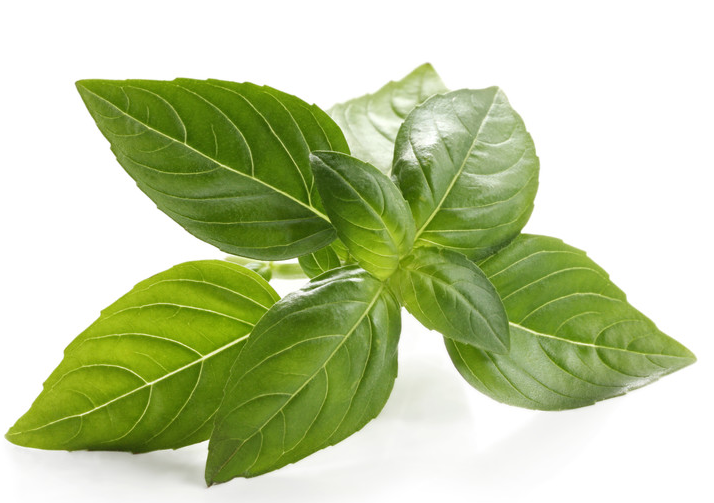
Basil-Did You Know?

Did you know basil is helpful for addiction recovery? It gives hope, and confidence to the tired soul. Basil is the essential oil of renewal, and supports those who are under a great deal of mental strain. Basil oil may strengthen the adrenals, and restore the body to its natural rhythms of sleep, activity, and rest. Basil in summary strongly implies to help those who are tired in mind, body, and for those in need of strength, and renewal.

Basil is contained in Hildegard’s Medicine Book. Hildegard of Bingen (1098-1179) was known as the first herbalist and naturopath of the middle ages. Her book documented over 12,000 remedies for symptoms and diseases. Some documented basil benefits, and uses are migraines, insect bites, throat/lung infections, mental fatigue, menstrual periods (scanty), hair (dandruff), aches and pains, insomnia, depression, anxiety, bronchitis, insect repellant (housefly and mosquito) and bites. Basil is amazing.

In Romania there is an old custom that if a boy accepts a sprig of basil from a girl, he is engaged to marry her. It is also tradition that basil was found growing around the tomb of Jesus. In medieval times it was thought that scorpions grew up under pots of basil. in most countries, basil is thought to be a royal herb. “Basil” in Greek, does mean “royal” or “kingly”. This may be because in many regions it was used in perfumes reserved for kings. Basil came to Massachusetts Bay Colony where it was introduced in 1621. From there its cultivation spread through the American Colonies. It has long been used to flavor food in the western world, but was used primarily for its aroma in India.

Basil has a warm, spicy, yet herbal aroma known to enhance memory function while reducing stress and tension. Basil provides restorative benefits to both the mind, and body due to its high linalool content, making it an ideal application for sore muscles, and joints, and to reduce tension when applied to the temples, and back of the neck. Basil is commonly used in cooking. Basil is cooling to the skin, and can be used to soothe minor irritations. When diffused, Basil helps promote clear breathing, and healthy respiratory function while sharpening focus, and lessening stress.

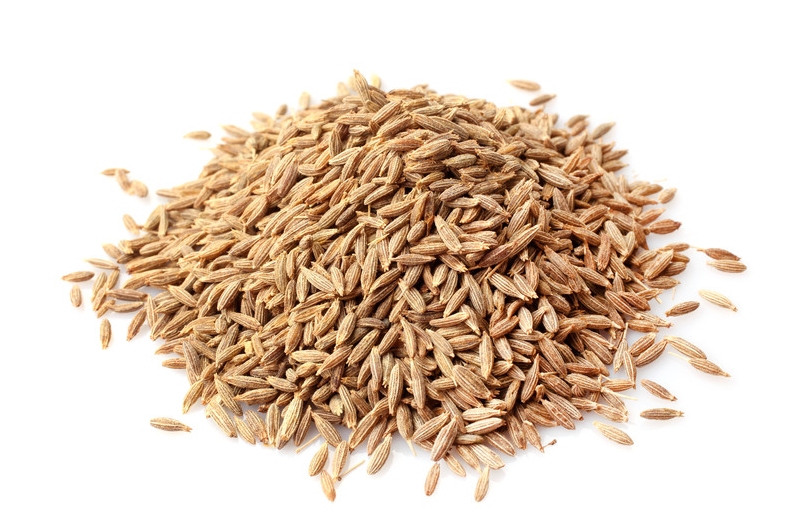
Cumin-Did You Know?

Cumin The Did You Know GuyDid you know Cumin was used in the ancient Egyptian mummification process? Marcus Antoninus 16th emperor of Rome was given a nickname that referenced the herb as someone miserly must have eaten cumin, and symbolized excessive desire. Pliny the Elder, a Roman naturalist who lived between 23 AD and 79 AD was said to have listed Cumin as “the best appetizer of all condiments.”

The history of Cumin goes back over 5000 years. from Iran and the Mediterranean. Cumin is a small seed that comes from the Cuminum cyminum herb, a member of the parsley family. This seed has a distinct flavor, and warm aroma. It is a major ingredient in chili powder as well as curry powder. According to the Bible, Cumin had such a powerful medicinal value that it could be used as money!

Cumin has an overpowering smell and should be used very sparingly. Yet it is considered non-toxic, non-irritant and non-sensitizing. It does have photo-toxic qualities, so it should not be used when the skin will be exposed to sunlight. Photosensitization, and photo-toxicity can occur when certain essential oils react when exposed to Ultraviolet UVA light. Inflammation, blistering, and reddening/burning of the skin are common.

Cumin is useful as a warming oil and helps relieve muscular pains and osteoarthritis. In the digestive system, it is a stimulant that helps with colic, dyspepsia, flatulence, bloating and indigestion. For the nervous system, it is a tonic, and has a beneficial effect on headaches, migraines, and nervous exhaustion.

Rosemary-Did You Know?

RosemaryDid you know rosemary assists in the development of true knowledge and true intelligence? Rosemary is the essential oil of knowledge and transition. It challenges people to look deeper than they normally would, and ask more soul searching questions so they may receive more inspired answers. Rosemary also aids in times of transition and change, such as adjusting to a new house, school, or a relationship.

Rosemary is actually a bush perennial that grows in abundance in the Mediterranean area (Spain, Italy, Portugal, Southern France, Greece and North Africa as well as in isolated areas of Turkey, Lebanon and Egypt). It is one of the most common aromatic wild plants of the Mediterranean landscape, especially in rocky limestone hillsides adjoining the seaside.

Rosemary was relocated to England by the Romans in the eighth century, primarily in the southern part of the country. Rosemary branches were placed on the floors of medieval homes to combat diseases during the “black plague.” Because of the fragrance the plant gives off, it was a used as an incense. It was introduced to the New World by early immigrants, but in the northern regions they must be protected in the winter months.

Rosemary is an aromatic, evergreen shrub whose leaves are frequently used to flavor foods such as stuffings and roast lamb, pork, chicken, and turkey. When you add rosemary to spaghetti sauce it will bring out the flavor of other ingredients. It is a very nice addition to tomato-based soups, stews, and sauces. Along with its culinary applications, Rosemary has many health benefits.

Rosemary supports healthy digestion and helps soothe sore muscles and joints. Long revered by healers, rosemary was considered sacred by the ancient Greek, Roman, Egyptian, and Hebrew cultures. Rosemary’s herbaceous and energizing scent is frequently used in aromatherapy to combat nervous tension, fatigue, and has antioxidant properties.

Oregano-Did You Know?

OreganoDid you know the word “oregano” comes from the Greek phrase, “joy of the mountains?” Oregano is the Oil of Humility and non-attachment. Oregano cuts through the less important parts of life and teaches people to do the same. Oregano is a powerful oil, and may even be described as assertive or intense. Oregano addresses an individual’s need to be “right.”

Ancient Greek physicians discovered that oregano had beneficial properties, and prescribed it for a variety of ailments. Hippocrates used it as well, as its close cousin, Marjoram, as an antiseptic. Just married couples were crowned with wreaths of it. It was also put on graves to give peace to departed spirits.

The use of oregano later spread throughout Europe and much of Northern Africa. In these regions it was used as a spice for meats, fish, and a flavoring for wine. In the middle ages people continued to use it. Oregano was one of few spices used in cooking to give variety to the daily meals.

In spite of its use in England, Oregano was little known in the United States prior to the Second World War. Soldiers discovered the flavors, and aromas during the Italian Campaign, and brought back the spice, and the desire for it. The oregano sold on the spice racks of stores today, is usually made up of several varieties.

Oregano is one of the most potent and powerful essential oils, and has been used for centuries in traditional medicine for its cleansing and immune-boosting properties. The primary chemical components of Oregano are carvacol, and thymol, both in the Phenols group, which possess purifying, and antioxidant properties. Due to its high phenol content, caution should be taken when inhaling or diffusing Oregano; only one to two drops is needed. Additionally, Oregano should be diluted with fractionated coconut oil when applied to the skin.

Oregano essential oil contains phenols—powerful antioxidants that ward off free radicals. One drop taken daily can help maintain healthy immune function; Oregano should be taken more frequently when seasonal threats are high, or as needed to further boost immunity. In addition to being a popular cooking spice, Oregano supports healthy digestion by promoting the secretion of digestive juices. When diffused, Oregano acts as an enhancer and equalizer in essential oil blends, and can help maintain healthy respiratory function.

Marjoram-Did You Know?

MarjoramDid you know Marjoram essential oil is the Oil of Connection? Marjoram assists people who are unable to trust others or form a serious relationship. Being unable to trust often originates from unpleasant life experiences. Marjoram teaches that trust is the foundation for all human relationships.

Marjoram is surrounded by mythology. People thought marjoram was created by the greek goddess Venus who gifted it with its pleasant sweet flavor and aroma. This is one of the most desired sought after herbs by Aphrodite. People believed that when an unmarried girl kept a marjoram plant in her bed she would see Aphrodite in her dreams, who would then reveal to her, a prospective husband.

By the middle ages, marjoram was worn by couples as garlands to represent love, warm respect, and contentment. It was also added in the food to encourage devotion. Due to its sweet aroma, it was frequently used as deodorant and carried in bouquets and sweet bags. People of England used marjoram as a preservative.

Marjoram was known to the Greeks and Romans as a symbol of happiness. Marjoram has been used in culinary dishes, imparting a unique flavor to soups, stews, dressings, and sauces. In Germany, Marjoram is known as the “Goose Herb” for its traditional use in roasting geese.

In traditional Austrian medicine, Marjoram was used to promote gastrointestinal health and to purify the skin. In modern applications, Marjoram is valued for its calming properties, and for its positive effect on the nervous system. It also soothes tired, stressed muscles, and supports both healthy cardiovascular, and respiratory systems.