From tropic soil where spices grow, Cardamom seeds in warm winds flow. Distilled with care, their oils release, A fragrant gift of calm and peace.
Called “Queen of Spices” long ago, From India’s hills to Guatemala’s glow. A sweet and spicy breath it brings, A treasure prized by queens and kings.
It soothes the stomach, lightens care, A gentle aid for troubles there. In kitchens, hearts, and homes it stays, A friend through nights and brighter days.
Diffused, its scent uplifts the mind, Clarity and focus you will find. For study hours or quiet prayer, Its grounding touch is always there.
When seasons shift and breath feels tight, Cardamom lends a steady light. Its vapors clear, the chest feels free, A comfort shared through history.
Egypt’s halls and India’s tea, Whispers of cardamom still roam free. A spice, a song, a timeless balm, Forever fragrant, warm, and calm.
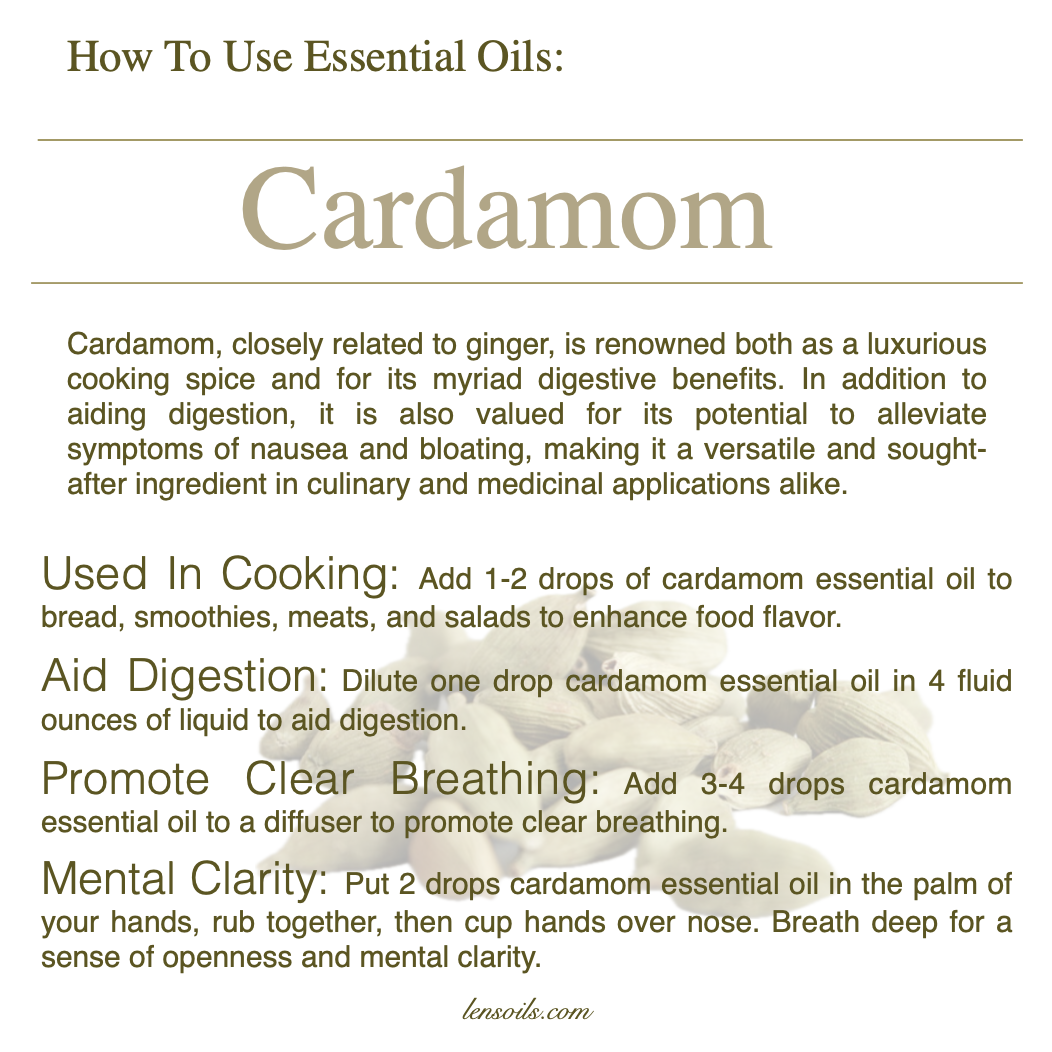
Cardamom (Elettaria cardamomum), a close relative of ginger, has been prized for centuries as both a luxurious culinary spice and a natural digestive aid. Historically, it has been used in Middle Eastern, Indian, and Scandinavian cuisine, where its warm, slightly sweet flavor enhances a variety of dishes. Beyond its culinary appeal, cardamom is known for its digestive benefits, traditionally used to ease bloating, indigestion, and occasional nausea. Adding 1-2 drops of cardamom essential oil to foods such as breads, smoothies, meats, and salads enhances their flavor while also supporting digestion. Additionally, cardamom essential oil can be diluted in 4 fluid ounces of liquid to help aid digestion naturally. While these traditional uses are well-documented, further scientific research is needed to confirm the full extent of cardamom essential oil’s role in gut health and digestive enzyme activation.
Beyond digestion, cardamom essential oil is often used in aromatherapy to promote respiratory health. Adding 3-4 drops to a diffuser can help create an atmosphere that supports clear breathing and soothes airways, making it useful during seasonal changes. Additionally, cardamom oil is said to promote mental clarity—placing 2 drops in the palms, rubbing hands together, and inhaling deeply is believed to provide a sense of openness and focus. Some studies suggest that certain compounds in cardamom may have calming effects, which could support mental well-being, though more clinical research is needed to determine its direct impact on stress reduction and cognitive function.
Among its various applications, cardamom essential oil is sometimes considered beneficial for oral health and detoxification, though these claims require more scientific validation. While cardamom has been used in traditional medicine for freshening breath and cleansing the mouth, research on its effectiveness in preventing bacteria-related oral issues remains limited. Additionally, some practitioners believe that cardamom essential oil may support natural detoxification, but further studies are needed to substantiate these claims. Regardless, cardamom remains a versatile and highly valued essential oil, offering culinary, digestive, and aromatic benefits, making it a staple in both traditional and modern wellness practices.
Essential oils can create a warming sensation on the skin, but it’s important to remember that everyone experiences this feeling differently. What may feel mildly warm to one person could feel hot or even irritating to another. When using essential oils classified as “warm,” caution should be taken, especially for those with sensitive skin. If an oil accidentally gets into the eyes or mucous membranes, it can cause discomfort or a burning sensation. Always use proper dilution methods to prevent adverse reactions.
The 50/50 rule is a helpful guideline when using warm essential oils. This means mixing equal parts (5 drops) of a warm essential oil with a carrier oil (5 drops) before applying it to the skin. Proper dilution helps reduce the risk of irritation while still allowing the oil’s therapeutic benefits to take effect. Some warm oils, like peppermint, may feel cooling initially but can have a warming after-effect, while others, like black pepper or ginger, provide steady warmth upon application. For internal use, extra caution is needed, as some warm oils may cause discomfort if not properly diluted.
In addition to their warming properties, these essential oils offer a variety of benefits. Oils like basil, cardamom, and clary sage can support digestion, while eucalyptus and rosemary may help open airways for clearer breathing. Other oils such as ginger and wintergreen are commonly used to ease muscle tension and support circulation. Understanding how warm oils interact with the body allows for more effective and comfortable use in aromatherapy, skincare, and wellness routines.
Oh, cardamom, spice of tales untold, With fragrant notes both warm and bold. A treasure cherished in kitchens near, Your essence travels far and clear.
In the kitchen, you claim your space, Enhancing dishes with subtle grace. One drop or two in bread or stew, Transforms a meal, makes flavors true.
In smoothies, salads, your taste refines, You grace the palate with rich designs. For digestive peace, you lend your art, With liquid mixed, you play your part.
A drop in water, ounces four, Soothes the belly, it aches no more. To breathe with ease, to lungs bring light, A diffuser spreads your calm through night.
Three drops or four, a tranquil stream, Cardamom clears, like a soothing dream. When thoughts are tangled, the mind confined, Two drops bring clarity, well-defined.
Rub hands together, cup near the face, Breathe in deeply, find mental space. Oh, cardamom oil, with gifts so true, For heart and soul, we turn to you.
Long ago, deep in the tropical forests of southern India, there thrived a plant shrouded in mystery. Its tall, slender stems reached skyward, while its seeds lay hidden within small, green pods. To those who cultivated it, this plant was a treasure, not just for its unique taste but for its remarkable ability to heal and uplift. For centuries, it was used in rituals and remedies, cherished as both a culinary delight and a soothing balm.
The seeds were painstakingly harvested by hand, dried under the sun, and carried across ancient trade routes. They reached the hands of kings and emperors, their value rivaling that of gold. Traders guarded its secrets fiercely, knowing its essence would fetch the highest prices in the spice markets of Europe and Asia. In every corner of the world, this fragrant seed found its place—infused into teas, ground into powders, and distilled into potent oils.
Legends grew around its powers. Ancient physicians praised it for its ability to calm an upset stomach, soothe nausea, and invigorate the senses. It became a favorite of royalty; Cleopatra herself is said to have used its scent to enchant her guests. The seed’s uses expanded as knowledge traveled, blending into the culinary traditions of countless cultures and the healing practices of generations.
Over time, its cultivation expanded beyond its native India. Farmers in the rainforests of South America began to grow the plant, taking advantage of the warm, humid climate to nurture its delicate pods. This new chapter in its journey spread its reach even further, making its fragrant seeds more accessible to people across the world. Each new region added its own traditions to the plant’s legacy, embedding it deeper into the cultural fabric of humanity.
Today, modern science continues to validate what ancient healers knew. Its oil, extracted through steam distillation, is celebrated for its digestive benefits, its ability to clear the mind, and its aromatic richness. It remains a cornerstone in kitchens and apothecaries alike, revered for its versatility and purity.
And now, cardamom, the unassuming seed from the forests of India and the rainforests of South America, lives on as a timeless treasure. From enhancing the flavors of bread and stews to promoting clear breathing with a diffuser’s gentle mist, it serves as both a culinary marvel and a source of well-being. Its journey through history, carried by the hands of explorers and traders, has secured its place in homes across the globe. A gift of nature, cardamom continues to connect us to the past while enriching our present, offering its fragrant magic to generations yet to come.
For centuries, the world has sought remedies to soothe life’s little discomforts, often turning to the Earth itself for solutions. Across continents and cultures, one particular spice found its place in the kitchens and apothecaries of ancient civilizations. A whisper of this ingredient’s magic could be found in the tales of traders who carried it from one bustling market to another, exchanging more than goods—they exchanged hope.
It began as a secret, growing wild in the humid rainforests of a distant land. Those who lived nearby believed in its remarkable properties: a balm for uneasy stomachs, a tonic for clear breaths, and even a cure for venomous bites. The truth about its worth, however, couldn’t be contained for long. Like a fine thread in a tapestry, this spice wove its way into the daily lives of those who discovered it, adding flavor to their meals and clarity to their minds.
The spice’s fame spread, carried by determined traders who ventured through jungles and over oceans. Arab merchants, keen-eyed and quick-witted, brought it into global commerce, ensuring its presence in the most elegant kitchens and revered medicine chests. By the time Portuguese explorers landed on its shores, its trade routes had already been established, leading back to the verdant hills of southern India, where it thrived in its natural, untamed glory.
In time, it became an empire within an empire. Kerala dominated its trade, its harvests meticulously overseen by rulers who recognized its value. Yet, as history often unfolds, colonial hands sought to control it, transplanting its cultivation to other lands. By the 20th century, a new contender emerged, far from its native soil. In the mountains of Guatemala, farmers began planting it as a secondary crop alongside coffee. Before long, it dethroned coffee as the most valuable agricultural export in the region.
Today, this remarkable spice is known not only for its culinary prowess but also for its ability to calm indigestion, promote clear breathing, and even brighten one’s mental clarity. A single drop of its oil can transform a dish, while its aroma fills rooms with a sense of warmth and comfort. Its versatility in food, medicine, and trade is a testament to its enduring legacy. And now you know the rest of the story—about the little green pod that started it all: Cardamom.
Did you know a lot of chronological Indian content mention Cardamom as a flavoring agent and medicine? There are recipes of sherbets and rice dishes flavored with Cardamom. Cardamom became an object of trade with South Asia in the last thousand years when Arab traders brought it into extensive use. Exports from the Malabar shore, close to where Cardamom’s grew untamed, were portrayed by the Portuguese traveler, Barbosa, in 1524. By the time of Garcia DA Orta in 1563, the worldwide trade in Cardamom’s was finely urbanized. Kerala continued to dominate the cardamom trade until the colonial era.
It was bought by the Raja’s administrators from India, and some of it was sold to Muslim merchants while the most excellent quality was sold abroad. In the 19th century British settlement established Cardamom as a secondary crop in coffee agricultural in further parts of India. But it’s Guatemala, which only started growing the spice in the 1920s, that’s the biggest commercial producer today, overtaking India and Sri Lanka. In some parts of Guatemala, it has even overtaken coffee as its most valuable crop!
Cardamom is largely used in South Asia and South America it has been known to help teeth and gums issues, to help control and take care of throat troubles, congestion of the lungs, inflammation of eyelids and also digestive disorders. It is also used to break up kidney stones and gall stones, and was apparently used as an antidote for venom from both snakes, and scorpions.




 Did you know a lot of chronological Indian content mention Cardamom as a flavoring agent and medicine? There are recipes of sherbets and rice dishes flavored with Cardamom. Cardamom became an object of trade with South Asia in the last thousand years when Arab traders brought it into extensive use. Exports from the Malabar shore, close to where Cardamom’s grew untamed, were portrayed by the Portuguese traveler, Barbosa, in 1524. By the time of Garcia DA Orta in 1563, the worldwide trade in Cardamom’s was finely urbanized. Kerala continued to dominate the cardamom trade until the colonial era.
 Len's Oils