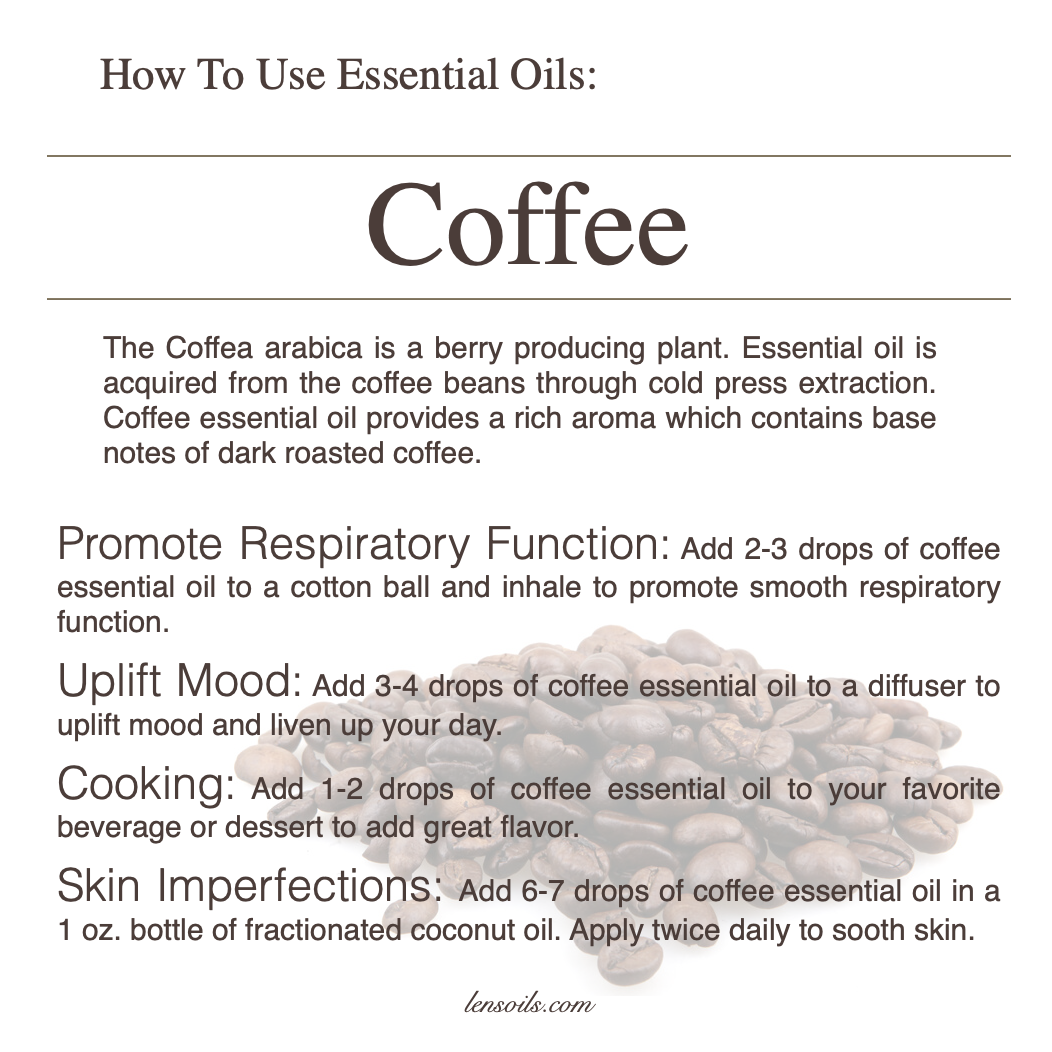
Coffee essential oil, cold-pressed from roasted coffee beans, is known for its bold, roasted aroma that instantly awakens the senses. Just like a freshly brewed cup, this oil carries a warm, rich scent that can energize and uplift the mood. Diffused, it creates a cozy environment perfect for mornings, study sessions, or creative work. Its aroma has been linked to feelings of alertness and comfort, making it a unique addition to diffuser blends.
In addition to its energizing fragrance, coffee essential oil contains antioxidants that can support healthy-looking skin when used in diluted topical blends. Some people use it in massage oils or body scrubs for its invigorating effect on both skin and spirit. Paired with vanilla, cocoa, or spice oils like cinnamon, coffee essential oil adds depth and richness to blends for both personal care and home fragrance.
Did You Know? Coffee is one of the most traded commodities in the world, second only to crude oil. While most people enjoy it as a beverage, coffee essential oil is a relatively new addition to aromatherapy, prized for its ability to capture the comforting scent of coffee in a concentrated form without caffeine.
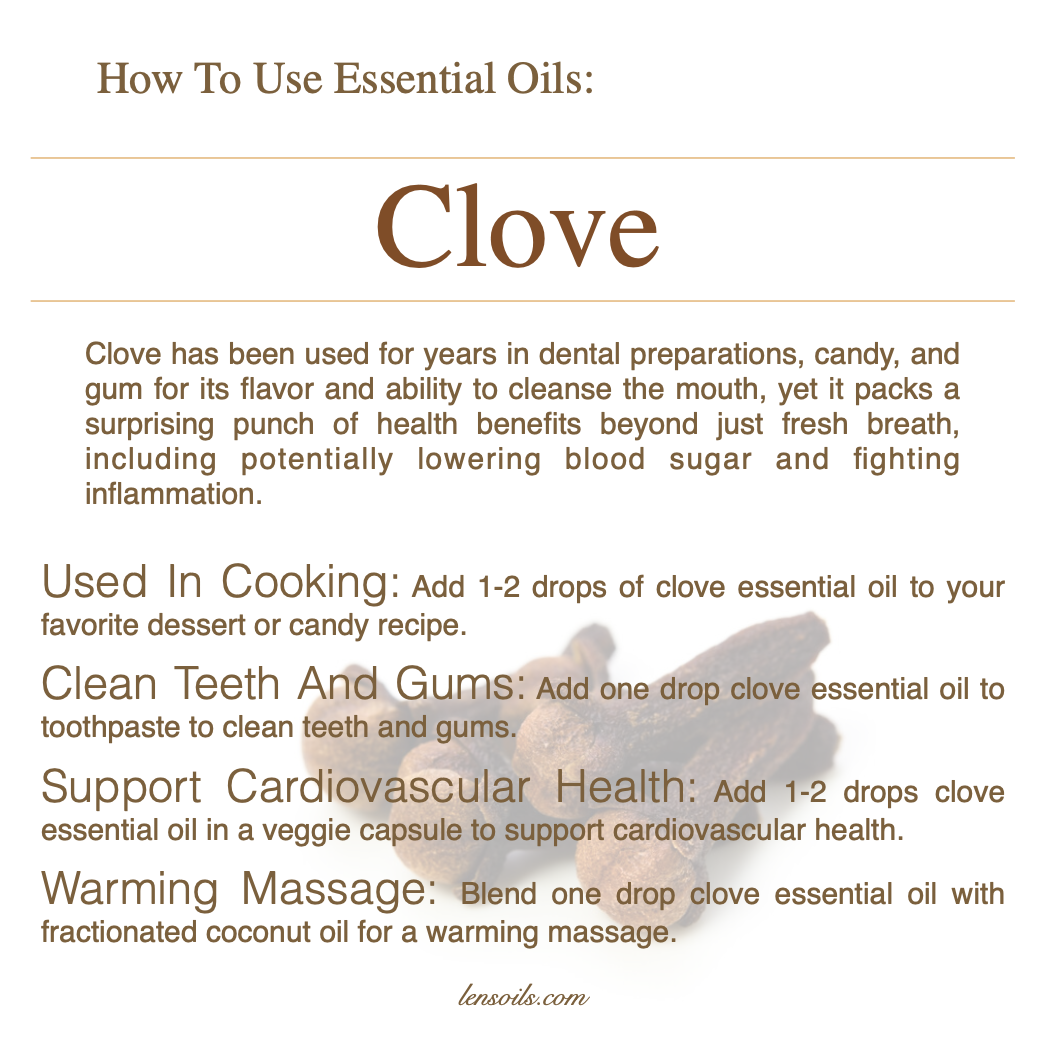
Clove essential oil, distilled from the dried flower buds of the clove tree, is instantly recognizable for its warm, spicy, and slightly sweet aroma. Native to the Maluku Islands of Indonesia, clove has been treasured for centuries as both a culinary spice and a traditional remedy. In essential oil form, it is often used to freshen the air, uplift the mood, and provide a comforting, cozy atmosphere when diffused. Its bold fragrance makes it a favorite in seasonal blends, especially during autumn and winter.
Beyond its inviting scent, clove oil is known for its high eugenol content, a compound with notable cleansing and soothing properties. It has long been used in oral care products, such as toothpastes and mouthwashes, to support fresh breath and maintain oral health. Around the home, clove oil can be added in small amounts to natural cleaning solutions for its purifying effect. When used with care and proper dilution, it serves as both a practical and aromatic addition to wellness routines.
Did You Know? During the spice trade era, cloves were so highly prized that entire wars were fought over control of their production and trade routes. In fact, European demand for cloves and other spices helped drive the Age of Exploration. Today, the world’s largest producers of cloves are still in Southeast Asia, with Madagascar and Tanzania also contributing significantly to global supply. The oil’s enduring value comes not only from its unique flavor and aroma but also from its wide-ranging applications in health and home.
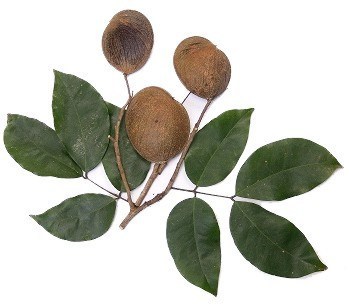
Deep in the heart of the Amazon rainforest, towering trees stretched over 100 feet tall, their thick trunks rooted deep in rich, untouched soil. They had stood for centuries, unnoticed by most of the world. But hidden within them was something remarkable—something that would one day change the way people cared for their health and well-being.
For generations, indigenous tribes and local farmers of South America had known the secret of these trees. They carefully tapped the bark, collecting a golden resin that flowed slowly like nature’s own medicine. This thick, aromatic sap was used to cleanse the skin, support oral health, and promote overall wellness. Those who ingested it found it could ease anxious feelings and support the immune, cardiovascular, and digestive systems. Passed down through generations, this knowledge remained within small communities, while the rest of the world remained unaware of its benefits.
As more people looked for natural ways to stay healthy, scientists and wellness experts became interested in this special tree resin. They discovered that it had a unique ingredient called β-caryophyllene (BCP), which could help the body in many ways. BCP connects with CB2 receptors in the body’s endocannabinoid system (ECS), which helps control things like inflammation, the immune system, and overall balance. This meant the resin could help the brain, nerves, liver, and kidneys stay healthy. Scientists also found that this resin had more BCP than any other essential oil, making it one of the most powerful natural wellness tools available.
However, with growing demand came challenges. Some large companies sought to harvest as much of the resin as possible, damaging the trees and ignoring the well-being of the farmers who relied on them. But one company, dōTERRA, took a different approach. Instead of mass production, they focused on sustainability and fair trade, working directly with local harvesters to protect the land and ensure a future for those who had been tending these trees for centuries.
Through dōTERRA’s Co-Impact Sourcing™ initiative, local farmers were trained to tap the trees responsibly, allowing them to continue producing resin for many years. Instead of overharvesting, they carefully collected only what was needed, ensuring that both the environment and the communities that relied on these trees thrived. dōTERRA also invested in education, healthcare, and fair wages for these farmers, helping to improve their quality of life while respecting their traditions and expertise.
One such farmer, whose name may not be widely known but whose impact is undeniable, had spent his entire life harvesting this resin the way his ancestors had before him. For years, he struggled under unfair trade conditions, receiving little pay while foreign companies profited from his hard work. But after partnering with dōTERRA, he and many others finally saw the value of their labor. They received fair wages, proper tools, and training, ensuring that their families could thrive while protecting the delicate balance of the rainforest.
Despite its long history, this oil remained one of nature’s best-kept secrets for centuries. It was widely used in lotions, creams, perfumes, and soaps, and had been an important part of traditional Brazilian health practices. It provided antioxidant support, helped maintain a healthy inflammatory response, and promoted general well-being. Whether applied to the skin for a clear complexion, taken internally for immune support, or diffused for a calming effect, its benefits extended far beyond what early explorers had imagined. This wasn’t just another tree in the rainforest—it was a powerful gift from nature.
The oil hidden in the rainforest? Copaiba. A natural treasure from the towering trees of the Amazon, once known only to indigenous healers and local farmers, now shared with the world through the sustainable efforts of dōTERRA. Thanks to dedicated harvesters, this extraordinary resin is collected responsibly, protecting both the land and the people who depend on it. And now, you know the rest of the story.
The slippery slope of prescription drugs with their harmful side effects can be hard to recover from.
Do you want to take back your health using natural essential oils?
If you would like a Free Sample please do one of the following.
Please text Free Sample or call me at 801-661-4786
I will be sure to get back to you as soon as possible.
Or
Send me an email with the heading Free Sample to lfish64@yahoo.com
It will be an honor to help you in any way that I can.
Or
Write me a letter requesting a Free Sample to
Leonard Fish
5075 Rushton Acres Court
West Valley City, Utah
84120 USA
In an unlikely place—a quiet orphanage garden in North Africa—a new kind of citrus fruit was discovered. Among the familiar trees, one bore small, vibrant orange fruit with an unusually thin peel. Unlike other citrus, it was easy to open, bursting with sweetness, and often seedless. The children at the orphanage were the first to enjoy its refreshing juice and effortless peeling. Soon, word spread beyond the orphanage walls, drawing the attention of farmers and botanists who suspected it was a natural hybrid between a willow leaf mandarin orange and a sweet orange.
One person ensured this fruit would not be forgotten—Brother Clément Rodier, a French missionary who tended the orphanage’s gardens. Though he did not intentionally create the fruit, he recognized its value and formally classified it in 1902. As farmers realized its high yield and desirable taste, it spread rapidly. By the mid-20th century, it was grown in orchards across Spain, Morocco, and the United States, making it widely available. What started as a garden surprise had become one of the most beloved citrus fruits in the world.
Beyond its irresistible flavor, this fruit became known for its versatility. A few drops of its essential oil could help ease occasional heartburn when added to tea or water. Mixed into facial cleansers or shampoos, it helped promote healthy skin and hair. Its zesty essence was used in smoothies, desserts, and even cleaning products. Whether enjoyed as a snack, blended into a refreshing drink, or used for its cleansing properties, this little fruit had an impact far beyond the orphanage where it was first discovered. Today, it is known as Clementine, a citrus treasure enjoyed across the world, bringing joy, nourishment, and wellness to millions.
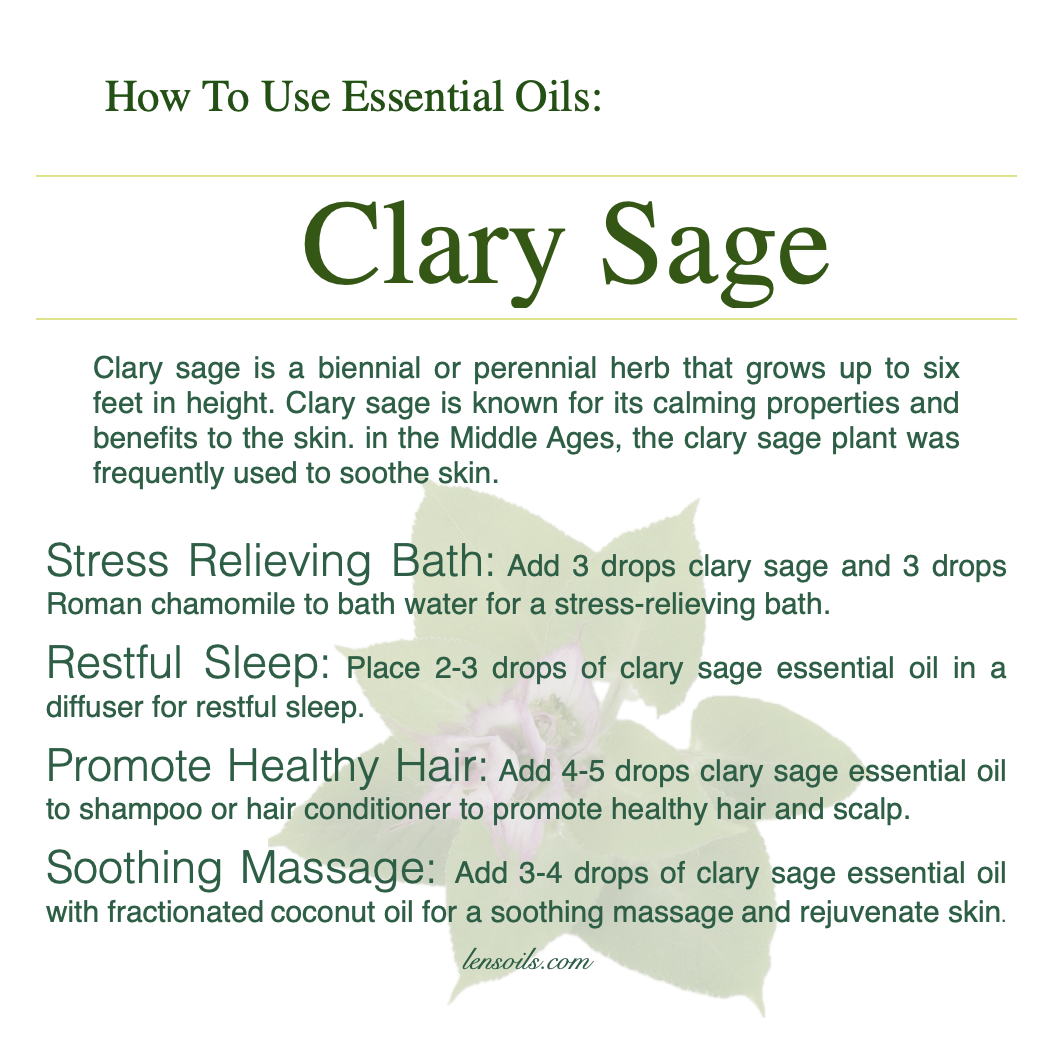
Clary sage (Salvia sclarea) is a biennial or perennial herb that can grow up to six feet tall and is widely recognized for its calming properties and benefits to the skin. Historically, clary sage was frequently used in the Middle Ages to help soothe skin irritations and promote overall wellness. The essential oil, distilled from the plant’s flowering tops and leaves, has a distinct herbal, earthy aroma that has made it a valuable ingredient in aromatherapy and natural skincare. Adding 3 drops of clary sage and 3 drops of Roman chamomile to bath water is a common practice for creating a relaxing, stress-relieving soak. Similarly, diffusing 2-3 drops of clary sage essential oil is widely believed to support restful sleep and relaxation. While anecdotal evidence supports these benefits, more scientific studies are needed to fully confirm its effectiveness in improving sleep quality.
Clary sage essential oil is also commonly used in hair and scalp care. Many people add 4-5 drops of clary sage essential oil to shampoo or conditioner to help promote a healthy scalp and strong hair. The oil contains linalyl acetate, a compound known for its soothing and balancing properties, which may help reduce scalp irritation and improve overall hair appearance. Additionally, clary sage essential oil is used in massage therapy, with 3-4 drops blended into fractionated coconut oil to create a soothing massage blend that helps relax muscles and rejuvenate the skin. Although these applications are widely practiced, further research is needed to determine the long-term benefits of clary sage essential oil on scalp health and hair growth.
Beyond stress relief and hair care, clary sage is being explored for its potential hormonal-balancing properties. Some studies suggest that its compounds may help support relaxation during menstrual cycles and contribute to a greater sense of emotional well-being. Many aromatherapists recommend diffusing clary sage oil or applying it diluted to the lower abdomen for potential menstrual support, though more clinical research is necessary to confirm its direct effects on hormonal balance. Despite these uncertainties, clary sage essential oil remains a popular and versatile natural remedy, valued for its calming, skin-soothing, and aromatic benefits in holistic wellness practices.
Citronella essential oil, distilled from a tall grass native to Asia, is widely recognized for its crisp, lemony-fresh aroma and natural insect-repelling qualities. For generations, it has been used to ward off mosquitoes, spiders, and other pests by masking human scents that attract them. Beyond its well-known bug-repellent benefits, citronella oil also helps freshen the air, making it a popular choice for diffusing during outdoor gatherings or in stuffy indoor spaces. Its clean and uplifting scent not only protects but also creates a refreshing, energizing environment.
In addition to keeping pests away, citronella essential oil offers cleansing and purifying properties that make it useful around the home and in personal care. When added to water, it can be used to clean surfaces and eliminate odors naturally. In hair care, a few drops blended into shampoo or conditioner can help reduce buildup and leave the scalp feeling refreshed. Whether used to brighten a room, cleanse the home, or keep insects at bay, citronella oil is a versatile essential oil with benefits that extend well beyond outdoor use.
Did You Know? Citronella is often confused with lemongrass, but they are actually two different plants. While both belong to the same family and share a fresh, citrus-like aroma, citronella is especially rich in compounds that make it more effective as a natural insect repellent. Because of this, it has long been used not only in essential oils but also in candles, sprays, and outdoor products to help keep pests away.
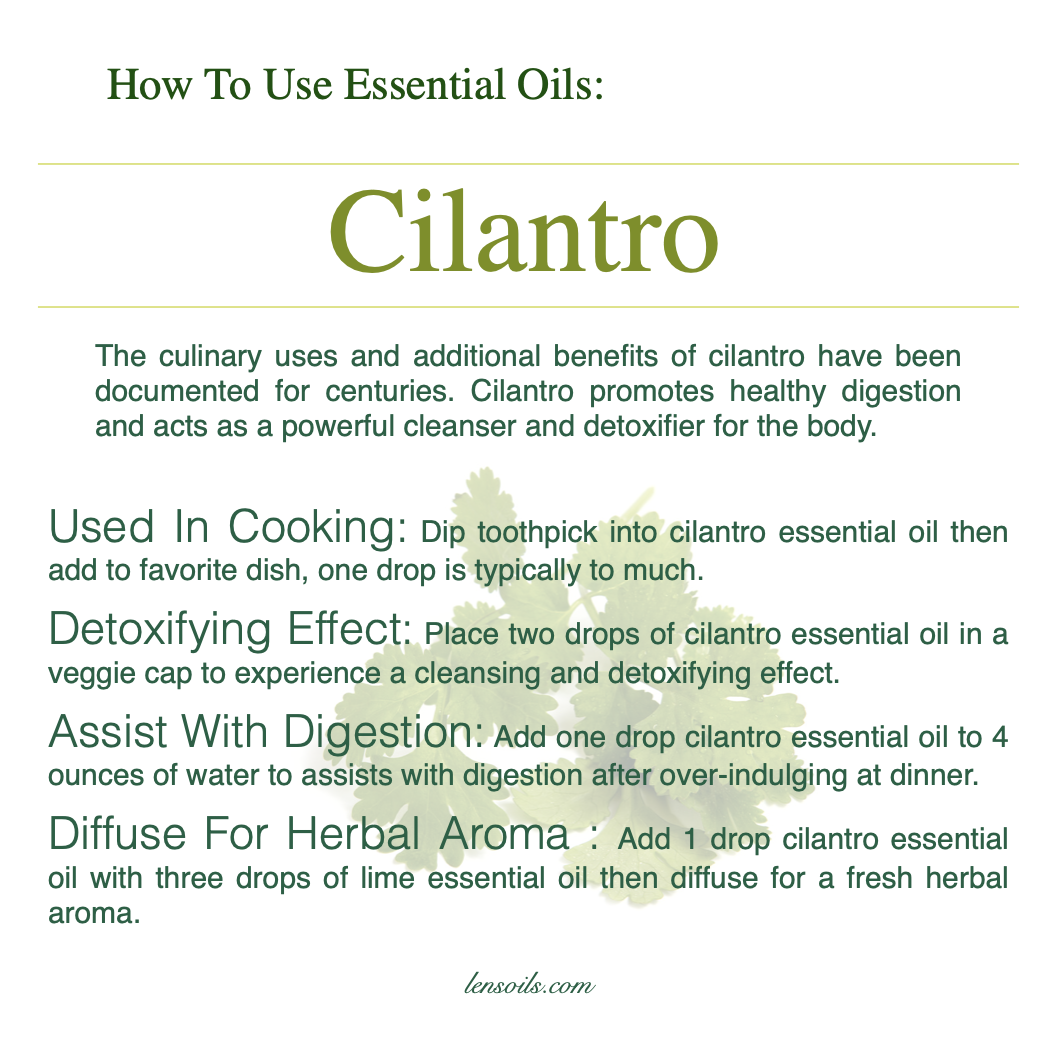
Cilantro (Coriandrum sativum) has been used in culinary and medicinal traditions for centuries, valued for both its distinctive flavor and health-supporting properties. Known for its fresh, herbaceous aroma, cilantro is widely used in cooking, particularly in Mexican, Middle Eastern, and Asian cuisines. The essential oil, derived from cilantro leaves, is highly concentrated, and a small amount goes a long way. A common method for culinary use is dipping a toothpick into cilantro essential oil and stirring it into dishes, as even one full drop may be too strong. Beyond its culinary appeal, cilantro essential oil is believed to promote digestion and help detoxify the body. Some practitioners suggest placing two drops of cilantro essential oil in a veggie capsule to support natural cleansing processes. While cilantro has been traditionally used for detoxification, more scientific studies are needed to validate its direct impact on heavy metal removal and long-term detox benefits.
Cilantro essential oil is also frequently used for digestive support. Many individuals add one drop to four ounces of water to assist digestion after a heavy meal, a practice based on cilantro’s traditional use in easing bloating and occasional stomach discomfort. Additionally, diffusing one drop of cilantro essential oil with three drops of lime essential oil can create a refreshing herbal aroma, often used to promote a sense of freshness and mental clarity. Some aromatherapists believe that cilantro’s invigorating scent may also contribute to emotional balance and stress reduction. While these benefits are widely supported by holistic wellness practices, further clinical research is required to fully understand cilantro essential oil’s physiological effects on digestion and mood enhancement.
Beyond its culinary and detoxifying properties, cilantro essential oil is being explored for its potential antibacterial and antimicrobial effects. Some studies suggest that cilantro oil contains compounds that may help inhibit certain bacteria, making it a potential natural preservative. It has also been traditionally used in folk medicine for immune support, though its efficacy compared to standard antimicrobial treatments remains an area of study. Despite these uncertainties, cilantro essential oil remains a highly versatile oil, offering culinary, digestive, and aromatic benefits, making it a valuable addition to natural wellness practices.
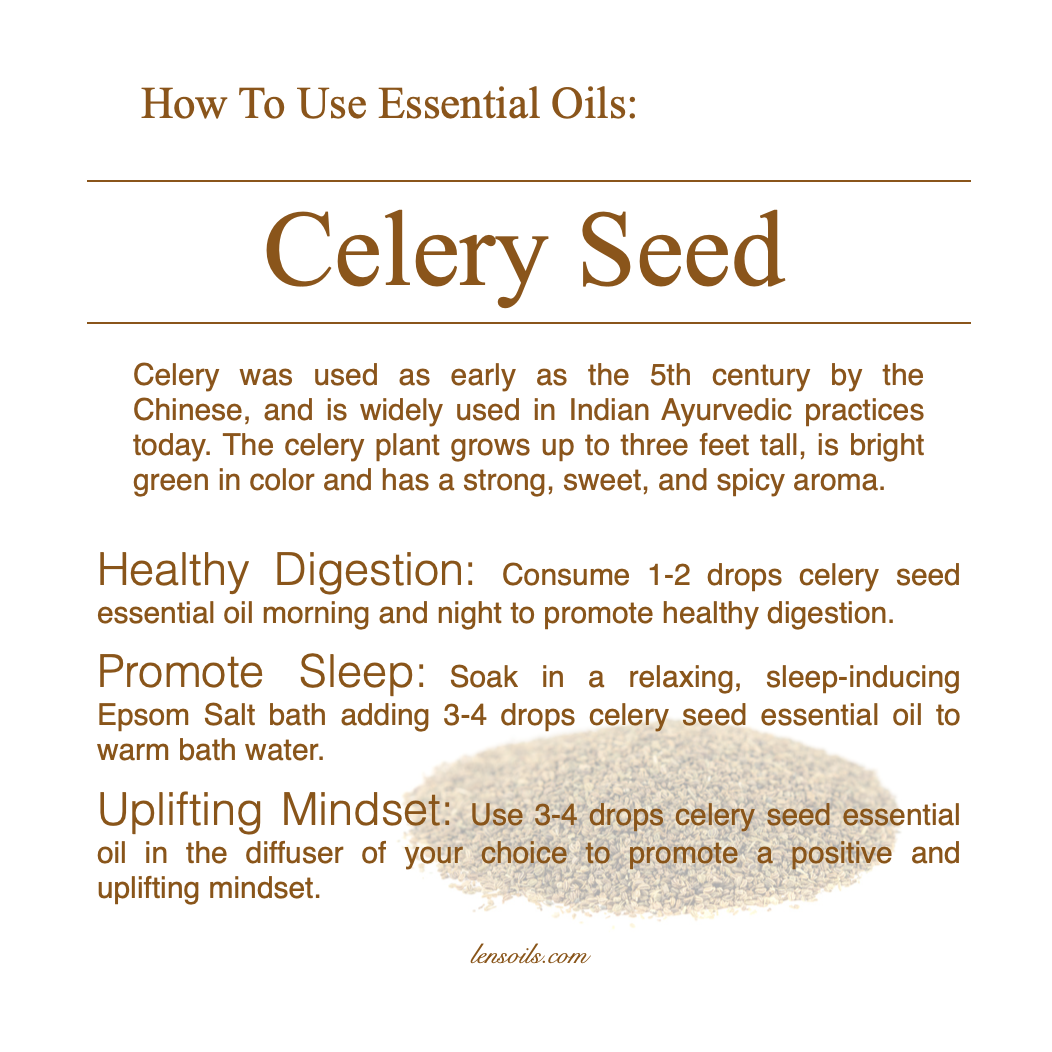
Celery (Apium graveolens) has been cultivated for centuries, with early records of its use dating back to the 5th century in Chinese medicine. It has also played a significant role in Indian Ayurvedic practices, where it is valued for its purported benefits in digestion, circulation, and overall wellness. The celery plant grows up to three feet tall, featuring bright green stalks and leaves with a strong, sweet, and spicy aroma. Celery seed essential oil, derived from the plant’s seeds, has been traditionally used to support healthy digestion. Many practitioners recommend consuming 1-2 drops of celery seed essential oil morning and night to help promote digestive balance. While historical use and anecdotal evidence support this claim, further scientific studies are needed to confirm its direct impact on digestive enzymes and gut health.
Celery seed essential oil is also commonly used in aromatherapy and relaxation techniques. Adding 3-4 drops to a warm bath with Epsom salt is believed to promote relaxation and support restful sleep. Its mild sedative effects are often attributed to phthalates, a natural compound in celery seeds, which may help with nervous tension and stress reduction. Additionally, diffusing 3-4 drops of celery seed essential oil can help create a positive and uplifting mindset, making it a favored choice for stress relief and emotional balance. While aromatherapy practitioners support these benefits, scientific research on celery seed oil’s specific effects on sleep induction and emotional well-being is still ongoing.
Beyond digestion and relaxation, celery seed essential oil is being explored for its potential role in supporting joint and muscle health. Some herbalists believe that the oil’s natural anti-inflammatory properties may help ease occasional discomfort, making it a potential addition to massage oils and topical applications. However, while celery seed extract has been studied for its antioxidant and anti-inflammatory effects, more research is needed to determine the efficacy of celery seed essential oil in pain relief and long-term musculoskeletal support. Despite these uncertainties, celery seed essential oil remains a versatile and valuable natural remedy, widely used for aromatherapy, digestive wellness, and relaxation practices.
Cedarwood (Cedrus spp.) is a towering evergreen tree native to cold climates, thriving in high altitudes and reaching heights of up to 100 feet. Known for its durability and resilience, cedarwood has been used throughout history in construction, medicine, and spiritual practices. The essential oil, derived from the wood of the tree, carries a rich, grounding aroma that promotes a sense of wellness and vitality. In skincare, adding 1-2 drops of cedarwood essential oil to a facial routine may help promote clear and balanced skin due to its purifying and astringent properties. Additionally, cedarwood is widely used in massage therapy, where 3-4 drops blended with fractionated coconut oilcan provide a calming and muscle-relaxing effect. While historical and anecdotal evidence support these uses, more scientific research is needed to confirm its full range of skin-enhancing and muscle-soothing benefits.
Beyond personal care, cedarwood essential oil is commonly used in aromatherapy to promote relaxation and emotional balance. Adding 3-4 drops to a diffuser can help create a calming environment, particularly after a stressful day. Cedarwood is also known for its insect-repellent properties—placing a drop on a cotton ball and leaving it in a closet may help keep moths at bay. This traditional use is supported by the presence of sesquiterpenes and cedrol, compounds that may have natural insect-deterring effects. However, while cedarwood has been traditionally used as a natural moth repellent, scientific studies on its effectiveness compared to chemical alternatives are still ongoing.
In addition to its well-known uses, cedarwood essential oil has been explored for its potential role in improving sleep quality. Some research suggests that cedrol, a primary component in cedarwood, may have mild sedative effects, which could help support relaxation and restful sleep. Many individuals use cedarwood oil in nighttime diffuser blends or apply a diluted amount to pulse points before bed to encourage a sense of calm. While early findings are promising, more clinical research is needed to confirm its direct impact on sleep disorders or long-term sleep improvement. Regardless, cedarwood essential oil remains a versatile and widely used natural remedy, valued for its aromatic, therapeutic, and protective benefits.




 Len's Oils