Moving day is equal parts physical exhaustion and emotional whiplash. Boxes are stacked, furniture is heavier than you remembered, and somehow everything feels urgent all at once. Between loading trucks, saying quick goodbyes, and trying not to lose important paperwork, it’s easy to feel overwhelmed. This Moving Day Survival Guide is about staying steady through the chaos—keeping your energy up, your emotions grounded, and reminding yourself that once the last box is loaded, a new chapter is already in motion.
In every job that must be done, there really is an essential oil that will help — not because it magically finishes the job, but because it keeps you from sighing loudly, checking the clock, and questioning all your life choices. Find the right oil, and suddenly dishes feel competitive, laundry becomes a sport, and emails are answered with suspicious calm. Turns out the real magic isn’t the task becoming fun — it’s you staying sane long enough to finish it.
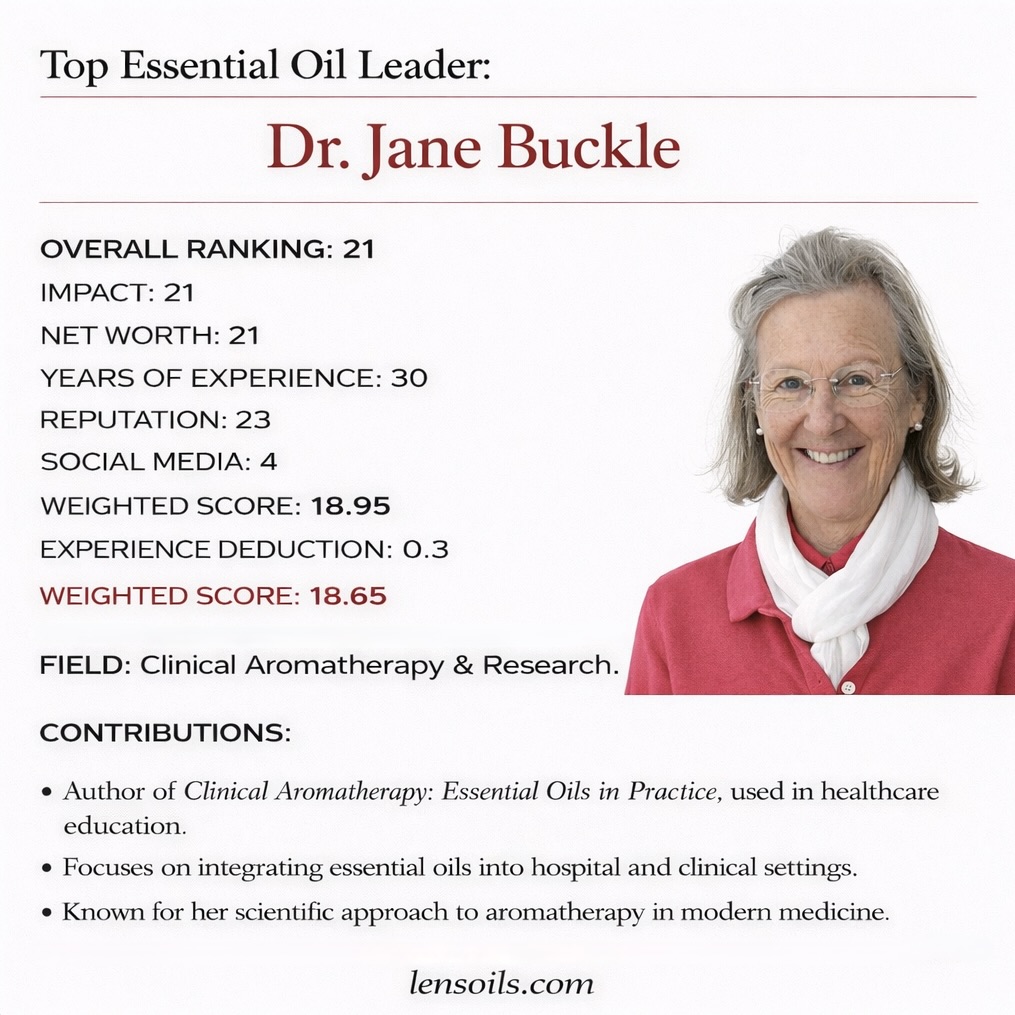
Jane Buckle is widely recognized as a pioneering figure in clinical aromatherapy, particularly for her work bridging essential oils with modern healthcare practice. With more than 30 years of experience, she has played a key role in establishing aromatherapy as a credible complementary approach within medical and clinical environments, emphasizing evidence, safety, and professional accountability.
Dr. Buckle is best known as the author of Clinical Aromatherapy: Essential Oils in Practice, a foundational text used in nursing, hospice, and integrative medicine education. The book is valued for its clear presentation of research, clinical case examples, and practical guidance on using essential oils in healthcare settings. It is frequently referenced by educators and practitioners seeking a science-informed framework rather than anecdotal or purely traditional use.
Her professional focus has centered on integrating essential oils into hospitals, palliative care, and symptom-management programs. Dr. Buckle has worked closely with healthcare professionals to demonstrate how aromatherapy may support patient comfort, stress reduction, and quality of life when used appropriately. This clinical emphasis helped shift aromatherapy discussions from wellness-only spaces into conversations that include nurses, physicians, and administrators.
Dr. Buckle is also known for her rigorous, research-oriented approach to aromatherapy. She has consistently advocated for peer-reviewed studies, standardized protocols, and ethical practice. By encouraging collaboration between researchers and clinicians, she helped lay groundwork for broader acceptance of aromatherapy within integrative medicine models, even in settings that traditionally viewed essential oils with skepticism.
Beyond her published research and clinical advocacy, it is reasonable to say that Dr. Buckle’s long-term influence lies in how she changed expectations within the field. Many practitioners credit her with demonstrating that aromatherapy can coexist with modern medicine without abandoning scientific standards. Her legacy likely rests not only in her writings, but in helping aromatherapy mature into a discipline capable of thoughtful dialogue with healthcare systems worldwide.
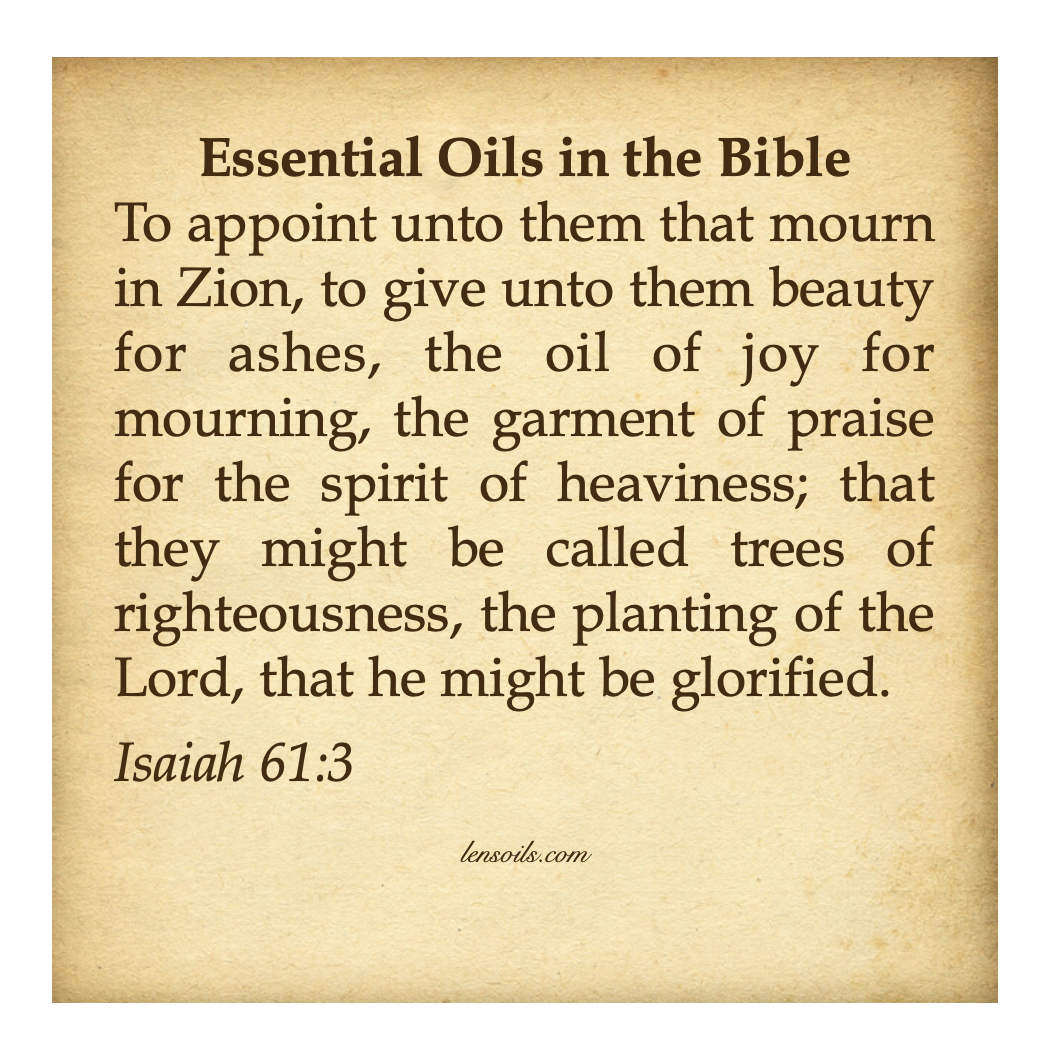
Isaiah 61:3 speaks to restoration after loss, using everyday elements people understood deeply. Ashes were a sign of grief and mourning, while oil was associated with care, comfort, and renewal. In Book of Isaiah, the “oil of joy” contrasts directly with mourning, pointing to a deliberate act of replacing sorrow with something that restores the body and lifts the spirit. Oil was not abstract or symbolic alone — it was applied, felt, and experienced as part of healing and celebration.
Essential oils fit naturally into this promise. Fragrant oils were used to soothe the weary, honor the brokenhearted, and mark moments of change from sorrow to hope. To receive oil instead of ashes meant moving from despair into dignity, from heaviness into praise. The verse shows how physical care and spiritual renewal were intertwined, much like trees planted and tended over time, growing strong and steady as living evidence of restoration and joy.
Story 2 of 10 — Marking 250 Years of American Freedom When Courage Refused to Let Hope Be Destroyed
February 9, 1776 came during a harsh New England winter, when fear and uncertainty weighed heavily on the colonies. British forces were still active in Massachusetts, and many families worried about what continued resistance might cost them. Independence had not yet been declared, and no one knew how the conflict would end. In this tense environment, communication between patriot leaders was both dangerous and necessary.
Couriers played an important role during this time. Often young and unnoticed, they traveled long distances on foot or horseback, carrying sealed letters through snow-covered roads and guarded towns. If caught, they could be arrested or punished. Without these messengers, the colonies would struggle to coordinate their actions or share vital information.
One such courier stopped at a farmhouse to escape the winter weather. Homes relied on open fires for warmth, which made accidental blazes a constant danger. When a fire broke out unexpectedly, there was little time to save belongings. As the building filled with smoke, the courier escaped with nothing but the letter pressed tightly under his coat.
In wartime, losing possessions was common, but losing information could be far more serious. Letters often contained instructions, warnings, or plans that could not easily be replaced. If destroyed, they could delay decisions, expose weaknesses, or leave leaders unprepared for what lay ahead.
After weeks of difficult travel, the message reached its destination. No single letter decided the course of the Revolution, but each successful delivery helped maintain cooperation between colonies facing enormous pressure. Resistance depended not only on soldiers and battles, but on steady communication that allowed leaders to respond wisely.
This moment reflects the deeper fears many colonists faced. People worried about losing homes, livelihoods, and family safety if resistance failed. Hesitation was often rooted in responsibility, not weakness. Courage during this time was not always loud or dramatic.
The survival of that letter did not end fear, but it protected hope. Bravery appeared quietly, when someone chose to preserve what mattered most under difficult circumstances. Independence moved forward through such choices, when refusing to let hope be destroyed became an act of strength.
References
Massachusetts Historical Society, Revolutionary War Correspondence and Courier Accounts
Ray Raphael, The First American Revolution: Before Lexington and Concord
George C. Daughan, If By Sea: The Forging of the American Navy from the Revolution to the War of 1812
These stories are grounded in documented historical events and primary sources, with limited interpretive synthesis used to connect facts and reflect lived experience where the historical record does not capture every detail.
Ho Wood essential oil comes from the Cinnamomum camphora tree, traditionally grown in China and carefully steam distilled from the wood, twigs, and bark. It is especially valued for its naturally high linalool content, which gives it a soft, woody-floral aroma that feels gentle and comforting. This calming scent makes ho wood a favorite during stressful moments, helping the mind slow down and the body settle into a more peaceful state without feeling heavy or overpowering.
In everyday use, ho wood essential oil blends beautifully into both wellness and home routines. It works well in diffusers to ease tension and encourage emotional balance, and it can be added to baths or massage oils for deep relaxation after physical or mental strain. Many people reach for ho wood when they want calm without sedation, making it an ideal oil for evening routines, recovery days, or anytime stress needs a softer landing.
The Japanese proverb reminds us that the person who eats plain food is usually the healthiest — comforting news for anyone who orders rice without a speech. While others chase superfoods and trends, this wisdom points to simple meals, modest portions, and food that doesn’t need explaining. It’s quiet, unfashionable, and somehow keeps working year after year.
There was once a thoughtful man who had four sons, each strong-willed and quick to form opinions. Wanting them to understand patience, perspective, and the danger of judging too quickly, he devised a lesson rooted not in lectures, but in lived experience and time.
He sent his sons, one by one, on a long journey to observe a single pear tree growing far away. Each son was sent during a different season, so none of them would see the tree under the same conditions or circumstances.
The first son traveled during the depths of winter, when the air was cold and the ground was bare. When he returned, he described the tree as ugly, twisted, and lifeless, its branches bent and stripped of anything worth admiring.
The second son was sent in early spring, when the earth was slowly waking. He returned with a different account, explaining that the tree was alive with green buds and fresh shoots, quietly full of promise and unseen potential.
The third son went during the height of summer, when warmth and growth were everywhere. He spoke passionately of blossoms covering the tree, filling the air with sweet fragrance, calling it graceful, vibrant, and the most beautiful thing he had ever witnessed.
The youngest son made the journey in autumn, when the year was nearing its close. He returned describing a tree heavy with ripe fruit, drooping under its own abundance, alive with fulfillment, nourishment, and the reward of time patiently endured.
The father listened carefully to each son, then gently explained that none of them were wrong. Each had simply seen the tree in a single season, never realizing that every phase was necessary to complete its full story.
He told them that a tree, like a person, cannot be judged by one moment, one struggle, or one appearance. The true measure of a life is revealed only after all seasons have passed and their lessons are complete.
If you abandon hope during winter, you will never see the promise of spring, the beauty of summer, or the fulfillment of fall. Do not let one difficult season define an entire life, or steal the joy that still lies ahead.
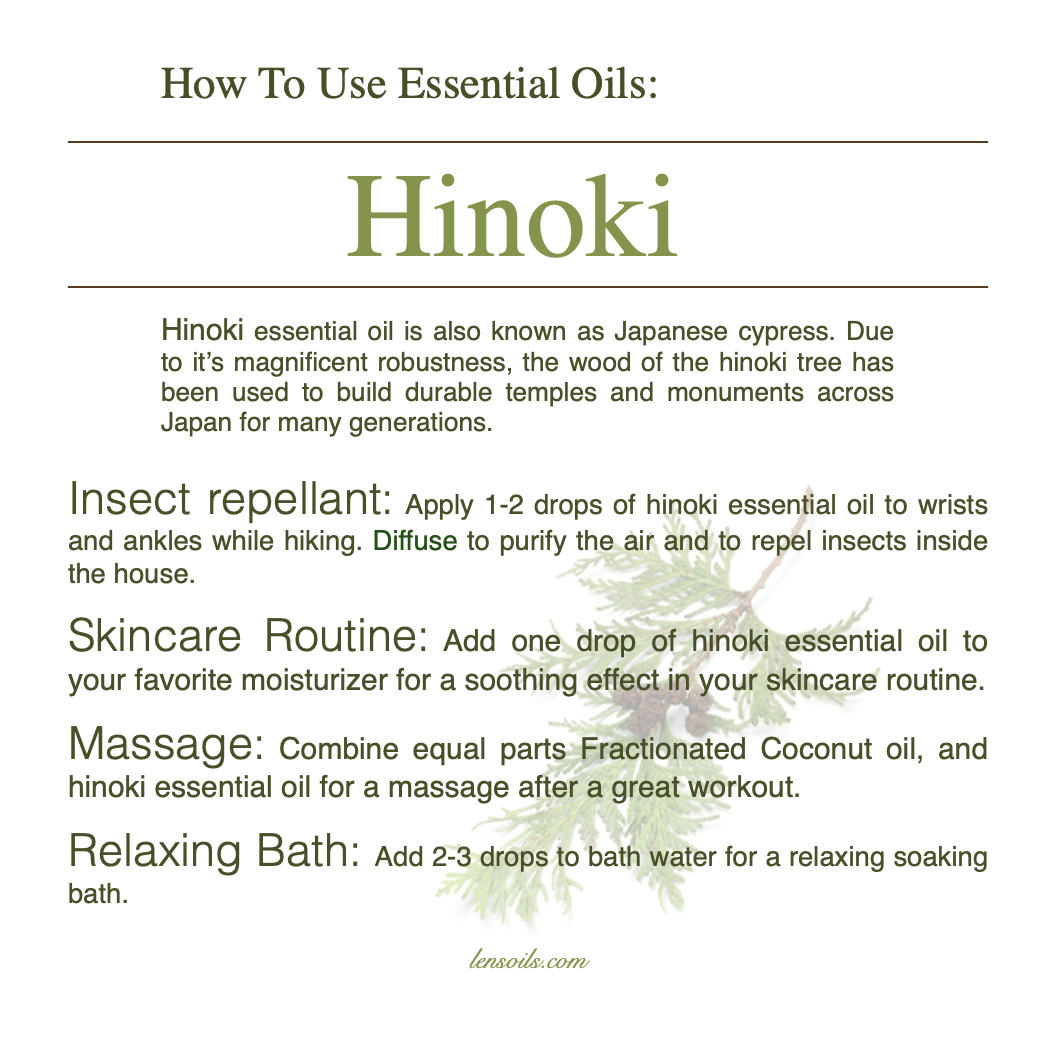
Hinoki essential oil, also known as Japanese cypress, comes from a tree long respected for its strength, calm presence, and natural purity. For centuries, hinoki wood has been used to build temples and sacred spaces throughout Japan, valued for its durability and clean, grounding aroma. The oil carries that same sense of quiet strength. Its fresh, woody scent feels both calming and clarifying, making it a favorite for creating a peaceful atmosphere while gently supporting emotional balance and mental clarity.
In daily use, hinoki essential oil fits easily into both wellness and self-care routines. It can be added to a diffuser to freshen the air and create a relaxing environment, or blended into skincare and massage oils for a soothing, restorative touch. Many people enjoy using hinoki after physical activity or during evening routines, as its aroma helps the body unwind while encouraging a sense of calm, comfort, and steady relaxation.
Psalm 45 was written as a royal wedding song, celebrating a king whose leadership was marked by justice, integrity, and joy. In the ancient Near East, kings were publicly anointed with oil as a sign of authority, favor, and divine approval. The “oil of gladness” in Book of Psalms reflects a real ceremonial act, where fragrant oils were poured as part of celebration, consecration, and honor. Joy was not only spoken of — it was seen, felt, and even smelled.
The mention of myrrh, aloes, and cassia points directly to essential oils known and prized in biblical times. These aromatic resins and woods were used in perfumes, sacred anointing oils, and royal garments, especially for important occasions. Clothing infused with these scents signaled abundance, joy, and distinction. The passage shows that fragrance was woven into spiritual life, leadership, and celebration, connecting righteousness with gladness through tangible, plant-based oils that lifted the senses and marked moments of divine favor.








 Len's Oils