Category Archives: Celebrating 250 Years of America

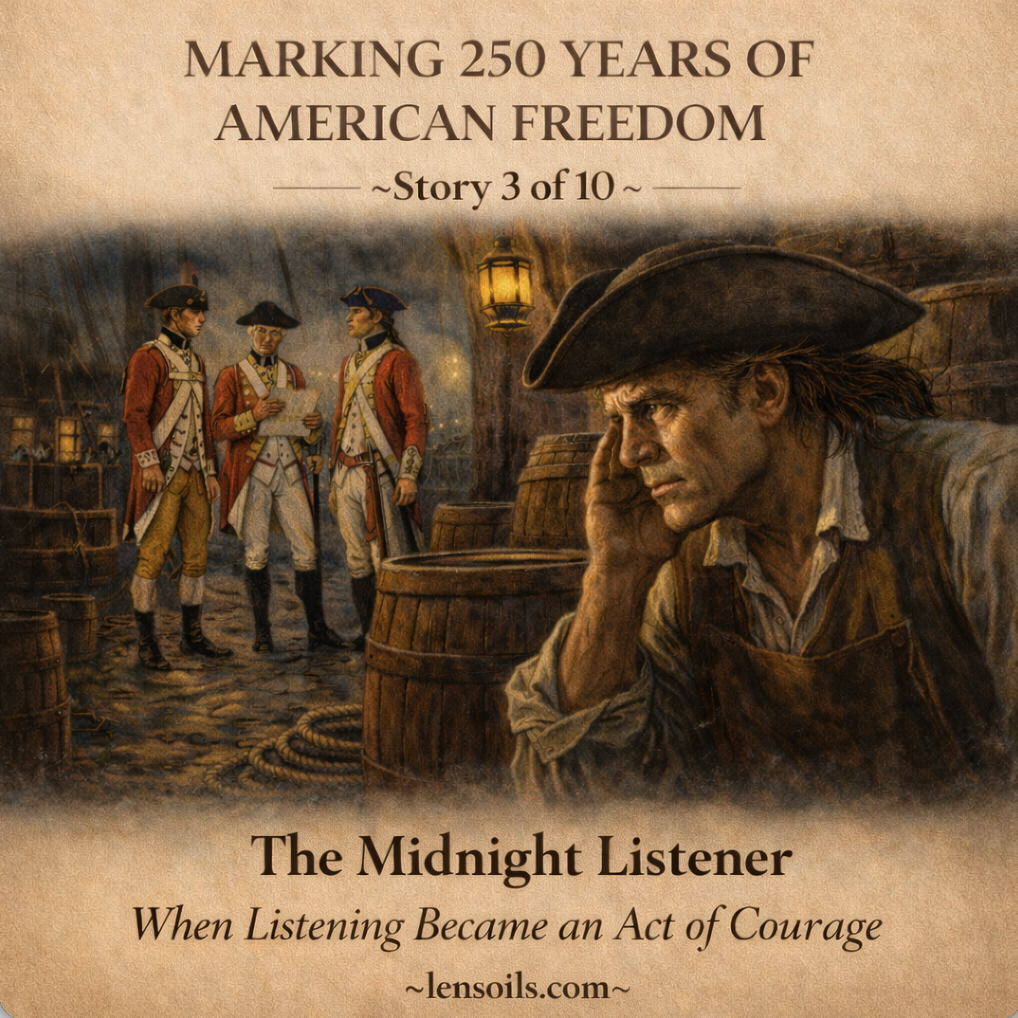
The Midnight Listener

Story 3 of 10 — Marking 250 Years of American Freedom
When Listening Became an Act of Courage

March 17, 1776 marked a turning point in the struggle for independence, as British forces evacuated Boston after months of siege. Ships moved out of the harbor, troops withdrew, and control of the city shifted. While this moment is often remembered for its military significance, it was also shaped by information quietly gathered long before the evacuation took place.

Ports and docks were places where news traveled freely. Sailors, soldiers, laborers, and merchants crossed paths daily, exchanging details without always realizing their importance. British officers often spoke openly near the waterfront, assuming the men loading cargo or repairing ships were uninterested or unaware. That assumption created opportunities few noticed.

One dockworker learned to listen carefully. He kept his eyes down and his reactions hidden while conversations unfolded nearby. He memorized ship names, destinations, troop movements, and supply changes, choosing not to write anything down. Asking questions would have drawn attention. Silence was his protection.

At night, the information was quietly passed along through trusted contacts. No signatures were attached, and no credit was claimed. Accuracy mattered more than speed. Each detail reduced uncertainty for colonial leaders and local militias preparing for what might come next.

These reports helped communities anticipate British actions and protect resources. While no single piece of information decided the outcome of the conflict, together they allowed leaders to act with greater confidence. Preparation depended not only on force, but on awareness.

The risk was real. Discovery could have led to arrest or worse. Yet the work continued because it mattered. Courage during this period often appeared without recognition, shaped by restraint rather than bold action.

This moment reflects a broader truth about the Revolution. Independence did not advance only through famous leaders or decisive battles. It also moved forward through ordinary people who paid attention, stayed disciplined, and acted quietly when uncertainty surrounded them. Listening, in this case, became a form of responsibility that helped prepare a divided people for the decisions still ahead.


References

  1. David McCullough, 1776
  2. National Park Service, Boston National Historical Park — Evacuation of Boston
  3. Benjamin L. Carp, Defiance of the Patriots: The Boston Tea Party and the Making of America

These stories are grounded in documented historical events and primary sources, with limited interpretive synthesis used to connect facts and reflect lived experience where the historical record does not capture every detail.
The Letter That Wouldn’t Be Burned

Story 2 of 10 — Marking 250 Years of American Freedom
When Courage Refused to Let Hope Be Destroyed

February 9, 1776 came during a harsh New England winter, when fear and uncertainty weighed heavily on the colonies. British forces were still active in Massachusetts, and many families worried about what continued resistance might cost them. Independence had not yet been declared, and no one knew how the conflict would end. In this tense environment, communication between patriot leaders was both dangerous and necessary.

Couriers played an important role during this time. Often young and unnoticed, they traveled long distances on foot or horseback, carrying sealed letters through snow-covered roads and guarded towns. If caught, they could be arrested or punished. Without these messengers, the colonies would struggle to coordinate their actions or share vital information.

One such courier stopped at a farmhouse to escape the winter weather. Homes relied on open fires for warmth, which made accidental blazes a constant danger. When a fire broke out unexpectedly, there was little time to save belongings. As the building filled with smoke, the courier escaped with nothing but the letter pressed tightly under his coat.

In wartime, losing possessions was common, but losing information could be far more serious. Letters often contained instructions, warnings, or plans that could not easily be replaced. If destroyed, they could delay decisions, expose weaknesses, or leave leaders unprepared for what lay ahead.

After weeks of difficult travel, the message reached its destination. No single letter decided the course of the Revolution, but each successful delivery helped maintain cooperation between colonies facing enormous pressure. Resistance depended not only on soldiers and battles, but on steady communication that allowed leaders to respond wisely.

This moment reflects the deeper fears many colonists faced. People worried about losing homes, livelihoods, and family safety if resistance failed. Hesitation was often rooted in responsibility, not weakness. Courage during this time was not always loud or dramatic.

The survival of that letter did not end fear, but it protected hope. Bravery appeared quietly, when someone chose to preserve what mattered most under difficult circumstances. Independence moved forward through such choices, when refusing to let hope be destroyed became an act of strength.


References

  1. Massachusetts Historical Society, Revolutionary War Correspondence and Courier Accounts
  2. Ray Raphael, The First American Revolution: Before Lexington and Concord
  3. George C. Daughan, If By Sea: The Forging of the American Navy from the Revolution to the War of 1812

These stories are grounded in documented historical events and primary sources, with limited interpretive synthesis used to connect facts and reflect lived experience where the historical record does not capture every detail.
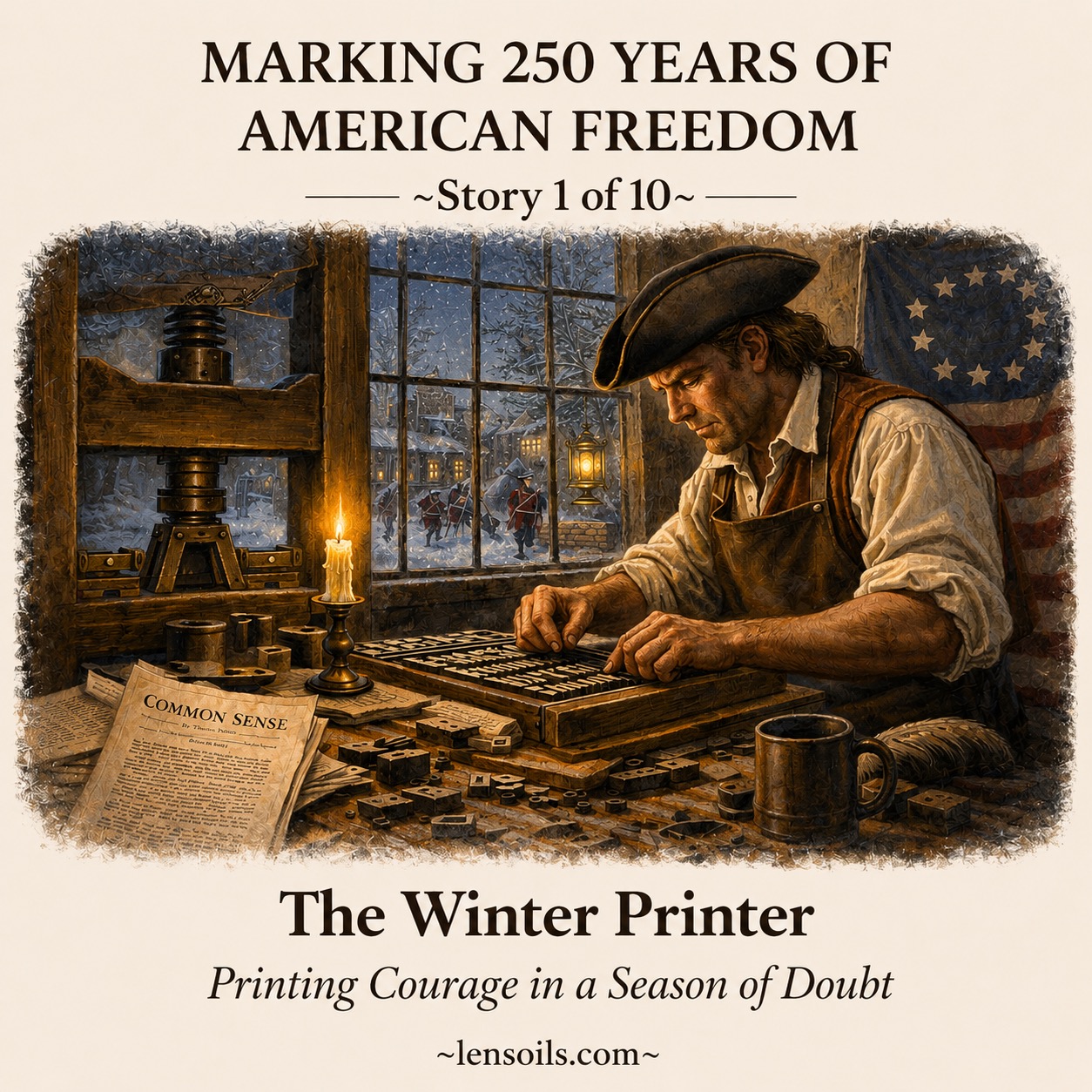
The Winter Printer

Story 1 of 10 — Marking 250 Years of American Freedom
Printing Courage in a Season of Doubt

January 10, 1776 became clear when the pamphlet Common Sense was published in Philadelphia by Thomas Paine. Written in plain language, it argued that monarchy was unjust and that independence was not only possible, but necessary. The colonies were already at war, yet independence had not been declared, and many people still hoped for reconciliation with Britain. Fear and uncertainty shaped daily life, and unity remained fragile.

During these winter weeks, printed words became one of the most powerful tools available. Pamphlets, broadsides, and newspapers carried arguments, warnings, and appeals across colonial towns. Printing presses worked long hours despite shortages of paper, ink, and money. Printers understood that what they produced could influence public opinion, even as it placed them under scrutiny.

One such printer worked late into the night, setting type by hand in a cold shop lit by candles. British patrols still moved through nearby streets, and printing political material carried real risk. Yet presses continued to run, producing pamphlets that called for shared purpose rather than submission or fear. These pages did not promise victory. They asked readers to consider responsibility.

The words traveled far beyond the city. Farmers read them by firelight, shopkeepers shared them with customers, and soldiers passed them between camps. Many readers had never seen the members of Congress or spoken with colonial leaders. What reached them instead were ideas—arguments about liberty, self-rule, and the cost of hesitation.

At the time, these printed appeals did not create immediate agreement. Colonies remained divided, and opinions shifted slowly. But the steady circulation of ideas helped establish a common language. Even among disagreement, people began to recognize shared concerns and shared risks. Unity, when it appeared, did so gradually.

This period shows that independence did not advance only through declarations or battles. It also moved through quiet, persistent effort by ordinary people willing to act without certainty. Long before July 1776, freedom was carried forward by those who chose truth over comfort, even when the outcome was unknown.

What happened in those winter print shops did not resolve the colonies’ disagreements, but it made honest debate unavoidable. Words carried responsibility before freedom carried celebration. Long before independence was declared, people were already practicing it by choosing to think, question, and speak for themselves. That quiet discipline, repeated day after day, prepared a divided people to face the harder decisions still ahead.

References
David McCullough, 1776
Thomas Paine, Common Sense (1776), Library of Congress
Pauline Maier, American Scripture: Making the Declaration of Independence

These stories are grounded in documented historical events and primary sources, with limited interpretive synthesis used to connect facts and reflect lived experience where the historical record does not capture every detail.