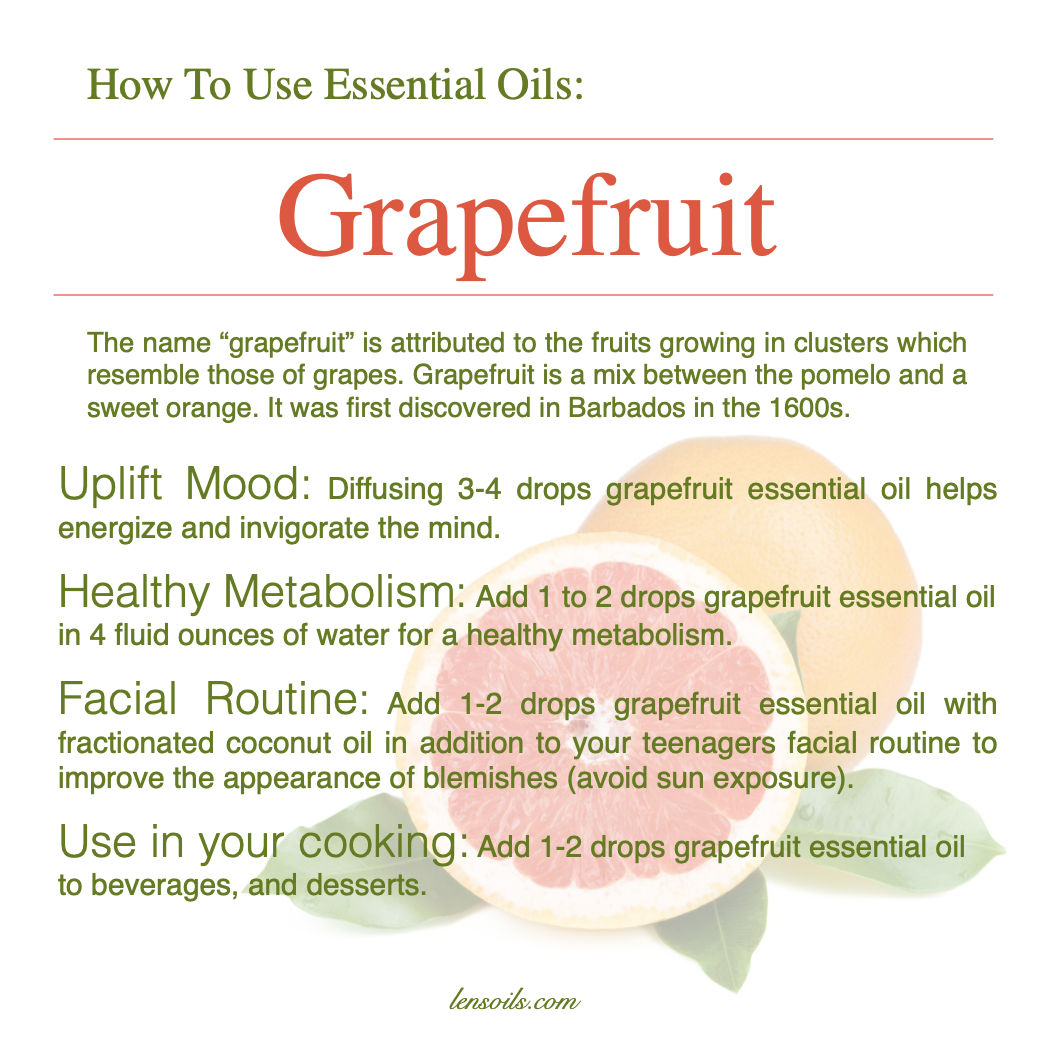
Grapefruit essential oil comes from a bright, citrus fruit that earned its name because it grows in clusters similar to grapes. A natural hybrid of pomelo and sweet orange, grapefruit was first discovered in Barbados in the 1600s and has been appreciated ever since for its fresh, energizing aroma. Diffusing three to four drops can help uplift mood, clear mental fog, and create an invigorating atmosphere that feels light and motivating.
In daily routines, grapefruit essential oil is often used to support a healthy metabolism when a drop or two is added to water. When properly diluted with fractionated coconut oil, it can also be a gentle addition to a facial routine, especially for teenagers looking to improve the appearance of blemishes. Its crisp, tangy flavor makes it a favorite in the kitchen as well, where one or two drops can brighten beverages and desserts. Because grapefruit is photosensitive, topical use should always be followed by avoiding direct sun exposure.
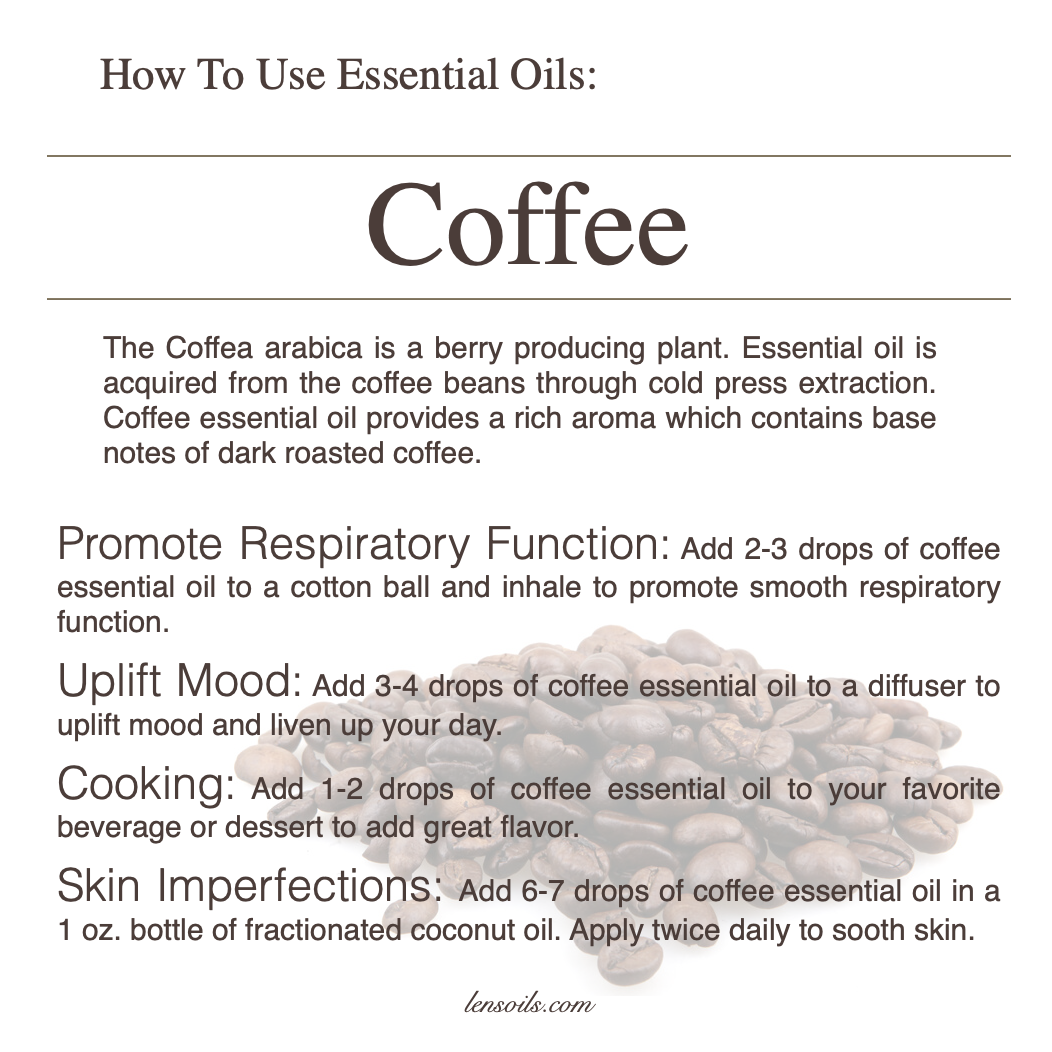
Coffee essential oil, cold-pressed from roasted coffee beans, is known for its bold, roasted aroma that instantly awakens the senses. Just like a freshly brewed cup, this oil carries a warm, rich scent that can energize and uplift the mood. Diffused, it creates a cozy environment perfect for mornings, study sessions, or creative work. Its aroma has been linked to feelings of alertness and comfort, making it a unique addition to diffuser blends.
In addition to its energizing fragrance, coffee essential oil contains antioxidants that can support healthy-looking skin when used in diluted topical blends. Some people use it in massage oils or body scrubs for its invigorating effect on both skin and spirit. Paired with vanilla, cocoa, or spice oils like cinnamon, coffee essential oil adds depth and richness to blends for both personal care and home fragrance.
Did You Know? Coffee is one of the most traded commodities in the world, second only to crude oil. While most people enjoy it as a beverage, coffee essential oil is a relatively new addition to aromatherapy, prized for its ability to capture the comforting scent of coffee in a concentrated form without caffeine.
In the early 1940s, World War II was raging, and the people of England were bracing themselves for the worst. Amid the chaos and fear, one young woman named Marguerite Maury was quietly working in her small Parisian laboratory, surrounded not by weapons or blueprints for war but by plants—hundreds of them. Marguerite was a biochemist and an avid believer in the power of natural remedies. But her fascination wasn’t merely scientific—it was personal. She had suffered from chronic illness as a child and found solace in the aromatic compounds of flowers and herbs.
Marguerite’s life took a turn when she came across the work of René-Maurice Gattefossé, a French chemist whose accidental discovery of lavender’s healing properties changed the course of modern aromatherapy. Gattefossé had burned his hand during an experiment and instinctively plunged it into a container of lavender oil. To his astonishment, the burn healed quickly, with little scarring. Inspired, Marguerite began to explore the healing potential of other plants, diving deeper into the study of essential oils.
Her research led her to a plant that, at first glance, seemed utterly unremarkable. It grew wild in the sun-soaked fields of Morocco, its yellow blossoms swaying gently in the Mediterranean breeze. Local farmers harvested it for its traditional uses, but Marguerite suspected the plant was capable of far more. She obtained a small sample of its oil and began her experiments. What she discovered would change her life—and the lives of countless others.
The oil was unlike anything Marguerite had ever encountered. Its color was a striking indigo blue, almost otherworldly. Marguerite learned that this unique hue came from a compound called chamazulene, which was only formed during the distillation process. But it wasn’t just the color that intrigued her—it was the oil’s effects. It seemed to calm irritated skin, ease tension, and lift the spirits in ways she had never seen before.
Marguerite decided to test the oil on herself. At the time, she was battling stress and fatigue from long days in her lab. She placed a single drop in a bowl of steaming water, inhaling deeply. The rich, herbaceous aroma filled her senses, and almost immediately, she felt a sense of calm and focus. Over the next few months, she shared the oil with friends and colleagues, documenting its effects on everything from blemishes to sore muscles.
Her breakthrough came when she presented her findings to a group of biochemists in Paris. They were skeptical at first, dismissing her work as nothing more than folk medicine. But Marguerite was undeterred. She had seen the results firsthand—she knew the oil was a gift, not just for healing the body but for restoring the soul. Eventually, her persistence paid off, and the scientific community began to take notice.
By the 1950s, Marguerite Maury had become a pioneer in aromatherapy, and her work with this mysterious blue oil had earned her international recognition. She introduced the concept of using essential oils not just for their physical benefits but for their emotional and psychological effects—a radical idea at the time. Her discoveries paved the way for modern holistic medicine, changing how people viewed the connection between plants and healing.
And the plant that started it all? The humble blue tansy, also known as Moroccan tansy. Today, it’s cherished for its skin-soothing properties, its ability to uplift the mood, and its role in Marguerite Maury’s groundbreaking legacy.
Tangerine has been used for a long time in Chinese culture and traditional medicine for staying healthy. The oil from tangerines has special substances called antioxidants, which are good for your health. One of these antioxidants, called limonene, is especially powerful.
For many years, people have used spearmint because it’s good for digestion. It smells sweet and refreshing, which can make you feel clean and happy. This makes it great for jhelping you concentrate and feel good.


 Len's Oils