Tag Archives: Mouth Rinse

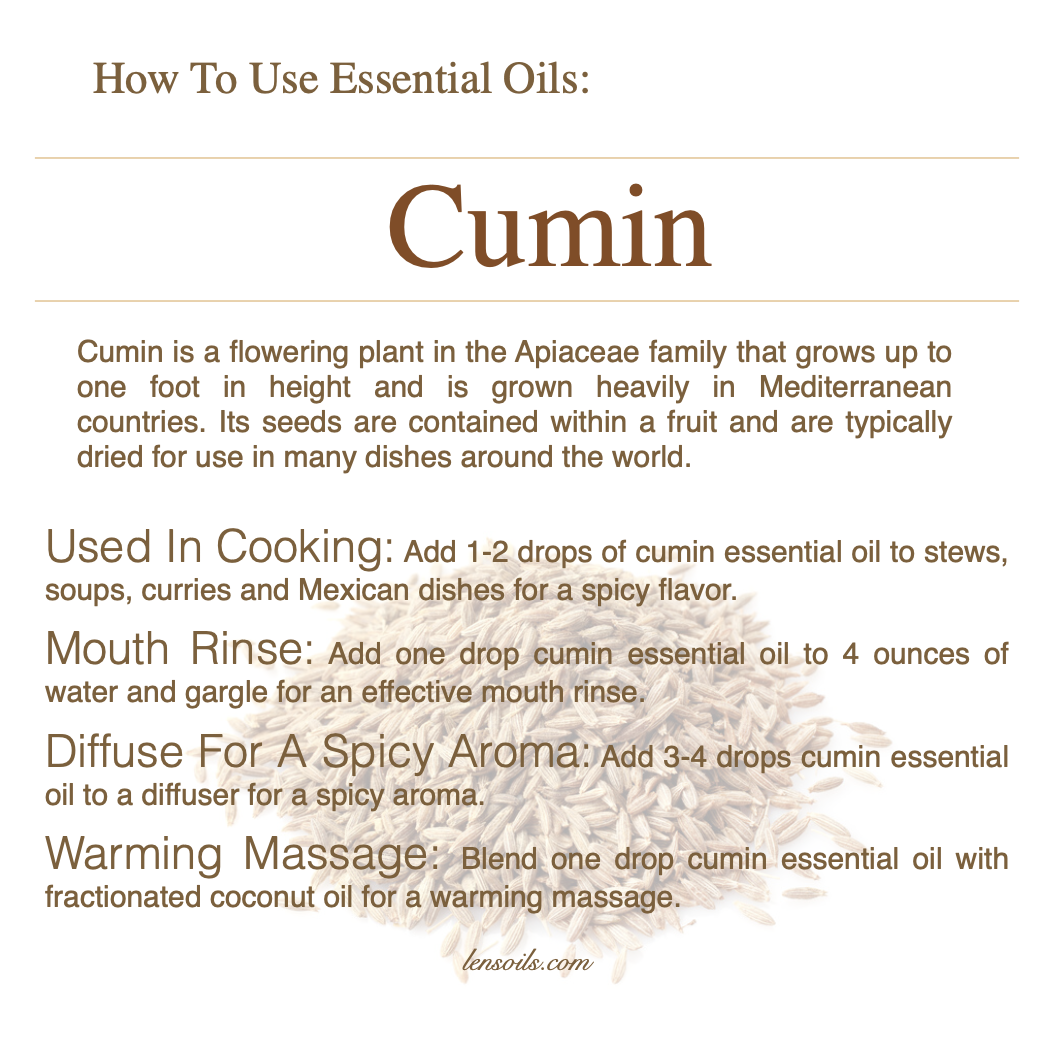
How to Use Essential Oils: Cumin

Cumin essential oil, distilled from the seeds of the Cuminum cyminum plant, carries a warm, spicy, and slightly earthy aroma that has been valued for thousands of years. Native to the Mediterranean and parts of the Middle East, cumin has been used both as a culinary spice and a traditional remedy. In essential oil form, it is often appreciated for its digestive support and its ability to bring depth and richness to blends. Diffused in small amounts, cumin’s strong scent can create a grounding and comforting atmosphere.

Beyond its culinary heritage, cumin essential oil is sometimes used to help promote relaxation after heavy meals or to ease occasional feelings of tension. When blended with citrus oils such as orange or lemon, it takes on a brighter, more refreshing quality, balancing its deep, spicy base. Properly diluted, cumin oil may also be added to massage blends to help comfort muscles and joints, though its potency means it is used sparingly. Its distinct aroma makes it a bold addition to both diffuser recipes and wellness routines.

Did You Know? Cumin seeds have been discovered in ancient Egyptian pyramids, showing they were treasured as far back as 2000 B.C. The seeds were used in cooking, medicine, and even as part of the mummification process. Cumin is also mentioned in the Bible—in Isaiah 28:25–27, it is noted as one of the spices carefully sown and harvested by farmers. Today, India produces the majority of the world’s cumin, highlighting its continued importance in both global cuisine and cultural traditions.

How to Use Essential Oils

Caraway (Carum carvi), a member of the carrot family, has been cultivated for centuries and holds a significant place in both culinary and medicinal traditions. The name caraway is believed to have originated from its early use in Asia and the Mediterranean region. Caraway seeds have historically been used for their digestive benefits and as a natural breath freshener. In biblical times, bread containing caraway seeds was eaten, and there was a superstition that anything containing caraway seeds could not be stolen. This belief made caraway a symbol of protection in European folklore. While these historical uses are well-documented, the scientific basis for caraway preventing theft remains purely anecdotal and rooted in superstition.

Today, caraway seed essential oil is widely used for digestive and oral health benefits. It is often blended with fractionated coconut oil for abdominal massage support, as 2-3 drops may help with occasional stomach discomfort. Caraway seed oil is also used for oral care, with many people adding a drop to their toothbrush or a daily mouth rinse to support fresh breath and dental hygiene. A combination of caraway seed and clove essential oil is sometimes used as a natural cleansing rinse, but while caraway oil has antimicrobial properties, more scientific research is needed to confirm its effectiveness in preventing cavities or gum disease.

Beyond digestion and oral care, caraway seed essential oil is recognized for its calming and relaxing properties. A warm bath infused with one drop of caraway seed essential oil and three drops of lavender essential oil may provide a soothing and aromatic experience. Some studies suggest that caraway seed oil contains antioxidants that may contribute to overall wellness, but further research is needed to determine its full range of health benefits. While many of its traditional applications are well-supported, its effectiveness in areas such as relaxation, stress relief, and long-term antioxidant support requires more clinical validation. Nevertheless, caraway seed essential oil remains a versatile and beneficial addition to natural health and aromatherapy practices.