Tag Archives: Did you know guy

Myrtle-Did You Know?


MyrtleDid you know Myrtle is the oil of adaptability? Myrtle instills the soul with qualities helping you to adjust to new conditions, capable of being flexible, and recovering quickly from difficult conditions. Myrtle helps brings joy to the heart allowing things to flow naturally. It is helpful during difficult and challenging times.

The Ancient Egyptians knew of the therapeutic properties of myrtle, macerating the leaves in wine to counter fever and infection. The best and most fragrant myrtle trees came from Egypt. In Biblical times, Jewish women wore garlands of myrtle on their heads on their wedding day as a symbol of love, and to bring them happiness. In 1876, Dr Delioux de Savignac advocated the use of myrtle for bronchial infections, for problems of the urinary and reproductive system, and for hemorrhoids.

A study shows that myrtle oil kills Salmonella on fresh fruits and vegetables. Scientists intentionally inoculated fresh tomatoes, and iceberg lettuce with a strain of Salmonella. Then they used a cleaning solution that had a dilution rate of 1 to 1000 containing myrtle leaf oil to test if it would kill the bacteria. The results suggest that the use of myrtle can be an effective alternative to the use of chlorine or other disinfectants on fruits and vegetables.

Myrtle lowers blood sugar and has been traditionally used in Iran for the treatment of Malaria. It is also known for its ability to repel mosquitoes, and kills fungus, and mold. In some cultures myrtle is used to heal mouth ulcers, warts, and acne.

My Personal Shingles Story

ShinglesSeveral years ago I started getting very painful burn like boils on the back of my neck and chest. It was a strange feeling starting deep in the tissues of my skin with itching. Then feeling like several dozen bees stinging me all at once the closer to the surface of my skin it appeared. Needless to say the sores were painful and very red.

I went to a doctor to see what was going on. He explained to me that I had shingles, a viral infection, caused by the same virus that causes chickenpox. He also explained after a person has had chickenpox the virus lies dormant in the nervous system. Years later, that virus can be reactivated by disease, immune deficiency, or stress , and cause shingles.

I was given a prescription without the promise it would heal quickly. When you are told that it could still be several weeks before you are free from shingles, it is very disheartening.

Two years ago a friend told me he had shingles. I said come on over, and I will give you essential oils that will help ease the pain. John was reluctant, but came over anyway. I looked in my Modern Essentials book, and discovered that melaleuca, eucalyptus, lavender, lemon, geranium, and bergamot have been studied to help with shingles. I put five drops of each oil in a roller bottle and then mixed them together with fractionated coconut oil. John rubbed the oil on his shingles from the roller bottle. Four days later John’s suffering with shingles was making a dramatic turn.

I never get tired of hearing stories of how essential oils may help ease the pain, and love seeing first hand the influence of essential oils.

Essential Oils Studied for their Laxative Properties.

Laxative Properties
Laxative

This means an agent that stimulates bowel excretion.

Basil Essential Oil
Basil is cooling to the skin, and can be used to soothe minor irritations. When diffused, Basil helps promote clear breathing, and healthy respiratory function while sharpening focus, and lessening stress.
Learn More

Bergamot Essential Oil
Italians have used Bergamot for years to reduce tension and stress and to soothe and rejuvenate skin. Bergamot is unique among citrus oils due to its ability to be both uplifting and calming, making it ideal to help with anxious and sad feelings.
Learn More

Black Pepper Essential Oil
Black Pepper is best know as a cooking spice however, Black Pepper also promotes healthy circulation both internally and externally, but should be used with caution when applied topically due to its strong warming sensation.
Learn More

Fennel Essential Oil
Fennel is best known for its distinct licorice aroma and taste, yet its ability to ease digestive troubles and monthly menstrual cycles are equally noteworthy.
Learn More

Ginger Essential Oil
Ginger can lessen motion sickness, soothe an upset stomach, and help digest food after a large meal. Ginger essential oil can also be applied topically or inhaled to help with digestion issues.
Learn More

Rose Essential Oil

Rose essential oil is known to promote smooth, beautiful skin.
Learn More

Spikenard Essential Oil
The health benefits of Spikenard essential oil can be attributed to its properties as a, deodorant, laxative, and sedative.
Learn More

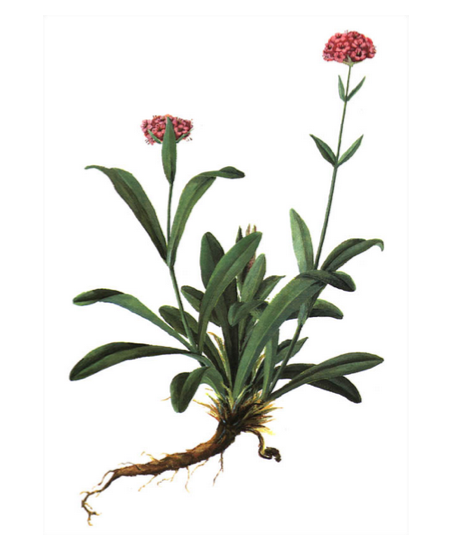
Spikenard-Did You Know?

SpikenardDid you know Spikenard is the oil of gratitude? Spikenard encourages true appreciation for life. It addresses repeated patterns of ingratitude, where a person sees  themselves as a person whom criticism or abuse may be directed, or a victim of their life circumstances. It encourages individuals to let go and find appreciation for all of life’s experiences.

Spikenard is grown in Nepal, China, and India. For centuries the oil has been used as a perfume, as a medicine, and in religious ceremonies from Europe to India. In the bible It was offered on the specialized incense altar in the time when the Tabernacle was located in the First and Second Jerusalem Temples. Several references to Spikenard, were made in both the Old and the New Testament.

Spikenard was one of the early aromatics used by the Egyptians and is mentioned frequently throughout the bible. The powdered root of Spikenard is also mentioned in some Islamic traditions as the fruit which Adam ate in Paradise, which God had forbidden him to eat. It was traditionally used to anoint people of high honor due to its healing properties, and is considered to have spiritual applications for blessing and protection.

Spikenard has a long list of therapeutic uses in clinical aromatherapy and is considered non-toxic, non-irritant, and non-sensitizing. It is also used to season foods in Medieval European cuisine.The health benefits of Spikenard Essential Oil can be attributed to its properties as a deodorant, laxative, and a sedative in nature.

Essential Oils Studied For Anti-Inflammatory Properties

Studied for Anti-Inflamatory
Anti-Inflammatory means an agent that alleviates inflammation.

Basil Essential Oil
Basil is cooling to the skin, and can be used to soothe minor irritations. When diffused, Basil helps promote clear breathing, and healthy respiratory function while sharpening focus, and lessening stress.
Learn More

Bergamot Essential Oil

Italians have used Bergamot for years to reduce tension and stress and to soothe and rejuvenate skin. Bergamot is unique among citrus oils due to its ability to be both uplifting and calming, making it ideal to help with anxious and sad feelings.

Learn More


Cassia Essential Oil 

When diluted, Cassia can help soothe sore, achy joints. Cassia can be used in cooking either as a replacement for Cinnamon in pies and breads, or by itself in many different entrees and desserts.
Learn More


Eucalyptus Essential Oil

Eucalyptus oil is best known for respiratory health and works great when massaged over the chest and throat. Can be applied without diluting.
Learn More

Frankincense Essential Oil

Frankincense promotes a healthy inflammatory response and acts as an overall tonic to the body’s systems, helping them function optimally. When inhaled or diffused, Frankincense induces feelings of peace, relaxation, satisfaction, and overall wellness.
Learn More

Geranium Essential Oil

This oil has been used to promote clear skin and healthy hair, making it ideal for skin and hair care products. It also helps calm nerves and lessen stress.
Learn More

Helichrysum Essential Oil
Helichrysum is great for regenerative effects, can be used without dilution for most people. No first aide kit should be without this oil.
Learn More

Lavender Essential Oil
Inhaling Lavender promotes relaxation and a restful night’s sleep, making it an ideal oil to diffuse at bedtime and when stress levels are high.
Learn More

Lemongrass Essential Oil
This oil supports healthy digestion, and soothes aching muscles. Lemongrass purifies and tones skin, and acts as an overall tonic to the body’s systems.
Learn More

Myrrh Essential Oil

Myrrh is valued as an expectorant, which means it promotes the expulsion of mucus in cases of bronchitis and lung congestion. Myrrh is best for chronic conditions, because it contains tannins and resins, it has an astringent effect on tissues.
Learn More


Orange Essential Oil

Orange can be taken daily to cleanse the body or used on surfaces as a natural cleaner. Diffusing Wild Orange will energize and uplift the mind and body while purifying the air.
Learn More


Peppermint Essential Oil

Peppermint is very pleasing to the taste buds (you can add the oil to tea or water), but is powerfully soothing to the digestive system. You can usually apply it without diluting, inhale for nausea, or take internally as suggested.
Learn More

Roman Chamomile Essential Oil

Ancient Romans used the oil for mental clarity and courage during war. While the most common use of chamomile is in teas, Roman Chamomile can also be found in face creams, drinks, hair dyes, shampoos, and perfumes.
Learn More

Rosemary Essential Oil

Rosemary supports healthy digestion and helps soothe sore muscles and joints. This oil also helps reduce nervous tension and fatigue.
Learn More

Wintergreen Essential Oil

The main chemical component in Wintergreen, methyl salicylate, is used in topical joint creams to soothe sore muscles and joints; in fact, Wintergreen and Birch are the only plants in the world that contain methyl salicylate naturally.
Learn More

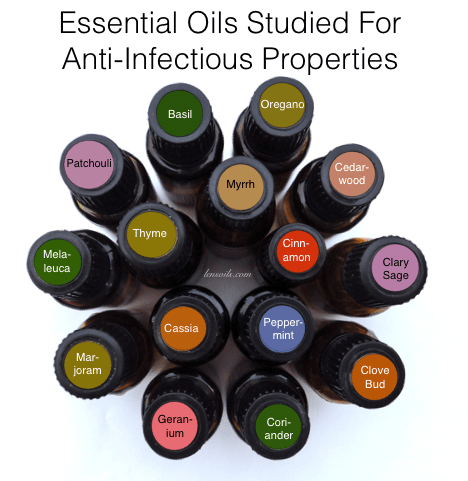
Essential Oils Studied For Anti-Infectious Properties

Anti-Infectious PropertiesAnti-Infectious means an agent that prevents and combats the spread of germs.

Basil Essential Oil

Basil is cooling to the skin, and can be used to soothe minor irritations. When diffused, Basil helps promote clear breathing, and healthy respiratory function while sharpening focus, and lessening stress.
Learn More

Cassia Essential Oil
When diluted, Cassia can help soothe sore, achy joints. Cassia can be used in cooking either as a replacement for Cinnamon in pies and breads, or by itself in many different entrees and desserts.
Learn More

Cedarwood Essential Oil
Diffusing or inhaling Cedarwood will help maintain healthy breathing and respiratory function and, when applied topically, Cedarwood promotes clear, healthy skin.
Learn More

Cinnamon Essential Oil

Cinnamon is strong, so be sure to dilute it (3 drops of carrier oil to 1 drop of cinnamon), but you can cook, bake, or even make candy with it too.
Learn More

Clary Sage Essential Oil
The main chemical component of Clary Sage is linalyl acetate, part of the esters group, making it one of the most relaxing, soothing, and balancing essential oils.
Learn More

Clove Essential Oil

Clove has been used for years in dental preparations,candy, and gum for its flavor and ability to promote oral health, yet it provides a myriad of health benefits.
Learn More

Coriander Essential Oil
Coriander has a high linalool content, giving it strengthening and toning properties that benefit the skin, emotions, and body.
Learn More

Geranium Essential Oil

This oil has been used to promote clear skin and healthy hair, making it ideal for skin and hair care products. It also helps calm nerves and lessen stress.
Learn More

Marjoram Essential Oil
Marjoram oil is noted for it’s calming properties, can be taken internally, or used topically, although sensitive skin may want to dilute and it. One drop of essential oil is equivalent to 2 tsp. of dried herbs.
Learn More


Melaleuca Essential Oil
Melaleuca is best known for its purifying properties. It can be used to cleanse and purify. Taken internally, Melaleuca enhances immunity when seasonal threats are high.
Learn More


Myrrh Essential Oil

Myrrh is valued as an expectorant, which means it promotes the expulsion of mucus in cases of bronchitis and lung congestion. Myrrh is best for chronic conditions, because it contains tannins and resins, it has an astringent effect on tissues.
Learn More


Oregano Essential Oil
Oregano is one of the most potent essential oils. It must be diluted (3 drops of carrier oil to 1 drop of Oregano essential oil when used topically). Apply to reflex points. It can be used as a flavoring in cooking.
Learn More

Patchouli Essential Oil
Patchouli is regularly used in the perfume industry as well as in scented products. The fragrance of Patchouli provides a grounding, balancing effect on emotions.
Learn More

Peppermint Essential Oil

Peppermint is very pleasing to the taste buds (you can add the oil to tea or water), but is powerfully soothing to the digestive system. You can usually apply it without diluting, inhale for nausea, or take internally as suggested.
Learn More

Thyme Essential Oil

Thyme makes a great defense against many concerns, although it should always be diluted (4 drops carrier oil to 1 drop thyme). You can also cook with it.
Learn More

Essential Oils Studied for Antiviral Properties

Studied For Antiviral Properties
The term antiviral refers to something that is able to inhibit or stop the development or duplication of an infection causing virus.

Arborvitae Essential Oil
Is unique because it has a high ester content, and 0% thuja content (a toxic constituent found in other varieties of arborvitae). It also has insect repelling properties even decomposition of the fallen trees for centuries.
Learn More

Basil Essential Oil
Basil is cooling to the skin, and can be used to soothe minor irritations. When diffused, Basil helps promote clear breathing, and healthy respiratory function while sharpening focus, and lessening stress.
Learn More

Cassia Essential Oil

When diluted, Cassia can help soothe sore, achy joints. Cassia can be used in cooking either as a replacement for Cinnamon in pies and breads, or by itself in many different entrees and desserts.
Learn More

Cinnamon Essential Oil

Cinnamon is strong, so be sure to dilute it (3 drops of carrier oil to 1 drop of cinnamon), but you can cook, bake, or even make candy with it too.
Learn More

Clove Essential Oil
Clove has been used for years in dental preparations,candy, and gum for its flavor and ability to promote oral health, yet it provides a myriad of health benefits.
Learn More

Eucalyptus Essential Oil

Eucalyptus oil is best known for respiratory health and works great when massaged over the chest and throat. Can be applied without diluting.
Learn More

Helichrysum Essential Oil

Helichrysum is highly valued and sought after for its many health benefits. It’s frequently consumed to help detoxify the body.
Learn More

Lemon Essential Oil

Lemon oil is great for cleaning, can be taken internally, or used topically. Those with sensitive skin may want to dilute  it, because it can cause photosensitivity.
Learn More

Lime Essential Oil

Lime oil can usually be used without diluting, depending on skin sensitivity. It can be taken internally, but like all citrus oils, it can cause sensitivity to the sun with topical use up to 12 hours prior.  Using it before bed is a great option.
Learn More

Melaleuca Essential Oil
Melaleuca is best known for its purifying properties. It can be used to cleanse and purify. Taken internally, Melaleuca enhances immunity when seasonal threats are high.
Learn More

Melissa (Lemon Balm) Essential Oil
Melissa is also great for your skin or over the reflex areas of concern. You can also add a drop to your tea.
Learn More

Myrrh Essential Oil

Myrrh is valued as an expectorant, which means it promotes the expulsion of mucus in cases of bronchitis and lung congestion. Myrrh is best for chronic conditions, because it contains tannins and resins. It has an astringent effect on tissues.
Learn More

Peppermint Essential Oil

Peppermint is very pleasing to the taste buds (you can add the oil to tea or water), but is powerfully soothing to the digestive system. You can usually apply it without diluting. inhale for nausea, or take internally as suggested.
Learn More

Thyme Essential Oil

Thyme is a great defense against many concerns. It should always be diluted (4 drops carrier oil to 1 drop thyme). You can also cook with it.
Learn More

Roman Chamomile-Did You Know?

Roman ChamomileDid you know Roman Chamomile oil is the Oil of Spiritual Purpose? Roman Chamomile supports a person who is discovering and living their true purpose in life. Roman Chamomile helps individuals find purpose and meaning in their lives. Chamomile assists the person that is consumed with meaningless activities, helping them focus on more fulfilling work.

The Egyptian’s dedicated Roman Chamomile to the sun and worshiped it above all other herbs for its healing properties and has been used cosmetically for at least 2,000 years. Chamomile was also used by the Romans in medicines, beverages and incense. Ancient Romans used the oil for mental clarity and courage during war.

One place Roman Chamomile grows very well is in the United Kingdom, harvesting takes place during late June or July although heavy rain often causes problems to the farmers schedule. And as if that were not enough, the crop must be harvested at the precise time that it contains the highest yield of essential oil, so this can be quite a challenge to say the least. Other countries that grow Chamomile for the production of essential oil, include Argentina, Belgium, France, Hungary, Italy and the USA.

Roman Chamomile grows close to the ground, reaching only up to a foot in height. It has gray-green leaves, flowers that resemble a daisy, and smells like apple. The plant has been nicknamed the “plant’s physician,” because it has positive effects on plants growing nearby.

While the most common use of chamomile is in teas, Roman Chamomile can also be found in face creams, drinks, hair dyes, shampoos, and perfumes. Roman Chamomile has a therapeutic, calming effect on the skin, mind, and body. It soothes body systems and promotes a healthy inflammatory response.