Tag Archives: culinary uses

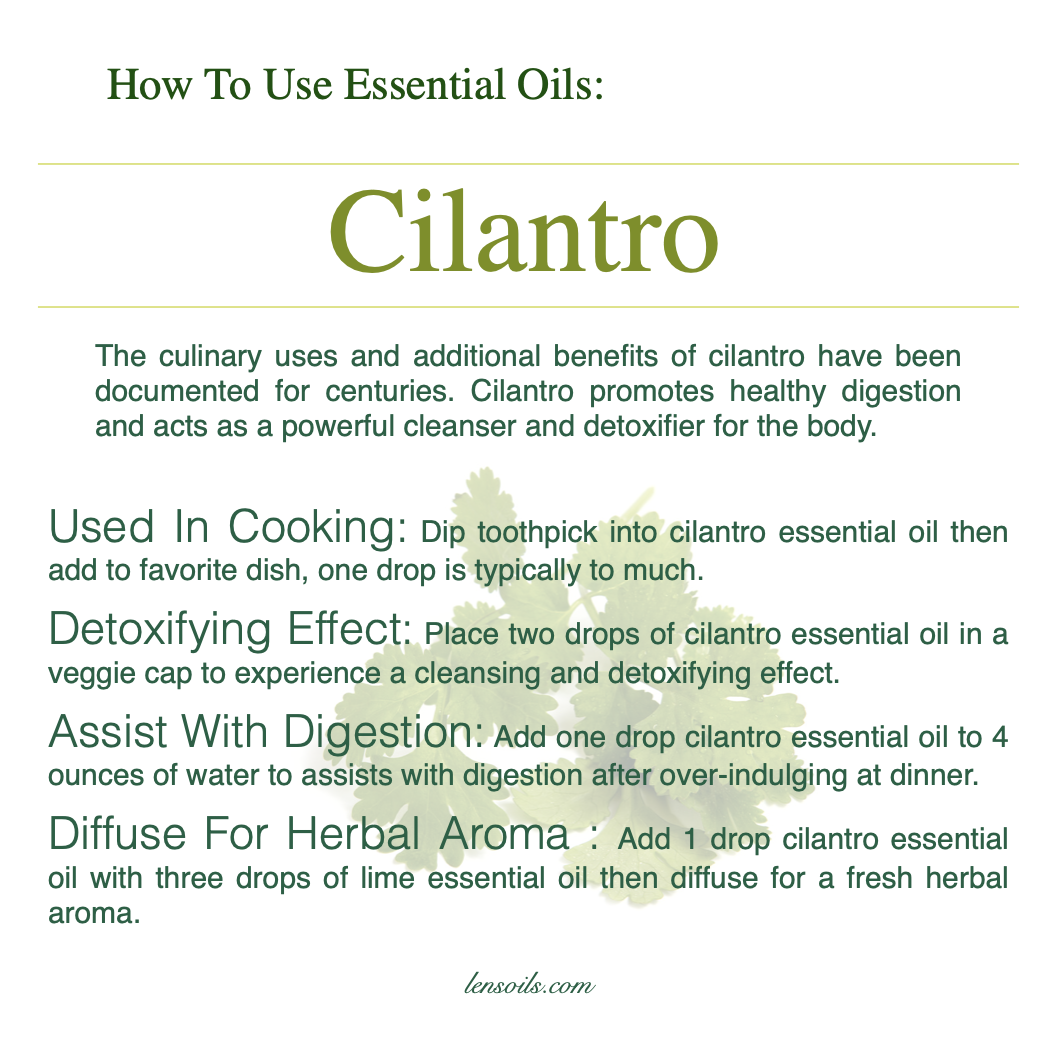
How to Use Essential Oils: Cilantro

Cilantro (Coriandrum sativum) has been used in culinary and medicinal traditions for centuries, valued for both its distinctive flavor and health-supporting properties. Known for its fresh, herbaceous aroma, cilantro is widely used in cooking, particularly in Mexican, Middle Eastern, and Asian cuisines. The essential oil, derived from cilantro leaves, is highly concentrated, and a small amount goes a long way. A common method for culinary use is dipping a toothpick into cilantro essential oil and stirring it into dishes, as even one full drop may be too strong. Beyond its culinary appeal, cilantro essential oil is believed to promote digestion and help detoxify the body. Some practitioners suggest placing two drops of cilantro essential oil in a veggie capsule to support natural cleansing processes. While cilantro has been traditionally used for detoxification, more scientific studies are needed to validate its direct impact on heavy metal removal and long-term detox benefits.

Cilantro essential oil is also frequently used for digestive support. Many individuals add one drop to four ounces of water to assist digestion after a heavy meal, a practice based on cilantro’s traditional use in easing bloating and occasional stomach discomfort. Additionally, diffusing one drop of cilantro essential oil with three drops of lime essential oil can create a refreshing herbal aroma, often used to promote a sense of freshness and mental clarity. Some aromatherapists believe that cilantro’s invigorating scent may also contribute to emotional balance and stress reduction. While these benefits are widely supported by holistic wellness practices, further clinical research is required to fully understand cilantro essential oil’s physiological effects on digestion and mood enhancement.

Beyond its culinary and detoxifying properties, cilantro essential oil is being explored for its potential antibacterial and antimicrobial effects. Some studies suggest that cilantro oil contains compounds that may help inhibit certain bacteria, making it a potential natural preservative. It has also been traditionally used in folk medicine for immune support, though its efficacy compared to standard antimicrobial treatments remains an area of study. Despite these uncertainties, cilantro essential oil remains a highly versatile oil, offering culinary, digestive, and aromatic benefits, making it a valuable addition to natural wellness practices.

Cilantro-Did You Know?

Did you know Cilantro essential oil is the oil of releasing control? Cilantro makes the detoxification of emotions and debris. It is helpful in lightening your load through the release of issues buried in the body, heart and soul. Those in need of cilantro may attempt to obsessively control other people or manage their surrounding and conditions.

It is a mystery as to where Cilantro originated, but it is thought by many to be from the Mediterranean region of Europe. No one knows exactly, but it appears that cilantro has been used for at least 5000 years. The seeds, also known as coriander, have even been found in ancient Egyptian tombs. Perhaps this was because the coriander seeds were thought by the ancient herbalists to be an aphrodisiac.

The therapeutic and culinary uses of Cilantro have been documented for centuries. Cilantro contains antioxidants known to protect the body’s cells from oxidative stress. Cilantro promotes healthy digestion and acts as a powerful cleanser and detoxifier for the body’s systems. Applied topically, Cilantro is very soothing and cooling to the skin, and it adds a fresh, herbal aroma to any essential oil blend when diffused.

There is also a large amount of literature speculating that cilantro may be an effective chellation therapy for people who have excess mercury in their systems. Some think that mercury poisoning could be the result of metallic teeth fillings. Every time a person with fillings chews, the fillings release minute amounts of mercury gas that may be breathed into the system. Of course, this is all speculative and disputed. Nevertheless, many people who have suffered from mercury poisoning and the “brain cloud” it causes have reported fairly rapid relief by the consistent consumption of cilantro over a period of just a few weeks.

Cilantro’s culinary uses are endless, adding a flavorful twist to meats, salads, dips, and guacamole. A small amount goes a long way, sometimes a drop is too much and overpowering. Just dipping a toothpick into an essential oil bottle, then using the toothpick for stirring is sufficient.

Cilantro-Did You Know?

Coriander:Cilantro-did you knowDid you know Cilantro essential oil is the oil of releasing control? Cilantro makes the detoxification of emotions and debris. It is helpful in lightening your load through the release of issues buried in the body, heart and soul. Those in need of cilantro may attempt to obsessively control other people or manage their surrounding and conditions.

It is a mystery as to where Cilantro originated, but it is thought by many to be from the Mediterranean region of Europe. No one knows exactly, but it appears that cilantro has been used for at least 5000 years. The seeds, also known as coriander, have even been found in ancient Egyptian tombs. Perhaps this was because the coriander seeds were thought by the ancient herbalists to be an aphrodisiac.

The therapeutic and culinary uses of Cilantro have been documented for centuries. Cilantro contains antioxidants known to protect the body’s cells from oxidative stress. Cilantro promotes healthy digestion and acts as a powerful cleanser and detoxifier for the body’s systems. Applied topically, Cilantro is very soothing and cooling to the skin, and it adds a fresh, herbal aroma to any essential oil blend when diffused.

There is also a large amount of literature speculating that cilantro may be an effective chellation therapy for people who have excess mercury in their systems. Some think that mercury poisoning could be the result of metallic teeth fillings. Every time a person with fillings chews, the fillings release minute amounts of mercury gas that may be breathed into the system. Of course, this is all speculative and disputed. Nevertheless, many people who have suffered from mercury poisoning and the “brain cloud” it causes have reported fairly rapid relief by the consistent consumption of cilantro over a period of just a few weeks.

Cilantro’s culinary uses are endless, adding a flavorful twist to meats, salads, dips, and guacamole. A small amount goes a long way, sometimes a drop is too much and overpowering. Just dipping a toothpick into an essential oil bottle, then using the toothpick for stirring is sufficient.

Cinnamon-Did you Know?

Cinnamon BarkDid you know Cinnamon is the oil of sexual harmony and greatly supports the reproductive system and aids with sexual issues? It helps people to embrace their body, and accepting their physical attractiveness. Cinnamon encourages the growth of strong relationships based on mutual love, and respect.

Cinnamon, which is actually the dried bark of the laurel tree a large tropical evergreen tree can grow up to 45 feet tall. Cinnamon has been used for thousands of years. This powerful spice was used in Egypt, Rome, and China. Cinnamon is native to Sri Lanka. The “real” cinnamon of old comes from the Cinnamomum zeylanicum tree.

Historically, cinnamon is even mentioned in the Bible. Moses used it as an ingredient for his anointing oils. In ancient Rome, it was burned during funerals, as a way to remove some of the odor of dead bodies. The ancient Egyptians used it in embalming mummies because of its pleasant odors and its preservative qualities.

Extracted from bark, cinnamon oil contains strong cleansing and immune enhancing properties. Due to its high content of cinnamaldehyde, Cinnamon should be diluted with Fractionated Coconut Oil when applied to the skin and only one to two drops are needed for internal benefits.

Cinnamon is very purifying to the circulatory system and it helps promote circulation, both internally and when applied to the skin, helping to ease sore muscles and joints. Cinnamon helps maintain a healthy immune system, especially when seasonal threats are high. When diffused, Cinnamon promotes clear breathing while purifying the air. Cinnamon is frequently used in mouth rinses and gums for its oral health benefits. Cinnamon has a long history of culinary uses, adding spice to desserts, entrees, and hot drinks.

Cinnamon-Did You Know?

Cinnamon Bark
Did you know Cinnamon is the oil of sexual harmony and greatly supports the reproductive system and aids with sexual issues? It helps people to embrace their body, and accepting their physical attractiveness. Cinnamon encourages the growth of strong relationships based on mutual love, and respect.

Cinnamon, which is actually the dried bark of the laurel tree a large tropical evergreen tree can grow up to 45 feet tall. Cinnamon has been used for thousands of years. This powerful spice was used in Egypt, Rome, and China. Cinnamon is native to Sri Lanka. The “real” cinnamon of old comes from the Cinnamomum zeylanicum tree.

Historically, cinnamon is even mentioned in the Bible. Moses used it as an ingredient for his anointing oils. In ancient Rome, it was burned during funerals, as a way to remove some of the odor of dead bodies. The ancient Egyptians used it in embalming mummies because of its pleasant odors and its preservative qualities.

Extracted from bark, cinnamon oil contains strong cleansing and immune enhancing properties. Due to its high content of cinnamaldehyde, Cinnamon should be diluted with Fractionated Coconut Oil when applied to the skin and only one to two drops are needed for internal benefits.

Cinnamon is very purifying to the circulatory system and it helps promote circulation, both internally and when applied to the skin, helping to ease sore muscles and joints. Cinnamon helps maintain a healthy immune system, especially when seasonal threats are high. When diffused, Cinnamon promotes clear breathing while purifying the air. Cinnamon is frequently used in mouth rinses and gums for its oral health benefits. Cinnamon has a long history of culinary uses, adding spice to desserts, entrees, and hot drinks.