Psalm 45 was written as a royal wedding song, celebrating a king whose leadership was marked by justice, integrity, and joy. In the ancient Near East, kings were publicly anointed with oil as a sign of authority, favor, and divine approval. The “oil of gladness” in Book of Psalms reflects a real ceremonial act, where fragrant oils were poured as part of celebration, consecration, and honor. Joy was not only spoken of — it was seen, felt, and even smelled.
The mention of myrrh, aloes, and cassia points directly to essential oils known and prized in biblical times. These aromatic resins and woods were used in perfumes, sacred anointing oils, and royal garments, especially for important occasions. Clothing infused with these scents signaled abundance, joy, and distinction. The passage shows that fragrance was woven into spiritual life, leadership, and celebration, connecting righteousness with gladness through tangible, plant-based oils that lifted the senses and marked moments of divine favor.
Cassia is oil of self-assurance, Its scarlet bark warms the soul. It stirs gladness, courage, and cheer, Helping the timid become whole.
It comforts the heart when it falters, Whispers, “Stand tall, do not hide.” Through laughter it brightens the spirit, Releasing the fears kept inside.
No longer embarrassed or shrinking, Nor haunted by judgment’s sting. The shy and insecure are lifted, Their voices are taught to sing.
When feeling humiliated, worthless, Or weighed by shadows of doubt, Cassia lights flames of boldness, And turns hesitation about.
Its fragrance calls forth new horizons, A path where the brave dare to tread. Cassia inspires the journey of living, Awakening hope where fear once spread.
With courage restored to the spirit, And gladness set joyfully free, We stand in the strength of cassia— Wrapped in its gift, the true Bark of Bravery.
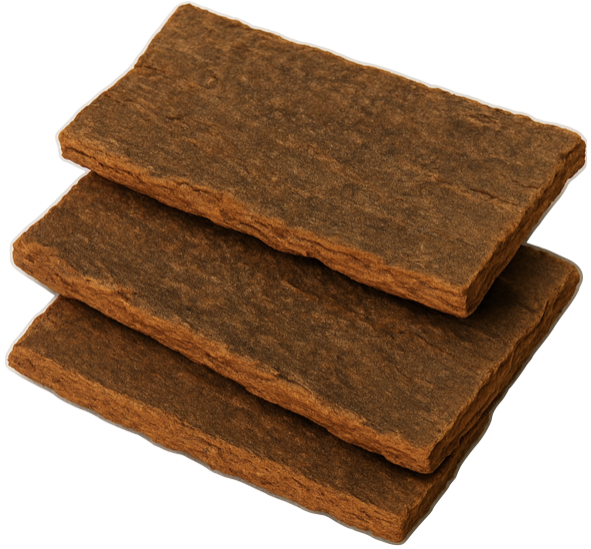
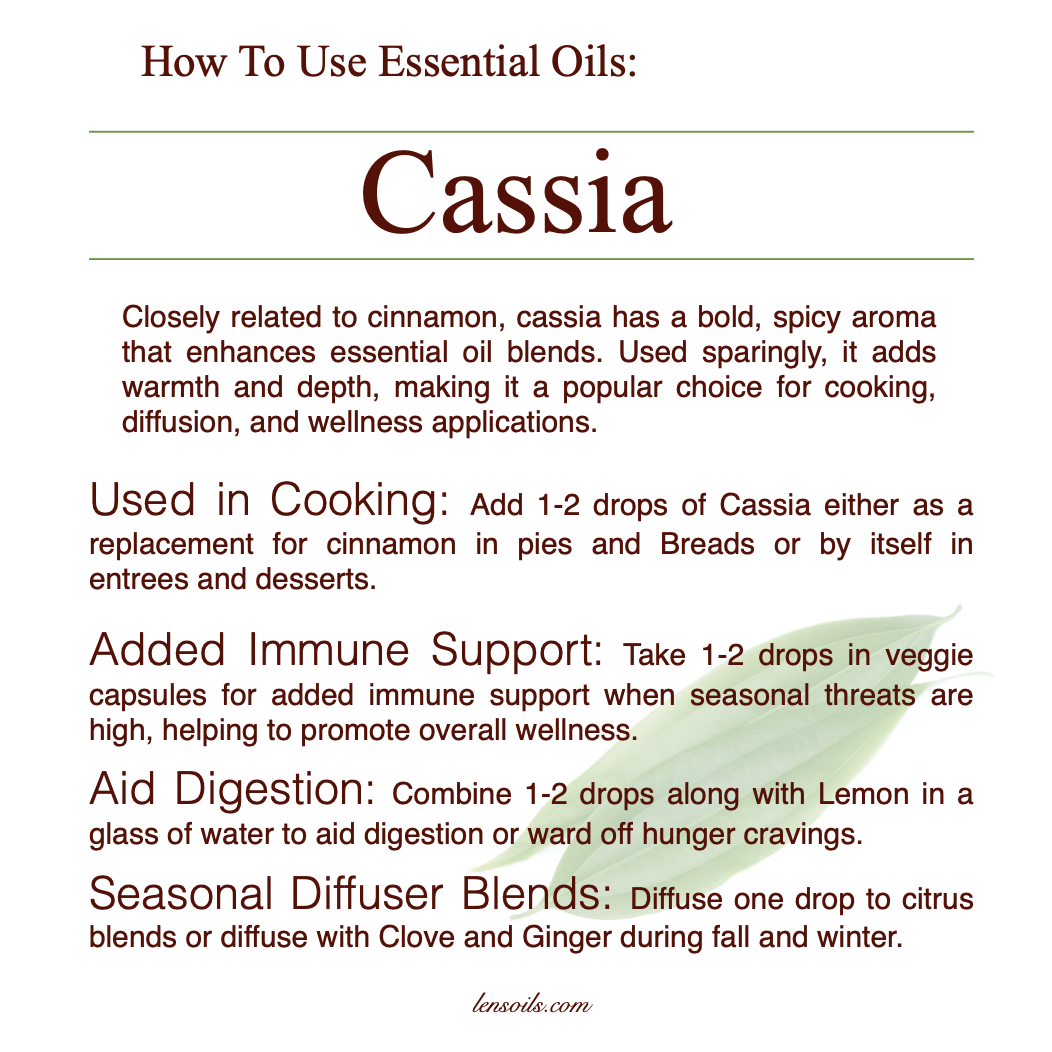
Cassia (Cinnamomum cassia), a close relative of cinnamon, is known for its warm, spicy aroma and strong flavor. Native to China and Southeast Asia, cassia has been used for centuries in traditional medicine and culinary applications. Its essential oil is highly concentrated, and only small amounts are needed to enhance recipes or blends. In cooking, 1-2 drops of cassia essential oil can be used as a substitute for cinnamon in pies, breads, and desserts or as a standalone spice in savory dishes. Due to its intense potency, it should be used sparingly. While cassia is recognized for its aromatic and culinary benefits, research on whether cassia essential oil retains the same digestive and metabolic effects as whole cassia bark is still limited.
Cassia is also commonly used for immune support and seasonal wellness. Many essential oil practitioners recommend taking 1-2 drops in a veggie capsule to help support the immune system, particularly during seasonal changes. Some preliminary studies suggest that cassia contains antimicrobial properties, but more research is needed to determine its direct impact on immune function. Additionally, combining cassia with lemon essential oil in a glass of water is thought to aid digestion and curb hunger cravings, though scientific validation on cassia oil’s role in appetite suppression remains inconclusive. While cassia essential oil may offer digestive support, it is highly concentrated and should always be diluted properly before ingestion.
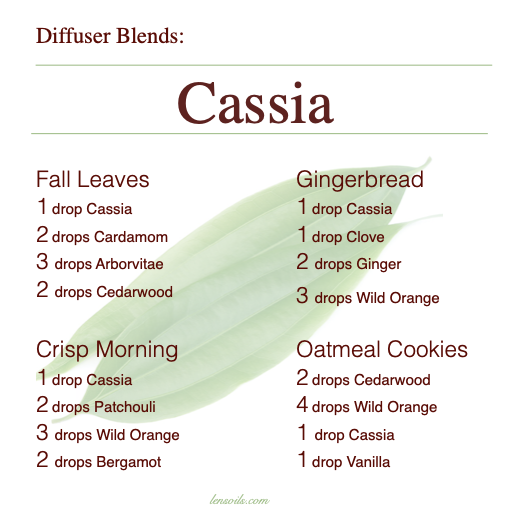
Cassia’s bold, warming scent makes it a popular choice for diffuser blends, particularly in fall and winter. Just one drop blended with citrus oils or paired with clove and ginger can create a cozy, inviting atmosphere. Some believe that diffusing cassia may also help support respiratory function, but further studies are needed to confirm these benefits. While cassia essential oil has strong antimicrobial and aromatic properties, its direct effects on digestion, immune support, and respiratory health require additional scientific validation. Nevertheless, cassia remains a versatile and powerful essential oil for culinary, aromatic, and occasional wellness applications.
It was a cold winter evening in the late 18th century when a young French chemist named Antoine Baumé began experimenting with the oils of an exotic spice. His research, focused on its strong, spicy aroma, revealed that just a small amount of this oil could transform ordinary remedies into something extraordinary. What made this discovery remarkable was how it seemed to heighten the senses, soothe discomfort, and even energize the weary. But Baumé, a man of few words, left his notes mysteriously vague, leaving the spice’s legacy to drift into obscurity—for a while.
Centuries earlier, in ancient Egypt, Pharaohs demanded that this spice be included in their burial rites. Its aroma, earthy yet sweet, filled the air during rituals, symbolizing both purification and preservation. Priests burned it in temple offerings, believing its scent could carry prayers to the heavens. While frankincense and myrrh often stole the spotlight, this spice stood silently in the background, a humble hero in the halls of Egyptian mysticism.
In the Bible, this spice was mentioned multiple times as a symbol of wealth, sacredness, and divine favor. Moses used it in the anointing oil for the Tabernacle, mixing it with other spices to create a fragrance both holy and unforgettable. The book of Proverbs spoke of its value, and it became synonymous with wisdom and health. Over time, merchants from the East carried it to Europe, where kings and queens clamored for its warmth and richness.
Fast forward to the 15th century, and Christopher Columbus encountered a mystery spice in the New World. Though it was not the spice he sought—cinnamon—it bore a striking resemblance in both flavor and aroma. He brought it back to Spain, where it quickly became a favorite in kitchens, adding depth to savory and sweet dishes alike. Explorers and traders were enchanted by its versatility, yet its true origin remained a closely guarded secret.
In 1819, English herbalist Nicholas Culpeper wrote of the spice’s remarkable medicinal properties. According to Culpeper, its oil could soothe indigestion, relieve chills, and fortify the immune system against seasonal threats. He recommended mixing it with water or wine for digestive relief or combining it with honey to calm a sore throat. While cinnamon was the darling of herbal medicine, this spice became its quieter but equally powerful cousin.
In kitchens across Europe and Asia, bakers discovered that just a drop or two of this spice could elevate pies, breads, and desserts to new heights. It offered a richer, deeper flavor than cinnamon, with a hint of fiery sweetness that lingered long after the last bite. It wasn’t just for food, though. Blended with clove and ginger, its oil became a staple in wintertime rituals, warming homes and hearts alike.
By the 20th century, essential oil practitioners rediscovered this ancient treasure. Aromatherapists praised its ability to boost the immune system and calm the mind. Fitness enthusiasts began using it in water to ward off hunger cravings, while others added it to their wellness routines for digestive support. Its strong, spicy scent became a favorite in fall and winter diffuser blends, evoking feelings of warmth, comfort, and nostalgia.
But what made this spice truly unique was its resilience. Growing wild in the forests of Southeast Asia, the plant thrived in conditions where few others could survive. Its hardy bark and leaves were as unyielding as its aroma was inviting. For centuries, its strength and vitality inspired those who used it, whether for cooking, healing, or spiritual practices.
And now, with all the clues before you—the sacred oils of ancient Egypt, the fiery warmth of fall recipes, the misunderstood spice sought by explorers—you might think we’re talking about cinnamon. But we’re not.
The unsung hero of this tale is Cassia. A close relative to cinnamon, Cassia’s bold, spicy oil has traveled through history, quietly transforming lives with its warmth and strength. And now, as Paul Harvey would say, you know the rest of the story.
When using essential oils, it’s essential to understand that everyone’s sensitivity differs. What feels “hot” to one person may not feel the same to another. A “hot” oil refers to an essential oil that may cause a warming or burning sensation on the skin, feel spicy if consumed, or cause discomfort if it comes into contact with sensitive areas like the eyes. To avoid irritation, always dilute “hot” oils with a carrier oil, typically in an 8:2 ratio (8 parts carrier oil to 2 parts essential oil).
Exercise caution when using “hot” oils such as Cassia, Cinnamon Bark, Clove, Hyssop, Lemongrass, Ocotea, Oregano, and Thyme. Proper dilution is crucial to ensure safety and comfort during use. Additionally, be mindful when applying essential oils to sensitive areas or ingesting them, as undiluted use can lead to discomfort or irritation. Always follow recommended guidelines and test oils on a small patch of skin to check for reactions before broader application.
In the Bible, God instructs Moses to create a special holy anointing oil using specific ingredients. This recipe is found in Exodus 30:23-25. Here’s a simplified explanation:
Take the following high-quality spices:
500 shekels of liquid myrrh
250 shekels of sweet-smelling cinnamon
250 shekels of calamus (a fragrant cane)
500 shekels of cassia (a spice similar to cinnamon)
A hin (about a gallon) of olive oil
These ingredients are combined by a skilled perfumer to create a sacred anointing oil. This oil was set apart as holy and used for special purposes in worship and dedication.
Here are 12 of the most revered oils of the Bible and their historic uses…
1. Frankincense
Frankincense is the king of the oils. It was used as a primary component of the holy incense, a medicine and a currency — and of course, it was a gift from the wise men to baby Jesus. In fact, at the time of Jesus’ birth, both frankincense and myrrh may have been worth more than their weight in the third gift: gold.
2. Myrrh
Quoted in Scripture 156 times, uses of myrrh oil in the Bible included use as an ointment, an incense, an embalming ingredient and as a skin beauty treatment by Queen Esther in Esther 2:12. By far, myrrh’s most common usage in the Bible is as a part of holy anointing oil.
3. Cinnamon
Like myrrh, cinnamon oil was a chief ingredient in holy anointing oil and used to cleanse the air, kill mold and act as a natural medicine. In Proverbs 7:17, Solomon uses this aromatic oil in the bedroom and as a natural perfume or cologne.
4. Cedarwood
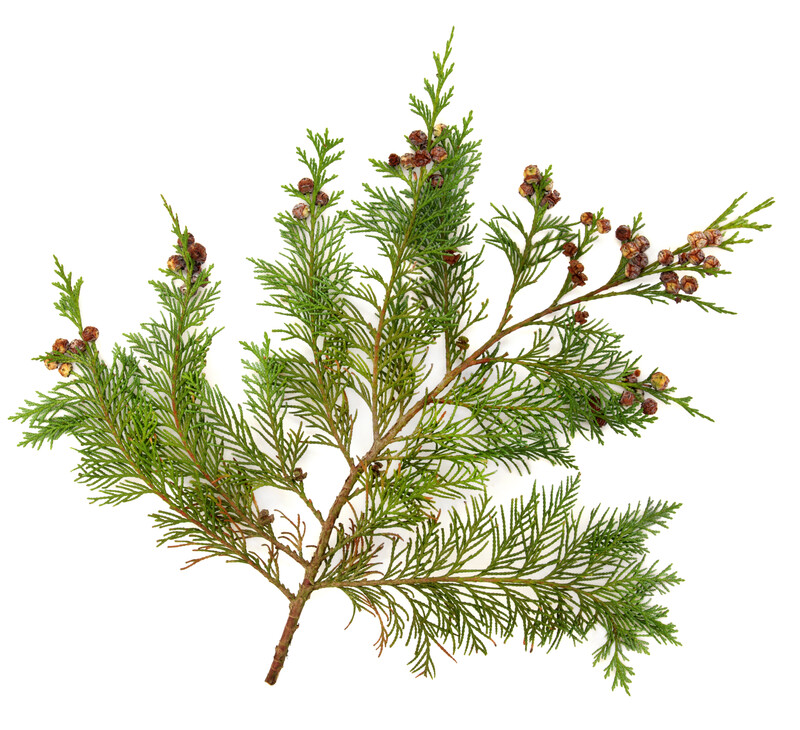
King Solomon used cedarwood in building God’s temple and Jesus was crucified on a cross made of cedarwood or cypress. It was thought to bring wisdom, was used for ritual cleansing and served as medicine in treating skin conditions and leprosy.
5. Spikenard
In Biblical times, “nard” was not only a very expensive perfume but also a precious ointment that was used as medicine. Interestingly, the “spikenard” used in the Bible may have in fact been lavender oil. In John 12:3, the Bible tells how spikenard was used to anoint Jesus just days before His death and resurrection.
6. Hyssop
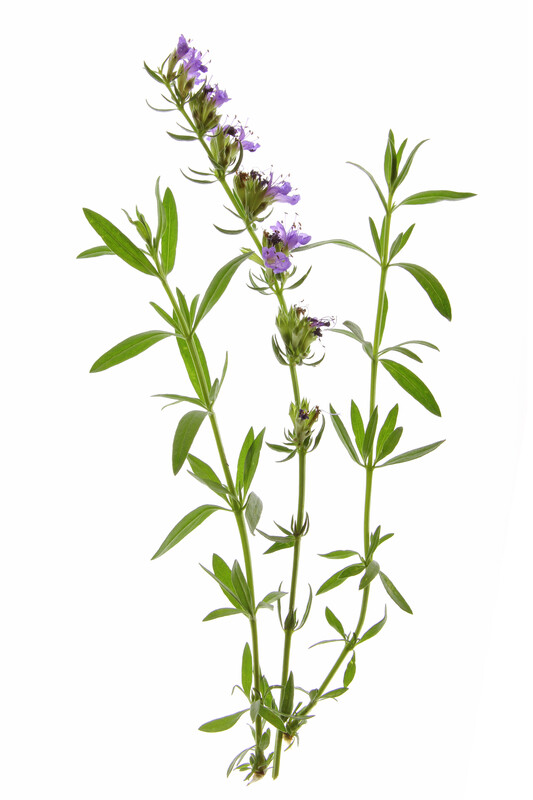
In the Old Testament, God commanded His people to use hyssop in the ceremonial cleansing of people and houses. Hyssop appears at Jesus’ crucifixion, when the Roman soldiers offered Jesus a drink of wine vinegar on a sponge at the end of a stalk of hyssop.
7. Cassia
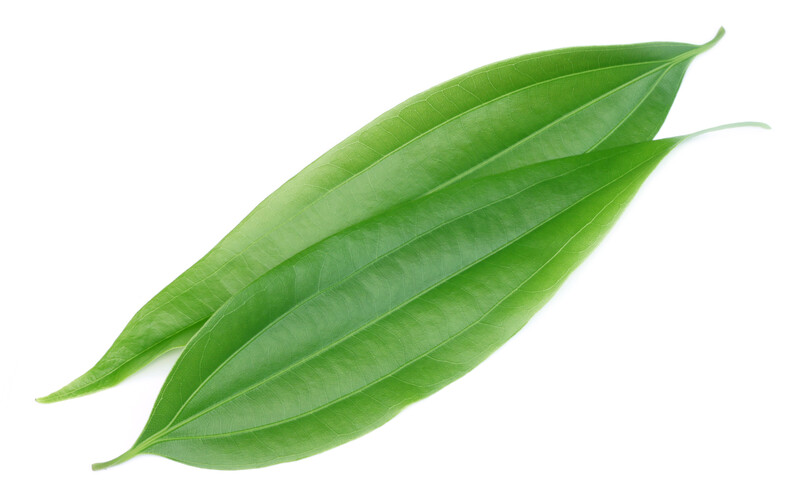
An herb very similar to cinnamon, cassia oil is the fourth ingredient listed in the holy anointing oil detailed in Exodus 30:24. It may have been brought out of Egypt when the Israelites fled Pharaoh and was commonly used with myrrh and aloes to scent garments.
8. Sandalwood (Aloes)
In Scripture, sandalwood is referred to as “aloes” and is called one of the oils of joy and gladness along with frankincense, myrrh and cedarwood. Nicodemus and Joseph of Arimathea brought sandalwood (aloes) and myrrh to bury Jesus, and in today’s market, the amount of oils used would be worth an estimated $200,000.
9. Cypress
Cypress is celebrated in Scripture as a symbol of strength, security and prosperity. The Bible mentions cypress as the choice wood for building, trading and even weaponry. In Genesis 6:14, God commanded Noah to “make yourself an ark of gopher wood,” which in modern English is in fact “cypress.”
10. Galbanum
Galbanum is a main ingredient of the holy incense used in the heart of the temple in Exodus 30:34. Interestingly, although galbanum itself has a somewhat foul odor, when burned with other sweet smelling oils in holy incense, it has the most beautiful scent and was thought to balance the emotions.
11. Rose of Sharon
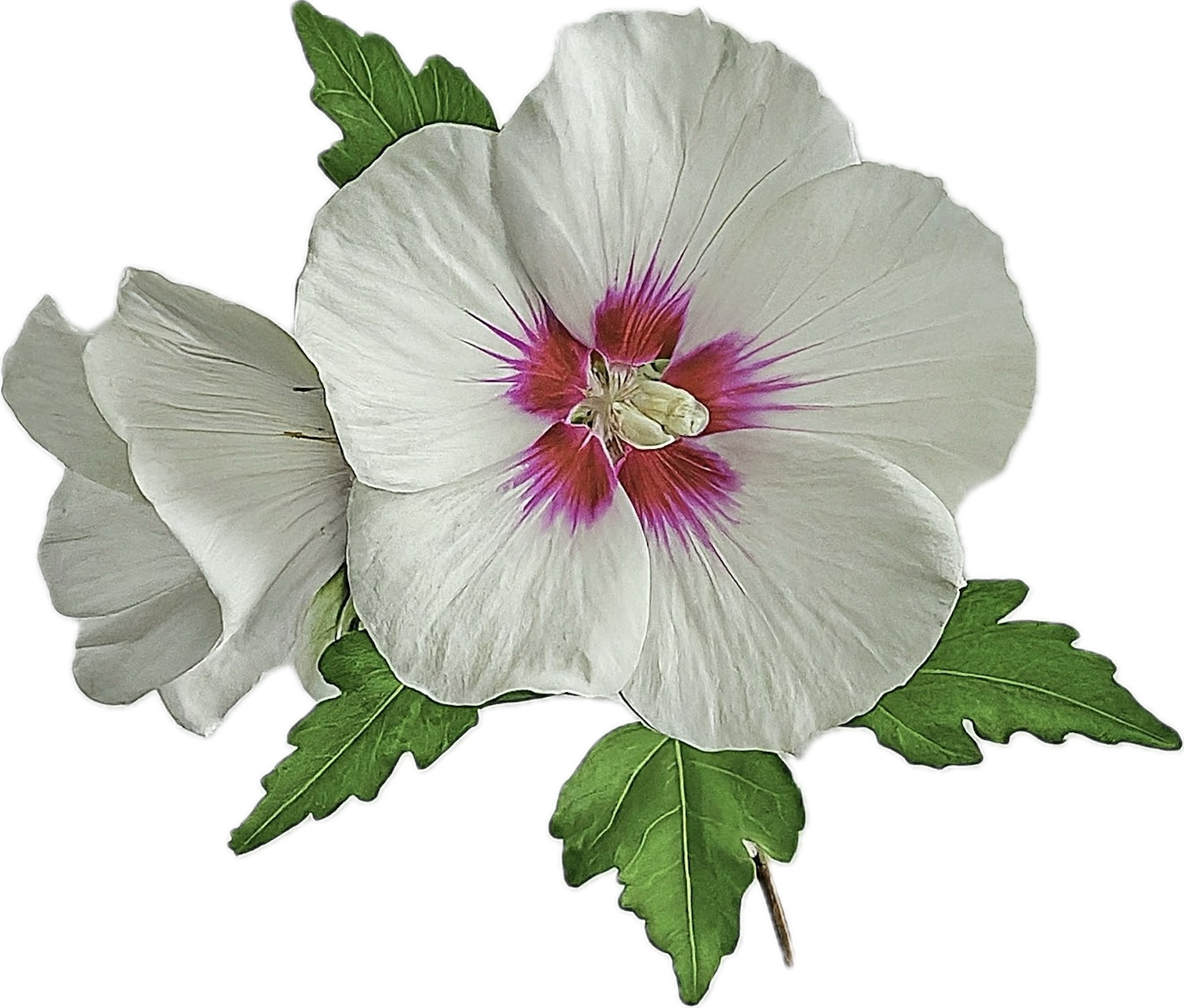
Mentioned in the Song of Solomon, the rose of Sharon is not really a “rose” but instead similar to the hibiscus or tulip (which is also called cistus). Some Bible expositors see the rose of Sharon as Christ and the lily as the church, His bride.
12. Calamus
Also known as “sweet cane,” calamus is an ancient herb that is perhaps what we now know as lemongrass. In Biblical times, calamus was used in perfumes, incense and as an ingredient in the special holy anointing oil used by the priests in the temple.
Cassia brings a bold, cozy warmth to these blends, acting like the spark that makes everything feel alive and comforting at the same time. Fall Leaves is rich and woodsy with a gentle spice that feels grounded and nostalgic, while Crisp Morningbalances cassia’s heat beautifully with bright citrus and deep earthiness for an uplifting yet steady feel. Gingerbread is pure comfort—spicy, sweet, and instantly familiar without being overpowering. And Oatmeal Cookies is soft and inviting, where cassia adds just enough warmth to keep the blend from drifting too sweet, making the whole lineup feel cozy, balanced, and perfectly seasonal.









 Len's Oils