Category Archives: Essential Oil Information

Cypress-Did You Know?

CypressDid you know Cypress is the oil of motion and flow? Cypress teaches our spirit how to let go of the past by going with the flow of life. Cypress gives support to people by helping them throw aside their worries and let go of control allowing them to enjoy the excitement that comes from being alive, and being fully in the present.

Mediterranean Cypress has been widely cultivated as an ornamental tree for millennia away from its native range, mainly throughout the whole Mediterranean region, and in other areas with similar hot, dry summers and mild, rainy winters. Natural forest stands of the species mainly occur in the western part of the Mediterranean region of Turkey.

It is also known for its very durable, scented wood, used most famously for the doors of St Peter’s Basilica in the Vatican City, Rome. The Mediterranean Cypress is also known as the “drama tree” because of its tendency to bend with even the slightest of breezes.

Cypress oil is known to mankind since ancient times and has been used in many traditional medicines. Aromatherapy has been another important usage of this essential oil which has been a common practice for a long time. It is also known for the cross on which Jesus was crucified was made from the wood of cypress tree.

The oil from the cypress tree assists with clear breathing. Promotes healthy respiratory function. Soothes tight, tense muscles. Supports localized blood flow. Beneficial for oily skin conditions. It has a grounding, yet stimulating effect on the emotions, making it a popular oil to diffuse during times of transition or loss.

Cedarwood-Did You Know?

CedarwoodDid you know cedarwood is the oil of community bringing people together who struggle to form bonds within social groups? Cedarwood supports people in seeing that they are not alone. It invites people to both give and receive and experience the joy of relationships.

Cedarwood Juniperus Virginiana is an important ornamental and timber tree of eastern North America whose fragrant wood is made into cabinets, fence posts, and pencils. Juniperus Virginiana is a dense slow-growing coniferous evergreen tree that may never become more than a bush on poor soil, but can grow up to 100 ft tall, The oldest tree reported, from Missouri, was 795 years old.

Cedarwood is used by Native American Indians to treat respiratory infections, rheumatism, arthritis, skin rashes, kidney infections and used as an insect repellent. Known for its rich hue and warm, woody scent, Cedarwood essential oil provides a myriad of health benefits that date back to biblical times.

Cedarwood is native to cold climates, thriving in high altitudes. Reminiscent of its size and strength, Cedarwood has a grounding aroma that evokes feelings of wellness and vitality. Additionally, Cedarwood is frequently used in massage therapy to relax and soothe the mind and body.

Cassia-Did You Know?

Cassia-Did You KnowDid you you know Cassia is the oil of Self Assurance? Cassia brings pleased delight, and the ability to do things that might frighten you. It is a delightful remedy for those that show nervousness or have a lack of courage. Cassia helps people with a feeling of doubt or disbelief by replacing these feelings with self assurance. Cassia helps people in self discovery of their authentic self.

Cassia is mentioned three times directly in the Bible, and mentioned over 65 times indirectly. It is a fragrant, aromatic bark and was probably used in a powdered form, and as one of the perfumes at funerals. Cassia, like cinnamon, was used by the Romans. Cassia was recorded in one of the oldest known medical records. It was in the Ebers papyrus an ancient book that contains over 800 recipes.

Cassia is a close relative to Cinnamon, has a strong, spicy aroma that can be used in small quantities to transform any essential oil blend. Cassia has been used for thousands of years to maintain physical health and promote emotional well-being. Cassia has an unmistakable fragrance and calming properties.

Cassia is a “warming” oil that helps promote circulation while maintaining healthy immune function. It can also aid in digestion, lessen nausea, and is a great oil to diffuse during cold months due to its warming properties and spicy scent.

Due to its caustic nature, Cassia should be diluted with Fractionated Coconut Oil when applied to the skin and can be very strong when inhaled directly. When diluted, Cassia can help soothe sore, achy joints. Cassia can be used in cooking either as a replacement for Cinnamon in pies and breads, or by itself in many different entrees and desserts.

Carrot Seed – Did You Know?

Carrot SeedDid you know that carrot seeds were at one point thought to be a contraceptive? There are many records in history, including Hippocrates, that the seeds were used for birth control. Carrot seed oil is perhaps one of the most under appreciated essential oils. It has been studied for it’s antiseptic, carminative, depurative, diuretic, emmenagogue, and vermifuge properties.

Carrot seed oil has well known health benefits. It nourishes, and tightens skin, helps stimulate an appetite, treats ulcers, improves liver and gall bladder issues and Stimulates the lymph system. Carrot seed oil also helps women with breast milk production after childbirth. It eases hiccups, colic, flatulence, and treats kidney stones and jaundice

Carrot seed oil is said to contain a high SPF factor when diluted with a carrier oil. According to a study published in “Pharmacognosy Magazine” in 2009, products containing carrot seed oil have a natural SPF of between 38 and 40. Determining the exact SPF factor of an oil is difficult, especially given that natural oils oxidize which means they lose some of their medicinal properties.Carrot

Cardamom-Did You Know?

CardamomDid you know a lot of chronological Indian content mention Cardamom as a flavoring agent and medicine? There are recipes of sherbets and rice dishes flavored with Cardamom. Cardamom became an object of trade with South Asia in the last thousand years when Arab traders brought it into extensive use. Exports from the Malabar shore, close to where Cardamom’s grew untamed, were portrayed by the Portuguese traveler, Barbosa, in 1524. By the time of Garcia DA Orta in 1563, the worldwide trade in Cardamom’s was finely urbanized. Kerala continued to dominate the cardamom trade until the colonial era.

It was bought by the Raja’s administrators from India, and some of it was sold to Muslim merchants while the most excellent quality was sold abroad. In the 19th century British settlement established Cardamom as a secondary crop in coffee agricultural in further parts of India. But it’s Guatemala, which only started growing the spice in the 1920s, that’s the biggest commercial producer today, overtaking India and Sri Lanka. In some parts of Guatemala, it has even overtaken coffee as its most valuable crop!

Cardamom is largely used in South Asia and South America it has been known to help teeth and gums issues, to help control and take care of throat troubles, congestion of the lungs, inflammation of eyelids and also digestive disorders. It is also used to break up kidney stones and gall stones, and was apparently used as an antidote for venom from both snakes, and scorpions.

Blue Tansy-Did You Know?

Blue TansyDid you know Blue Tansy is The Oil of Inspired Action? Blue Tansy helps those that try to prevent action on what they know to be true. Instead of listening to their conscience they are indecisive and postpone action. Their will becomes paralyzed as they refuse to listen to their inner voice for guidance. Blue Tansy invites people to show their inspiration through action.

The Charlemagne and the Benedictine monks of St. Gall are just a few people of interest who have grown and harvested Blue Tansy for its valuable wellness-promoting properties. The ancient Greeks cultivated Blue Tansy for a variety of wellness practices, as well. The Irish have a history of using Blue Tansy to help with joint discomfort, and would combine it with salts in fragrant, calming hot baths.

Blue Tansy is best used for allergy relief, sore muscles and skin care. It also stimulates the thymus gland so it can help with stimulating your immune system. Blue Tansy has similar properties to the Chamomiles, it has sometimes been called “Blue Chamomile” but that is not correct. Always check the botanical name. Blue Tansy Is good to use for rashes, eczema, and dry skin.

Because Blue Tansy is so strong, use carefully. This oil is a very peaceful oil, works very well for skin care. While the azulene is what makes the oil blue, it also is known for skin care properties. Since it is blue in color, be aware it will change the color of any recipes you put together. Especially if you put it in white or cream colored lotions.

Myrtle-Did You Know?

MyrtleDid you know Myrtle is the oil of adaptability? Myrtle instills the soul with qualities helping you to adjust to new conditions, capable of being flexible, and recovering quickly from difficult conditions. Myrtle helps brings joy to the heart allowing things to flow naturally. It is helpful during difficult and challenging times.

The Ancient Egyptians knew of the therapeutic properties of myrtle, macerating the leaves in wine to counter fever and infection. The best and most fragrant myrtle trees came from Egypt. In Biblical times, Jewish women wore garlands of myrtle on their heads on their wedding day as a symbol of love, and to bring them happiness. In 1876, Dr Delioux de Savignac advocated the use of myrtle for bronchial infections, for problems of the urinary and reproductive system, and for hemorrhoids.

A study shows that myrtle oil kills Salmonella on fresh fruits and vegetables. Scientists intentionally inoculated fresh tomatoes, and iceberg lettuce with a strain of Salmonella. Then they used a cleaning solution that had a dilution rate of 1 to 1000 containing myrtle leaf oil to test if it would kill the bacteria. The results suggest that the use of myrtle can be an effective alternative to the use of chlorine or other disinfectants on fruits and vegetables.

Myrtle lowers blood sugar and has been traditionally used in Iran for the treatment of Malaria. It is also known for its ability to repel mosquitoes, and kills fungus, and mold. In some cultures myrtle is used to heal mouth ulcers, warts, and acne.

Coriander-Did You Know?

Coriander seeds.png

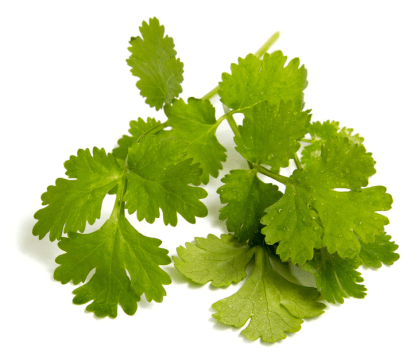
Coriander and cilantro come from the same plant. The word coriander can be used to describe the entire plant: leaves, stems, seeds, and all. Most people are referring to the spice produced from the seeds of the coriander plant. The leaves of the plant are commonly called cilantro, which comes from the Spanish word for coriander.

The change in names is very appropriate, since the plant’s leaves and the ripened seeds taste totally different. Cilantro on the other hand is a little too different for many more delicate taste buds, unfortunately. Most people either enjoy or greatly dislike the taste, but I can see why some people argue that it’s an acquired taste.

It’s a different story for the seeds. Coriander is an extremely popular spice with a pleasing aroma and lemony flavor, found in many recipes. Little is known about the origins of the coriander plant, although it is generally thought to be native to the Mediterranean and parts of southwestern Europe.

More recently, coriander plants were known to be growing in Massachusetts by the early 1600’s, one of the first herbs grown by the American colonists. Coriander essential oil promotes digestion and eases stomach upset, aids in a healthy insulin response, soothes joint and muscle pain. Coriander essential oil is also know for toning and rejuvenating to the skin.

Clary Sage-Did You Know?

Clary Sage -Did You KnowDid You Know Clary Sage is the oil of clarity and vision? Clary Sage helps people in changing the way they see things in order to see the truth. Clary Sage helps individuals see their limiting beliefs. It also gives support to people to new ideas, and different ways of looking at the same situation.

It is thought that Clary originated in Syria or south west and central Europe where it can still be found growing wild? It was known to the ancients and the essential oil was prized by Dioscorides a Roman physician, and Pliny a Roman naturalist. This is still used in cosmetics and the perfume industry and is cultivated for these industries in France and Russia. It is a member of the sage family.

Clary Sage Oil can boost self esteem, confidence, and mental strength, thereby efficiently fighting depression. This can be very helpful for forms of depression due to challenges in your career or personal life, insecurity, loneliness, death of a friend or loved one, and many other reasons. Clary Sage oil also relieves anxiety. As an antidepressant, it can be used with patients suffering from acute depression who are undergoing rehabilitation.

Black Pepper-Did You Know?

Pepper cornsDid you know Black Pepper is The Oil of Unmasking? It reveals the masks and superficial facades people use to hide aspects of one’s self. Since childhood, most of us have been taught that some feelings and behaviors are acceptable while others are not. So instead of seeking to understand feelings and behaviors that appear to be inappropriate, they usually judge and condemn. People learn early in life in order to be loved, and excepted they must hide their negative behaviors behind a mask or facade. Black Pepper helps people find their authentic self.

Black Pepper also comes in green, red, and white all from the same plant. The color is related to how ripe it is and how it has been processed. Black Pepper is the number one selling spice in America. Pepper is native to India, and grows as a tall vine with the peppercorns as flowering drupes. It has been used in cooking for over 2000 years!

Pepper was mostly eaten by the wealthy in the past, as it was so expensive and sought after. Traders formed spice routes from India to Europe and would often fight over them. In the Middle Ages a man’s wealth was measured by his stock pile of pepper. The Romans would even demand pepper as a ransom when besieging a city.

Black Pepper gets its kick from the compound peperine. Black Pepper loses its flavor and aroma through evaporation, so its best to keep it in an airtight container. Consider using whole peppercorns and grinding just before use to maintain flavor, and add near the end of cooking.

Black Pepper essential oil is high in monoterpenes and sesquiterpenes, known for their antioxidant activity and ability to help ward off environmental and seasonal threats. Black Pepper promotes healthy circulation both internally and externally, but should be used with caution when applied topically due to its strong warming sensation. It may also help curb urges to smoke.