Essential oils are absorbed transdermally through the skin’s pores, allowing their beneficial properties to take effect. Some essential oils are gentle and soothing, while others are considered “hot” and can cause irritation. To ensure safe application, it is essential to have fractionated coconut oil available to dilute stronger oils. When applying multiple oils, allow a few minutes between each layer to let the skin absorb the properties of each oil properly.
When using essential oils on the skin, it’s important to consider factors such as skin sensitivity and the purpose of the oil. Always perform a patch test before using a new oil to check for any reactions. Dilution is key for safe application, especially with potent oils like oregano or cinnamon. Additionally, essential oils should be applied to pulse points or problem areas for targeted benefits. For enhanced absorption, gently massaging the oil into the skin can improve circulation and effectiveness.
One particularly beneficial oil for skincare is Roman Chamomile (Anthemis nobilis). This essential oil is known for its calming and soothing properties, making it an excellent choice for irritated or sensitive skin. It can help reduce redness, inflammation, and minor skin discomfort. Roman Chamomile is also popular for promoting relaxation, making it a great addition to nighttime skincare routines.
Revelation 18:13 describes the fall of a wealthy and corrupt society by listing the luxurious goods it once thrived on. Among these goods are spices like cinnamon and frankincense, which were highly valued in the ancient world for their fragrance, religious rituals, and medicinal properties. Along with these spices, the verse mentions other luxury items such as ointments, wine, oil, flour, wheat, livestock, and even human lives, showing how this society was built on trade, wealth, and exploitation. The inclusion of cinnamon and frankincense highlights how people sought after extravagance and comfort while ignoring the moral consequences of their greed.
This verse serves as a warning that material wealth and lavish lifestyles do not last forever. History has shown that empires that prioritize luxury and power over justice and righteousness eventually collapse. The mention of spices, along with other goods, reflects how people often chase after temporary pleasures but fail to see the deeper importance of kindness, integrity, and human dignity. The phrase “souls of men” in the verse is particularly striking, emphasizing that human lives were treated as commodities, further revealing the deep corruption of this society.
For today’s world, this verse is a reminder to reflect on what we value most. Do we focus on material wealth, status, and luxury like cinnamon, frankincense, and fine oils, or do we prioritize compassion, justice, and ethical living? Revelation 18:13 warns that societies built on greed and exploitation will not last, but those who live with fairness and kindness will create something truly meaningful and enduring.
In the small German village of Aalen, nestled near the River Kocher, Johann Becker spent his days crafting rye bread infused with a peculiar spice. Johann wasn’t a famous baker, not yet, but his bread was different—it lingered on the tongue and settled the stomach. This wasn’t just any spice; it had been cherished for generations, from the markets of the Middle Ages to the dining tables of Europe.
Centuries earlier, in the Roman Empire, this seed was already a staple. The Roman naturalist Pliny the Elder wrote about its digestive benefits, describing how it was commonly added to bread and stews. The Romans also believed that this spice had protective qualities—some even carried it as a charm against misfortune. It was a fixture in their cuisine, medicine, and rituals, spreading across the empire as trade routes flourished.
In the 12th century, Hildegard von Bingen, the famed German abbess and healer, praised this tiny seed for its ability to soothe the stomach. She documented its use in treating digestive discomfort and called it a “gift of the earth.” Hildegard’s herbal remedies spread across medieval Europe, and her influence ensured that this seed remained a trusted remedy for centuries to come.
By the Elizabethan era, this spice had firmly established itself in England. Bakers added it to cakes and breads, and it was a common ingredient in festive dishes. A curious superstition arose: it was believed that anything containing this seed could not be stolen. Some even placed it in cabinets or carried it in small pouches as a safeguard. While the origins of this belief remain unclear, it persisted for generations.
In the 19th century, Dr. John Kellogg, a pioneer in health and wellness, experimented with the oil derived from this seed. At his Battle Creek Sanitarium, he advocated for its use in promoting digestion and oral health. Kellogg’s interest in natural remedies helped popularize essential oils in the medical community, reinforcing the long-standing belief that this seed was more than just a spice—it was a healer.
Meanwhile, in kitchens across the world, chefs continued to rely on its warm, peppery flavor. Eastern European and Middle Eastern bakers incorporated it into traditional breads, while French and German cooks used it in sausages and stews. This seed had an unmistakable aroma—one that deepened with heat, adding complexity to any dish it touched.
As the field of aromatherapy developed, scientists discovered that the seed contained carvone, a compound responsible for its distinct scent and therapeutic properties. Studies confirmed what ancient healers had long suspected—it aided digestion, freshened breath, and provided a sense of grounding and warmth. Its oil found its way into massage blends, mouth rinses, and even skincare routines.
Dentists and naturopaths recommended it for oral care, while herbalists blended it with other essential oils for relaxation and focus. It became a key ingredient in herbal teas, digestive aids, and natural remedies. In modern spas, its essential oil was combined with lavender to create soothing soaks, continuing the tradition of using this seed for both wellness and relaxation.
And now, with all the clues before you—the ancient kitchens, the writings of Pliny, the healing wisdom of Hildegard von Bingen, the science of carvone—you might think we’re talking about cumin or fennel. But no, the unsung hero of this story is caraway. With its zesty flavor, digestive benefits, and timeless aroma, it has touched lives for centuries.
Nine years ago, I was introduced to something that has transformed my life: essential oils.
Yes I was a big skeptic about them at first, but I now use essential oils on a daily basis in every area of my home, and they have completely changed my life! My medicine cabinet has been completely transformed, and I am now empowered with the tools and knowledge to care for my family.
When I realized I could get free products AND create residual income? I got really excited!
As a result, of my essential oil journey, and passion helping others, I’m ready to help you get started with your essential oil journey as well.
The best part about essential oils is that there is an option for everyone, whether you want to simply enjoy the products for yourself and transform your family’s health (and get free stuff in the process) OR you’re ready to build a team, create residual income, and get out of debt.
If any of these options sound appealing to you, let’s chat!
I’ll help you figure out which option will be the best fit for you, plus you can qualify for some awesome incentives in the process.
I can’t wait to talk to you!
I love sharing essential oils
Please text Free Sample or call me at 801-661-4786
I will be sure to get back to you as soon as possible.
Or
Send me an email at lfish64@yahoo.com
with the heading Free Sample
It will be an honor to help you in any way that I can.
Or
Write a letter requesting a Free Sample to
Leonard Fish
5075 Rushton Acres Court
West Valley City, Utah 84120
Essential oils are highly concentrated and should be used with care. Always dilute essential oils with a carrier oil, such as coconut, almond, or jojoba oil, before applying them to the skin. This helps prevent irritation without reducing the effectiveness of the oil. While most essential oils are safe for general use, some, like cinnamon or oregano, are particularly potent and may cause skin sensitivity. To test for any adverse reactions, perform a patch test by applying a small amount of diluted oil to a small area of skin and waiting 24 hours.
If essential oils come into contact with your eyes or cause skin irritation, do not rinse with water, as this can spread the oil and worsen irritation. Instead, flush the area with a carrier oil to help dilute and soothe the affected skin. Additionally, avoid applying essential oils directly to sensitive areas such as the eyes, ears, and mucous membranes. When diffusing essential oils, ensure proper ventilation and use recommended amounts to prevent overpowering scents or respiratory discomfort. Always research the safety guidelines for each essential oil, especially if using them around children, pets, or individuals with allergies.
Davana essential oil, with its sweet, fruity, and slightly herbaceous aroma, is a unique and versatile addition to any diffuser blend. Its rich scent is known for creating a warm, uplifting atmosphere and pairs beautifully with both floral and citrus oils. Davana blends well with oils like Orange, Grapefruit, and Lemon for a bright, cheerful aroma, or with Ylang Ylang and Geranium for a sweet, floral experience. For a grounding and sophisticated blend, combine Davana with earthy oils like Patchouli, Sandalwood, or Cedarwood. It also complements spicy oils like Clove or Cinnamon for a cozy and comforting vibe. Whether you want to create a luxurious and exotic ambiance by pairing Davana with Frankincense or an energizing blend with Peppermint and Lime, this oil adds a depth and complexity that enhances any diffuser recipe. Its rich aroma makes it a favorite for setting a mood of positivity and relaxation.
“Tarzan has Jane, Batman has Robin, Sherlock has Watson… and Health Advocates? They have Essential Oils—because who needs a sidekick when you’ve got tea tree and lavender fighting your battles?” 🌿
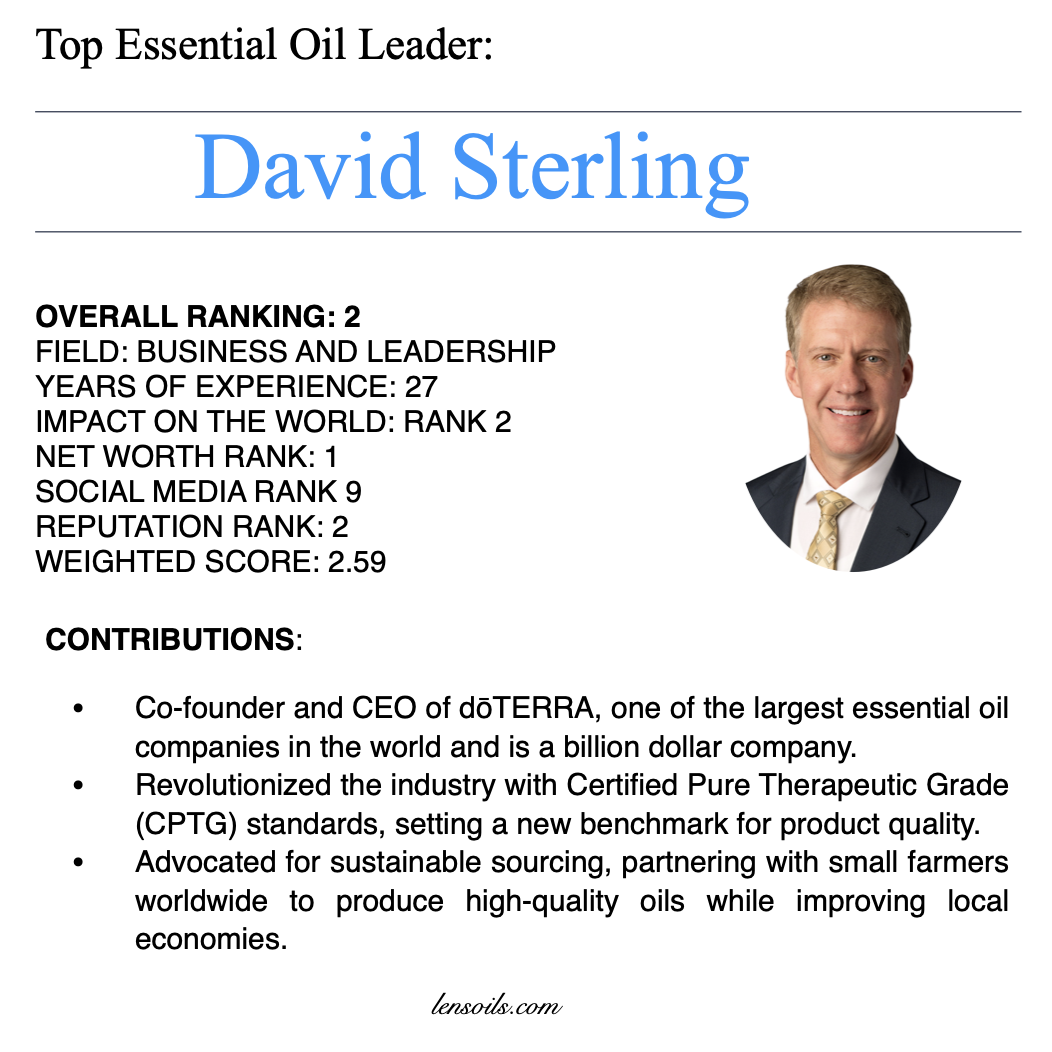
David Stirling, co-founder of dōTERRA is a visionary leader whose work has revolutionized the essential oils industry. Born in 1962, Stirling’s career began in business and product development, where he honed his skills in creating effective systems for quality assurance and sustainable growth. His background in health and wellness industries laid a strong foundation for his later contributions to the essential oils market.
In 2008, Stirling and a group of seven co-founders launched dōTERRA, aiming to create a company that redefined how essential oils were sourced, processed, and marketed. Dissatisfied with the inconsistencies in the industry, they focused on delivering high-quality, therapeutic-grade essential oils to consumers worldwide. The company’s name, derived from the Latin for “Gift of the Earth,” reflects Stirling’s belief in the natural healing power of plants.
Stirling’s key innovation was the introduction of Certified Pure Therapeutic Grade® (CPTG) standards, a rigorous quality assurance process that ensures each bottle of oil is free from contaminants and adulteration. This commitment to purity and potency has set a new benchmark in the essential oils industry, allowing dōTERRA to stand out as a trusted leader in a competitive market.
Under Stirling’s guidance, dōTERRA also pioneered Co-Impact Sourcing®, a program that emphasizes ethical and sustainable sourcing practices. By partnering directly with farmers and distillers in over 45 countries, dōTERRA ensures fair wages, improved working conditions, and long-term community support. This approach not only strengthens the company’s supply chain but also uplifts the lives of those involved, making Stirling a key advocate for corporate social responsibility.
Stirling’s leadership has taken essential oils from niche products to mainstream wellness tools. He has driven widespread consumer education about the benefits of essential oils, integrating them into homes, healthcare systems, and wellness practices worldwide. His focus on research has also contributed to the growing body of scientific evidence supporting the therapeutic uses of essential oils, bridging the gap between natural remedies and modern medicine.
In 2022, Stirling took a step back from his day-to-day responsibilities at dōTERRA to dedicate himself to a deeply personal mission. Together with his wife, Laura, he embarked on a three-year volunteer assignment as a mission president for The Church of Jesus Christ of Latter-day Saints. The Stirlings are serving in Fresno, California, where they oversee and mentor hundreds of young missionaries aged 18 to 25. Their role involves not only spiritual guidance but also providing practical life skills and emotional support to these missionaries as they serve communities and grow in their own journeys of faith.
This time of service reflects Stirling’s lifelong dedication to helping others thrive. The leadership, empathy, and vision he demonstrates in his mission work mirror the qualities that propelled dōTERRA to global success. His ability to inspire and empower the next generation—whether in business or in faith—has been a defining characteristic of his career. While he has stepped back from daily operations, Stirling’s influence is still felt at dōTERRA, as the culture of innovation and integrity he established continues to guide the company.
Even during his time away, Stirling’s legacy with dōTERRA remains vibrant. The company, now a global leader, boasts millions of wellness advocates and customers across the world. Under Stirling’s direction, DoTERRA expanded its offerings to include over 100 essential oils, along with supplements, skincare products, and home care solutions. Annual conventions attract tens of thousands of participants, a testament to the vibrant community he helped create.
David Stirling remains a driving force behind dōTERRA’s enduring mission and values. Though his focus is currently on his church mission, his influence within the essential oils industry remains undeniable. By fostering relationships between dōTERRA and global communities, he ensured the company’s growth was tied to making a positive impact worldwide.
David Stirling’s story is one of vision, faith, and unwavering dedication to service. From revolutionizing an industry to uplifting individuals in business and personal growth, he has left a mark that extends far beyond essential oils. Today, as he serves with his wife in Fresno, he continues to embody the principles of compassion, integrity, and purpose that have defined his life’s work. His ability to lead with vision and heart makes him not only a pioneer in his field but also a source of inspiration for all who seek to make a meaningful impact in the world
The phrase “Common sense is not so common.” is most famously attributed to Voltaire, the French Enlightenment writer, historian, and philosopher. He included a version of this phrase in his 1764 work Dictionnaire Philosophique(Philosophical Dictionary), where he criticized the tendency of people to lack practical reasoning despite its supposed prevalence.
Origins and Meaning
Author: Voltaire (François-Marie Arouet)
Year: 1764
Book:Dictionnaire Philosophique
Context: Voltaire used the phrase to critique the contradiction between what is considered “common sense” and how rarely it is actually applied in real life. He was often critical of dogma, superstition, and societal irrationality.
Modern Usage
This quote is widely used in various fields, from business to psychology, to highlight how people often fail to use practical reasoning in everyday situations.
It aligns with the idea that what seems like obvious knowledge is not always applied in practice.
Regarding the “Health Proverb” Attribution
If you’ve seen this phrase labeled as a “health proverb,” it might be because common sense is essential in making good health choices—such as eating well, exercising, and avoiding harmful behaviors. However, its original intent was much broader and philosophical.
Oh Yuzu, bright and golden gem, A treasure from the East’s rich hem. Your citrus kiss, a tart embrace, A dance of Mandarin and Grapefruit’s grace.
For centuries past, in Japan’s serene lands, You’ve graced the air, soothed weary hands. A zesty balm, a fragrant art, To calm the mind and heal the heart.
In diffusers, you softly bloom, Chasing away the cloud of gloom. A few mere drops, a calming breeze, Melting tension with effortless ease.
In creams and mists, your scent does glide, A personal fragrance, worn with pride. Soft whispers on the skin you leave, A touch of joy, a sense reprieve.
When breath grows shallow, and lungs feel tight, You bring relief, restore the light. A blend with coconut, a soothing trail, To conquer congestion, you never fail.
Oh Yuzu, citrus spirit divine, Your therapeutic gifts forever shine. A timeless essence, pure and true, A gift from nature, dear Yuzu.







 Len's Oils