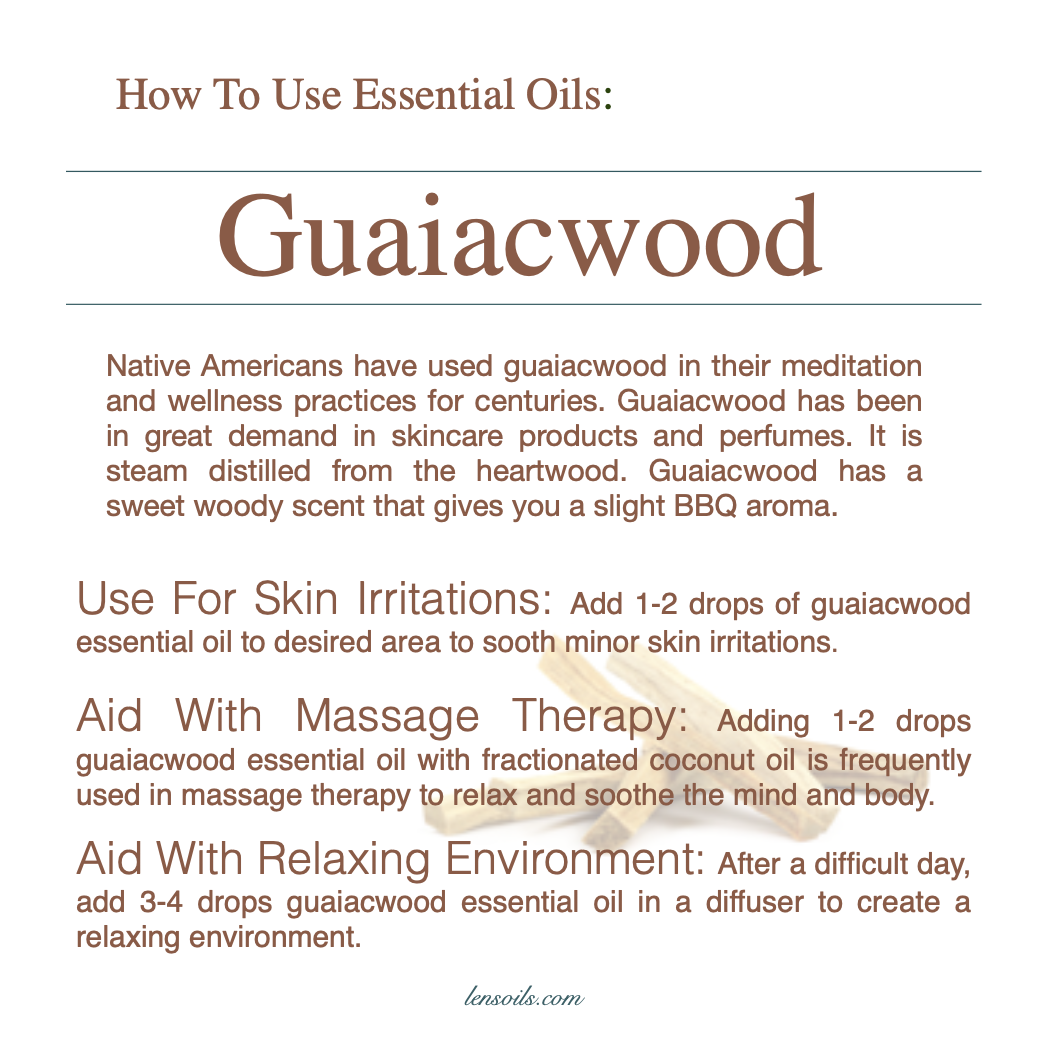
Guaiacwood essential oil has a long history of use, especially among Native American cultures that valued it for meditation and wellness practices. Steam distilled from the heartwood, this oil carries a rich, sweet, woody aroma with a subtle smoky note that many describe as gently reminiscent of a BBQ scent. Its grounding fragrance has also made it popular in perfumes and skincare products, where warmth and depth are desired.
In everyday use, guaiacwood essential oil is often chosen for its soothing qualities. When diluted and applied topically, it may help calm minor skin irritations. Blended with fractionated coconut oil, it is frequently used in massage therapy to promote relaxation of both the mind and body. Diffusing three to four drops after a long or stressful day can help create a calm, peaceful environment, making guaiacwood a comforting oil for winding down and restoring balance.
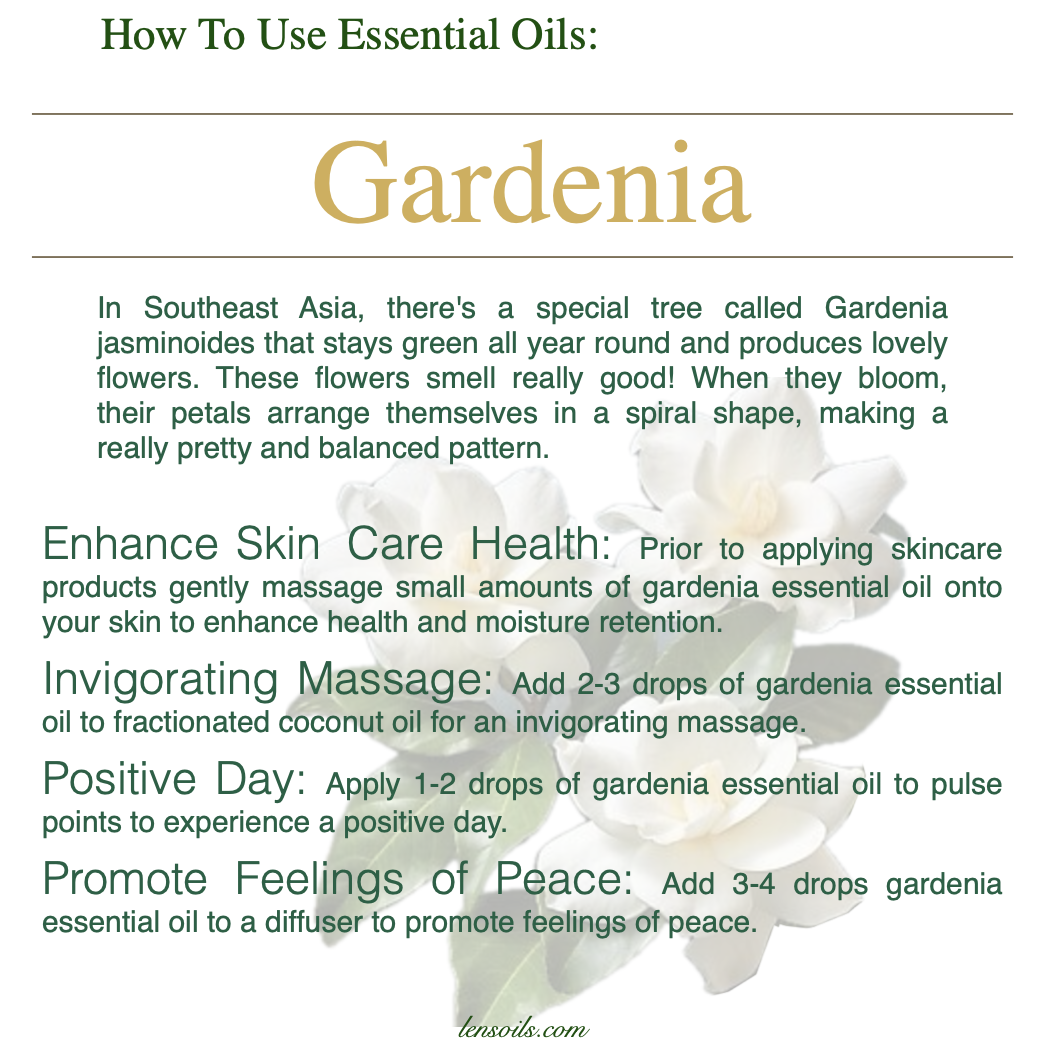
Gardenia essential oil comes from the beautifully fragrant flowers of the Gardenia jasminoides plant, an evergreen shrub native to Southeast Asia. Known for its creamy white blossoms and rich, floral aroma, gardenia has long been associated with balance, beauty, and quiet elegance. When the flowers bloom, their petals form a gentle spiral, a pattern often linked with harmony and calm, which mirrors the emotional effect many people experience when using this oil.
In skincare routines, gardenia essential oil is often used to support a healthy-looking complexion and help the skin feel soft and nourished. Gently massaging a small, well-diluted amount into the skin before applying lotions or serums can enhance moisture retention and leave the skin feeling refreshed. Its luxurious scent also adds a spa-like element to daily self-care, turning an ordinary routine into a calming ritual.
Gardenia essential oil is equally valued for emotional and aromatic use. When blended with a carrier oil for massage, it creates an uplifting and soothing experience that helps the body relax while the mind feels gently energized. Applied to pulse points, its aroma can support a positive, centered mood throughout the day. Diffused into the air, gardenia’s rich floral scent promotes feelings of peace and tranquility, making it a wonderful choice for quiet evenings, meditation, or moments when emotional balance is needed.
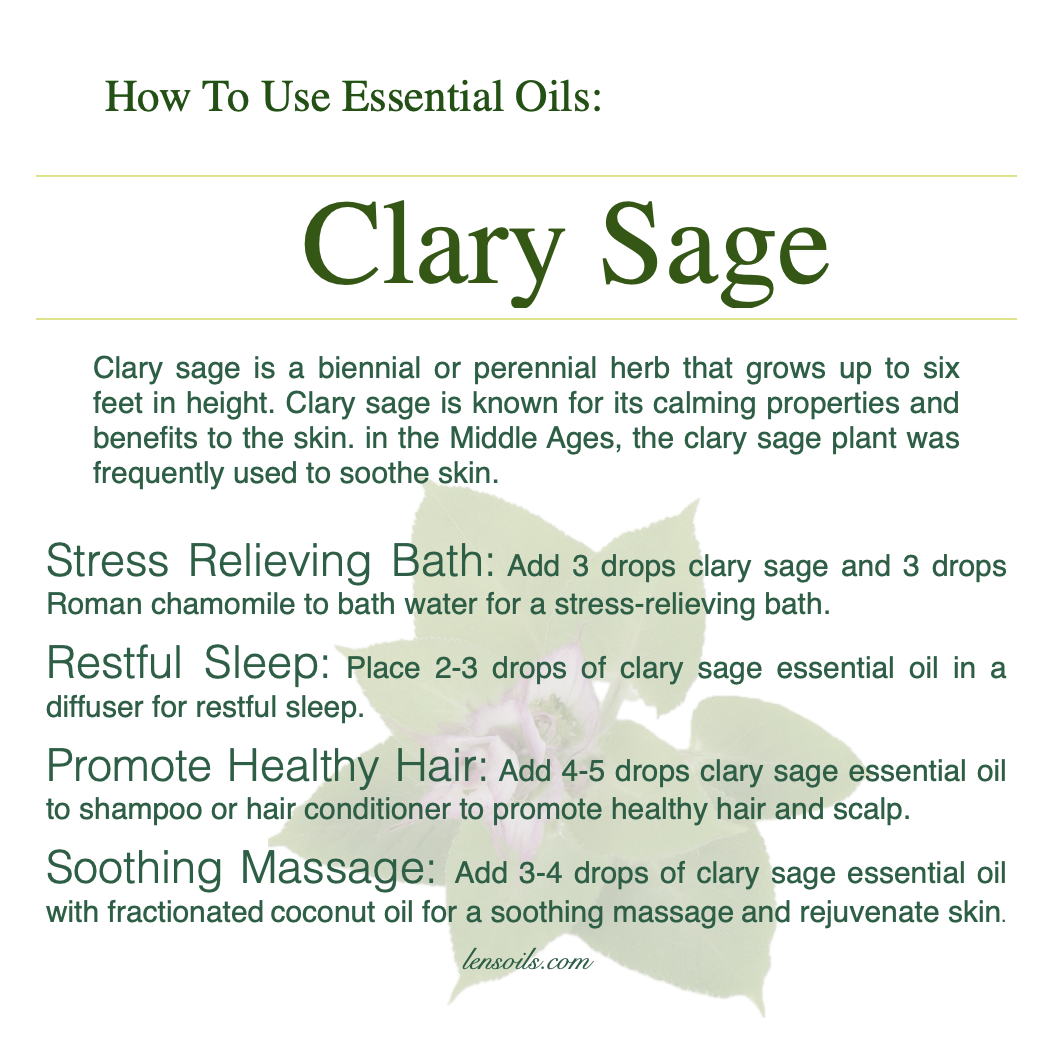
Clary sage (Salvia sclarea) is a biennial or perennial herb that can grow up to six feet tall and is widely recognized for its calming properties and benefits to the skin. Historically, clary sage was frequently used in the Middle Ages to help soothe skin irritations and promote overall wellness. The essential oil, distilled from the plant’s flowering tops and leaves, has a distinct herbal, earthy aroma that has made it a valuable ingredient in aromatherapy and natural skincare. Adding 3 drops of clary sage and 3 drops of Roman chamomile to bath water is a common practice for creating a relaxing, stress-relieving soak. Similarly, diffusing 2-3 drops of clary sage essential oil is widely believed to support restful sleep and relaxation. While anecdotal evidence supports these benefits, more scientific studies are needed to fully confirm its effectiveness in improving sleep quality.
Clary sage essential oil is also commonly used in hair and scalp care. Many people add 4-5 drops of clary sage essential oil to shampoo or conditioner to help promote a healthy scalp and strong hair. The oil contains linalyl acetate, a compound known for its soothing and balancing properties, which may help reduce scalp irritation and improve overall hair appearance. Additionally, clary sage essential oil is used in massage therapy, with 3-4 drops blended into fractionated coconut oil to create a soothing massage blend that helps relax muscles and rejuvenate the skin. Although these applications are widely practiced, further research is needed to determine the long-term benefits of clary sage essential oil on scalp health and hair growth.
Beyond stress relief and hair care, clary sage is being explored for its potential hormonal-balancing properties. Some studies suggest that its compounds may help support relaxation during menstrual cycles and contribute to a greater sense of emotional well-being. Many aromatherapists recommend diffusing clary sage oil or applying it diluted to the lower abdomen for potential menstrual support, though more clinical research is necessary to confirm its direct effects on hormonal balance. Despite these uncertainties, clary sage essential oil remains a popular and versatile natural remedy, valued for its calming, skin-soothing, and aromatic benefits in holistic wellness practices.
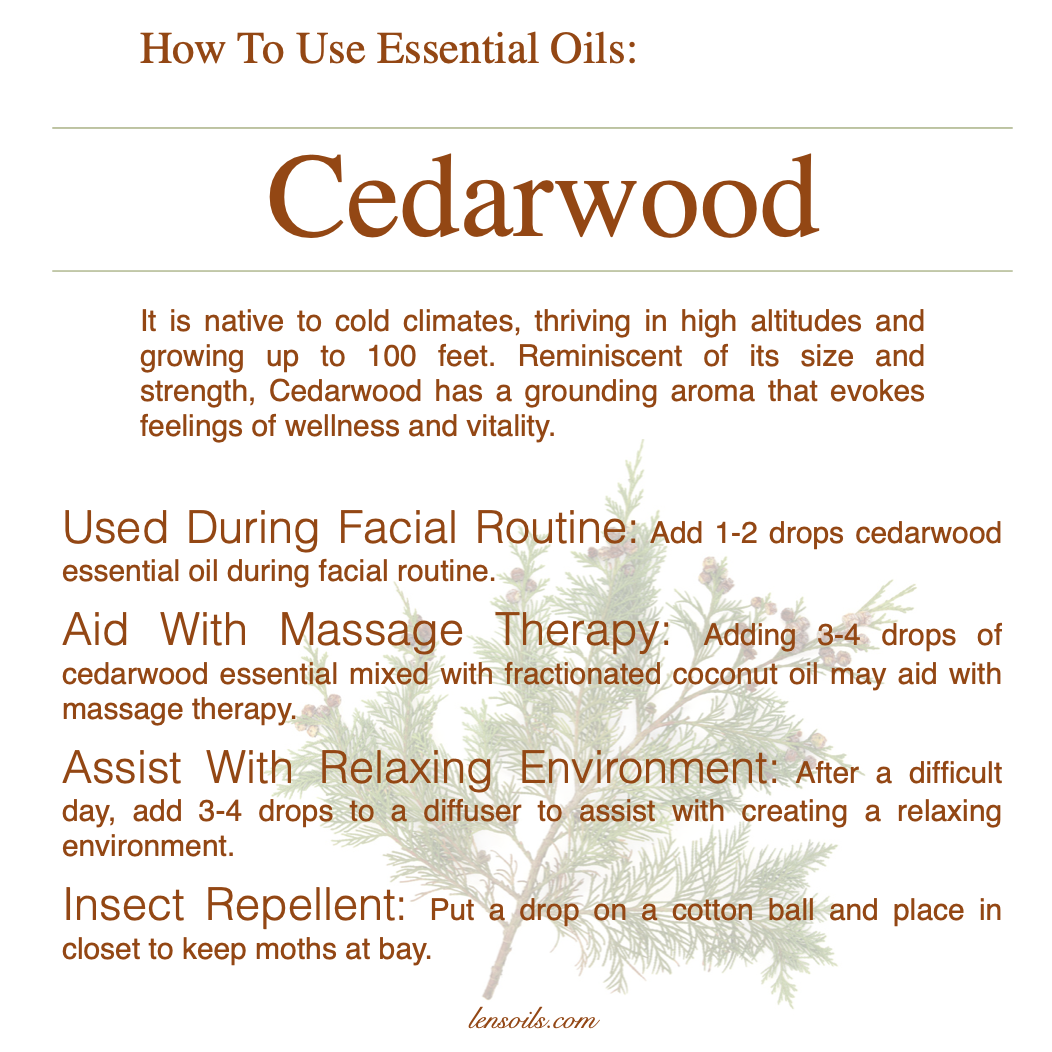
Cedarwood (Cedrus spp.) is a towering evergreen tree native to cold climates, thriving in high altitudes and reaching heights of up to 100 feet. Known for its durability and resilience, cedarwood has been used throughout history in construction, medicine, and spiritual practices. The essential oil, derived from the wood of the tree, carries a rich, grounding aroma that promotes a sense of wellness and vitality. In skincare, adding 1-2 drops of cedarwood essential oil to a facial routine may help promote clear and balanced skin due to its purifying and astringent properties. Additionally, cedarwood is widely used in massage therapy, where 3-4 drops blended with fractionated coconut oilcan provide a calming and muscle-relaxing effect. While historical and anecdotal evidence support these uses, more scientific research is needed to confirm its full range of skin-enhancing and muscle-soothing benefits.
Beyond personal care, cedarwood essential oil is commonly used in aromatherapy to promote relaxation and emotional balance. Adding 3-4 drops to a diffuser can help create a calming environment, particularly after a stressful day. Cedarwood is also known for its insect-repellent properties—placing a drop on a cotton ball and leaving it in a closet may help keep moths at bay. This traditional use is supported by the presence of sesquiterpenes and cedrol, compounds that may have natural insect-deterring effects. However, while cedarwood has been traditionally used as a natural moth repellent, scientific studies on its effectiveness compared to chemical alternatives are still ongoing.
In addition to its well-known uses, cedarwood essential oil has been explored for its potential role in improving sleep quality. Some research suggests that cedrol, a primary component in cedarwood, may have mild sedative effects, which could help support relaxation and restful sleep. Many individuals use cedarwood oil in nighttime diffuser blends or apply a diluted amount to pulse points before bed to encourage a sense of calm. While early findings are promising, more clinical research is needed to confirm its direct impact on sleep disorders or long-term sleep improvement. Regardless, cedarwood essential oil remains a versatile and widely used natural remedy, valued for its aromatic, therapeutic, and protective benefits.
Carrot seed essential oil is primarily derived from wild carrots (Daucus carota), which are commonly found in Europe and parts of Asia. The plant is an annual or biennial herb, recognized for its hairy leaves and white lacy flowers with purple centers. Traditionally, carrot seed oil has been valued for skin and hair care, with historical use in natural remedies and herbal medicine. The oil is known to contain antioxidants and compounds that support skin health, making it a popular ingredient in skincare formulations. Due to its soothing properties, combining 1-2 drops of carrot seed essential oil with fractionated coconut oil and applying it to sunburned areas may help provide relief. While many users report benefits, scientific research on carrot seed oil’s direct effectiveness in sunburn relief remains limited.
Carrot seed essential oil is also commonly associated with liver health and detoxification. Some practitioners recommend adding 3-4 drops to a fruit smoothie to help support liver function, based on its traditional use in herbal detox regimens. While carrot seed oil contains antioxidants, which may contribute to overall wellness, more scientific studies are needed to confirm its direct role in liver cleansing. Another popular use is reducing the appearance of wrinkles, where 2-3 drops added to a skin cream may support skin elasticity and hydration. Carrot seed oil’s rich antioxidant profile makes it a common ingredient in anti-aging skincare, but long-term studies on its effectiveness in reducing wrinkles are still ongoing.
In addition to skincare and detox benefits, carrot seed essential oil has been linked to supporting eye health due to its association with carotenoids and vitamin A. Some sources suggest adding 2-3 drops to 8 oz of water to promote eye health, but this claim requires more clinical research, as carrot seed essential oil does not contain direct forms of vitamin A like beta-carotene found in raw carrots. While carrot seed oil has potential health benefits, its role in eye support and liver cleansing is still being studied, and further scientific validation is needed. Nevertheless, carrot seed essential oil remains a valuable addition to natural skincare, wellness, and aromatherapy routines.
Blue tansy, also known as Moroccan tansy (Tanacetum annuum), is a Mediterranean plant native to northern Morocco. It produces small yellow flowers, but when distilled into an essential oil, it takes on a deep blue color due to the presence of chamazulene. This compound is responsible for blue tansy’s well-known anti-inflammatory and skin-soothing properties. Traditionally, it has been used in aromatherapy and skincare to promote calmness and relief from irritation. The oil is often diffused to uplift mood and create a relaxing atmosphere, while topical application—diluted in a moisturizer or cleanser—may help reduce the appearance of blemishes and soothe skin irritation.
In modern wellness practices, blue tansy is widely used for relaxation and muscle recovery. Adding 1-2 drops to lotion can create a restoring massage blend, useful for relaxing muscles after a stressful day or intense workout. Due to its natural antioxidant properties, some people also use blue tansy to help protect skin from environmental stressors. However, its role in broader healing processes remains an area requiring more research. While its anti-inflammatory and antioxidant effects may contribute to skin repair, there are limited scientific studies specifically evaluating blue tansy’s ability to aid in wound healing or other physical recovery processes.
Beyond skincare and relaxation, blue tansy is sometimes used for reducing minor discomfort, particularly in muscle and joint care. Its chamazulene content gives it a mild cooling effect, making it a popular choice for soothing soreness. However, while many users report relief from aches and tension, its effectiveness in pain relief beyond topical inflammation has not been extensively studied. As research continues, blue tansy remains a well-regarded essential oil for emotional balance, skincare, and muscle relaxation, though its broader healing properties and pain-relief potential require further scientific exploration.
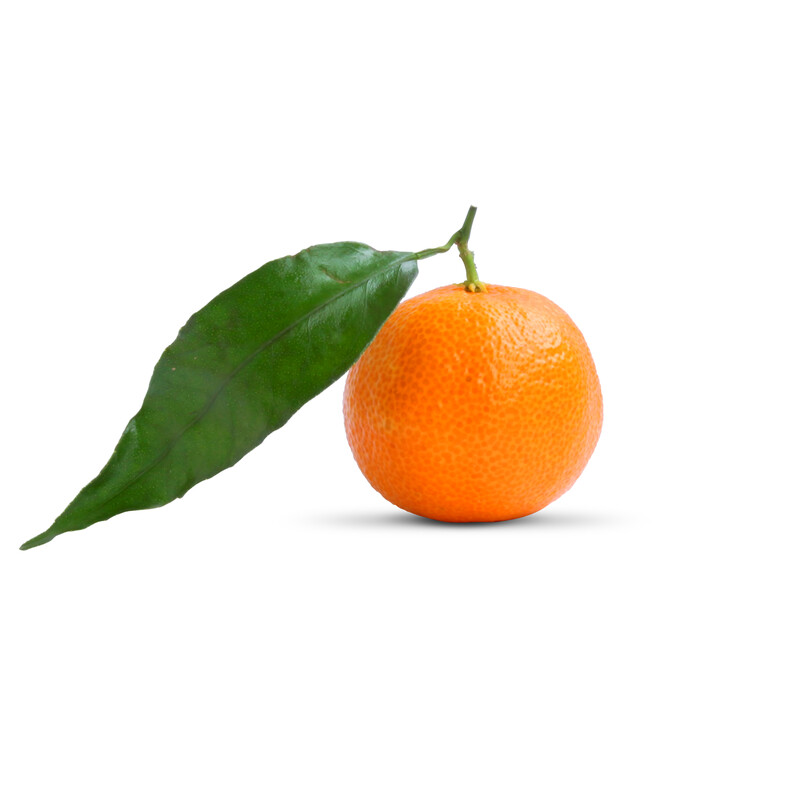
In a quiet garden, nestled within the walls of an orphanage in North Africa, something unexpected happened. The soil was no different than it had been for years, the air no sweeter, and yet, on one particular tree, something unusual appeared. A fruit, smaller than most, with a deep orange glow and a skin so thin it peeled with barely a touch. It was a citrus unlike any other—mild yet fragrant, sweet but not overly so. And it had arrived, it seemed, by accident.
The children at the orphanage were among the first to notice it. They delighted in its easy-to-peel skin, its burst of sweetness, and its refreshing juice. Unlike other citrus fruits, this one had fewer seeds—sometimes none at all. It was as if nature had crafted something perfectly suited for small hands and eager appetites. But no one knew, just yet, what it was or where it had come from.
Word spread beyond the orphanage walls. Farmers and botanists took notice, intrigued by this unusual citrus. Some suspected it was a hybrid of two familiar trees—one with thin, willow-like leaves and another that bore sweet, round oranges. Others believed it had been growing unnoticed for years, only now recognized for its remarkable qualities. Whatever the case, it soon found its way into markets and homes, where it quickly became a favorite.
The fruit’s appeal was undeniable. It was easy to peel, effortlessly segmented, and refreshingly sweet. Its delicate balance of tartness and flavor made it ideal for eating fresh, adding to desserts, or even blending into drinks. It was also useful in unexpected ways—a few drops of its oil in tea or water helped ease occasional heartburn, while adding it to facial cleansers provided a natural boost to the skin. Its bright, zesty essence found its way into household cleaners, its scent filling homes with freshness.
It gained popularity quickly, reaching far beyond its place of origin. Farmers established entire orchards devoted to its cultivation, drawn to its abundant harvests, lack of seeds, and delightful flavor. Over time, it became a staple of the winter season, adding bursts of color to fruit bowls and making its way into school lunches. By the mid-20th century, countries such as Spain, Morocco, and the United States embraced its commercial production, ensuring it would be enjoyed worldwide.
For years, many enjoyed the fruit without ever questioning where it had come from. It seemed as though it had always existed, as natural and familiar as any other citrus. Yet few knew its true origins or how it had been brought to the world’s attention. It had transformed from an orphanage’s garden surprise to one of the most beloved citrus varieties in the world, but the story of the person behind it remained in the background.
The fruit that almost wasn’t? Clementine was named after the man who first cultivated and classified it—Brother Clément Rodier. This small, sweet citrus became a symbol of nature’s surprises, bringing joy, health, and nourishment to countless people. Its vibrant hue, effortless peeling, and refreshing taste secured its place among the most beloved citrus varieties. Whether tucked into a child’s lunchbox, nestled in a holiday fruit basket, or blended into skincare products, its presence is unmistakable. And now, you know the rest of the story.
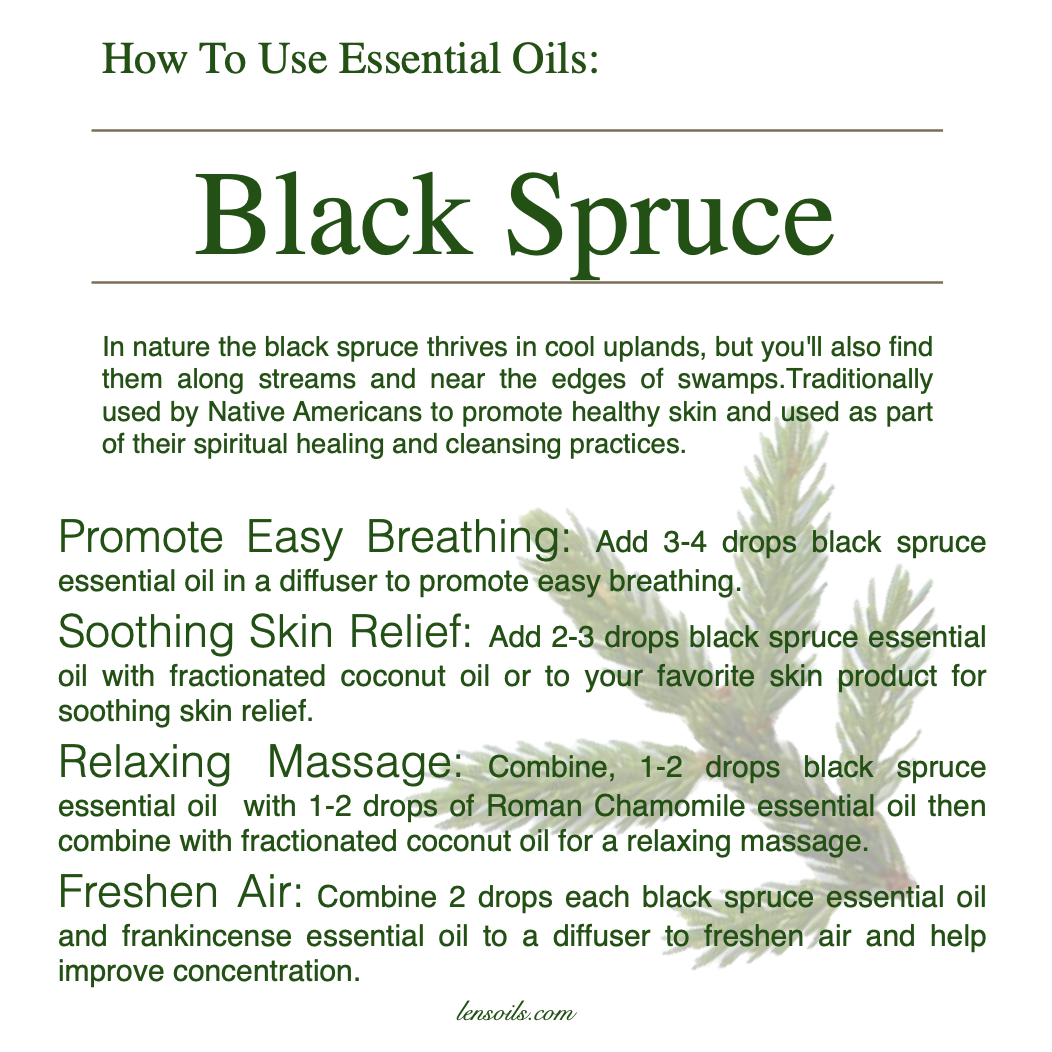
Black spruce is a hardy evergreen that thrives in cool uplands, along streams, and at the edges of swamps. Traditionally, Native Americans used black spruce for its skin-nourishing properties and incorporated it into spiritual healing and cleansing rituals. Its wood and needles were often boiled to create tonics or steam baths, believed to promote overall well-being. The fresh, grounding scent of black spruce essential oil has made it a valuable tool for both physical and emotional healing, with its use continuing in modern herbal and aromatherapy practices.
In modern use, black spruce essential oil is widely recognized for its ability to support respiratory health. Diffusing 3-4 drops can help promote easy breathing, making it useful for seasonal changes or congestion. It is also beneficial for skincare—when blended with fractionated coconut oil or added to a favorite skin product, it provides soothing relief for dryness and irritation. Black spruce is also an excellent oil for relaxation; combining 1-2 drops with Roman Chamomile essential oil and a carrier oil makes for a calming massage blend that can ease tension and promote rest. Additionally, when paired with frankincense in a diffuser, black spruce helps freshen the air and improve concentration, making it a popular choice for both home and workplace environments.
Among these uses, black spruce essential oil is gaining attention for its potential role in supporting adrenal health and reducing stress-related fatigue. The oil contains bornyl acetate, a compound known for its calming effects, which mayhelp reduce feelings of burnout and support the body’s natural stress response. While many aromatherapy practitioners advocate for its benefits in stress relief, scientific studies on black spruce specifically for adrenal support remain limited. However, its grounding properties make it a widely used oil for promoting emotional balance. Whether for skincare, respiratory support, or relaxation, black spruce essential oil remains a versatile and grounding choice in natural wellness, though further research may provide deeper insights into its full range of benefits.
High in the mist-covered mountains of Lebanon, King Solomon’s builders labored. They sought wood that would withstand centuries, wood that was resistant to decay and filled the air with an unmistakable aroma. They chose carefully, for this wood would line the halls of the most magnificent temple ever built. It was a tree known for its strength, durability, and fragrance—a tree that had already been revered for generations.
Far to the south, the priests of Egypt knew of this tree as well. It was not merely prized for its timber but for something more—the oil that could be extracted from its heartwood. The Egyptians used this oil to embalm their dead, believing it would preserve not just the body, but the soul. The tombs of Pharaohs bore the scent long after their earthly kings had turned to dust.
Centuries later, the Roman scholar Pliny the Elder wrote of its properties. He documented its resistance to rot and insects, its deep, grounding fragrance, and the way its oil was used to anoint sacred objects. The Romans burned shavings of its wood in temples, letting the aroma drift skyward with their prayers.
In the American colonies, settlers recognized the same properties. They lined their closets with this wood, filling storage chests with its shavings. Why? Because its scent repelled moths and insects, protecting precious linens and heirlooms for generations. Even today, small blocks of this wood are placed in closets for the same reason.
By the 20th century, chemists began to examine the oil more closely. Among them was René-Maurice Gattefossé, the French scientist who pioneered aromatherapy. He recognized this oil’s ability to promote relaxation and soothe the mind. Blended into massage oils or diffused into the air, it provided a sense of calm after a long, weary day.
Meanwhile, outdoorsmen took note of another quality. Hikers and campers began using the oil as a natural insect repellent. A drop on a cotton ball, tucked into a tent or sleeping bag, kept unwanted pests at bay. It was yet another way this tree protected those who sought its benefits.
Modern dermatologists discovered its skincare potential. With astringent properties, it became a trusted ingredient in facial treatments, helping with oily skin. Those who suffered from occasional skin irritation found that just a few drops blended into lotions or carrier oils could provide relief.
And in households around the world, its scent filled the air—not just in wooden furniture, but in diffusers, candles, and soaps. It became a staple in spas, helping people unwind from the pressures of daily life. It was the quiet companion of relaxation, as it had been for thousands of years.
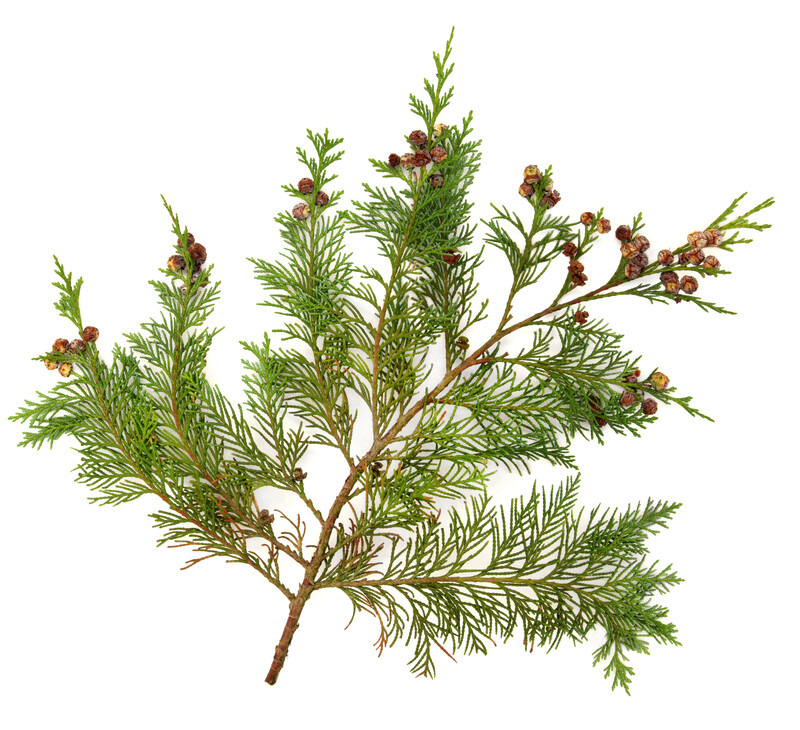
And now, with all the clues before you—the ancient temples, the chests lined with fragrant wood—you might think we’re talking about sandalwood or pine. But no, the unsung hero of this story is Cedarwood. With its grounding aroma and remarkable benefits, it has touched lives for centuries.
Essential oils are absorbed transdermally through the skin’s pores, allowing their beneficial properties to take effect. Some essential oils are gentle and soothing, while others are considered “hot” and can cause irritation. To ensure safe application, it is essential to have fractionated coconut oil available to dilute stronger oils. When applying multiple oils, allow a few minutes between each layer to let the skin absorb the properties of each oil properly.
When using essential oils on the skin, it’s important to consider factors such as skin sensitivity and the purpose of the oil. Always perform a patch test before using a new oil to check for any reactions. Dilution is key for safe application, especially with potent oils like oregano or cinnamon. Additionally, essential oils should be applied to pulse points or problem areas for targeted benefits. For enhanced absorption, gently massaging the oil into the skin can improve circulation and effectiveness.
One particularly beneficial oil for skincare is Roman Chamomile (Anthemis nobilis). This essential oil is known for its calming and soothing properties, making it an excellent choice for irritated or sensitive skin. It can help reduce redness, inflammation, and minor skin discomfort. Roman Chamomile is also popular for promoting relaxation, making it a great addition to nighttime skincare routines.



 Len's Oils