Tag Archives: Immune support

Rainforest’s Hidden Gift and The Rest of the Story

Deep in the heart of the Amazon rainforest, towering trees stretched over 100 feet tall, their thick trunks rooted deep in rich, untouched soil. They had stood for centuries, unnoticed by most of the world. But hidden within them was something remarkable—something that would one day change the way people cared for their health and well-being.

For generations, indigenous tribes and local farmers of South America had known the secret of these trees. They carefully tapped the bark, collecting a golden resin that flowed slowly like nature’s own medicine. This thick, aromatic sap was used to cleanse the skin, support oral health, and promote overall wellness. Those who ingested it found it could ease anxious feelings and support the immune, cardiovascular, and digestive systems. Passed down through generations, this knowledge remained within small communities, while the rest of the world remained unaware of its benefits.

As more people looked for natural ways to stay healthy, scientists and wellness experts became interested in this special tree resin. They discovered that it had a unique ingredient called β-caryophyllene (BCP), which could help the body in many ways. BCP connects with CB2 receptors in the body’s endocannabinoid system (ECS), which helps control things like inflammation, the immune system, and overall balance. This meant the resin could help the brain, nerves, liver, and kidneys stay healthy. Scientists also found that this resin had more BCP than any other essential oil, making it one of the most powerful natural wellness tools available.

However, with growing demand came challenges. Some large companies sought to harvest as much of the resin as possible, damaging the trees and ignoring the well-being of the farmers who relied on them. But one company, dōTERRA, took a different approach. Instead of mass production, they focused on sustainability and fair trade, working directly with local harvesters to protect the land and ensure a future for those who had been tending these trees for centuries.

Through dōTERRA’s Co-Impact Sourcing™ initiative, local farmers were trained to tap the trees responsibly, allowing them to continue producing resin for many years. Instead of overharvesting, they carefully collected only what was needed, ensuring that both the environment and the communities that relied on these trees thrived. dōTERRA also invested in education, healthcare, and fair wages for these farmers, helping to improve their quality of life while respecting their traditions and expertise.

One such farmer, whose name may not be widely known but whose impact is undeniable, had spent his entire life harvesting this resin the way his ancestors had before him. For years, he struggled under unfair trade conditions, receiving little pay while foreign companies profited from his hard work. But after partnering with dōTERRA, he and many others finally saw the value of their labor. They received fair wages, proper tools, and training, ensuring that their families could thrive while protecting the delicate balance of the rainforest.

Despite its long history, this oil remained one of nature’s best-kept secrets for centuries. It was widely used in lotions, creams, perfumes, and soaps, and had been an important part of traditional Brazilian health practices. It provided antioxidant support, helped maintain a healthy inflammatory response, and promoted general well-being. Whether applied to the skin for a clear complexion, taken internally for immune support, or diffused for a calming effect, its benefits extended far beyond what early explorers had imagined. This wasn’t just another tree in the rainforest—it was a powerful gift from nature.

The oil hidden in the rainforest? Copaiba. A natural treasure from the towering trees of the Amazon, once known only to indigenous healers and local farmers, now shared with the world through the sustainable efforts of dōTERRA. Thanks to dedicated harvesters, this extraordinary resin is collected responsibly, protecting both the land and the people who depend on it. And now, you know the rest of the story.
How to Use Essential Oils: Cassia

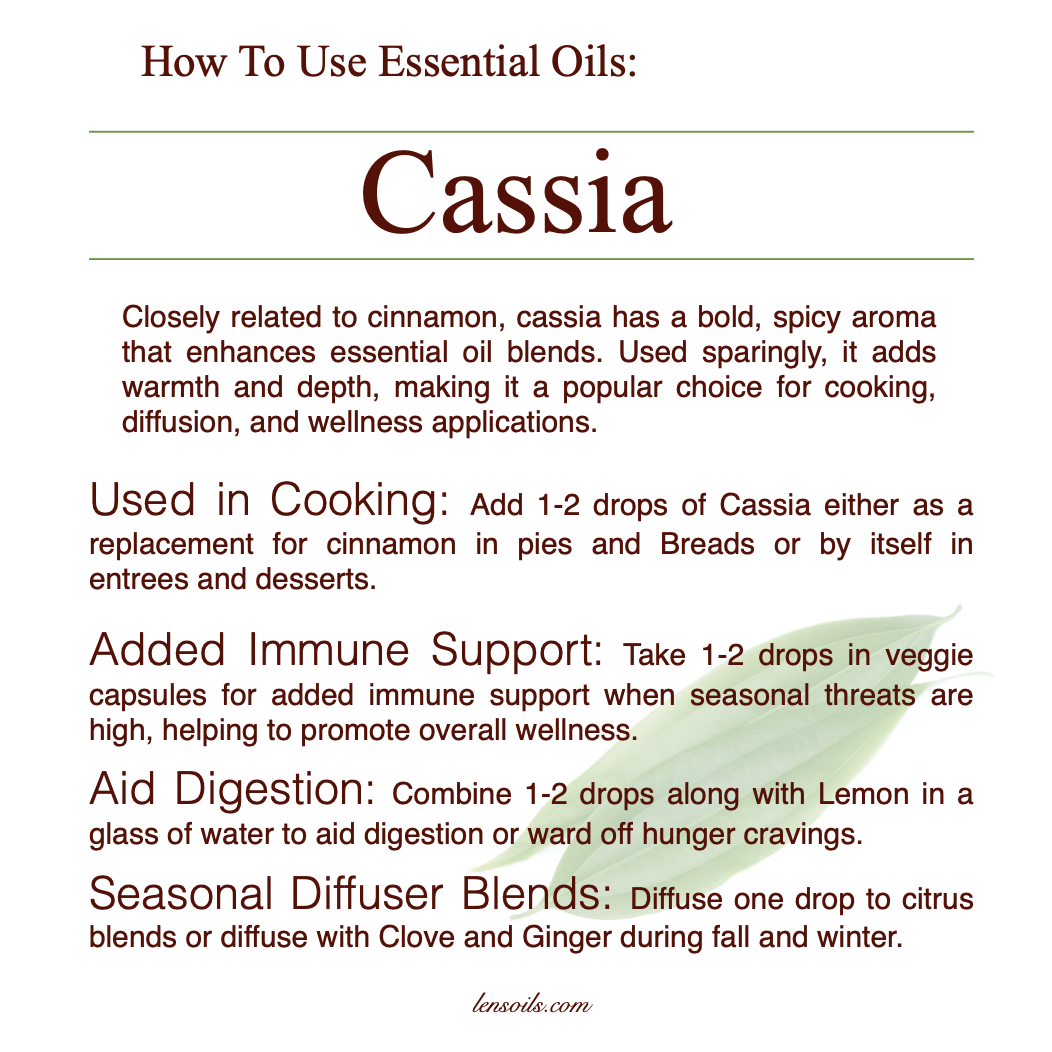
Cassia (Cinnamomum cassia), a close relative of cinnamon, is known for its warm, spicy aroma and strong flavor. Native to China and Southeast Asia, cassia has been used for centuries in traditional medicine and culinary applications. Its essential oil is highly concentrated, and only small amounts are needed to enhance recipes or blends. In cooking, 1-2 drops of cassia essential oil can be used as a substitute for cinnamon in pies, breads, and desserts or as a standalone spice in savory dishes. Due to its intense potency, it should be used sparingly. While cassia is recognized for its aromatic and culinary benefits, research on whether cassia essential oil retains the same digestive and metabolic effects as whole cassia bark is still limited.

Cassia is also commonly used for immune support and seasonal wellness. Many essential oil practitioners recommend taking 1-2 drops in a veggie capsule to help support the immune system, particularly during seasonal changes. Some preliminary studies suggest that cassia contains antimicrobial properties, but more research is needed to determine its direct impact on immune function. Additionally, combining cassia with lemon essential oil in a glass of water is thought to aid digestion and curb hunger cravings, though scientific validation on cassia oil’s role in appetite suppression remains inconclusive. While cassia essential oil may offer digestive support, it is highly concentrated and should always be diluted properly before ingestion.

Cassia’s bold, warming scent makes it a popular choice for diffuser blends, particularly in fall and winter. Just one drop blended with citrus oils or paired with clove and ginger can create a cozy, inviting atmosphere. Some believe that diffusing cassia may also help support respiratory function, but further studies are needed to confirm these benefits. While cassia essential oil has strong antimicrobial and aromatic properties, its direct effects on digestion, immune support, and respiratory health require additional scientific validation. Nevertheless, cassia remains a versatile and powerful essential oil for culinary, aromatic, and occasional wellness applications.

The Herb of Two Opinions and the Rest of the Story

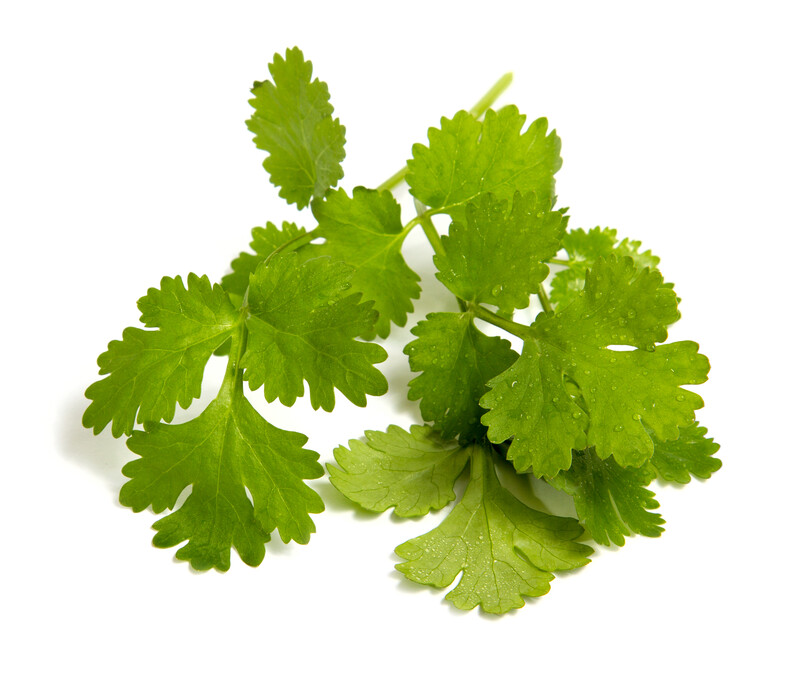
For centuries, an unassuming green herb has graced tables across the world, its fragrance as distinct as its flavor. It has been crushed into pastes, steeped into teas, and scattered atop dishes from Mexico to India. Ancient civilizations knew of its powers long before modern science confirmed its worth. Traces of it have been found in the tombs of Egyptian pharaohs, nestled alongside gold and sacred artifacts, hinting at a value that extended far beyond the kitchen. Hippocrates, the father of medicine, spoke of its medicinal properties, while Chinese healers used it to rid the body of toxins.

In the Middle Ages, it was rumored to hold mystical qualities, a belief likely rooted in its ability to purify and restore. Traders carried its seeds along the Silk Road, sharing its secret with distant lands. The Spanish conquistadors ensured its presence in the New World, where it flourished in the warm, fertile soils of the Americas. Today, it is a staple in kitchens worldwide, yet it remains one of the most polarizing ingredients in culinary history—beloved by some and despised by others.

Its scent, bright and citrusy to some, is curiously soapy to others, a perception dictated by genetics. Charles J. Wysocki, a behavioral neuroscientist, uncovered the genetic link that determines whether one will relish its fresh, tangy bite or recoil at its pungency. This divisive reaction is rooted in olfactory receptors, proving that taste, at times, is simply a matter of biology. But beyond its flavor, it harbors an arsenal of benefits that modern science has only begun to unravel.

Dr. Ellen Silbergeld, a toxicologist renowned for her work in environmental health, found that this little leaf could do what few other plants could—it binds to heavy metals in the body, aiding in their safe removal. Its detoxifying properties have made it a subject of research in holistic medicine, where it is lauded for its ability to cleanse the bloodstream and support liver function. Some have even referred to it as nature’s own “chelation therapy.”

Not just a detoxifier, this herb is a digestive ally. Its essential oils contain compounds that soothe the gut, reducing bloating and discomfort after a heavy meal. A single drop of its concentrated essence, mixed into water, can help the body process rich or indulgent foods. For those who prefer its raw form, adding it to meals not only enhances flavor but also promotes gut health.

Its uses extend beyond digestion and detoxification. Researchers have found that its antioxidant properties may support the body’s defenses against oxidative stress. With a rich profile of vitamins A, C, and K, it contributes to skin health, immune support, and overall well-being. And when paired with lime in a diffuser, its fresh herbal aroma invigorates the senses, bringing a touch of nature indoors.

For all its uses, it remains misunderstood by many. Some associate it with humble street food, while others see it as a refined touch in gourmet cuisine. It has been praised in Ayurvedic medicine for its healing properties, studied by Western scientists for its detoxifying effects, and endlessly debated at dinner tables around the world. Cilantro, with its distinct flavor, divides opinions—fresh and citrusy to some, overwhelmingly soapy to others, a reaction dictated by genetics. Yet, despite the controversy, it continues to thrive in cultures across the globe, enhancing meals, supporting digestion, and purifying the body. A staple in kitchens from Mexico to India, a remedy in holistic medicine, and a topic of scientific curiosity, this humble herb holds a history as rich as its flavor.

And now you know the rest of the story.

How to Use Essential Oils: Feet

The feet provide one of the safest and most effective ways to absorb essential oils into the body. The large pores on the soles allow oils to be quickly absorbed and distributed throughout the system, making foot application both fast and convenient. Many reflexologists believe that the bottoms of the feet contain reflex points that correspond to different organs, meaning essential oils applied to specific areas may offer targeted support. Simply rub 1-3 drops of essential oil onto the soles of the feet, then rub them together to evenly distribute the oil. This method is particularly useful before bed, as oils like lavender or cedarwood can help promote relaxation and restful sleep.

Because the skin on the feet is thicker than other areas of the body, it’s generally safe for most essential oils, but some, like oregano oil, should be diluted due to their potency. Mixing oregano, tea tree, or eucalyptus essential oil with fractionated coconut oil can be beneficial for foot health, helping to cleanse and support the skin. Essential oils applied to the feet can also provide warmth and circulation support—peppermint or ginger oil, for example, can create a warming or cooling sensation, depending on personal needs. Whether for relaxation, immune support, or overall wellness, applying essential oils to the feet is a simple yet powerful way to experience their benefits.