Tag Archives: Essential Oils

My Personal Shingles Story

Several years ago, I started getting very painful, burn-like boils on the back of my neck and chest. It was a strange intense sensation that began deep in the tissues of my skin, accompanied by relentless itching. Then, it escalated to feeling like several dozen bees stinging me all at once as the boils came closer to the surface. Needless to say, the sores were extremely painful and very red.

I went to a doctor to see what was going on. He explained to me that I had shingles, a viral infection caused by the same virus that causes chickenpox. He further clarified that after a person has had chickenpox, the virus lies dormant in the nervous system. Years later, it can be reactivated by factors like disease, immune deficiency, or stress, and lead to shingles.

I was given a prescription, but without the promise it would heal quickly. When you’re told it could still take several weeks before you’re free from shingles, it is very disheartening. It felt like an endless battle with little relief in sight.

Two years ago, a friend of mine, John, told me he had shingles. I said, “Come on over, and I’ll give you some essential oils that may help ease the pain.” John was reluctant but eventually decided to give it a try. I consulted my Modern Essentials book and discovered that oils like melaleuca, eucalyptus, lavender, lemon, geranium, and bergamot have been studied for their potential to help with shingles. I combined five drops of each oil in a roller bottle and diluted the mixture with fractionated coconut oil. John applied the oil blend to his shingles, and just four days later, his suffering was making a dramatic turn for the better.

Reflecting on my own experience with shingles, I wish I had known then about the natural remedies that could ease the pain. The journey of learning and sharing has become so rewarding. I never get tired of hearing stories of how essential oils may help improve someone’s quality of life, and I love seeing firsthand the profound influence they can have on others.
Essential Oils in the Bible

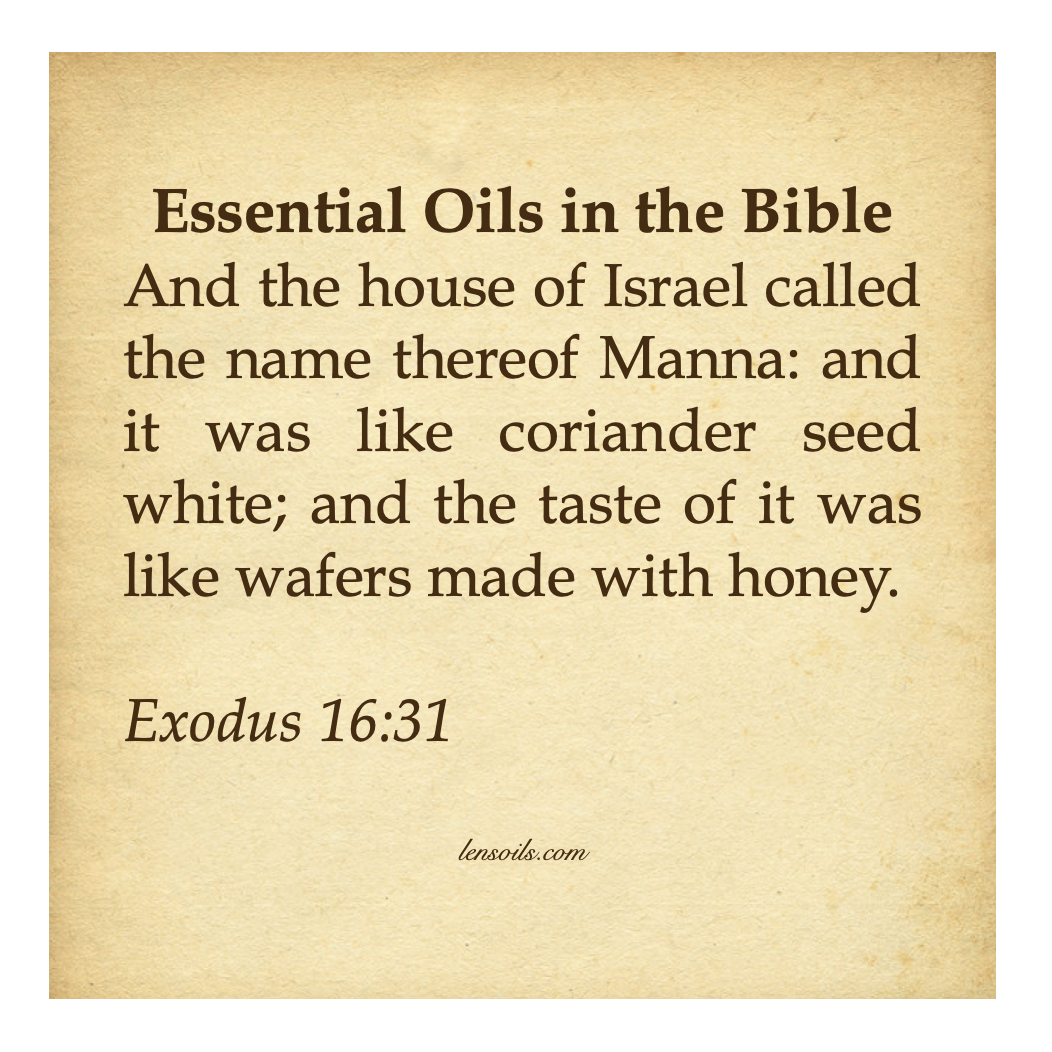
The verse in Exodus 16:31, “And the house of Israel called the name thereof Manna: and it was like coriander seed white; and the taste of it was like wafers made with honey,” recounts a miraculous provision of food from God to the Israelites during their journey through the wilderness after their escape from Egypt. The story of manna is deeply symbolic and reflects themes of trust, divine provision, and sustenance.

After fleeing Egypt and crossing the Red Sea, the Israelites faced hardships, including scarcity of food. They complained to Moses about their hunger, longing for the abundance they remembered in Egypt. In response, God provided manna—a mysterious, edible substance that appeared on the ground each morning like dew. Manna’s description as “like coriander seed, white” and tasting “like wafers made with honey” conveys its nourishing and pleasant qualities, highlighting God’s generosity.

While manna itself isn’t directly connected to essential oils, the Bible often references fragrant plants and resins like frankincense, myrrh, and spikenard, which were used in anointing, worship, and healing practices. Manna shares a similar symbolic role in providing physical and spiritual sustenance. Its sweet taste and miraculous nature reinforced the idea that God would meet the needs of His people, teaching them to rely on Him daily for provision and to obey His commandments.

In broader biblical tradition, manna became a symbol of God’s faithfulness, a lesson in gratitude, and a foreshadowing of spiritual nourishment, as referenced by Jesus in the New Testament when He referred to Himself as the “bread of life” (John 6:35). The connection between natural elements like manna and spiritual truths underscores the Bible’s recurring theme of God’s care through the gifts of creation.

While the verse in Exodus 16:31 doesn’t explicitly mention essential oils, there is a subtle connection to the biblical use of natural substances for physical and spiritual well-being. Manna is described as resembling coriander seed, a plant that is still valued today for its essential oil, known for its warming, energizing, and digestive properties. This description links manna to the natural world and its potential to provide both nourishment and healing.

In biblical times, essential oils and aromatic resins like frankincense, myrrh, and spikenard were widely used not only for anointing and worship but also for their medicinal benefits. Manna, while primarily a miraculous food, fits within this broader biblical theme of God providing sustenance and wellness through nature. The honey-like taste of manna suggests a sweet and wholesome quality, paralleling how essential oils often embody the healing and restorative properties of the plants they are derived from.

This connection can be seen as a reminder of how God’s provision extends beyond immediate needs to include elements of comfort and health. Just as manna sustained the Israelites physically and spiritually in their wilderness journey, essential oils and natural remedies can be seen as part of the divine design for maintaining well-being, echoing the care and nourishment symbolized by manna.

Ode to Basil

Oh, fragrant basil, herb divine,
With spicy notes and touch of thyme,
You calm the storm, you ease the mind,
A tranquil balm for humankind.

In a diffuser, your essence flows,
Promoting focus as knowledge grows.
While studying or reading through the night,
You sharpen thoughts and bring delight.

In kitchens, you take center stage,
A single drop on the culinary page,
Transforming dishes, fresh and bright,
A taste of gardens in every bite.

For weary souls, you’re a tender balm,
With wintergreen, you restore the calm.
A massage of oils, the stress will cease,
Neck to shoulders, you bring sweet peace.

During cycles, you lend your grace,
A soothing touch, a warm embrace.
Internally taken, a drop will do,
To steady and comfort the body anew.

Oh, basil, friend of both heart and plate,
A gift from nature, so simple, so great.
In every drop, a story untold,
Of wellness, flavor, and courage bold.

How to Use Essential Oils: Bee & Wasp Stings

Essential oils can provide soothing relief for stings and help reduce discomfort when used correctly. Here’s how you can incorporate them into your care routine:


1. Apply Lavender or Tea Tree Oil Neat

Out of all essential oils, lavender and tea tree can be safely applied directly to the skin (neat). Simply place a drop of either oil on the sting area to help reduce swelling and soothe irritation.


2. Create a Venom-Absorbing Clay Mask

For a deeper detox, use a homemade clay mask to absorb toxins from the sting area. Here’s what you’ll need:

  • 2 tsp bentonite clay
  • 1 tsp activated charcoal powder
  • 2 drops lavender essential oil
  • 2 drops rosemary essential oil

How to use it:

  • Mix the ingredients with enough water to make a thick paste.
  • Apply the paste to the sting area.
  • Allow it to dry for 15 minutes.
  • Rinse off thoroughly with warm water.

This mask not only draws out toxins but also soothes the skin.


3. Explore the 9 Best Essential Oils for Stings

These oils can be used individually or blended for their calming, antiseptic, and soothing properties:

  • Roman Chamomile: Calms inflammation and soothes irritation.
  • Eucalyptus: Reduces swelling and provides cooling relief.
  • Lavender: Known for its soothing and healing properties.
  • Melissa: Helps reduce redness and irritation.
  • Peppermint: Provides a cooling sensation for immediate comfort.
  • Rosemary: Assists with circulation and detoxification.
  • Tea Tree: Offers antiseptic and anti-inflammatory benefits.
  • Thyme: Helps prevent infection.
  • Vetiver: Soothes the skin and calms irritation.

By using essential oils thoughtfully and safely, you can turn a sting into a moment of care and healing. Learn more about essential oils at lensoils.com.

Winter Diffuser Blends

Winter Diffuser Blends for a Fresh Start to the New Year

As we say goodbye to the holidays and embrace the fresh opportunities of the new year, these winter diffuser blends will fill your home with warmth, energy, and comfort. Try these blends to create a cozy, inviting atmosphere or a bright and invigorating vibe to start 2025 off right!


Crystal Snow

For a crisp, refreshing scent that mimics the cool air of a snowy day:

  • 5 drops Peppermint
  • 2 drops Ylang Ylang

Frosted Trees

Bring the fresh, forest-like aroma of evergreens into your space:

  • 4 drops Siberian Fir
  • 2 drops Peppermint
  • 1 drop Wintergreen

Tea Time

Perfect for chilly afternoons, this warm and spicy blend creates a cozy, tea-like atmosphere:

  • 1 drop Cardamom
  • 2 drops Cinnamon Bark
  • 3 drops Wild Orange
  • 1 drop Clove

Mittens

Wrap yourself in the warmth of this comforting, citrusy blend:

  • 2 drops Cinnamon Bark
  • 4 drops Wild Orange
  • 2 drops Cedarwood

New Year’s Fresh Start (Bonus Blend for January 1st)

Infuse your space with optimism and clarity for the year ahead:

  • 3 drops Lemon
  • 2 drops Eucalyptus
  • 3 drops Frankincense

Start the new year with scents that inspire joy, calm, and motivation. These blends are perfect for winter days when you want to unwind, reflect, or set new intentions.

Learn more about essential oils and creative diffuser blends at lensoils.com. Here’s to a bright and aromatic 2025!

The Seeds of Timeless Wisdom

Long ago, in lands where mountains kissed the sky and the desert stretched far and wide, humanity found treasures hidden in plain sight. They were not gold or jewels but plants—humble, unassuming, yet brimming with secrets that whispered through the ages. One of these plants would change the way people saw healing, nourishment, and even trust. But before we get to that, let’s start with the foundation of its legacy.

The earliest healers didn’t wear lab coats or work in sterile clinics. They were farmers, shepherds, and midwives who turned to the earth’s bounty for answers. Oils pressed from leaves, roots, and seeds became their medicine. A mere drop could soothe pain or sweeten a sour stomach. These ancient remedies, passed through generations, became the foundation of modern wellness. Yet, even with all our advancements, some secrets from the past remain indispensable.

For centuries, the carrot family has been a source of health and nourishment. From its roots came earthy sustenance, and from its seeds, oils that calmed and healed. Plants like cumin and fennel have become kitchen staples, their aromatic seeds flavoring dishes and aiding digestion. These seeds, steeped in history, whisper their benefits into every bite. But there was one cousin in this family, small and quiet, that rose to fame in ways no one could predict.

This tiny hero carried its aroma into the stories of many cultures. Bread baked with its seeds graced ancient tables, offering sustenance and solace. Tales from long-forgotten kitchens spoke of this seed’s power to soothe a worried mind and ease a troubled gut. Meanwhile, in distant lands, the same seeds became symbols of loyalty, ensuring that belongings laced with their scent remained unstealable. Such is the legacy of these simple yet profound seeds.

And so we arrive at caraway seed. Native to Asia but beloved worldwide, it has stood the test of time as both a healer and protector. Its essential oil, extracted from the seed, has amazing benefits. A soothing abdominal massage with caraway seed oil calms discomfort; a single drop in a daily rinse refreshes the breath and supports oral health. Blend it with lavender in a bath, and you’ll find peace in its calming embrace. In biblical times, caraway seed even found its way into bread, a testament to its enduring value.

Now, whenever you see that tiny seed, remember its journey—from ancient remedies to modern wellness. It’s more than a spice; it’s a bridge between the wisdom of the past and the promise of the future. And now you know… the rest of the story.

How to Use Essential Oils: Don’t

How to Use Essential Oils: Tips for the Holiday Season and Beyond

After the festivities of Christmas and as we step into the new year, essential oils can help create a soothing and refreshing atmosphere to start 2025 on the right note! Here are some simple ways to use essential oils safely and effectively:

Don’ts

  1. Don’t Forget to Dilute Essential Oils
    Always mix essential oils with a carrier oil (like coconut, jojoba, or almond oil) before applying them to your skin to avoid irritation.
  2. Don’t Overdo It
    A little goes a long way! Start with just a few drops in your diffuser, bath, or DIY products to enjoy their benefits without overwhelming your senses.
  3. Don’t Ignore Labels and Instructions
    Always read the label for safe usage recommendations. Look for details on dilution, ingestion, or application tips.
  4. Don’t Neglect Patch Testing
    Before applying a new oil to your skin, do a small patch test to check for sensitivity or allergies.
  5. Don’t Store Oils Improperly
    Keep essential oils in a cool, dark place and tightly sealed to preserve their potency and prevent degradation.
  6. Don’t Skip Cleaning Your Diffuser
    Clean your diffuser regularly to avoid buildup and ensure the purity of the oils you diffuse.
  7. Don’t Forget to Use Glass or Stainless Steel Containers
    When using oils in beverages or cleaning blends, opt for glass or stainless steel containers to avoid reactions with plastics.
  8. Don’t Hesitate to Experiment with Blends
    Feel free to mix complementary oils like lavender and peppermint for relaxation or lemon and eucalyptus for a refreshing aroma.

Essential Oils in the Bible

In Matthew 2:11, the wise men (or Magi) visited Jesus after His birth, bringing gifts of great significance: gold, frankincense, and myrrh. These gifts were not random; they were deeply symbolic and valuable in their time.

  • Gold: A gift fit for a king, symbolizing Jesus’ royalty and His role as the King of Kings.
  • Frankincense: A fragrant resin used in worship and as incense in temples, representing Jesus’ divine nature and His role as a priest who connects humanity with God.
  • Myrrh: Another resin, often used in anointing oils and embalming, foreshadowing Jesus’ suffering and sacrifice.

Frankincense and myrrh were highly prized in the ancient world for their aromatic, medicinal, and spiritual uses. These essential oils were extracted from tree sap and were considered luxuries, traded along ancient trade routes. Their inclusion as gifts emphasized Jesus’ importance and the acknowledgment of His divine mission, even as a child.

How to Use Essential Oils: Do’s

How to Use Essential Oils This Christmas Season: DO’s

The holidays bring joy, but they can also bring stress, sniffles, and the need for self-care. Essential oils can be a wonderful addition to your Christmas season if used safely and effectively. Here’s how to make the most of them:

  1. Ingest with Care:
    Only ingest essential oils that have supplemental facts on the label, indicating they’re safe for consumption. A drop of food-grade peppermint oil can be a festive addition to hot cocoa or tea!
  2. Dilute Smartly:
    Use carrier oils, such as coconut or almond oil, for persistent burning or sensitive skin. They’ll help dilute the oils while keeping your skin nourished.
  3. Store Properly:
    Keep your essential oils in a dark, cool space to maintain their potency and shelf life. Treat them as you would Christmas cookies—safe, secure, and ready for use!
  4. Daily Care:
    Incorporate essential oils into your health routine. Lavender for relaxation, eucalyptus for clearer airways, or frankincense for grounding during this busy season.
  5. Go Easy:
    Remember, less is more. Diluting oils with a carrier and applying them more often is better than overusing a concentrated amount.
  6. Share the Love:
    Essential oils make thoughtful holiday gifts! Create personalized blends for loved ones or share your favorite uses to help others stay merry and bright.

By following these tips, you can safely and effectively enjoy the magic of essential oils this Christmas. Whether it’s diffusing holiday blends, soothing winter skin, or adding festive aromas to your gatherings, essential oils are a gift that keeps on giving! 🎄✨