Money doesn’t grow on trees, but thankfully many oils do — which explains why my diffuser smells like a small forest and my budget feels emotionally supported. Sure, I can’t pay the electric bill with eucalyptus, but I can survive opening it without stress. Turns out when life gets expensive, inhaling something that literally came from a tree is the most affordable therapy I’ve found.
Leviticus 14 describes a detailed purification process for someone being cleansed after a skin disease, overseen by a priest and grounded in practical ritual. Cedar wood, scarlet yarn, and hyssop were not chosen at random. In Book of Leviticus, these materials were familiar for their cleansing, preservative, and purifying qualities. Cedar was valued for its strength and resistance to decay, while hyssop was commonly used for washing and sprinkling, making the ritual both symbolic and rooted in everyday health practices.
Essential oils connect naturally to this passage because cedarwood and hyssop were aromatic plants known for their cleansing and protective properties. These plants were often used fresh or infused in liquids and oils, releasing their natural compounds through contact and aroma. The ritual reflects an early understanding that restoration involved the whole person, body, environment, and community. Purification was not only declared but enacted through natural elements that cleansed, refreshed, and marked a clear return to wholeness and life.
Jasmine essential oil is treasured for its delicate white flowers, which release a rich, captivating aroma for up to thirty-six hours after being carefully hand-picked. The extraction process is extremely labor-intensive and must begin at daybreak, when the blossoms are at their most fragrant and contain the highest concentration of aromatic components. This careful timing preserves jasmine’s signature scent, often described as both uplifting and deeply comforting.
In daily use, jasmine essential oil is often chosen for its ability to support emotional balance and self-confidence. Diffusing a small amount may encourage feelings of joy and peace, while topical use can complement skincare and hair routines with a nourishing, aromatic touch. Many people also enjoy applying jasmine to pulse points as part of a morning or evening ritual, using its gentle fragrance to foster a positive, steady outlook throughout the day.
Hyssop essential oil carries a slightly sweet, herbal aroma that has been valued for thousands of years. In ancient Egypt, Israel, and Greece, hyssop was considered a sacred plant and was often associated with purification, reflection, and spiritual clarity. Its fragrant scent is known to support moments of creativity and meditation, helping the mind feel focused while maintaining a calm, grounded atmosphere.
In everyday wellness routines, hyssop essential oil offers gentle, versatile support. It can be added to hair care products to help balance the scalp, blended with a carrier oil for targeted skin or digestive comfort, or diffused to support clear breathing and a refreshed environment. Many people appreciate hyssop for its ability to feel both uplifting and steady, making it a thoughtful choice when balance and clarity are needed.
Moving day is equal parts physical exhaustion and emotional whiplash. Boxes are stacked, furniture is heavier than you remembered, and somehow everything feels urgent all at once. Between loading trucks, saying quick goodbyes, and trying not to lose important paperwork, it’s easy to feel overwhelmed. This Moving Day Survival Guide is about staying steady through the chaos—keeping your energy up, your emotions grounded, and reminding yourself that once the last box is loaded, a new chapter is already in motion.
In every job that must be done, there really is an essential oil that will help — not because it magically finishes the job, but because it keeps you from sighing loudly, checking the clock, and questioning all your life choices. Find the right oil, and suddenly dishes feel competitive, laundry becomes a sport, and emails are answered with suspicious calm. Turns out the real magic isn’t the task becoming fun — it’s you staying sane long enough to finish it.
Ho Wood essential oil comes from the Cinnamomum camphora tree, traditionally grown in China and carefully steam distilled from the wood, twigs, and bark. It is especially valued for its naturally high linalool content, which gives it a soft, woody-floral aroma that feels gentle and comforting. This calming scent makes ho wood a favorite during stressful moments, helping the mind slow down and the body settle into a more peaceful state without feeling heavy or overpowering.
In everyday use, ho wood essential oil blends beautifully into both wellness and home routines. It works well in diffusers to ease tension and encourage emotional balance, and it can be added to baths or massage oils for deep relaxation after physical or mental strain. Many people reach for ho wood when they want calm without sedation, making it an ideal oil for evening routines, recovery days, or anytime stress needs a softer landing.
Hinoki essential oil, also known as Japanese cypress, comes from a tree long respected for its strength, calm presence, and natural purity. For centuries, hinoki wood has been used to build temples and sacred spaces throughout Japan, valued for its durability and clean, grounding aroma. The oil carries that same sense of quiet strength. Its fresh, woody scent feels both calming and clarifying, making it a favorite for creating a peaceful atmosphere while gently supporting emotional balance and mental clarity.
In daily use, hinoki essential oil fits easily into both wellness and self-care routines. It can be added to a diffuser to freshen the air and create a relaxing environment, or blended into skincare and massage oils for a soothing, restorative touch. Many people enjoy using hinoki after physical activity or during evening routines, as its aroma helps the body unwind while encouraging a sense of calm, comfort, and steady relaxation.
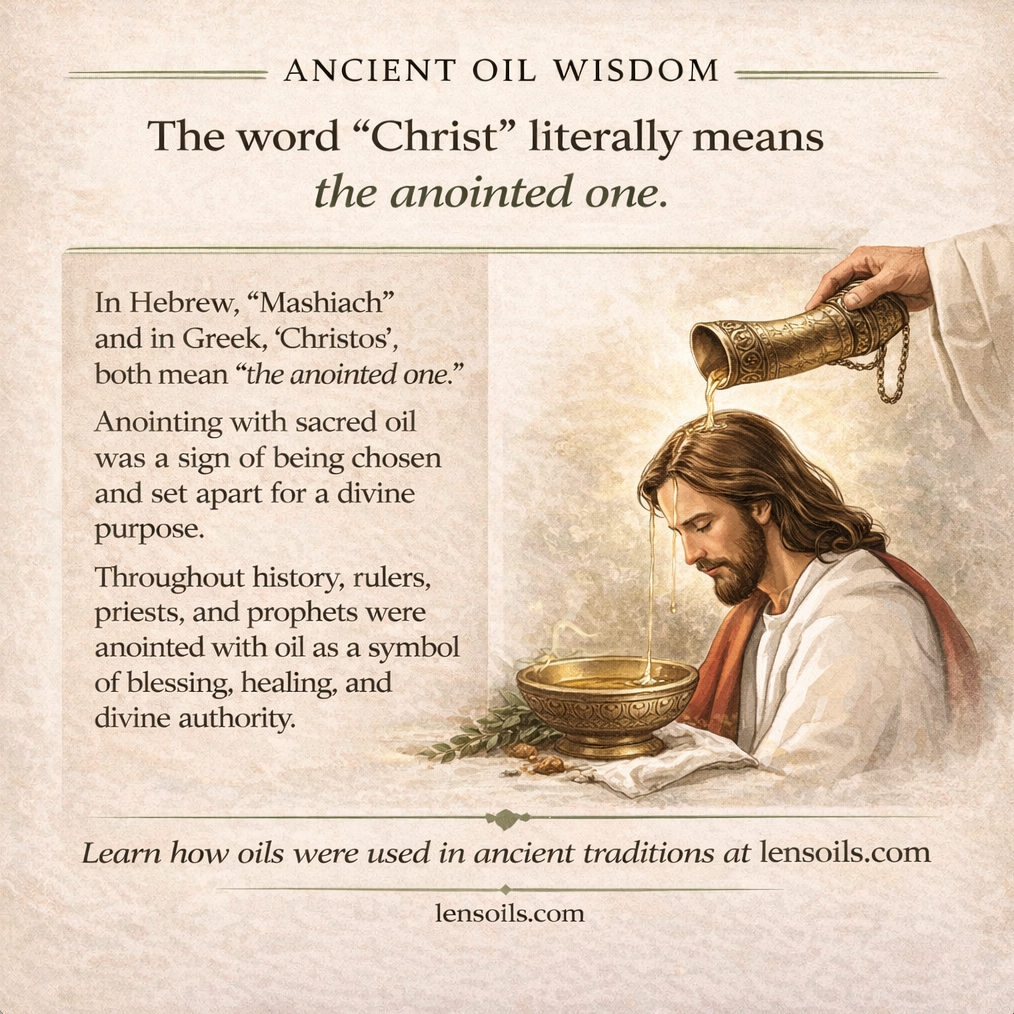
Psalm 45 was written as a royal wedding song, celebrating a king whose leadership was marked by justice, integrity, and joy. In the ancient Near East, kings were publicly anointed with oil as a sign of authority, favor, and divine approval. The “oil of gladness” in Book of Psalms reflects a real ceremonial act, where fragrant oils were poured as part of celebration, consecration, and honor. Joy was not only spoken of — it was seen, felt, and even smelled.
The mention of myrrh, aloes, and cassia points directly to essential oils known and prized in biblical times. These aromatic resins and woods were used in perfumes, sacred anointing oils, and royal garments, especially for important occasions. Clothing infused with these scents signaled abundance, joy, and distinction. The passage shows that fragrance was woven into spiritual life, leadership, and celebration, connecting righteousness with gladness through tangible, plant-based oils that lifted the senses and marked moments of divine favor.