Please text Free Sample or call me at 801-661-4786 I will be sure to get back to you as soon as possible. Or Send me an email at lfish64@yahoo.com with the heading Free Sample It will be an honor to help you in any way that I can. Or Write me a letter, request a Free Sample Leonard Fish 5075 Rushton Acres Court West Valley City, Utah 84120 USA
Ginger adds a warm, steady pulse to these blends, bringing both comfort and quiet motivation without stealing the spotlight. Grounded Joy feels balanced and emotionally lifting, where ginger gently anchors the florals and citrus, while Spicy Comfort is cozy and reassuring, like warmth spreading from the inside out. Forest Spice is especially grounding, blending ginger’s gentle heat with deep woods and resin to create a calm, reflective atmosphere. And Citrus Focus shows ginger’s energizing side, smoothing the sharper edges of lemon, peppermint, and rosemary so the blend feels clear, focused, and sustained rather than rushed.
“I have never yet met a healthy person who worried very much about his health, or a really good person who worried much about his own soul.” —John B. S. Haldane
Or… kind of like how the person who says “I’m not competitive” is usually the one flipping the board game when they lose.
—Meaning: when you’re genuinely well or truly good, you live it naturally — you don’t have to obsess over proving it.
Valerie Ann Worwood is an internationally recognized authority on aromatherapy and essential oils. She is best known as the author of The Complete Book of Essential Oils and Aromatherapy, first published in 1991, which has become one of the most widely referenced texts in the field. Her work is often described as both practical and comprehensive, making it accessible for beginners while still offering depth for experienced practitioners. Over the years, her books have been translated into multiple languages and have helped spread knowledge of aromatherapy to a worldwide audience.
One of Worwood’s major contributions has been her ability to connect the therapeutic and emotional benefits of essential oils with everyday use. She emphasizes that essential oils are not only for physical well-being but also for supporting mental clarity, emotional balance, and stress relief. This dual focus on body and mind has helped to broaden the understanding of aromatherapy as a holistic practice, reaching beyond traditional applications and into areas of daily living.
In addition to her writing, Valerie Ann Worwood has been a strong advocate for educating the public about safe and effective essential oil use. Her guides frequently provide detailed instructions, blending recipes, and practical tips that allow individuals to incorporate aromatherapy into their homes. Through this approachable style, she has empowered countless readers to explore natural health care while still respecting the importance of proper safety standards in handling concentrated plant extracts.
Beyond her published work, it is believed that Worwood has also been involved in consulting and speaking within the aromatherapy community, sharing her expertise with practitioners and wellness enthusiasts alike. While the extent of these roles may vary over time, her voice has consistently been respected as one that bridges professional knowledge with everyday practicality. Her ability to make essential oils approachable has made her a trusted figure among both casual users and those working professionally in the field.
Today, Valerie Ann Worwood continues to be celebrated as one of the most influential authors in aromatherapy. Her decades of involvement, stretching back to at least the late 1980s, have left a lasting mark on the way essential oils are understood and used across the globe. While she may not always be in the public spotlight, her writings remain a cornerstone of modern aromatherapy education, ensuring her influence will endure for years to come.
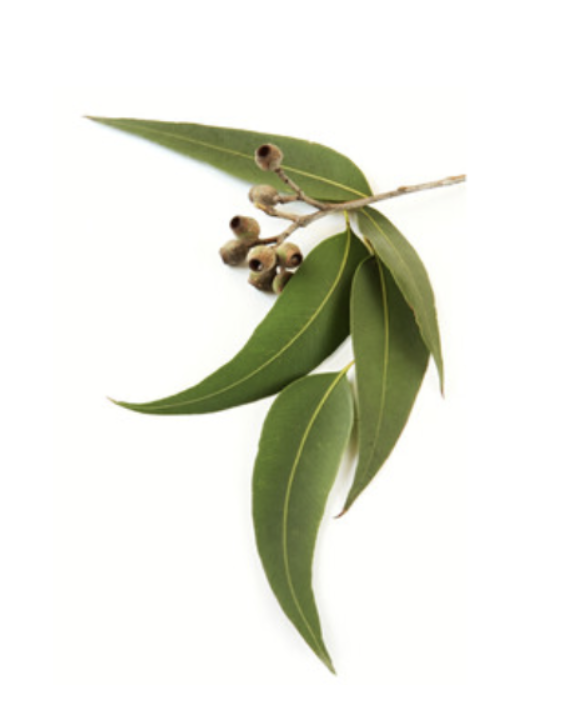
It began in a place where sunlight dances through the haze and the ground steams after the rain. Where the scent in the air is so clean, so crisp, you’d swear it could sweep the dust from your thoughts. Travelers in the southern hemisphere once followed that aroma through dense groves, not knowing its name—only that breathing felt easier, and the world a little clearer, beneath those tall blue-tinged trees.
For generations, the people who lived among them knew what the trees could do. They gathered the long, narrow leaves and hung them in doorways and corners of the home. When someone caught a chill, they boiled them into strong-smelling teas. If a head felt heavy, they’d crush the leaves and breathe in deeply. They never took credit. They just called it wisdom passed down—and they respected what the trees gave them.
When colonists and settlers arrived, they too noticed the power in the air. Soldiers tucked leaves into their packs. Homesteaders burned branches over smoky fires. Doctors began to carry little bottles filled with strong, clear oil—used for cleaning, cooling, or clearing the head. It became known as “fever tree” in some parts, though no one could quite agree on what it cured. They only knew they felt better when it was nearby.
Over time, the oil was drawn more carefully. The leaves were distilled with steam, and the vapor captured in bottles. It had a cooling effect, a camphor-like strength that reminded people of crisp mornings and clean linen. While scientists would eventually study its compounds and its properties, most people didn’t wait for the footnotes. They added a few drops to hot water, rubbed it into tired muscles, or let it drift through a room like a fresh breeze after rain.
To this day, the practice remains. Harvesters still rise early, walking among tall, slender trunks with shears in hand, gathering leaves warmed by the sun. The scent is unmistakable even before the oil is extracted. In places like Australia, parts of Africa, and beyond, this tradition has become an industry—one that doTERRA now supports through responsible sourcing and long-term relationships with local growers. The oil is still crafted with care, bottle by bottle, so it reaches homes around the world as pure as it began.
That tall tree with silvery bark and narrow blue-green leaves? It has eased breathing, cleared minds, and freshened homes for centuries. Its name wasn’t always known, but its gifts were felt long before they were labeled. It was first discovered by native people, later admired by explorers, and eventually carried across oceans in little brown bottles. This tree is Eucalyptus. Now you know the rest of the story.
Elemi essential oil, steam-distilled from the resin of the Canarium luzonicum tree, has a bright, lemony, and slightly peppery aroma with hints of pine. Native to the Philippines, elemi has been valued for centuries as both a spiritual and medicinal resin, often compared to frankincense and myrrh because they come from the same botanical family. In essential oil form, its uplifting scent is known to refresh the mind, promote focus, and create a feeling of lightness. Diffused, it brings a clean, balancing energy that supports both clarity and calm.
Beyond its uplifting qualities, elemi essential oil is often used in skin care and wellness blends. Its resinous compounds make it helpful for supporting healthy-looking skin, and it is sometimes added to facial oils or serums for a rejuvenating effect. In aromatherapy, it blends well with citrus oils like bergamot or grounding oils like frankincense, making it a versatile choice for meditation, relaxation, and emotional balance. Its crisp, citrus-pine aroma also makes it useful in natural cleaning sprays or room fresheners.
Did You Know? The word “elemi” is thought to come from an Arabic phrase meaning “above and below,” reflecting its traditional use for balancing both spirit and body. Like frankincense and myrrh, elemi belongs to the Burseraceae family, and during the 17th and 18th centuries it was sometimes used in church incense as a substitute when frankincense was scarce. Its lemony-pine fragrance added a fresh note to Christmas and festival celebrations, giving elemi a subtle but meaningful connection to the season.
In Matthew 2:11, the wise men brought treasures of gold, frankincense, and myrrh to the Christ child. These gifts were far more than valuable commodities—they carried deep symbolic meaning. Gold was a gift fit for a king, but frankincense and myrrh were essential oils highly prized in the ancient world. Frankincense, harvested from the resin of the Boswellia tree, was central in Hebrew worship. It was burned on the altar of incense in the Temple (Exodus 30:34-36) and represented prayer rising to God. Myrrh, drawn from the resin of the Commiphora tree, had multiple uses: as a perfume, in anointing oils, and even in embalming. Together, frankincense and myrrh pointed to Jesus’ dual role: frankincense as a sign of His priestly and divine nature, and myrrh foreshadowing His suffering and sacrificial death.
Historically, these oils were among the most valuable substances in the ancient Near East. They were traded along caravan routes stretching from Arabia and East Africa into Israel, often worth their weight in gold. Kings and priests used them in ceremonies, and healers prized them for medicinal purposes. For the Magi to present such costly oils to the young Jesus was both a gesture of immense honor and a prophetic symbol of His mission. Today, frankincense and myrrh essential oils are still used for their aromatic, calming, and restorative properties—echoing their sacred and timeless history. Their presence in the story of the Nativity reminds us that God’s plan was written not only in scripture but also in the fragrances and treasures of the ancient world.
My grandma had a saying she repeated often: “Life is like a train, child. You don’t stay at every stop, and not everyone rides with you until the end.” As a child, I didn’t really understand what she meant, but now, as the years pass and my own hair turns gray, I see the deep truth in her words.
When you’re young, the train is loud, fast, and crowded. Everyone seems to be on board—friends from school, neighbors, coworkers, and family. The compartments are filled with laughter, excitement, and plans that make it feel like the ride will last forever.
As the journey continues, people begin to get off at different stops. Some leave because their path takes them elsewhere, while others are lost suddenly, leaving behind empty seats we can’t bear to look at. With time, the train feels quieter, and we start to understand how precious every shared mile truly was.
That’s when Grandma’s wisdom comes alive inside me. She said the secret wasn’t to mourn every passenger who leaves, but to treasure the ones still sitting beside you. Her voice reminds me to look out the window and notice the scenery that’s always changing.
There are sunrises, fields, cities, mountains, and long stretches of open sky—all part of the same ride. Each moment, like each passenger, has its own season and beauty. The view outside keeps shifting, teaching us to appreciate what’s here before it’s gone.
Now, when I visit her memory in my heart, I can almost hear her voice again. “Don’t be afraid when the train empties out,” she said gently. “Be grateful you had company for as long as you did, and when your stop finally comes, step off with peace.”
Life truly is like a train—filled with comings and goings, goodbyes and reunions. It carries moments of noise and stretches of silence that teach us who we are. By the time we reach the last station, we realize the ride was beautiful not because it was perfect, but because it was ours.









 Len's Oils