And now for the rest of the story
There was a time, not too many years ago, when a small group of farmers in Morocco found themselves at a crossroads. They had worked their fields for generations, harvesting grains and spices from the Mediterranean earth, just as their parents and grandparents had done before them. But times were changing, and so was the land. Harsh seasons and dwindling returns made their crops unpredictable. Many were ready to give up, feeling the weight of their families’ legacy slipping through their fingers. And yet, there was a wild, seemingly ordinary yellow-flowered plant growing around their fields, something they had never really thought twice about.
This yellow-flowered plant wasn’t entirely unknown. Their grandmothers had used it now and then, mixing it into remedies to soothe aching muscles or using it to help with skin irritation after long days working under the Moroccan sun. But it had no real value to anyone outside their villages. Then, a team of essential oil experts discovered the remarkable potential of this humble plant. To the farmers’ surprise, it turned out that the plant held within it a potent and rare essential oil that could have an incredible impact beyond their fields. The oil from this yellow flower was a rich indigo, unlike anything they had ever seen, and it was soon drawing interest from companies around the world.
As demand grew, the farmers entered a partnership with doTERRA, a company that would not only bring them fair trade practices but also invest in the sustainability of their land. Under this new alliance, the farmers began to learn ways of refining and cultivating their crops, caring for each yellow bloom with newfound respect and purpose. The company was equally invested, ensuring the soil was treated with care, the plants grown without harm, and the farmers’ futures protected. For many, it felt like a new beginning — a fresh start rooted in the wisdom of the past.
It was during this time that Dr. Robert Pappas, an expert in essential oil chemistry, heard about the beautiful blue oil from Morocco and saw an opportunity to further its potential. Known for his expertise on essential oils, Dr. Pappas studied the primary component, chamazulene, that gave this oil its vivid indigo color and its renowned skin-soothing properties. Through his research at Essential Oil University, he discovered that with careful storage—like refrigeration and minimal air exposure—the oil’s color and effectiveness could be preserved, ensuring a high-quality product for consumers. His knowledge helped doTERRA establish best practices for handling the oil, preserving its unique characteristics and enhancing its benefits for users around the world.
Soon, the stories of this essential oil’s benefits started reaching places far from Morocco. People used it to ease tension, soothe irritated skin, and elevate their spirits. The farmers couldn’t believe that the plant they’d always seen as just another wildflower was now a part of something bigger than they’d imagined. As they harvested the flowers each season, they saw firsthand the difference it made, not only in their own lives but in the lives of people across the globe.
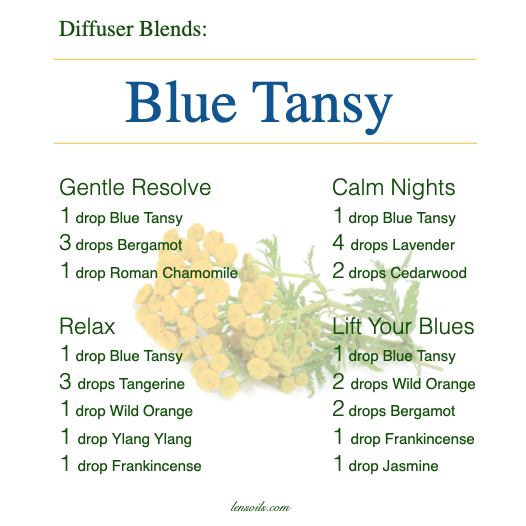
And there was something else, something that set this oil apart. When distilled, it transformed into a beautiful indigo blue, a color that seemed almost magical, as if it carried the essence of the Mediterranean sky. This blue oil, so unique and vibrant, was treasured not just for its color but for the way it could uplift a room with a single drop in a diffuser or soothe weary skin when mixed with a lotion after a long, exhausting day.
This treasured oil, the gift of the small yellow flower, was known as Blue Tansy. It was the very thing that had transformed the lives of those Moroccan farmers, helped them reconnect with their land, and showed the world that sometimes, the most remarkable treasures come from the humblest of places. And now, every time you add a drop of Blue Tansy oil to your skincare or breathe it in for a moment of calm, you’re part of their story too.
And that, as Paul Harvey might say, is the rest of the story.








 Len's Oils