Tag Archives: Aid Digestion

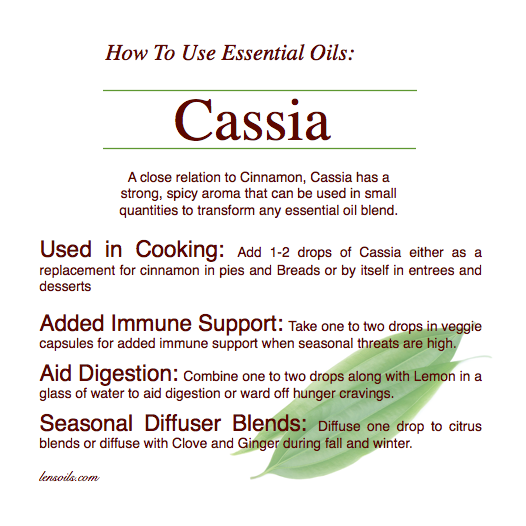
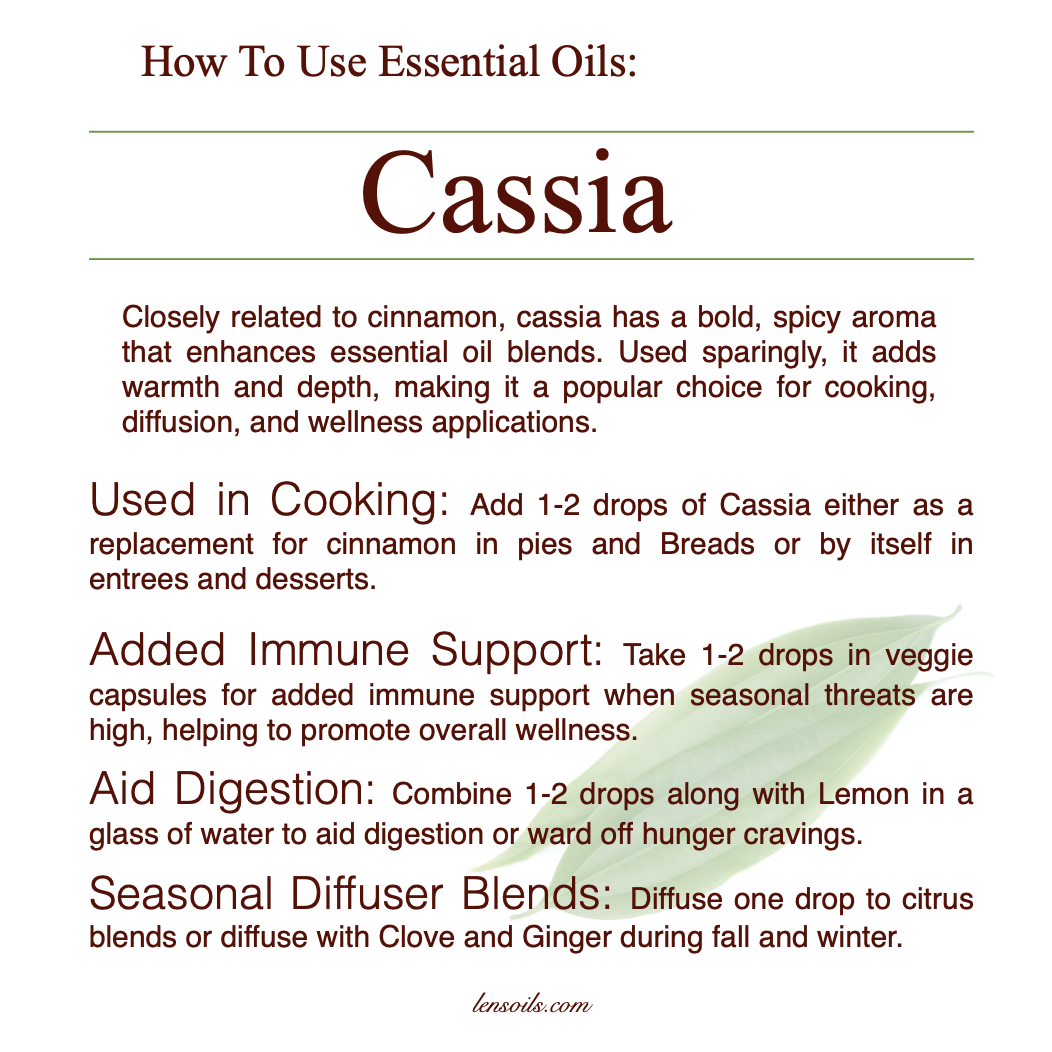
How to Use Essential Oils: Cassia

Cassia (Cinnamomum cassia), a close relative of cinnamon, is known for its warm, spicy aroma and strong flavor. Native to China and Southeast Asia, cassia has been used for centuries in traditional medicine and culinary applications. Its essential oil is highly concentrated, and only small amounts are needed to enhance recipes or blends. In cooking, 1-2 drops of cassia essential oil can be used as a substitute for cinnamon in pies, breads, and desserts or as a standalone spice in savory dishes. Due to its intense potency, it should be used sparingly. While cassia is recognized for its aromatic and culinary benefits, research on whether cassia essential oil retains the same digestive and metabolic effects as whole cassia bark is still limited.

Cassia is also commonly used for immune support and seasonal wellness. Many essential oil practitioners recommend taking 1-2 drops in a veggie capsule to help support the immune system, particularly during seasonal changes. Some preliminary studies suggest that cassia contains antimicrobial properties, but more research is needed to determine its direct impact on immune function. Additionally, combining cassia with lemon essential oil in a glass of water is thought to aid digestion and curb hunger cravings, though scientific validation on cassia oil’s role in appetite suppression remains inconclusive. While cassia essential oil may offer digestive support, it is highly concentrated and should always be diluted properly before ingestion.

Cassia’s bold, warming scent makes it a popular choice for diffuser blends, particularly in fall and winter. Just one drop blended with citrus oils or paired with clove and ginger can create a cozy, inviting atmosphere. Some believe that diffusing cassia may also help support respiratory function, but further studies are needed to confirm these benefits. While cassia essential oil has strong antimicrobial and aromatic properties, its direct effects on digestion, immune support, and respiratory health require additional scientific validation. Nevertheless, cassia remains a versatile and powerful essential oil for culinary, aromatic, and occasional wellness applications.
How to Use Essential Oils: Cardamom

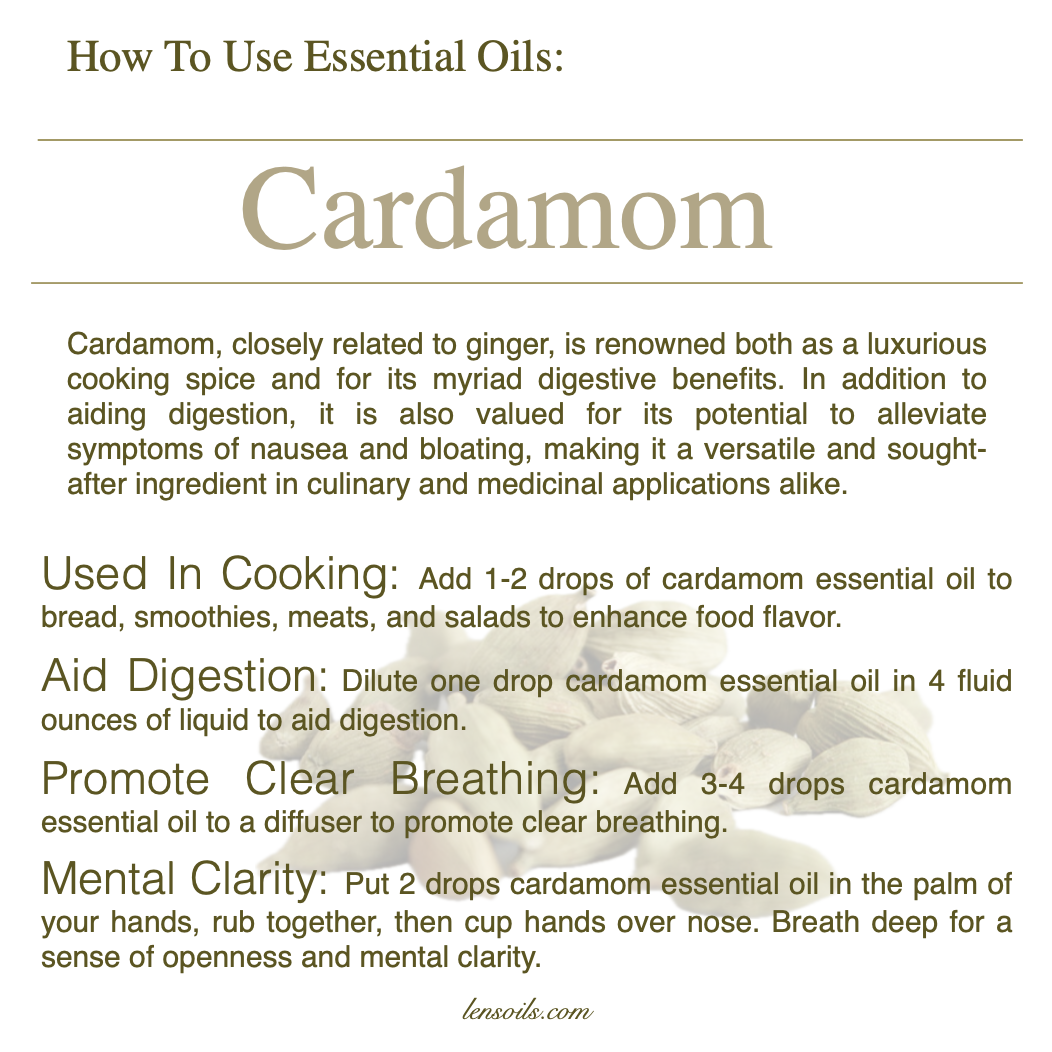
Cardamom (Elettaria cardamomum), a close relative of ginger, has been prized for centuries as both a luxurious culinary spice and a natural digestive aid. Historically, it has been used in Middle Eastern, Indian, and Scandinavian cuisine, where its warm, slightly sweet flavor enhances a variety of dishes. Beyond its culinary appeal, cardamom is known for its digestive benefits, traditionally used to ease bloating, indigestion, and occasional nausea. Adding 1-2 drops of cardamom essential oil to foods such as breads, smoothies, meats, and salads enhances their flavor while also supporting digestion. Additionally, cardamom essential oil can be diluted in 4 fluid ounces of liquid to help aid digestion naturally. While these traditional uses are well-documented, further scientific research is needed to confirm the full extent of cardamom essential oil’s role in gut health and digestive enzyme activation.

Beyond digestion, cardamom essential oil is often used in aromatherapy to promote respiratory health. Adding 3-4 drops to a diffuser can help create an atmosphere that supports clear breathing and soothes airways, making it useful during seasonal changes. Additionally, cardamom oil is said to promote mental clarity—placing 2 drops in the palms, rubbing hands together, and inhaling deeply is believed to provide a sense of openness and focus. Some studies suggest that certain compounds in cardamom may have calming effects, which could support mental well-being, though more clinical research is needed to determine its direct impact on stress reduction and cognitive function.

Among its various applications, cardamom essential oil is sometimes considered beneficial for oral health and detoxification, though these claims require more scientific validation. While cardamom has been used in traditional medicine for freshening breath and cleansing the mouth, research on its effectiveness in preventing bacteria-related oral issues remains limited. Additionally, some practitioners believe that cardamom essential oil may support natural detoxification, but further studies are needed to substantiate these claims. Regardless, cardamom remains a versatile and highly valued essential oil, offering culinary, digestive, and aromatic benefits, making it a staple in both traditional and modern wellness practices.

How to Use Essential Oils: Black Pepper

Black pepper essential oil is rich in monoterpenes and sesquiterpenes, powerful compounds known for their antioxidant properties. These compounds help the body combat environmental and seasonal challenges by supporting overall immune function. Beyond its internal benefits, black pepper essential oil is commonly used to promote circulation and soothe sore muscles. Its warming properties make it a popular choice for massage therapy when combined with a carrier oil, helping to relax tense muscles and joints. Historically, black pepper has been valued not only as a prized spice but also for its medicinal benefits in traditional healing practices.

Incorporating black pepper essential oil into a daily routine can offer multiple benefits. Taking 1-2 drops in a veggie cap can provide support during times of seasonal threats, while adding a drop to meals enhances the flavor of meats, soups, and entrées. It is also known for its ability to soothe anxious feelings, as inhaling its warm, spicy aroma can help promote emotional balance. Additionally, black pepper oil can aid digestion when taken internally, helping to stimulate digestive enzymes and improve nutrient absorption. Its ability to support gut health makes it a useful tool for those looking to improve overall digestive function naturally.

Among these uses, black pepper essential oil is also recognized for its potential role in supporting nicotine withdrawal. Research suggests that inhaling black pepper essential oil may help reduce cravings and withdrawal symptoms for those trying to quit smoking. The oil’s stimulating properties can mimic the sensation of inhaling tobacco, which may help curb the urge to smoke. This makes black pepper essential oil a valuable tool not only in cooking and wellness but also in lifestyle changes aimed at promoting better health.