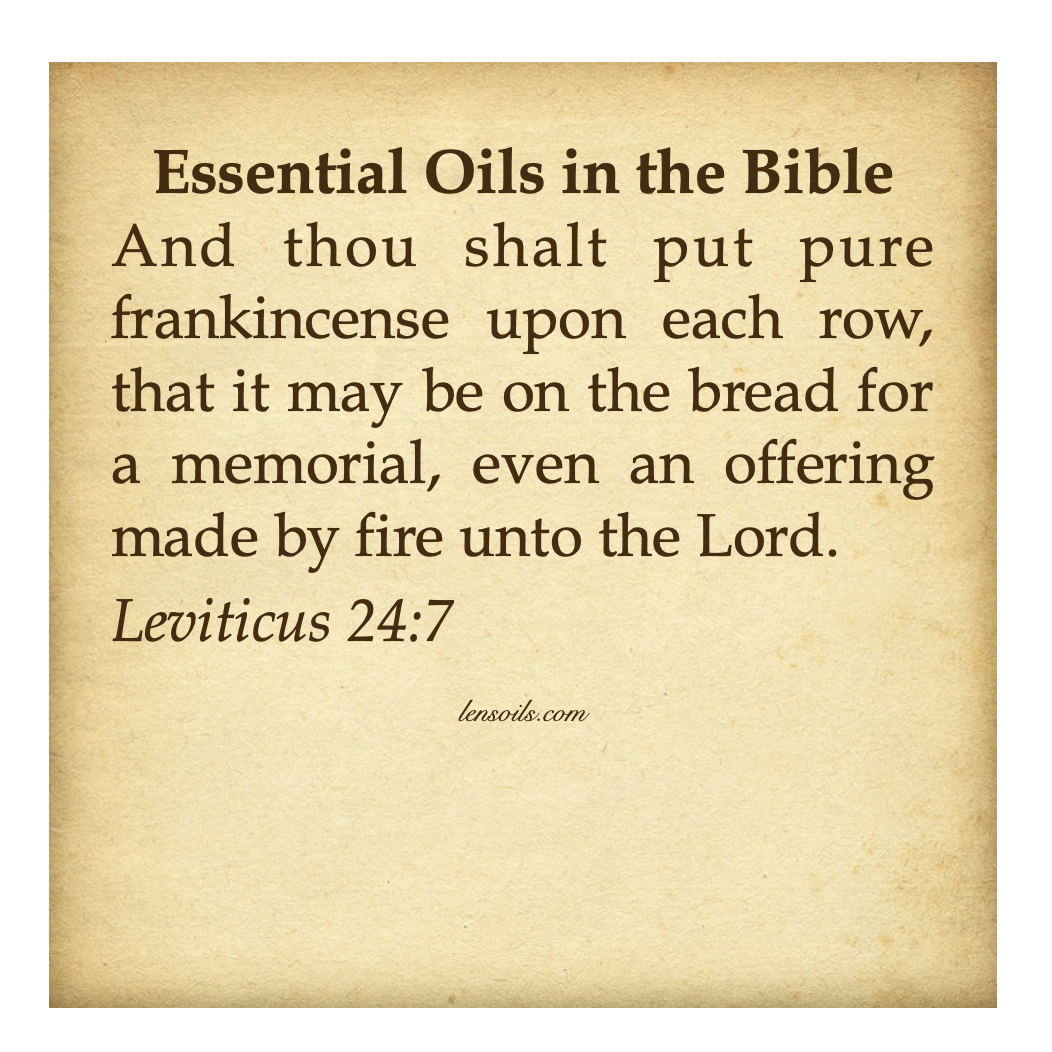
Essential Oils in the Bible

When I was a small child I struggled with my reading ability. I was born with a lazy eye and astigmatism. The first four years of my life I wandered around half blind until I got glasses. This opened up a whole new world where I could see, but I was behind developmentally.
When I was in first and second grades I was at the bottom in all my classes at school. In my effort to catch up and improve myself, one year I received an award for reading 1,000 books to my mother and my two oldest siblings, Ramona and Sherry. The next closest person read only 400 books.
I had many helpful, caring teachers. I remember one machine that helped me read. It would make the sound of a word when you slid a card through the machine. It had a strip of recordable tape attached to cards. You would slide a card through the device, then you would hear the word you just read. I learned how to erase the right word and, replace it with the wrong word instead. The teacher was not happy with my newly discovered knowledge of the reading machine.
I find it interesting that in spite of my difficult past with reading, I have risen above my reading obstacle. I now enjoy writing, and sharing my love of essential oils. I have come full circle, sharing oils that may help small children with their ability to focus which I feel was one of my challenges as a child, and has followed me into adulthood. I have been blessed with an essential oil focus blend, that I have found greatly aids my ability to focus.

The varieties of essential oils are many!
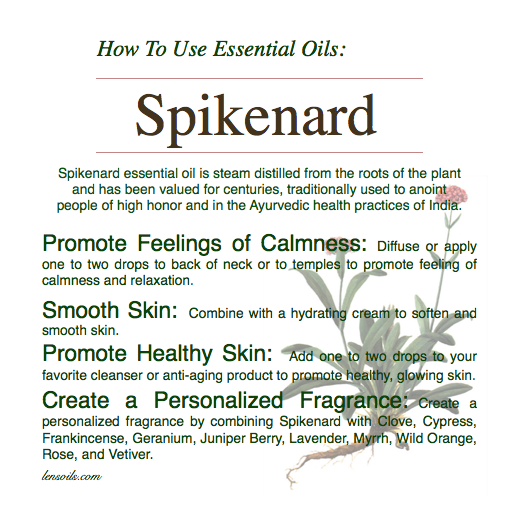
Spikenard, a flowering plant of the Valerian family, is native to high altitudes in the sub-alpine and alpine regions of the Himalayan mountains.

I remember a kind couple who loved my parents, John and Nome Mackaleash. They enjoyed visiting with our family. I remember one time when they came to our home that my sister Rachel was involved in a fundraiser, and was selling boxes of M&M candies for one dollar. This was big money in the 1980’s. I remember John pulled out 20 dollars and bought the whole case of candy. He then gave each one of us our own box.
Fast forward 20 years and my children are doing a school fundraiser. I totally discouraged my children from doing any fundraisers. I would say, “I will give you a dollar if you don’t do that fundraiser.” I was very nasty with everyone trying to sell me anything. One day I was listening to one of my audio books. The guy in the book is telling everyone to be more generous with their money and it will come back ten fold. I started doing this and it works. Now when children come over to the house selling things I buy from everyone. I think back to the great example and generosity of my parents’ friends. We must give more in order to receive more.
Generous giving of ourselves produces a generous harvest. I think this is why I enjoy using and sharing essential oils so much. When I use an essential oil that has personally effected my life in a positive way, I cant wait to share it with others. I love using a product that has no harmful side effects, that gives people another option for hope on their journey for better health.

Spearmint is more subtle then peppermint and very soothing for an upset stomach.



Peppermint, cool and crisp reminds me of Winter.

Using essential oils is a great way to start the year in a great direction.
 Len's Oils