Citronella essential oil, distilled from a tall grass native to Asia, is widely recognized for its crisp, lemony-fresh aroma and natural insect-repelling qualities. For generations, it has been used to ward off mosquitoes, spiders, and other pests by masking human scents that attract them. Beyond its well-known bug-repellent benefits, citronella oil also helps freshen the air, making it a popular choice for diffusing during outdoor gatherings or in stuffy indoor spaces. Its clean and uplifting scent not only protects but also creates a refreshing, energizing environment.
In addition to keeping pests away, citronella essential oil offers cleansing and purifying properties that make it useful around the home and in personal care. When added to water, it can be used to clean surfaces and eliminate odors naturally. In hair care, a few drops blended into shampoo or conditioner can help reduce buildup and leave the scalp feeling refreshed. Whether used to brighten a room, cleanse the home, or keep insects at bay, citronella oil is a versatile essential oil with benefits that extend well beyond outdoor use.
Did You Know? Citronella is often confused with lemongrass, but they are actually two different plants. While both belong to the same family and share a fresh, citrus-like aroma, citronella is especially rich in compounds that make it more effective as a natural insect repellent. Because of this, it has long been used not only in essential oils but also in candles, sprays, and outdoor products to help keep pests away.
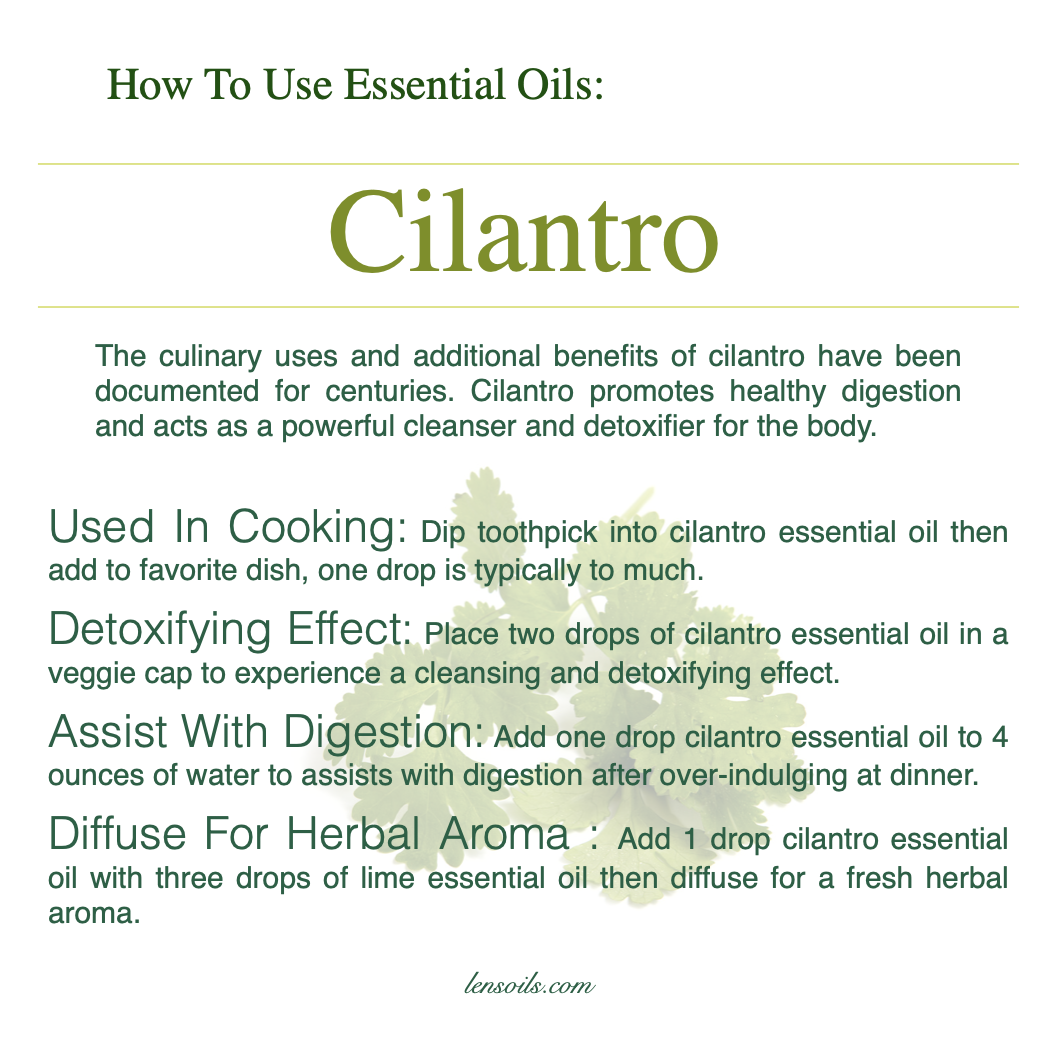
Cilantro (Coriandrum sativum) has been used in culinary and medicinal traditions for centuries, valued for both its distinctive flavor and health-supporting properties. Known for its fresh, herbaceous aroma, cilantro is widely used in cooking, particularly in Mexican, Middle Eastern, and Asian cuisines. The essential oil, derived from cilantro leaves, is highly concentrated, and a small amount goes a long way. A common method for culinary use is dipping a toothpick into cilantro essential oil and stirring it into dishes, as even one full drop may be too strong. Beyond its culinary appeal, cilantro essential oil is believed to promote digestion and help detoxify the body. Some practitioners suggest placing two drops of cilantro essential oil in a veggie capsule to support natural cleansing processes. While cilantro has been traditionally used for detoxification, more scientific studies are needed to validate its direct impact on heavy metal removal and long-term detox benefits.
Cilantro essential oil is also frequently used for digestive support. Many individuals add one drop to four ounces of water to assist digestion after a heavy meal, a practice based on cilantro’s traditional use in easing bloating and occasional stomach discomfort. Additionally, diffusing one drop of cilantro essential oil with three drops of lime essential oil can create a refreshing herbal aroma, often used to promote a sense of freshness and mental clarity. Some aromatherapists believe that cilantro’s invigorating scent may also contribute to emotional balance and stress reduction. While these benefits are widely supported by holistic wellness practices, further clinical research is required to fully understand cilantro essential oil’s physiological effects on digestion and mood enhancement.
Beyond its culinary and detoxifying properties, cilantro essential oil is being explored for its potential antibacterial and antimicrobial effects. Some studies suggest that cilantro oil contains compounds that may help inhibit certain bacteria, making it a potential natural preservative. It has also been traditionally used in folk medicine for immune support, though its efficacy compared to standard antimicrobial treatments remains an area of study. Despite these uncertainties, cilantro essential oil remains a highly versatile oil, offering culinary, digestive, and aromatic benefits, making it a valuable addition to natural wellness practices.
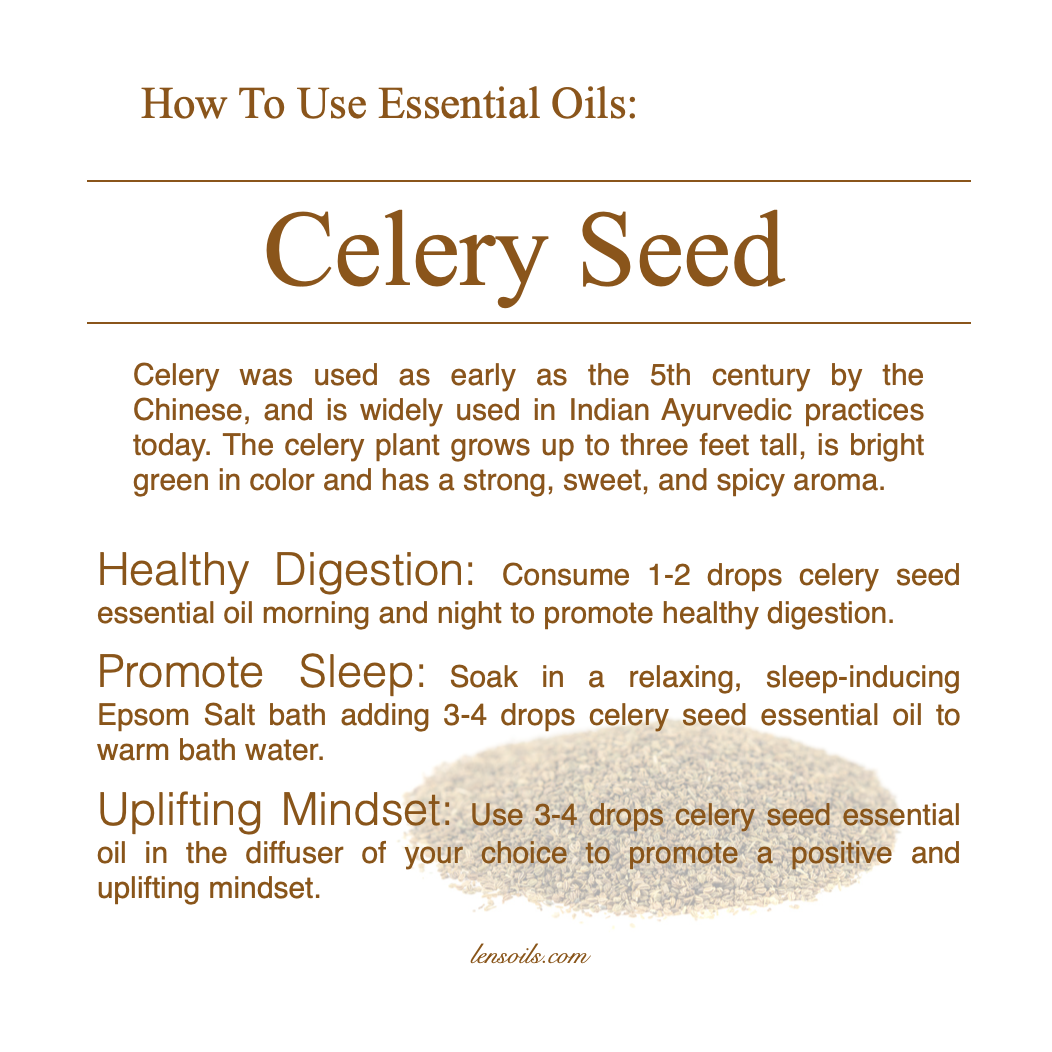
Celery (Apium graveolens) has been cultivated for centuries, with early records of its use dating back to the 5th century in Chinese medicine. It has also played a significant role in Indian Ayurvedic practices, where it is valued for its purported benefits in digestion, circulation, and overall wellness. The celery plant grows up to three feet tall, featuring bright green stalks and leaves with a strong, sweet, and spicy aroma. Celery seed essential oil, derived from the plant’s seeds, has been traditionally used to support healthy digestion. Many practitioners recommend consuming 1-2 drops of celery seed essential oil morning and night to help promote digestive balance. While historical use and anecdotal evidence support this claim, further scientific studies are needed to confirm its direct impact on digestive enzymes and gut health.
Celery seed essential oil is also commonly used in aromatherapy and relaxation techniques. Adding 3-4 drops to a warm bath with Epsom salt is believed to promote relaxation and support restful sleep. Its mild sedative effects are often attributed to phthalates, a natural compound in celery seeds, which may help with nervous tension and stress reduction. Additionally, diffusing 3-4 drops of celery seed essential oil can help create a positive and uplifting mindset, making it a favored choice for stress relief and emotional balance. While aromatherapy practitioners support these benefits, scientific research on celery seed oil’s specific effects on sleep induction and emotional well-being is still ongoing.
Beyond digestion and relaxation, celery seed essential oil is being explored for its potential role in supporting joint and muscle health. Some herbalists believe that the oil’s natural anti-inflammatory properties may help ease occasional discomfort, making it a potential addition to massage oils and topical applications. However, while celery seed extract has been studied for its antioxidant and anti-inflammatory effects, more research is needed to determine the efficacy of celery seed essential oil in pain relief and long-term musculoskeletal support. Despite these uncertainties, celery seed essential oil remains a versatile and valuable natural remedy, widely used for aromatherapy, digestive wellness, and relaxation practices.
Cedarwood (Cedrus spp.) is a towering evergreen tree native to cold climates, thriving in high altitudes and reaching heights of up to 100 feet. Known for its durability and resilience, cedarwood has been used throughout history in construction, medicine, and spiritual practices. The essential oil, derived from the wood of the tree, carries a rich, grounding aroma that promotes a sense of wellness and vitality. In skincare, adding 1-2 drops of cedarwood essential oil to a facial routine may help promote clear and balanced skin due to its purifying and astringent properties. Additionally, cedarwood is widely used in massage therapy, where 3-4 drops blended with fractionated coconut oilcan provide a calming and muscle-relaxing effect. While historical and anecdotal evidence support these uses, more scientific research is needed to confirm its full range of skin-enhancing and muscle-soothing benefits.
Beyond personal care, cedarwood essential oil is commonly used in aromatherapy to promote relaxation and emotional balance. Adding 3-4 drops to a diffuser can help create a calming environment, particularly after a stressful day. Cedarwood is also known for its insect-repellent properties—placing a drop on a cotton ball and leaving it in a closet may help keep moths at bay. This traditional use is supported by the presence of sesquiterpenes and cedrol, compounds that may have natural insect-deterring effects. However, while cedarwood has been traditionally used as a natural moth repellent, scientific studies on its effectiveness compared to chemical alternatives are still ongoing.
In addition to its well-known uses, cedarwood essential oil has been explored for its potential role in improving sleep quality. Some research suggests that cedrol, a primary component in cedarwood, may have mild sedative effects, which could help support relaxation and restful sleep. Many individuals use cedarwood oil in nighttime diffuser blends or apply a diluted amount to pulse points before bed to encourage a sense of calm. While early findings are promising, more clinical research is needed to confirm its direct impact on sleep disorders or long-term sleep improvement. Regardless, cedarwood essential oil remains a versatile and widely used natural remedy, valued for its aromatic, therapeutic, and protective benefits.
Please text Free Sample or call me at 801-661-4786 I will be sure to get back to you as soon as possible. Or Send me an email at lfish64@yahoo.com with the heading Free Sample It will be an honor to help you in any way that I can. Or Write me a letter, request a Free Sample
Leonard Fish 5075 Rushton Acres Court West Valley City, Utah 84120 USA
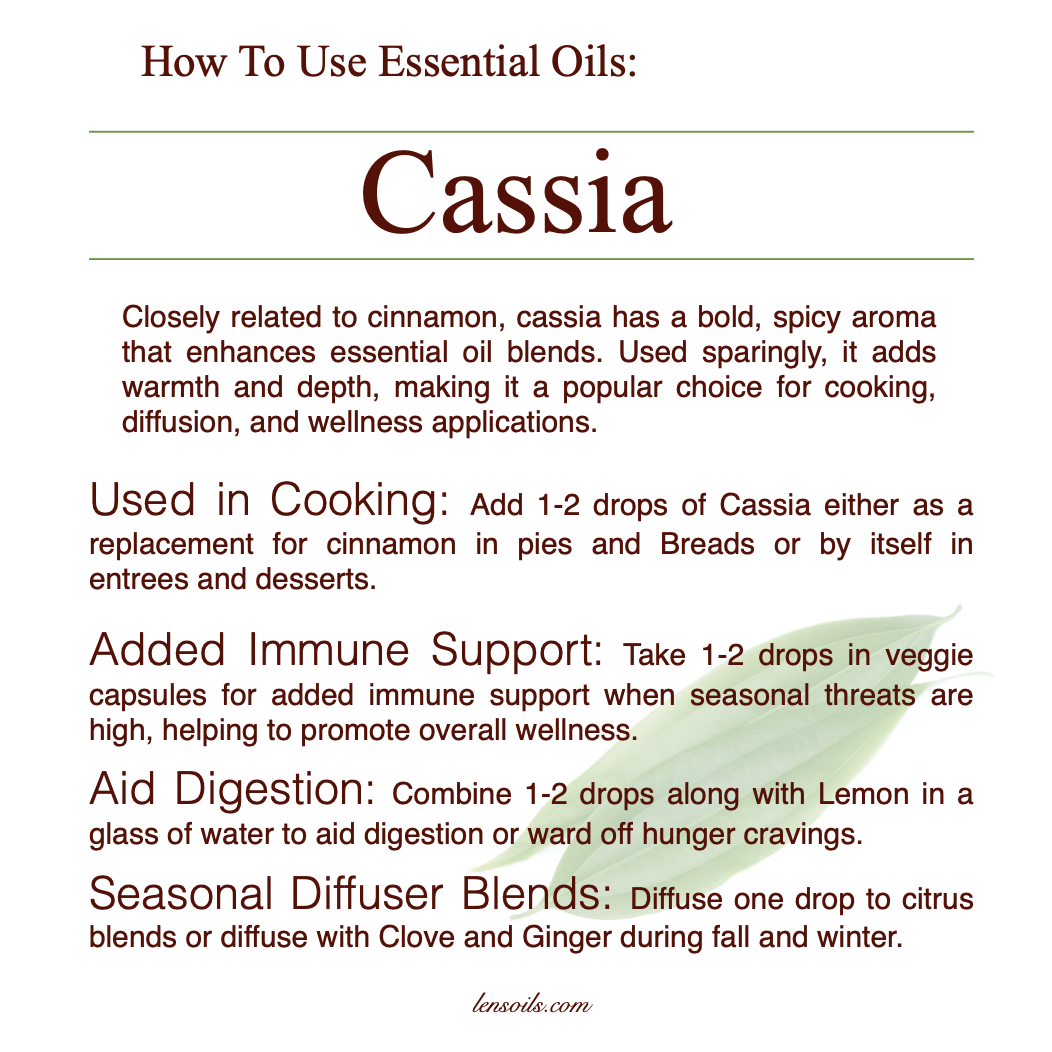
Cassia (Cinnamomum cassia), a close relative of cinnamon, is known for its warm, spicy aroma and strong flavor. Native to China and Southeast Asia, cassia has been used for centuries in traditional medicine and culinary applications. Its essential oil is highly concentrated, and only small amounts are needed to enhance recipes or blends. In cooking, 1-2 drops of cassia essential oil can be used as a substitute for cinnamon in pies, breads, and desserts or as a standalone spice in savory dishes. Due to its intense potency, it should be used sparingly. While cassia is recognized for its aromatic and culinary benefits, research on whether cassia essential oil retains the same digestive and metabolic effects as whole cassia bark is still limited.
Cassia is also commonly used for immune support and seasonal wellness. Many essential oil practitioners recommend taking 1-2 drops in a veggie capsule to help support the immune system, particularly during seasonal changes. Some preliminary studies suggest that cassia contains antimicrobial properties, but more research is needed to determine its direct impact on immune function. Additionally, combining cassia with lemon essential oil in a glass of water is thought to aid digestion and curb hunger cravings, though scientific validation on cassia oil’s role in appetite suppression remains inconclusive. While cassia essential oil may offer digestive support, it is highly concentrated and should always be diluted properly before ingestion.
Cassia’s bold, warming scent makes it a popular choice for diffuser blends, particularly in fall and winter. Just one drop blended with citrus oils or paired with clove and ginger can create a cozy, inviting atmosphere. Some believe that diffusing cassia may also help support respiratory function, but further studies are needed to confirm these benefits. While cassia essential oil has strong antimicrobial and aromatic properties, its direct effects on digestion, immune support, and respiratory health require additional scientific validation. Nevertheless, cassia remains a versatile and powerful essential oil for culinary, aromatic, and occasional wellness applications.
Carrot seed essential oil is primarily derived from wild carrots (Daucus carota), which are commonly found in Europe and parts of Asia. The plant is an annual or biennial herb, recognized for its hairy leaves and white lacy flowers with purple centers. Traditionally, carrot seed oil has been valued for skin and hair care, with historical use in natural remedies and herbal medicine. The oil is known to contain antioxidants and compounds that support skin health, making it a popular ingredient in skincare formulations. Due to its soothing properties, combining 1-2 drops of carrot seed essential oil with fractionated coconut oil and applying it to sunburned areas may help provide relief. While many users report benefits, scientific research on carrot seed oil’s direct effectiveness in sunburn relief remains limited.
Carrot seed essential oil is also commonly associated with liver health and detoxification. Some practitioners recommend adding 3-4 drops to a fruit smoothie to help support liver function, based on its traditional use in herbal detox regimens. While carrot seed oil contains antioxidants, which may contribute to overall wellness, more scientific studies are needed to confirm its direct role in liver cleansing. Another popular use is reducing the appearance of wrinkles, where 2-3 drops added to a skin cream may support skin elasticity and hydration. Carrot seed oil’s rich antioxidant profile makes it a common ingredient in anti-aging skincare, but long-term studies on its effectiveness in reducing wrinkles are still ongoing.
In addition to skincare and detox benefits, carrot seed essential oil has been linked to supporting eye health due to its association with carotenoids and vitamin A. Some sources suggest adding 2-3 drops to 8 oz of water to promote eye health, but this claim requires more clinical research, as carrot seed essential oil does not contain direct forms of vitamin A like beta-carotene found in raw carrots. While carrot seed oil has potential health benefits, its role in eye support and liver cleansing is still being studied, and further scientific validation is needed. Nevertheless, carrot seed essential oil remains a valuable addition to natural skincare, wellness, and aromatherapy routines.
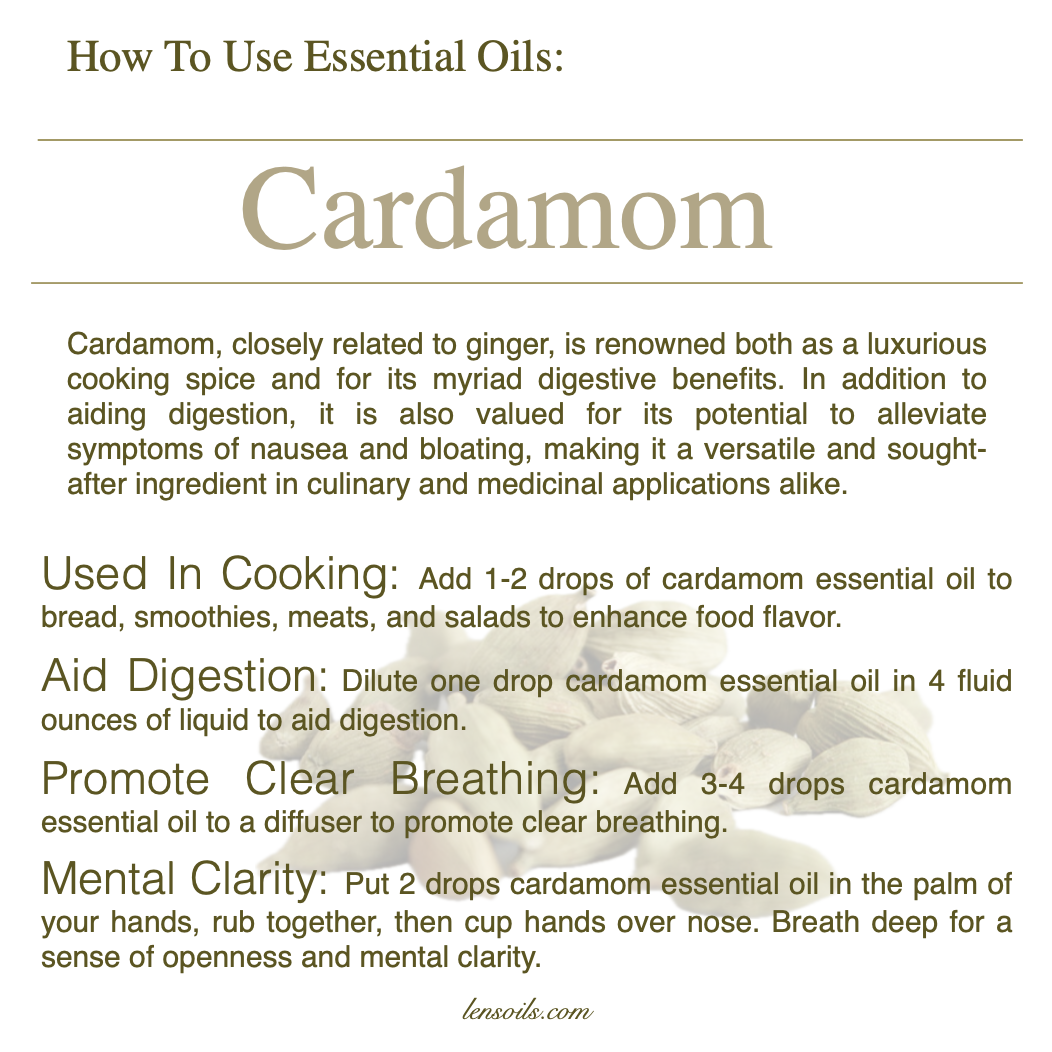
Cardamom (Elettaria cardamomum), a close relative of ginger, has been prized for centuries as both a luxurious culinary spice and a natural digestive aid. Historically, it has been used in Middle Eastern, Indian, and Scandinavian cuisine, where its warm, slightly sweet flavor enhances a variety of dishes. Beyond its culinary appeal, cardamom is known for its digestive benefits, traditionally used to ease bloating, indigestion, and occasional nausea. Adding 1-2 drops of cardamom essential oil to foods such as breads, smoothies, meats, and salads enhances their flavor while also supporting digestion. Additionally, cardamom essential oil can be diluted in 4 fluid ounces of liquid to help aid digestion naturally. While these traditional uses are well-documented, further scientific research is needed to confirm the full extent of cardamom essential oil’s role in gut health and digestive enzyme activation.
Beyond digestion, cardamom essential oil is often used in aromatherapy to promote respiratory health. Adding 3-4 drops to a diffuser can help create an atmosphere that supports clear breathing and soothes airways, making it useful during seasonal changes. Additionally, cardamom oil is said to promote mental clarity—placing 2 drops in the palms, rubbing hands together, and inhaling deeply is believed to provide a sense of openness and focus. Some studies suggest that certain compounds in cardamom may have calming effects, which could support mental well-being, though more clinical research is needed to determine its direct impact on stress reduction and cognitive function.
Among its various applications, cardamom essential oil is sometimes considered beneficial for oral health and detoxification, though these claims require more scientific validation. While cardamom has been used in traditional medicine for freshening breath and cleansing the mouth, research on its effectiveness in preventing bacteria-related oral issues remains limited. Additionally, some practitioners believe that cardamom essential oil may support natural detoxification, but further studies are needed to substantiate these claims. Regardless, cardamom remains a versatile and highly valued essential oil, offering culinary, digestive, and aromatic benefits, making it a staple in both traditional and modern wellness practices.
For centuries, a tiny, dried bud held secrets far greater than its size suggested. Its deep, rich aroma was unmistakable—bold, warm, and slightly sweet. It had a way of lingering in the air, filling kitchens, apothecaries, and even the chambers of royalty. Some knew it as a key ingredient in their favorite confections, while others used it for far more than just taste.
Its value was once so great that wars were fought over it. Traders risked treacherous ocean voyages to secure it, knowing that those who controlled its supply controlled power. This little bud, often found in spice racks today, was once worth its weight in gold. It was cultivated in lands far from Europe, where the soil and climate allowed it to flourish. When crushed, it released an oil so potent that it became a prized remedy in medicine, dentistry, and even perfumery.
Its benefits extended beyond the kitchen. Healers discovered that it possessed remarkable properties—it could soothe a troubled stomach, ease aching muscles, and even help cleanse wounds. Over time, doctors found a particularly important use for it in dental care, where it provided relief from the agony of toothaches. It became a common ingredient in oral preparations, earning a reputation not just for freshening breath but for supporting overall health.
As trade routes expanded, so did knowledge of this remarkable spice. Apothecaries recommended it for digestion, cooks infused it into desserts, and even sailors carried it on long voyages, believing it helped preserve health during months at sea. Some even mixed a drop of its oil into coconut oil for a warming massage that brought relief to aching joints. Its versatility was astounding—whether in food, medicine, or self-care, it remained a cherished commodity.
But one man in particular changed how the world viewed this spice. Dr. Joseph Lawrence, a chemist in the 19th century, understood its potential beyond the kitchen. Inspired by its cleansing properties, he included its oil in the formula for a now-famous antiseptic mouthwash, ensuring that its legacy as a powerful health aid would endure. Thanks to his work, millions of people unknowingly benefit from its properties every day.
Even today, its uses continue to grow. A single drop of its essential oil added to toothpaste can help clean teeth and gums. Mixed into a capsule, it supports cardiovascular health. Infused into warm desserts, it enhances both aroma and well-being. It has even been used to flavor gum, leaving a distinctive tingle long after the last chew. Though it was once hoarded and fought over, it is now a household staple, readily available to those who seek its benefits.
It is a spice, a medicine, a healer, and a warrior in the fight against inflammation. It is found in everything from traditional remedies to modern health trends, proving that the wisdom of the past often holds the key to the future. Few people know just how many ways this tiny dried bud has shaped history, but its impact is undeniable.
The spice that transformed dental care, enhanced cuisine, and fueled trade for centuries? Clove. This small but mighty bud has healed wounds, calmed nerves, and added warmth to both food and medicine. It continues to be used in natural wellness, offering relief, protection, and comfort to those who embrace its power. Whether in a steaming cup of tea, a soothing massage oil, or a trusted bottle of mouthwash, it remains one of nature’s most remarkable gifts. And now, you know the rest of the story.







 Len's Oils