Category Archives: Better Living

How to Use Essential Oils: Bergamot

Bergamot is the most delicate of the citrus plants, requiring a unique combination of climate and soil to thrive. Known for its uplifting and calming properties, bergamot has been used by Italians for centuries to help reduce feelings of stress and promote overall well-being. It is a popular choice for aromatherapy, often diffused in classrooms, workplaces, or homes when tension runs high. Just a few drops in a diffuser can create a soothing environment that fosters relaxation and mental clarity.

Beyond its effects on mood, bergamot essential oil is highly valued for its skin-purifying benefits. When applied during a shower, it not only provides a calming aroma but also supports clear, healthy skin. Mixing bergamot oil into a DIY facial cleanser enhances its cleansing properties, helping to refresh and rejuvenate the complexion. It can also be used in a relaxing nighttime routine by applying a few drops to the bottom of the feet or blending it with fractionated coconut oil for a soothing massage before bed.

In addition to its well-known stress-relieving and skincare benefits, bergamot has been studied for its potential impact on digestion and appetite regulation. Some research suggests that bergamot essential oil may help support healthy metabolic function when taken internally in small, appropriate amounts. Its ability to balance emotions, improve skin health, and potentially aid digestion makes bergamot an incredibly versatile essential oil with a long history of use in both traditional and modern wellness practices.

Lessons From Fishing

When I was nine or ten, I went fishing with my dad and older brother. I loved spending time with my dad because he was always busy, and these moments were rare and cherished. We spent the day together by the water, laughing and bonding. I can still remember the excitement of reeling in three or four good-sized fish. I felt so proud of what we’d caught—until the next part.

When it was time to gut the fish, my dad and brother handled the task while I stood off to the side, horrified. Watching them clean the fish was absolutely disgusting to me, and it took away some of the magic of the day. Things didn’t improve when we got home. My mom cooked up the fish, filling the entire house with the smell of fried fish. We sat down as a family to eat, but I struggled to enjoy the meal. No matter how carefully I picked through my portion, I always seemed to miss a bone. The fishy taste and lingering smell made the experience worse. From that day on, I decided: I don’t like catching or eating fish.

This simple rule—”don’t eat the fish”—has stayed with me ever since. It’s a personal rule rooted in a negative experience, but it’s one that works for me. For others, though, it would seem ridiculous. Many people love fishing and enjoy fresh fish, but my rule is shaped by my personal history, just as others’ habits and rules are shaped by theirs.

How often do we follow rules without questioning them? Many of the things we do are based on negative experiences, traditions, or habits passed down from others without us fully understanding why. For instance, I’m reminded of a story about Mary, who was preparing a ham for dinner. One of her children asked, “Why do you cut off the end of the ham before putting it in the pan?” Mary replied, “That’s how my mom always did it.” Curious, Mary called her mother to ask why. Her mom laughed and said, “I only did that because my pans were too small to fit the whole ham.”

This story illustrates how much of what we do is based on what’s been handed down to us. We often follow practices or traditions without stopping to ask if they still make sense or serve us well. When it comes to our health, this is especially true. Many of us, when we get sick, instinctively reach for over-the-counter pain relievers or other medications because that’s what we were taught to do. It’s what we’ve seen and experienced, so we repeat it.

But now we know better. With every man-made drug, there are potential side effects—some minor, others dangerous and harmful to our health. Thankfully, there’s another option. I’ve discovered the power of essential oils, which offer natural, effective solutions without the dangerous side effects of synthetic drugs.

Essential oils have transformed the way I approach my health. These powerful, plant-based remedies have been studied for their healing properties, and I’ve experienced their benefits firsthand. Whether I’m dealing with a headache, a cold, or simply trying to stay well, essential oils are my first line of defense. They’re not just effective—they’re also a reminder that sometimes the best solutions are the simplest and most natural ones.

My fishing story might seem unrelated to essential oils at first, but they’re both about learning from our experiences. That day on the lake taught me a lot—not just about fish, but about how personal experiences shape our choices. Just as I chose not to eat fish based on my childhood, I’ve now chosen essential oils as a healthier alternative for my well-being. It’s a choice rooted in knowledge, growth, and a desire for something better. And like fishing with my dad and brother, it’s a journey I’m grateful for, even if it didn’t start out perfectly.


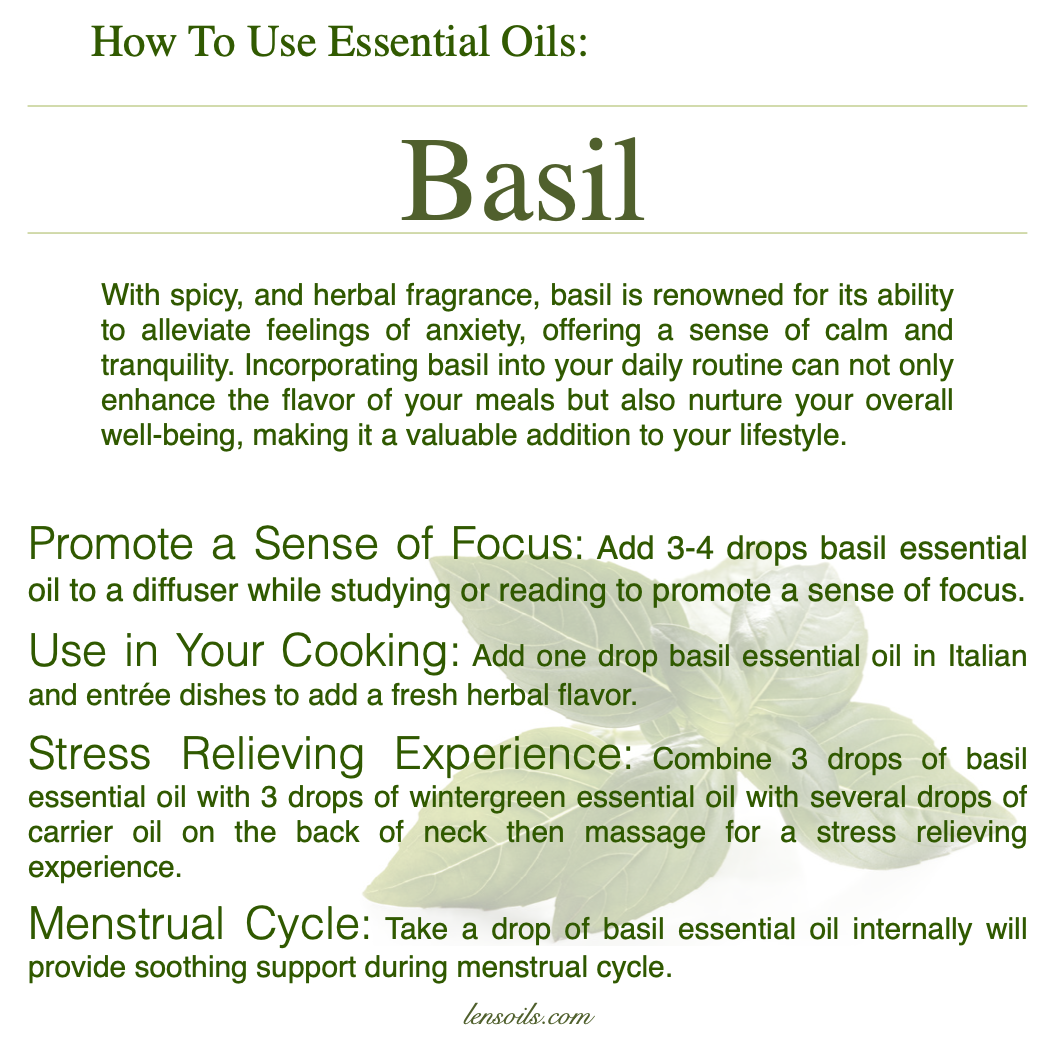
How to Use Essential Oils: Basil

Basil essential oil, with its spicy and herbal fragrance, is well known for its calming properties. It is particularly effective in alleviating feelings of anxiety, promoting a sense of calm and tranquility. Incorporating basil into daily routines can provide both emotional and physical benefits, making it a valuable addition to self-care practices. Whether diffused for relaxation or applied topically for stress relief, basil oil can help enhance overall well-being while also offering its signature fresh scent.

Beyond its calming effects, basil essential oil is widely used to promote focus and mental clarity. Adding 3-4 drops to a diffuser while studying or reading can create a stimulating environment that enhances concentration. In the kitchen, basil essential oil can bring a burst of fresh herbal flavor to Italian dishes, soups, and entrees. For stress relief, combining 3 drops of basil essential oil with 3 drops of wintergreen oil and a carrier oil can create a soothing neck massage blend. Additionally, taking a drop of basil essential oil internally may provide comfort and support during the menstrual cycle, helping to ease occasional discomfort.

Basil essential oil also offers benefits for respiratory health. When inhaled, it can help open airways and promote clearer breathing, making it useful for seasonal changes or congestion. One simple way to use basil oil for respiratory support is to add a few drops to a bowl of steaming water, cover the head with a towel, and inhale deeply. This method can help ease breathing discomfort and provide a refreshing, invigorating experience. With its diverse applications, basil essential oil is a versatile and beneficial oil for both wellness and culinary use.

Health Proverb

The phrase “Rest and Be Thankful” is often linked to William Wordsworth, the great Romantic poet, but its roots run deeper in British and Scottish history. It became widely known due to the Rest and Be Thankful Pass in Scotland, a breathtaking spot along the A83 road in Argyll and Bute. In the 18th century, British soldiers built a military road through the rugged Highlands after the Jacobite uprisings, and the climb was so demanding that, upon reaching the summit, weary travelers would pause, rest, and express gratitude. The phrase was even engraved on a stone marker, serving as a timeless reminder that even in life’s most challenging journeys, one should stop, breathe, and appreciate the moment.

Although Wordsworth did not originate the phrase, he deeply embraced its sentiment in his writings and poetry. He found solace and renewal in nature, often encouraging his readers to pause, reflect, and find beauty in the world around them. His poem Tintern Abbey echoes this philosophy, describing how time spent in nature becomes a source of peace, healing, and cherished memories. Wordsworth believed that spiritual rest and gratitude were essential, and his poetry invites us to step away from the busyness of life and immerse ourselves in the stillness and wisdom of the natural world.

Today, “Rest and Be Thankful” remains a powerful call to pause and appreciate life’s journey, whether in moments of joy or hardship. Whether inspired by a Scottish landscape, Wordsworth’s poetic reflections, or the simple need for rest in a fast-paced world, the phrase reminds us to embrace gratitude and find renewal in stillness. It speaks to the universal human need for both physical and spiritual rest, reminding us that even the hardest climbs deserve a moment of reflection and thankfulness at the top.

Excerpt from Tintern Abbey

(Lines 142–159)

“Therefore let the moon
Shine on thee in thy solitary walk;
And let the misty mountain-winds be free
To blow against thee: and, in after years,
When these wild ecstasies shall be matured
Into a sober pleasure; when thy mind
Shall be a mansion for all lovely forms,
Thy memory be as a dwelling-place
For all sweet sounds and harmonies; oh! then,
If solitude, or fear, or pain, or grief
Should be thy portion, with what healing thoughts
Of tender joy wilt thou remember me,
And these my exhortations! Nor, perchance—
If I should be where I no more can hear
Thy voice, nor catch from thy wild eyes these gleams
Of past existence—wilt thou then forget
That on the banks of this delightful stream
We stood together.”

The Slippery Slope

The -Slippery SlopeThe slippery slope of prescription drugs with their harmful side effects can be hard to recover from.

Do you want to take back your health using natural essential oils?
If you would like a Free Sample please do one of the following.

Please text Free Sample or call me at 801-661-4786
I will be sure to get back to you as soon as possible.
Or
Send me an email with the heading Free Sample to lfish64@yahoo.com
It will be an honor to help you in any way that I can.
Or
Write me a letter requesting a Free Sample to
Leonard Fish
5075 Rushton Acres Court
West Valley City, Utah
84120 USA

Leonard Fish
Leonard Fish
Health and Wellness Advisor

How to Use Essential Oils:

Arborvitae essential oil, derived from the “tree of life,” is known for its natural preserving properties and unique benefits. Traditionally used to prevent wood from rotting, this oil has been a popular choice for woodcraft and preserving natural surfaces. By mixing four drops of Arborvitae essential oil with two drops of lemon essential oil, you can create a natural wood preservative and polish, helping to protect and enhance the longevity of wooden furniture, countertops, and décor. Its ability to repel moisture and resist decay makes it a valuable tool for natural home maintenance.

Beyond wood preservation, Arborvitae essential oil can be used to protect against environmental threats. Adding 5-6 drops of Arborvitae oil to a spray bottle filled with water creates a natural surface and hand spray, offering protection without the use of harsh chemicals. Additionally, its strong, earthy aroma makes it a powerful insect repellent. When mixed with fractionated coconut oil and applied to the wrists and ankles, Arborvitae oil can help ward off insects while hiking or spending time outdoors. These protective properties make it a great addition to natural wellness and household care routines.

In addition to its physical benefits, Arborvitae essential oil is valued for its grounding and calming effects in meditation and mindfulness practices. Diffusing 3-4 drops of Arborvitae oil during meditation can help create a peaceful and centered atmosphere, allowing for deeper relaxation and focus. It is also sometimes used in emotional balancing blends to encourage feelings of stability and connection. Whether used for preserving wood, repelling insects, or fostering a sense of inner peace, Arborvitae essential oil is a versatile and beneficial addition to any essential oil collection.

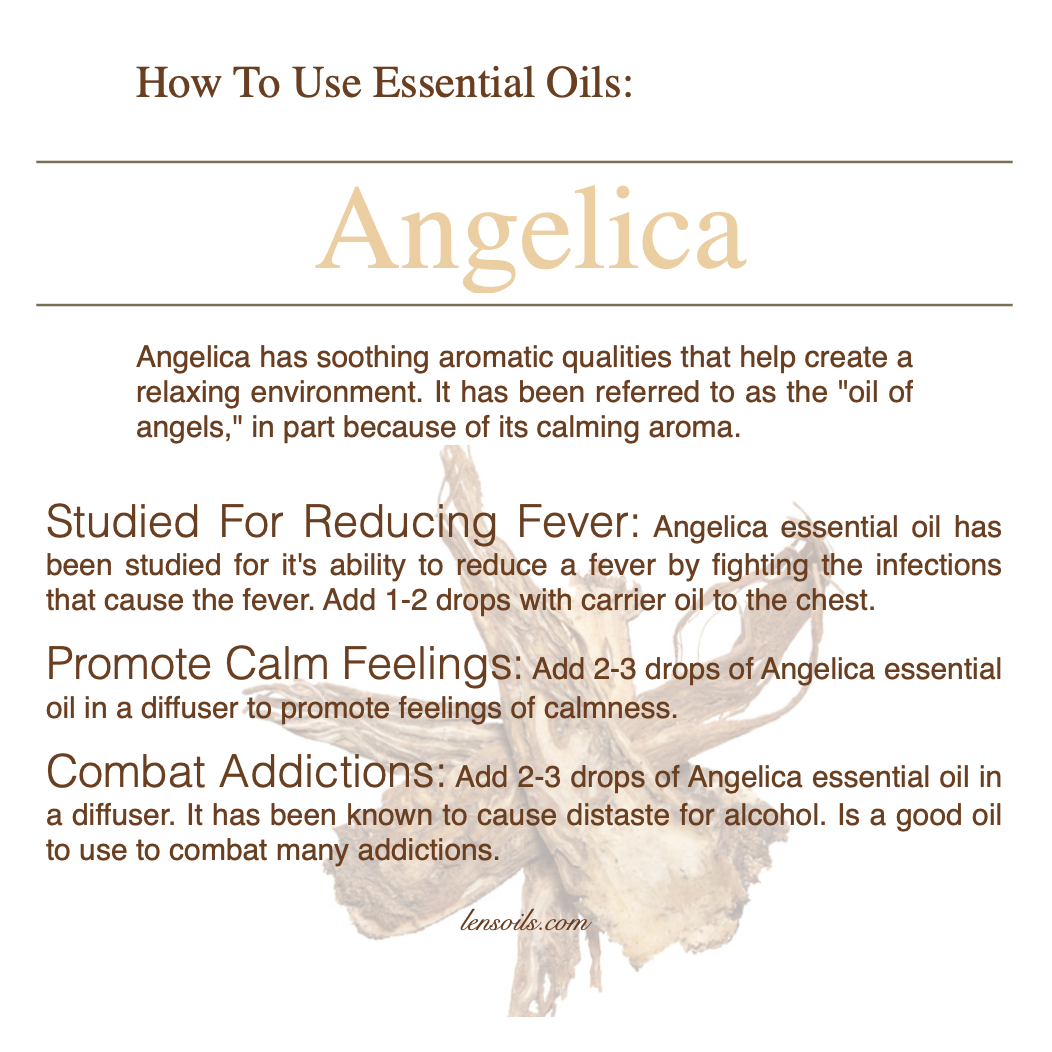
How to Use Essential Oils: Angelica

Angelica essential oil is well known for its soothing and calming aromatic qualities, making it a popular choice for creating a relaxing environment. Often referred to as the “oil of angels,” it has a gentle yet grounding aroma that can help ease stress and tension. Many people use Angelica oil in aromatherapy to unwind after a long day or to promote a sense of peace during meditation. Its natural properties make it a valuable oil for emotional balance and relaxation.

In addition to its calming effects, Angelica essential oil has been studied for its ability to reduce fevers. It is believed to help fight the infections that cause fever, supporting the body’s natural healing process. To use Angelica oil for this purpose, dilute 1-2 drops with a carrier oil and apply it to the chest. The oil’s therapeutic properties may assist in boosting the immune system and providing relief from discomfort. It is also commonly used in diffusers to promote feelings of tranquility, helping to create a restful atmosphere.

Beyond its traditional uses, Angelica essential oil has been noted for its potential in combating addictions. When diffused, it is said to cause a distaste for alcohol, making it a helpful tool for those looking to break free from certain habits. Some people also use it to help manage cravings and support emotional resilience during recovery. While not a standalone solution, incorporating Angelica oil into a wellness routine may provide additional support for those seeking to overcome various dependencies.

A Story From The Art of Happiness

A Story from The Art of Happiness

One of the most memorable stories from The Art of Happiness that reflects the quote “A calm mind brings inner strength and self-confidence, so that’s very important for good health.” is the story of a Tibetan monk who endured years of imprisonment and torture yet emerged with unshaken peace and inner strength.

The Story of the Tibetan Monk

During a conversation, the Dalai Lama shared the story of a Tibetan monk who had been imprisoned by the Chinese government for nearly 20 years after the invasion of Tibet in 1959. The monk had been tortured, starved, and subjected to brutal conditions in a Chinese prison camp.

When the monk was finally released, he traveled to India and met with the Dalai Lama. The Dalai Lama, knowing the suffering he had endured, asked him,

“What was the greatest danger you faced during your time in prison?”

The monk replied, “The greatest danger I faced was losing my compassion for my captors.”

What This Story Teaches Us

Despite experiencing unimaginable suffering, the monk maintained a calm mind and inner strength. He understood that if he allowed anger, hatred, or fear to take over, he would have lost his inner peace and self-confidence—which, in turn, would have destroyed his mental and physical health.

Instead of focusing on his suffering, he focused on compassion, forgiveness, and maintaining a peaceful state of mind. He survived the ordeal not just physically, but emotionally and spiritually intact.

The Gift of Generosity

I remember a kind couple, John and Nome Mackaleash, who loved my parents and enjoyed spending time with our family. They had big hearts and a genuine desire to help. They often brought us new clothes from a business they owned, showing their thoughtfulness in ways we deeply appreciated. One visit stands out in my memory: my sister Rachel was participating in a fundraiser, selling boxes of M&M candies for a dollar each—a significant amount of money in the 1980s. Without hesitation, John pulled out twenty dollars and bought the entire case of candy. Then, in an act of pure generosity, he gave each of us our own box.

Fast forward 20 years, and now it was my turn as a parent. My children were doing school fundraisers, but my reaction was the opposite of John’s. I completely discouraged them from participating. I’d say, “I’ll give you a dollar if you don’t do that fundraiser.” I was downright unpleasant to anyone who came to my door selling something.

One day, while listening to an audiobook, I heard the speaker say, “Be generous with your money, and it will come back to you tenfold.” Something about that message resonated with me. I decided to change my ways. I started being more open and generous, buying from every child who came to my door. It reminded me of John’s incredible generosity and the example he set for me all those years ago.

This shift in mindset also made me realize how giving can create a ripple effect. I even hired neighborhood kids to clean up rotten apples in my front yard and rewarded each of them with a crisp two-dollar bill. Seeing their smiles made me realize that generosity isn’t just about money—it’s about creating moments of joy and encouragement for others.

This perspective ties perfectly into my love for essential oils. Generosity isn’t just about giving money or gifts; it’s about sharing things that have positively impacted your life. For me, essential oils have been life-changing. I use them daily, appreciating their ability to promote better health without harmful side effects. When I experience the benefits of an oil—whether it’s improved focus, better sleep, or relief from discomfort—I feel compelled to share it with others.

I believe essential oils represent the same spirit of generosity that John and Nome demonstrated. They offer people hope and an alternative path to better health. Generosity, whether it’s giving time, money, or a small bottle of essential oil, creates a harvest far greater than we can imagine. Every time I share an oil, I’m reminded of the beauty in giving: it transforms lives—mine and others’—and fosters a deeper connection to those around me.

The lesson is clear: generous giving of ourselves, whether through kindness, encouragement, or something as simple as sharing essential oils, leads to a generous harvest of joy, hope, and connection. And just like John’s act of kindness with those boxes of candy, it’s the small, thoughtful gestures that often make the biggest difference.

How to Use Essential Oils: Pets

Essential oils can be a natural and effective way to support your pet’s well-being when used safely and correctly. A calming spray made with diluted lavender or chamomile oil can help ease anxiety in pets, especially during stressful situations like thunderstorms or travel. Lightly misting your pet’s bedding or crate can create a soothing environment that promotes relaxation. These gentle essential oils are known for their calming properties and can help pets feel more at ease in unfamiliar or high-stress situations.

For pet owners looking to protect their furry friends from pests, a natural flea and tick repellent can be made by blending cedarwood and lemongrass essential oils with a carrier oil. Applying a small amount of this mixture to a pet’s collar or bandana can help keep insects away without the use of harsh chemicals. Additionally, dry and cracked paw pads can be soothed with a homemade paw balm made from frankincense or myrrh essential oils combined with coconut oil and shea butter. This nourishing balm helps restore moisture and protect a pet’s paws from rough surfaces and extreme weather conditions.

Beyond these specific uses, pet owners should always be cautious when introducing essential oils to their animals. Some oils, such as tea tree oil for dogs and citrus oils for cats, can be toxic and should be avoided. Essential oils should always be properly diluted, and it’s best to consult a veterinarian before using them on or around pets, especially if the pet has pre-existing health conditions. Observing how a pet reacts to an essential oil and adjusting usage accordingly ensures their safety and comfort while benefiting from natural remedies.