
“Tarzan has Jane, Batman has Robin, Sherlock has Watson… and Health Advocates? They have Essential Oils—because who needs a sidekick when you’ve got tea tree and lavender fighting your battles?” 🌿

“Tarzan has Jane, Batman has Robin, Sherlock has Watson… and Health Advocates? They have Essential Oils—because who needs a sidekick when you’ve got tea tree and lavender fighting your battles?” 🌿
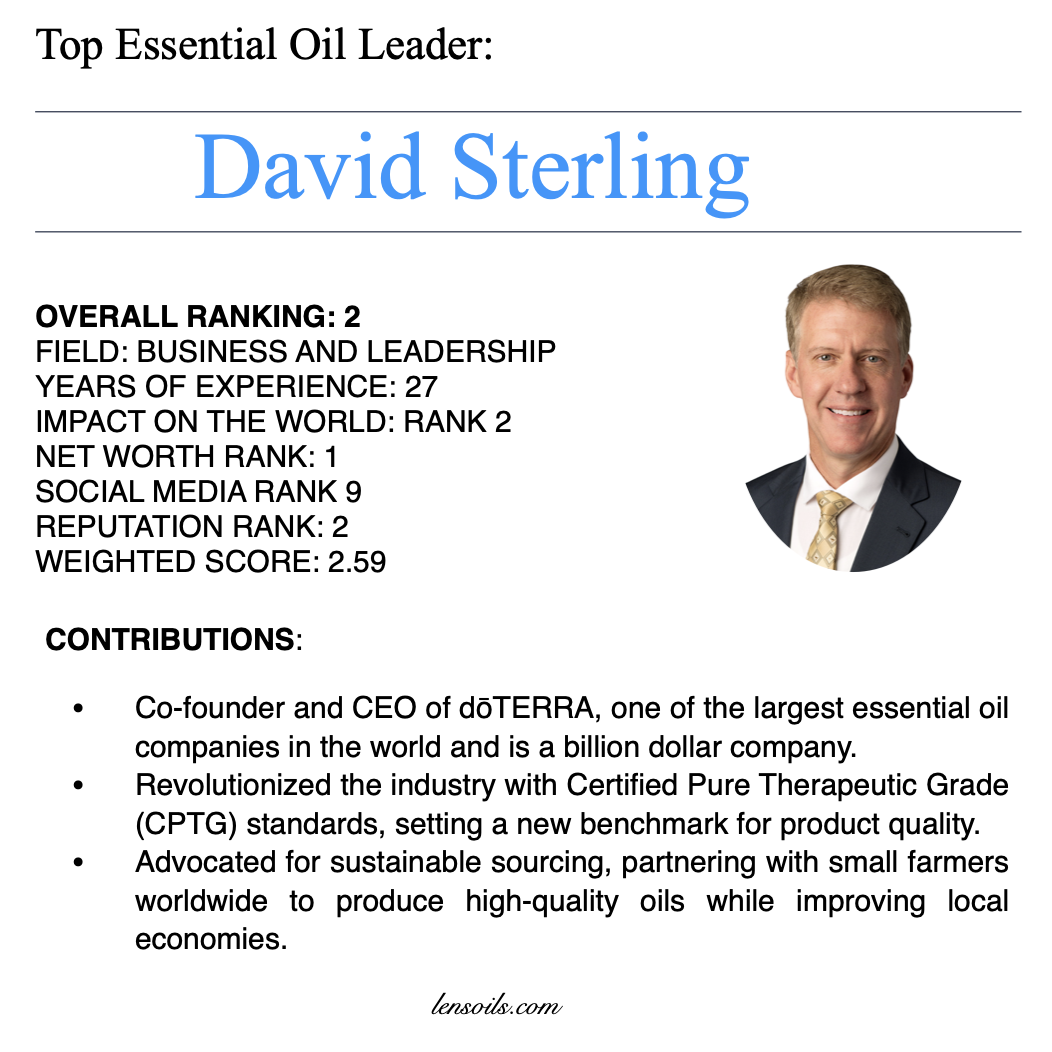
David Stirling, co-founder of dōTERRA is a visionary leader whose work has revolutionized the essential oils industry. Born in 1962, Stirling’s career began in business and product development, where he honed his skills in creating effective systems for quality assurance and sustainable growth. His background in health and wellness industries laid a strong foundation for his later contributions to the essential oils market.
In 2008, Stirling and a group of seven co-founders launched dōTERRA, aiming to create a company that redefined how essential oils were sourced, processed, and marketed. Dissatisfied with the inconsistencies in the industry, they focused on delivering high-quality, therapeutic-grade essential oils to consumers worldwide. The company’s name, derived from the Latin for “Gift of the Earth,” reflects Stirling’s belief in the natural healing power of plants.
Stirling’s key innovation was the introduction of Certified Pure Therapeutic Grade® (CPTG) standards, a rigorous quality assurance process that ensures each bottle of oil is free from contaminants and adulteration. This commitment to purity and potency has set a new benchmark in the essential oils industry, allowing dōTERRA to stand out as a trusted leader in a competitive market.
Under Stirling’s guidance, dōTERRA also pioneered Co-Impact Sourcing®, a program that emphasizes ethical and sustainable sourcing practices. By partnering directly with farmers and distillers in over 45 countries, dōTERRA ensures fair wages, improved working conditions, and long-term community support. This approach not only strengthens the company’s supply chain but also uplifts the lives of those involved, making Stirling a key advocate for corporate social responsibility.
Stirling’s leadership has taken essential oils from niche products to mainstream wellness tools. He has driven widespread consumer education about the benefits of essential oils, integrating them into homes, healthcare systems, and wellness practices worldwide. His focus on research has also contributed to the growing body of scientific evidence supporting the therapeutic uses of essential oils, bridging the gap between natural remedies and modern medicine.
In 2022, Stirling took a step back from his day-to-day responsibilities at dōTERRA to dedicate himself to a deeply personal mission. Together with his wife, Laura, he embarked on a three-year volunteer assignment as a mission president for The Church of Jesus Christ of Latter-day Saints. The Stirlings are serving in Fresno, California, where they oversee and mentor hundreds of young missionaries aged 18 to 25. Their role involves not only spiritual guidance but also providing practical life skills and emotional support to these missionaries as they serve communities and grow in their own journeys of faith.
This time of service reflects Stirling’s lifelong dedication to helping others thrive. The leadership, empathy, and vision he demonstrates in his mission work mirror the qualities that propelled dōTERRA to global success. His ability to inspire and empower the next generation—whether in business or in faith—has been a defining characteristic of his career. While he has stepped back from daily operations, Stirling’s influence is still felt at dōTERRA, as the culture of innovation and integrity he established continues to guide the company.
Even during his time away, Stirling’s legacy with dōTERRA remains vibrant. The company, now a global leader, boasts millions of wellness advocates and customers across the world. Under Stirling’s direction, DoTERRA expanded its offerings to include over 100 essential oils, along with supplements, skincare products, and home care solutions. Annual conventions attract tens of thousands of participants, a testament to the vibrant community he helped create.
David Stirling remains a driving force behind dōTERRA’s enduring mission and values. Though his focus is currently on his church mission, his influence within the essential oils industry remains undeniable. By fostering relationships between dōTERRA and global communities, he ensured the company’s growth was tied to making a positive impact worldwide.
David Stirling’s story is one of vision, faith, and unwavering dedication to service. From revolutionizing an industry to uplifting individuals in business and personal growth, he has left a mark that extends far beyond essential oils. Today, as he serves with his wife in Fresno, he continues to embody the principles of compassion, integrity, and purpose that have defined his life’s work. His ability to lead with vision and heart makes him not only a pioneer in his field but also a source of inspiration for all who seek to make a meaningful impact in the world

The phrase “Common sense is not so common.” is most famously attributed to Voltaire, the French Enlightenment writer, historian, and philosopher. He included a version of this phrase in his 1764 work Dictionnaire Philosophique(Philosophical Dictionary), where he criticized the tendency of people to lack practical reasoning despite its supposed prevalence.
Origins and Meaning
Modern Usage
Regarding the “Health Proverb” Attribution
If you’ve seen this phrase labeled as a “health proverb,” it might be because common sense is essential in making good health choices—such as eating well, exercising, and avoiding harmful behaviors. However, its original intent was much broader and philosophical.

Oh Yuzu, bright and golden gem,
A treasure from the East’s rich hem.
Your citrus kiss, a tart embrace,
A dance of Mandarin and Grapefruit’s grace.
For centuries past, in Japan’s serene lands,
You’ve graced the air, soothed weary hands.
A zesty balm, a fragrant art,
To calm the mind and heal the heart.
In diffusers, you softly bloom,
Chasing away the cloud of gloom.
A few mere drops, a calming breeze,
Melting tension with effortless ease.
In creams and mists, your scent does glide,
A personal fragrance, worn with pride.
Soft whispers on the skin you leave,
A touch of joy, a sense reprieve.
When breath grows shallow, and lungs feel tight,
You bring relief, restore the light.
A blend with coconut, a soothing trail,
To conquer congestion, you never fail.
Oh Yuzu, citrus spirit divine,
Your therapeutic gifts forever shine.
A timeless essence, pure and true,
A gift from nature, dear Yuzu.

The feet provide one of the safest and most effective ways to absorb essential oils into the body. The large pores on the soles allow oils to be quickly absorbed and distributed throughout the system, making foot application both fast and convenient. Many reflexologists believe that the bottoms of the feet contain reflex points that correspond to different organs, meaning essential oils applied to specific areas may offer targeted support. Simply rub 1-3 drops of essential oil onto the soles of the feet, then rub them together to evenly distribute the oil. This method is particularly useful before bed, as oils like lavender or cedarwood can help promote relaxation and restful sleep.
Because the skin on the feet is thicker than other areas of the body, it’s generally safe for most essential oils, but some, like oregano oil, should be diluted due to their potency. Mixing oregano, tea tree, or eucalyptus essential oil with fractionated coconut oil can be beneficial for foot health, helping to cleanse and support the skin. Essential oils applied to the feet can also provide warmth and circulation support—peppermint or ginger oil, for example, can create a warming or cooling sensation, depending on personal needs. Whether for relaxation, immune support, or overall wellness, applying essential oils to the feet is a simple yet powerful way to experience their benefits.

Psalm 51:7 states:
“Purge me with hyssop, and I shall be clean: wash me, and I shall be whiter than snow.”
This verse comes from Psalm 51, a well-known psalm of repentance written by King David after his sin with Bathsheba was exposed by the prophet Nathan (2 Samuel 12). The verse is deeply symbolic and carries both spiritual and historical meaning.
Insights Behind the Verse
1. Hyssop as a Symbol of Purification
Hyssop is a small, fragrant herb mentioned multiple times in the Bible, often in relation to purification rituals:
David’s request to be “purged with hyssop” suggests a desire for deep cleansing—not just outwardly, but inwardly. He is asking God to remove his sin and make him pure, just as hyssop was used in ceremonial cleansing.
2. Spiritual Cleansing and Forgiveness
The phrase “wash me, and I shall be whiter than snow” emphasizes the complete forgiveness and renewal that David longs for. Snow is naturally white, symbolizing purity, but David acknowledges that only God can cleanse him from sin to such an extent. This points to the spiritual transformation that takes place when God forgives and restores a person.
3. Foreshadowing of Christ’s Sacrifice
The use of hyssop also has a connection to Jesus’ crucifixion. In John 19:29, as Jesus was dying on the cross, a sponge soaked with sour wine was lifted to Him on a branch of hyssop. This moment ties the cleansing symbolism of hyssop to the ultimate sacrifice for sin—Jesus’ blood, which cleanses all who believe in Him.
Essential Oils and Hyssop in the Bible
Hyssop oil is known for its antiseptic and healing properties, and it was likely used in biblical times for its medicinal and aromatic qualities. Though the Bible does not explicitly mention essential oils, it does refer to anointing with oils for healing and consecration (James 5:14, Exodus 30:22-25). The reference to hyssop in Psalm 51:7 may also indicate its use in physical and spiritual purification practices.
Application Today

When I was in first grade, I was a slow learner. Watching the other kids in my class grasp concepts quickly while I struggled was painful. At our school, we read Sam and Ann books. I was stuck in book 2 while many of my classmates had advanced to book 10. The smartest kid in the class was already in book 23. I was amazed that anyone could be so far ahead of the rest of us.
Every time a child moved up to the next book level, they were rewarded with a piece of candy. The day finally came when I advanced to book 3. I was thrilled! My teacher was proud of me, too. She reached into her desk to give me a piece of candy but found that she didn’t have any left. After searching, she found a stick of gum instead. She handed it to me and said, “Leonard, I’ll give you this gum if you promise not to chew it until you get home.” I eagerly agreed.
But temptation got the better of me during recess. I thought, No one will know if I chew it now. I unwrapped the gum and began chewing. When we lined up to come back inside, a teacher spotted me. My crime was obvious. I was immediately asked to spit out the gum and, as punishment, spend my next recess writing, “I will not chew gum in school.”
My connection to gum—and trouble—didn’t end there. Later that same year, I came home from the store with my dad, happily chewing gum. My dad immediately realized something was off; gum was a rare treat in our house. He put two and two together, knowing we had just come from the store. Once again, I was guilty of a gum-related offense. I had taken a pack of gum without paying for it.
My dad insisted that I make things right. He marched me back to the store, where I had to admit my mistake to the manager and pay for what I had taken. The experience left a strong impression on me. I’m grateful to have had a dad who taught me the importance of owning up to my mistakes and making better choices.
Years later, I spent much of my career as a custodian at a school. It was a rewarding job, and I loved seeing the students grow and learn. I’m now retired, but I remember one thing that surprised me before I left: the students were given gum before taking their big year-end tests. I couldn’t believe it. Don’t they know gum is against the rules? I thought. When I asked, I was told about a study showing that peppermint gum helps students stay alert and improves memory recall. The gum was meant to boost test scores.
This memory of gum got me thinking about double standards. As a child, gum was “bad”—don’t chew it at school, and definitely don’t take gum without paying for it. As an adult, gum was “good”—it helped students focus and succeed. I realized that double standards are everywhere.
Even my own family wasn’t immune. My grandparents experienced a heartbreaking tragedy when their oldest child, my uncle, died of a drug overdose at just seven years old. He had been given an adult prescription that proved fatal. That loss led my grandfather to become a pharmacist. Yet he had a double standard: “Drugs are to sell, not to take,” he would often say.
This philosophy shaped my upbringing. I was taught to view drugs with caution. Yet today, I see a similar double standard with prescription drugs. Many parents are baffled when their children turn to illegal drugs, not realizing that the habit may have started with a reliance on legal drugs for every little ailment.
There’s no denying the great advances in medicine and science. Prescription drugs save countless lives. But on the flip side, how many of us reach for medicine like it’s candy—popping pills for every ache and pain without considering the long-term effects? Society has conditioned us to seek quick fixes, often at the expense of our health.
When I get a headache, my first step is to drink a tall glass of water. If that doesn’t work, I use an essential oil to rub on my forehead. About 95% of the time, this is enough. My last resort is taking an over-the-counter pain reliever.
If given the choice between a convenient pill and a healthier alternative, let’s choose health over convenience. By removing double standards, we can take charge of our well-being and start living more intentionally.

Essential oils can be used in water to support digestion, hydration, and overall well-being. When added to drinking water, essential oils such as lemon, peppermint, or ginger may aid the digestive system by soothing occasional stomach discomfort and supporting nutrient absorption. A drop of peppermint oil in a glass of water can provide a cooling effect on hot days, helping to refresh and energize the body. Additionally, some essential oils, like tea tree or clove, may offer soothing relief when gargled in water, making them a natural option for addressing minor throat irritation.
When using essential oils in water, it’s important to follow safety guidelines to maximize benefits. Always use glass or ceramic containers, as essential oils can degrade plastic and Styrofoam, potentially leaching harmful chemicals into the liquid. Since essential oils are highly concentrated, only a drop or two is needed per glass of water, and they should always be thoroughly mixed before drinking. For a more enjoyable experience, citrus oils like wild orange or grapefruit can be added to enhance the flavor while also providing their cleansing and invigorating properties.

The proverb “Use your health, even to the point of wearing it out” originates from George Bernard Shaw, the Irish playwright, critic, and philosopher known for his sharp wit and thought-provoking insights on society, health, and human nature.
Origins and Meaning
George Bernard Shaw (1856–1950) was a strong advocate for healthy living, physical activity, and maintaining an active mind and body. His philosophy on health was unconventional compared to the cautious approach many take. This quote suggests that one should fully embrace and use their physical vitality rather than overly preserve it in fear of exhaustion or aging. Shaw believed that life should be lived with energy and purpose, even if it meant pushing the body’s limits.
This aligns with his broader views on life and productivity. Shaw saw health as a tool to be used for meaningful pursuits rather than something to be hoarded or preserved through excessive caution. He criticized sedentary lifestyles and believed that a life fully lived—one of action, effort, and engagement—was better than one lived too cautiously.
Connection to Modern Health Perspectives
While modern medicine emphasizes balance and longevity, Shaw’s idea reflects a carpe diem (seize the day) philosophy. In today’s terms, this might mean making the most of one’s physical abilities while still alive—engaging in exercise, adventure, work, and passion projects—rather than leading an overly cautious, inactive life in the name of self-preservation.
Shaw’s perspective remains a powerful reminder that health is a resource meant to be used, not just protected, and that life is best lived with purpose and vigor, rather than fear and hesitation.
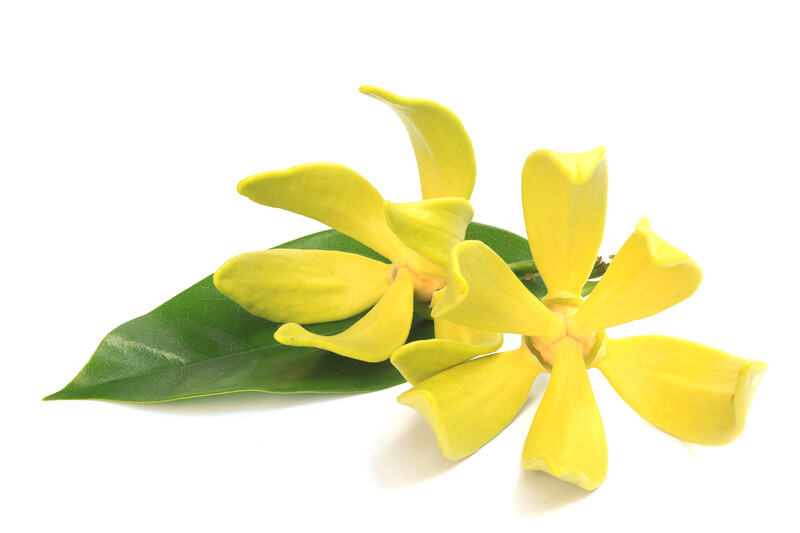
Beneath the tropic sun so bright,
Star-shaped blooms in golden light,
The ylang ylang tree sways soft and free,
A fragrant gift for you and me.
Its petals whisper ancient lore,
Of sacred vows and love once more,
A bloom that graced both bride and groom,
A sweet perfume to lift the gloom.
In waters warm with Epsom’s grace,
A drop transforms the weary space,
A calming balm for mind and soul,
Ylang ylang makes the spirit whole.
For locks in need of tender care,
Its touch restores with love to spare,
A silken sheen, a floral kiss,
Each strand rejoices in its bliss.
A single drop upon the skin,
A scent where dreams and joy begin,
Its essence lingers, soft and true,
A bloom of gold, a heart anew.
Oh, ylang ylang, your gifts abound,
In every petal, wonders found,
A treasure rare from tree to land,
A gentle touch, a healer’s hand.
 Len's Oils