I love this one because it sneaks wisdom in through the back door. A child’s heart is open, unguarded, and honest, and that’s exactly how good essential oils should meet us. No tricks, no shortcuts, nothing hidden. For children, oils like lavender, frankincense, Roman chamomile, and wild orange are often the best starting places because they are gentle, calming, and supportive without being overwhelming. And a child’s will? That quiet, stubborn strength that keeps going even when tired or unsure. The best oils carry that same steady resolve. They don’t overpower. They support, protect, and show up consistently, reminding us that real strength is gentle, real purity is simple, and both work best when they’re trusted rather than forced.
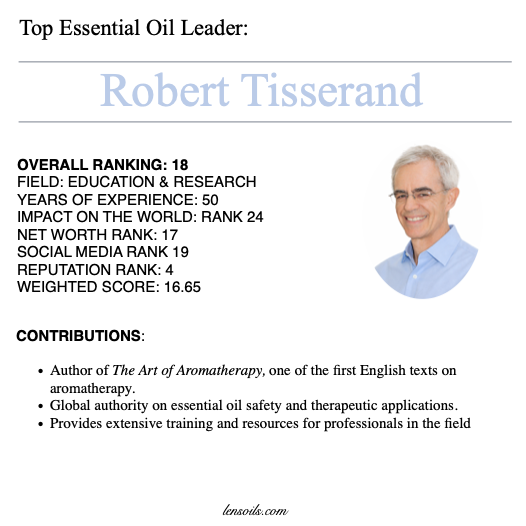
Robert Tisserand is one of the most influential figures in modern aromatherapy, especially in the English-speaking world. With more than fifty years of experience, he helped introduce aromatherapy at a time when reliable information was scarce. His early work laid the foundation for aromatherapy to be taken seriously as a structured practice rather than a fringe or mystical tradition.
Tisserand first gained wide recognition with The Art of Aromatherapy in 1977, one of the earliest comprehensive English texts on the subject. The book brought together traditional uses, emerging science, and practical guidance, making aromatherapy accessible to practitioners and the public alike. For many, it served as a gateway into understanding essential oils beyond simple fragrance or folklore.
As the field grew, Tisserand shifted his focus toward safety, chemistry, and evidence-based practice. He became known for emphasizing proper dilution, contraindications, and toxicological limits, challenging unsafe or exaggerated claims. This approach helped protect users and practitioners while raising professional standards, even when it meant confronting popular but risky trends within the aromatherapy community.
His most authoritative contribution is Essential Oil Safety, co-authored with Rodney Young. This reference work is considered the gold standard for professionals, educators, and clinicians worldwide. It compiles research on dermal limits, drug interactions, phytotoxicity, and internal use, offering clear guidelines rooted in scientific data rather than opinion or marketing language.
Through the Tisserand Institute, he continues to educate professionals globally with courses, research articles, and safety resources. His influence is quiet but structural, shaping how aromatherapy is taught, regulated, and practiced. While not universally popular with casual users, Tisserand’s legacy rests on credibility, rigor, and a long-term commitment to making aromatherapy safer and more trustworthy.
I love this quote because it flips the order we usually argue about. We chase freedom first, happiness second, and health somewhere far down the list. Amiel suggests the opposite. Health is liberty because nothing limits choice faster than a body that won’t cooperate. When your energy is gone or pain takes over, freedom becomes theoretical. You may have options, plans, and good intentions, but your body quietly vetoes them all.
The clever twist is that happiness isn’t the reward for health, it’s the fuel for it. Joy lowers stress, meaning steadies us, and connection keeps our nervous systems from living in panic mode. We often treat happiness as optional and our bodies like rental cars, pushing them hard and ignoring the warning lights. This quote reminds us that caring for health and allowing happiness isn’t indulgent, it’s how freedom stays usable.
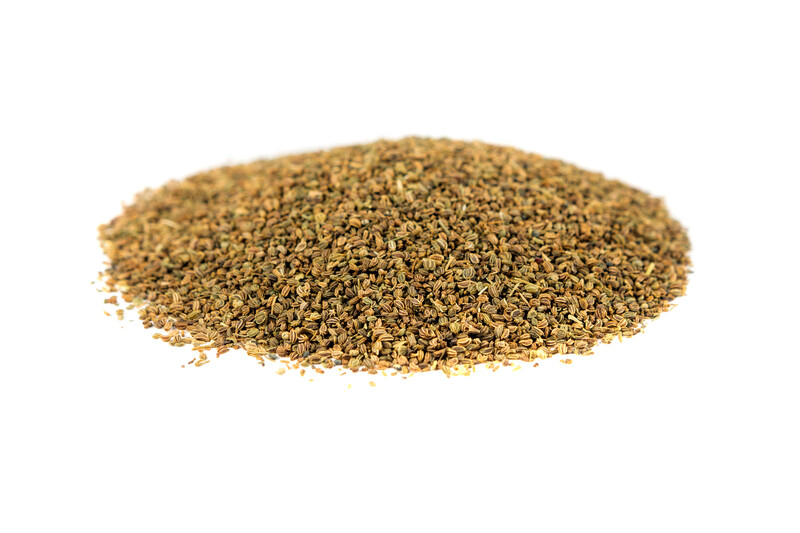
Celery seed, so small, so bright, Its oil restores both heart and sight. It calms the noise, relieves the strain, And lifts the spirit free again.
Researchers note its power clear, Antioxidants are strong and near. Protects the heart, supports the flow, And helps the weary body glow.
For joints that ache or stomach tight, Its gentle strength can bring delight. Traditions long have held it dear, For cleansing paths both far and near.
Studies show it clears the way, Where stress and tension tend to stay. It fights the fire, it soothes the flame, And brings the restless back to tame.
Confusion fades, the mind grows still, Release is found, restored the will. From cluttered thoughts to balance sweet, Its steady gift feels whole, complete.
So tiny seed, with gift profound, In every drop such peace is found. It grants us calm, content, release— Celery seed, the oil of peace.
The slippery slope of prescription drugs with their harmful side effects can be hard to recover from.
Do you want to take back your health using natural essential oils?
If you would like a Free Sample please do one of the following.
Please text Free Sample or call me at 801-661-4786
I will be sure to get back to you as soon as possible.
Or
Send me an email with the heading Free Sample to lfish64@yahoo.com
It will be an honor to help you in any way that I can.
Or
Write me a letter requesting a Free Sample to
Leonard Fish
5075 Rushton Acres Court
West Valley City, Utah
84120 USA
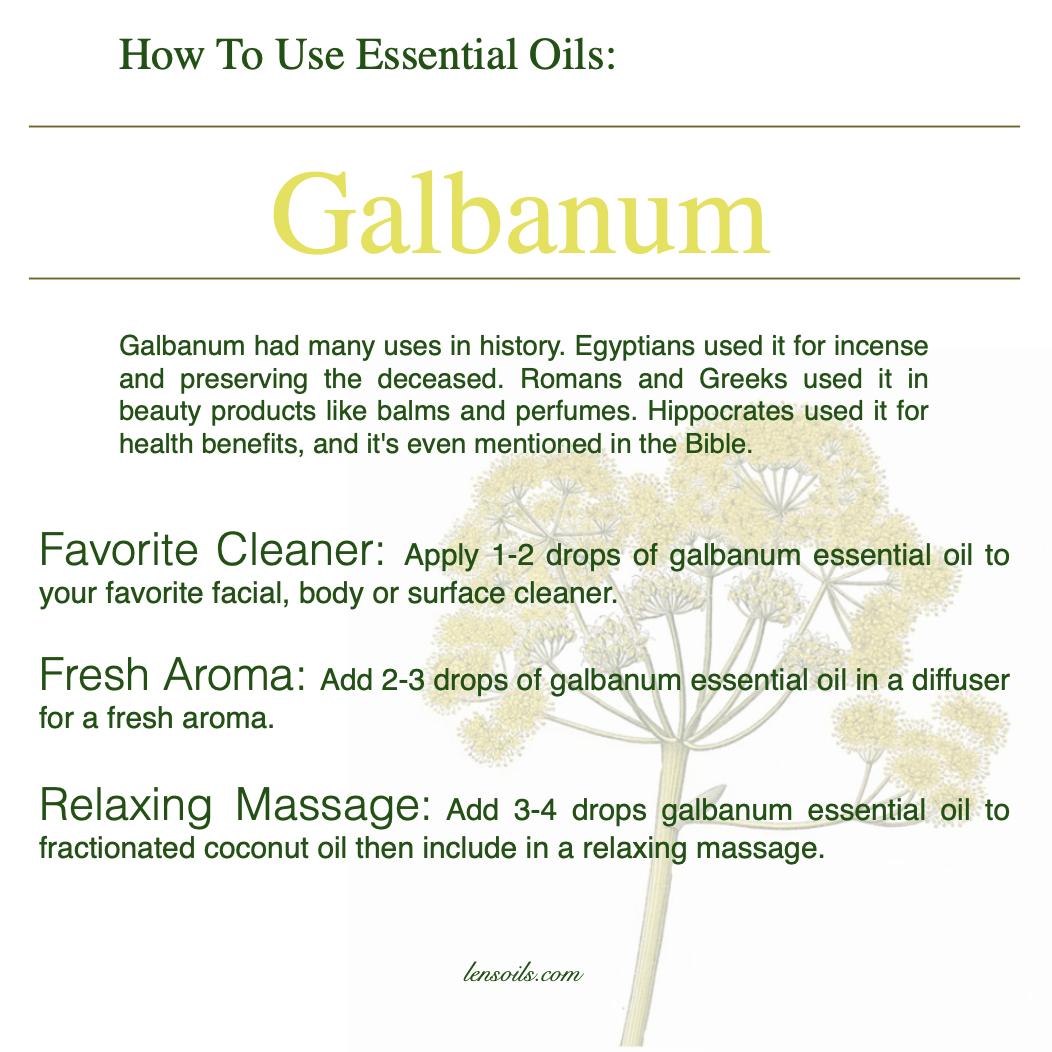
Galbanum essential oil, steam-distilled from the resin of the Ferula galbaniflua plant, has a strong, green, and earthy aroma with hints of spice and balsam. Native to the Middle East and western Asia, galbanum has been used since ancient times in incense, perfumes, and healing balms. Its unique fragrance is both grounding and stimulating, making it a distinctive choice for meditation, reflection, and spiritual practice. Diffused, galbanum creates a deep, resinous atmosphere that connects the mind and spirit.
Beyond its ancient spiritual heritage, galbanum essential oil is valued in modern aromatherapy for its calming and restorative qualities. It blends well with wood oils like cedarwood, floral oils like lavender, and other resins such as frankincense and myrrh. In perfumery, galbanum is often used as a fresh top note that adds depth, richness, and brightness to blends. In wellness practices, it is sometimes included in diluted massage oils for soothing and balancing the body.
Did You Know? Galbanum is mentioned in the Bible as one of the sacred ingredients in the holy incense described in Exodus 30:34, alongside frankincense and myrrh. Ancient Egyptians also used galbanum resin in embalming practices and temple offerings, while Roman and Greek physicians recommended it for various remedies. Today, its distinctive balsamic aroma is still prized in high-end perfumery and spiritual blends, keeping its place as one of history’s most treasured resins.
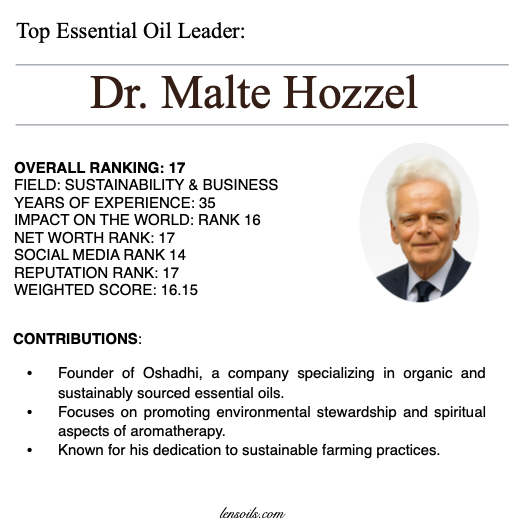
Dr. Malte Hozzel is the founder of Oshadhi, a company established in 1990 that has become internationally recognized for providing high-quality essential oils and aromatherapy products. From its beginnings in Germany, Oshadhi has grown into a respected global brand, distributing oils sourced from around the world. With more than three decades of leadership in the industry, Malte has positioned Oshadhi as a pioneer in combining traditional knowledge with modern understanding of plant-based wellness. His work has helped set standards for purity, authenticity, and responsible sourcing within the essential oil field.
One of Malte’s most significant contributions has been his emphasis on organic and sustainably sourced essential oils. Oshadhi partners with growers who cultivate plants using environmentally friendly and chemical-free practices, ensuring oils are both therapeutic and respectful of the earth. This focus on ecological responsibility reflects Malte’s belief that the health of people and the health of the planet are inseparably linked. Many of Oshadhi’s oils carry organic certification, further supporting his commitment to transparency and quality within the industry.
In addition to his business leadership, Malte has consistently highlighted the holistic dimensions of aromatherapy. He has written, lectured, and taught extensively about how plant essences can support physical health while also contributing to emotional well-being. Through international workshops and educational programs, he has encouraged practitioners and the public to explore aromatherapy as a tool for wellness rooted in both tradition and modern science. This emphasis has made him a recognized educator as well as an entrepreneur.
Malte is also widely respected for advocating sustainable farming practices. By supporting small farmers and distillers worldwide, Oshadhi helps preserve traditional methods of cultivation and distillation that protect biodiversity and cultural heritage. His initiatives have encouraged the development of long-term relationships with suppliers, ensuring that essential oils are produced in ways that maintain ecological balance. This approach has strengthened Oshadhi’s reputation as a company that values both quality and environmental stewardship.
Alongside his entrepreneurial work, Malte has contributed significantly as an author. He has written several books on aromatherapy, including Aromatherapy for Healing the Spirit and other titles that blend practical knowledge with broader reflections on essential oils. His publications are used by practitioners and enthusiasts as reliable resources for understanding both the therapeutic properties and appropriate applications of oils. These works reinforce his role as a leading figure in the field, combining decades of professional experience with clear, research-based writing that continues to educate and guide the aromatherapy community.
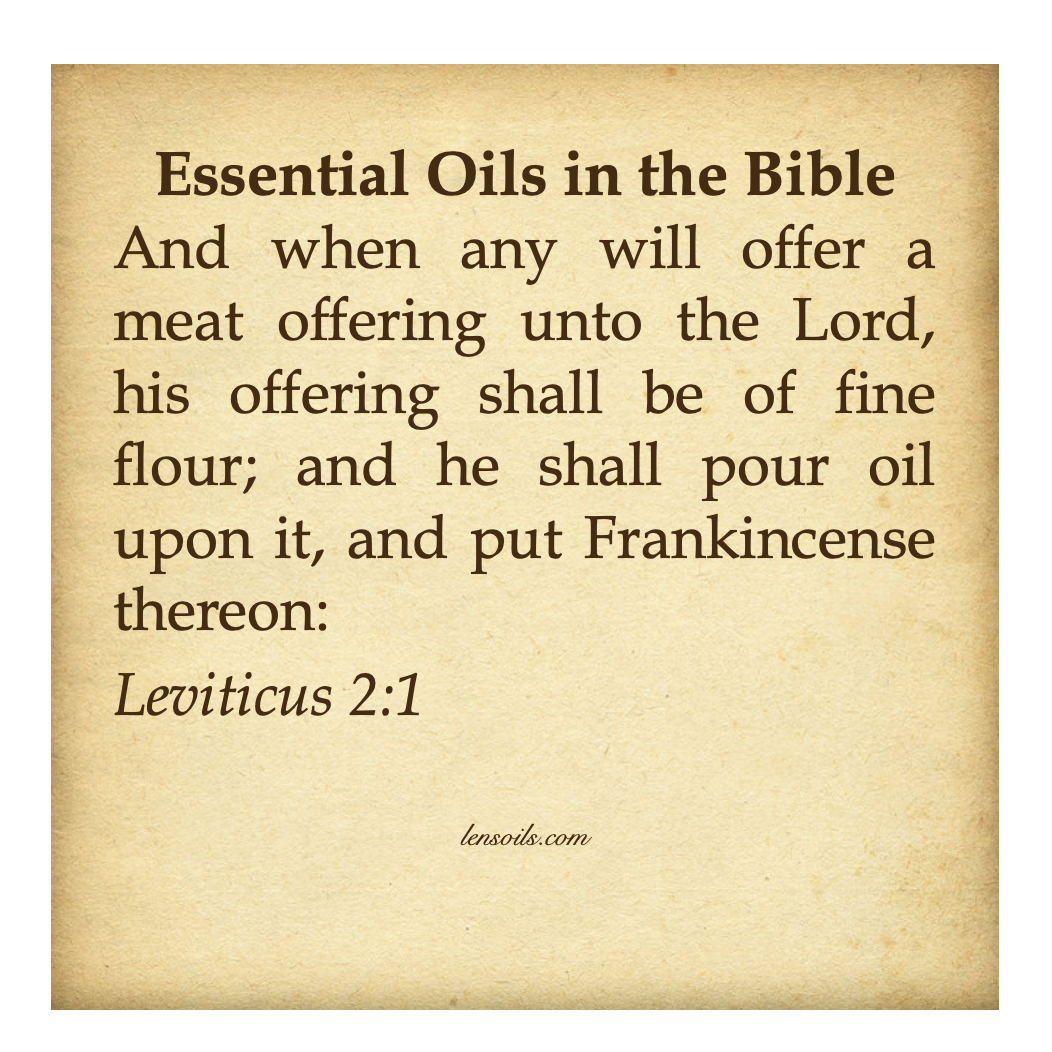
“And when any will offer a meat offering unto the Lord, his offering shall be of fine flour; and he shall pour oil upon it, and put frankincense thereon.” — Leviticus 2:1
In this passage, frankincense was added to the grain offering, setting it apart as a memorial before God. Its fragrance, when burned, made the simple elements of flour and oil into something sacred, lifted from the ordinary into an act of holy devotion. Unlike animal sacrifices, which were dramatic and costly, the grain offering—with its measure of frankincense—showed that even daily bread could become worship when offered with a pure heart.
Historically, frankincense was a highly sought-after resin, harvested from the Boswellia tree and carried along ancient caravan routes into Israel. It was not just a commodity but a marker of sacred use, always connected with prayer, offerings, and the presence of God. While it served practical purposes in trade and medicine, its role in worship gave it lasting spiritual meaning. Today, frankincense essential oil continues this legacy, supporting prayer and reflection, reminding us of how God transforms the ordinary into the holy.
It began in sun-drenched fields, where soft feathery stalks swayed in the breeze and the air smelled faintly of licorice and earth. Long before maps had borders and names, this plant grew wild along the shores of the Mediterranean. Ancient hands didn’t call it medicine or spice—they just knew that chewing a few seeds settled the stomach and brightened the senses. The knowledge didn’t come from books. It came from experience.
Through wars and winters, the plant remained. Roman soldiers chewed its seeds for courage. Midwives in medieval villages gave it to new mothers for strength. In some places, it was hung over doorways to ward off unwelcome spirits. In others, it was ground into food to flavor feasts and help with digestion after. It became a plant of the people, simple, strong, enduring and always nearby.
As centuries turned, apothecaries and herbalists began boiling the seeds, pressing the oils, and steeping the leaves. And when modern distillation arrived, something even more concentrated emerged. The scent was sweet but strong—like anise and black licorice, with something warm beneath. People began to use it for clarity, for confidence, for calming unsettled thoughts. No one needed permission. They just liked how it made them feel.
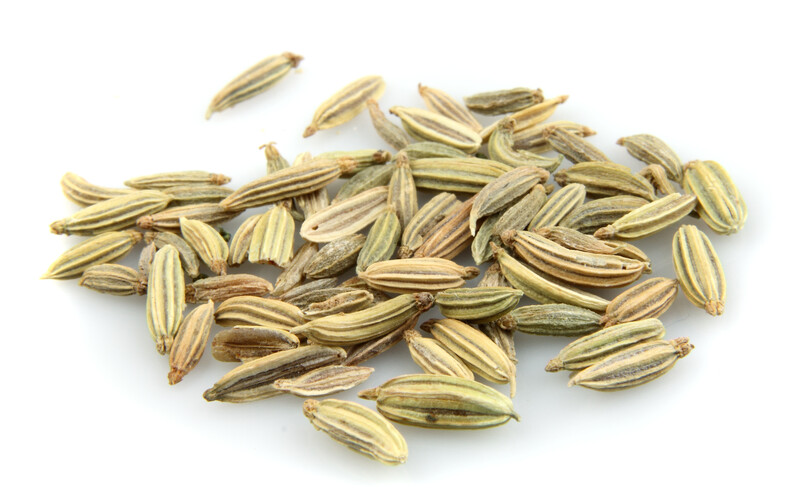
Today, the steam distillers run quietly in rural hillsides where the tradition is still alive. The seeds are collected when they’re rich in oil, their pale green shells holding a powerful secret. In small villages, farmers still know which rows produce the boldest flavor, and which seasons yield the brightest scent. And companies like doTERRA have chosen to partner with these growers—preserving not just the oil, but the hands and heritage behind it.
That light-green plant, with feathery leaves and tiny seeds that shimmer in the sun, has flavored food, soothed spirits, and sharpened minds for thousands of years. It was trusted by mothers, soldiers, and healers alike. Its name? That came later—borrowed from Latin, carried across languages, and eventually distilled into something more than a spice. This is Fennel. Now you know the rest of the story.





 Len's Oils