“Because somehow lavender needs a PhD, but neon-blue toilet cleaner gets a free pass.”
People often question natural remedies more than synthetic ones, even though both deserve thoughtful attention — it’s a reminder to stay curious, but also consistent, about what we bring into our homes and bodies.
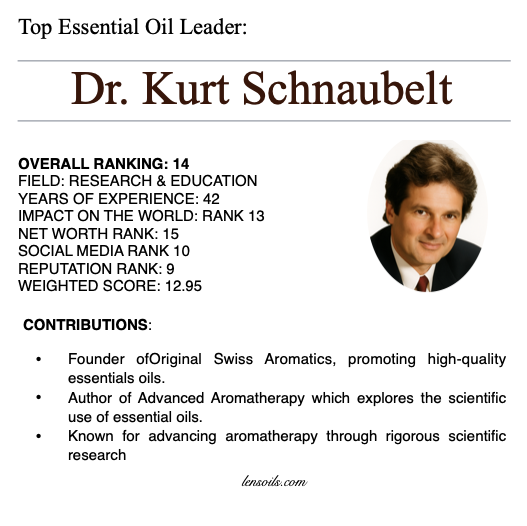
Dr. Kurt Schnaubelt is a chemist with a Ph.D. from the Technical University of Munich in Germany. His scientific training provided a strong foundation for his later work in the field of aromatherapy, where he combined chemistry with natural wellness practices. This background allowed him to examine essential oils not only as natural remedies but also through the lens of chemical composition and their potential therapeutic effects.
In 1983, Dr. Schnaubelt founded Original Swiss Aromatics in California. The company focused on authentic, high-quality essential oils at a time when many products on the market were not well documented. While French pioneers such as René-Maurice Gattefossé and Jean Valnet laid early groundwork for modern aromatherapy, Schnaubelt played a significant role in introducing scientific approaches to the U.S. audience, helping to grow interest in what became known as medical aromatherapy.
AromatherapyAs an author, Dr. Schnaubelt contributed several influential books. His works include Advanced Aromatherapy: The Science of Essential Oil Therapy (1998), Medical Aromatherapy: Healing with Essential Oils (1999), and The Healing Intelligence of Essential Oils (2011). These books emphasize the scientific use of essential oils and explain their biochemical and pharmacological properties in a way accessible to both practitioners and enthusiasts.
Dr. Schnaubelt has been recognized internationally for his role in aromatherapy education. While he did not invent concepts such as chemotypes, dosages, or targeted applications—earlier French researchers had already introduced these ideas he helped popularize them in the United States. His teaching stressed the importance of understanding essential oils in terms of their chemistry, encouraging practitioners to see them as more than cosmetic or perfumery products.
Over the decades, Dr. Schnaubelt has built a reputation as a lecturer, writer, and educator in the aromatherapy community worldwide. His efforts have highlighted the therapeutic possibilities of essential oils when applied with knowledge of their chemical makeup. By combining scientific explanation with practical application, he has helped advance a broader appreciation of essential oils as part of holistic health practices.
It started in forests older than most nations, where evergreen giants stood watch over hillsides bathed in sun and wind. The trees didn’t shout, they whispered—through the fragrance of resin, the rustle of boughs, and the cool clarity of air after rainfall. People lingered beneath their branches, not knowing the science, only the feeling. Something in that clean, woodsy scent seemed to quiet the noise inside.
For generations, these trees played a role in daily life. Their wood was used for ships and temples. Their twigs were burned in ceremonies to purify the air. Their leaves were crushed and steeped into homemade brews. The stories said it helped when lungs were heavy, joints were stiff, or minds were restless. Traditions were built around them, and yet no one quite knew why they worked—they just did.
Eventually, researchers caught up. Modern testing found that the oil from this tree’s branches and needles held antioxidant properties and antimicrobial potential, especially against certain strains of bacteria. Some studies observed relaxation effects from inhaling its vapors—measurable shifts in heart rate variability and parasympathetic response. Compounds like α-pinene, cedrol, and limonene began to appear regularly in scientific journals. The mystery, once kept by folklore, had begun to meet the microscope.
In distillation houses tucked within Mediterranean hills and temperate groves, harvesters continue to gather the leaves and twigs by hand. Timing still matters. So does patience. The chemistry of the oil depends not only on the soil and weather, but also on the shape of the still itself. In places where tradition meets precision, doTERRA has formed trusted partnerships that help preserve this careful process—supporting farmers, protecting forests, and ensuring that what reaches the bottle reflects the wisdom of both nature and nurture.
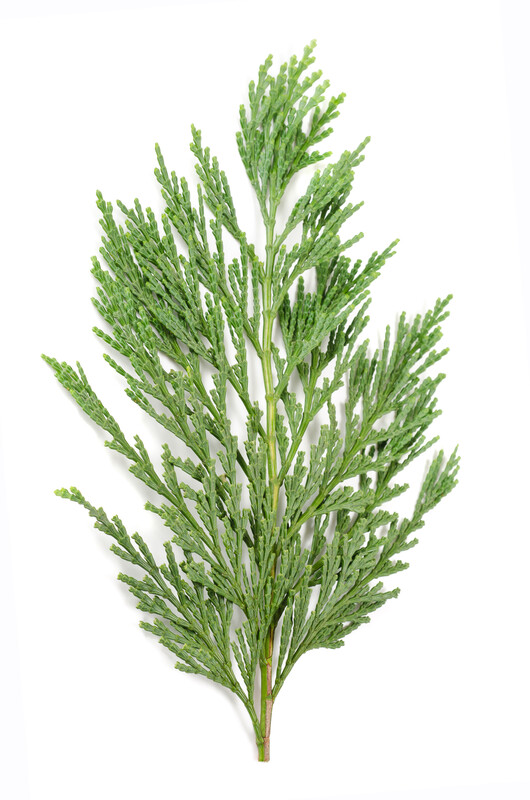
And in those groves, that story continues. It’s not mass production. It’s stewardship. It’s the art of distilling history one drop at a time. And now you know the rest of the story—the ancient tree whose oil helps clear the air, calm the breath, and sharpen the mind. You’ve likely smelled it in a diffuser or perhaps blended it with another oil, not realizing its roots trace back thousands of years. You may know the tree by its modern name: Cypress. Its story began in stillness. And even now, it continues to speak softly.
Copaiba essential oil, tapped from the resin of Copaifera trees native to the Amazon rainforest, is prized for its mild, woody aroma and gentle yet powerful benefits. Unlike strong-smelling resins such as frankincense or myrrh, copaiba has a soft, sweet scent that makes it easy to blend with other oils. Traditionally used in South American herbal practices, the resin and oil have long been valued for soothing the body and calming the mind. Diffused, it creates a grounding environment that encourages relaxation and emotional balance.
One of copaiba’s most notable features is its high content of beta-caryophyllene, a compound also found in black pepper, which interacts with the body’s endocannabinoid system. This makes copaiba unique among essential oils, as it can support a sense of calm and help the body respond more naturally to stress. It is often used in massage oils or diluted topical blends to comfort tired muscles and joints. Because of its gentle profile, copaiba is considered a versatile oil that can be used daily for both physical and emotional support.
Did You Know? Copaiba resin has been tapped and used in the Amazon basin since at least the 16th century, when European explorers recorded its use by indigenous peoples. Today, it is sometimes called the “Amazon’s liquid gold” because of its wide range of uses and sustainable harvesting process. Rather than cutting down the tree, harvesters carefully tap the trunk to collect resin, allowing the same tree to provide oil for decades without harm.
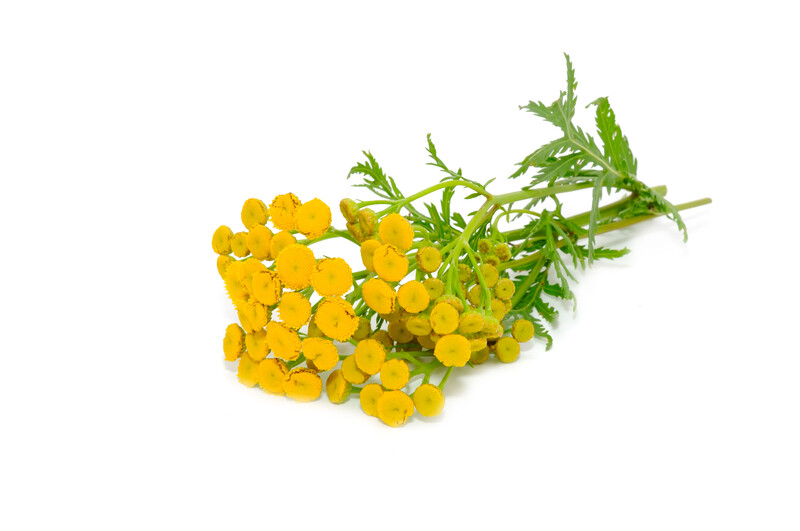
From fields of Morocco, bright blossoms grow, A yellow flower with a cobalt glow. Its oil turns blue when distilled with care, A calming gift, both precious and rare.
Rich in chamazulene, soothing the skin, It cools irritation from deep within. Used in blends for its gentle repair, It eases redness with tender care.
Inhale the scent, a fruity delight, With herbal tones both calming and light. It comforts the mind, releasing the stress, A tranquil embrace, restoring rest.
Blue Tansy uplifts, yet steadies the soul, Balancing moods, it helps make us whole. A single drop in a diffuser’s stream, Turns troubled thoughts to a softer dream.
Blended with oils like lavender’s grace, Or frankincense lending its grounding base, It magnifies power in synergy’s way, Strengthening blends both night and day.
From ancient soils to bottles we hold, Its story is timeless, quietly bold. Blue Tansy whispers in vibrant hue, A healing treasure, forever true.
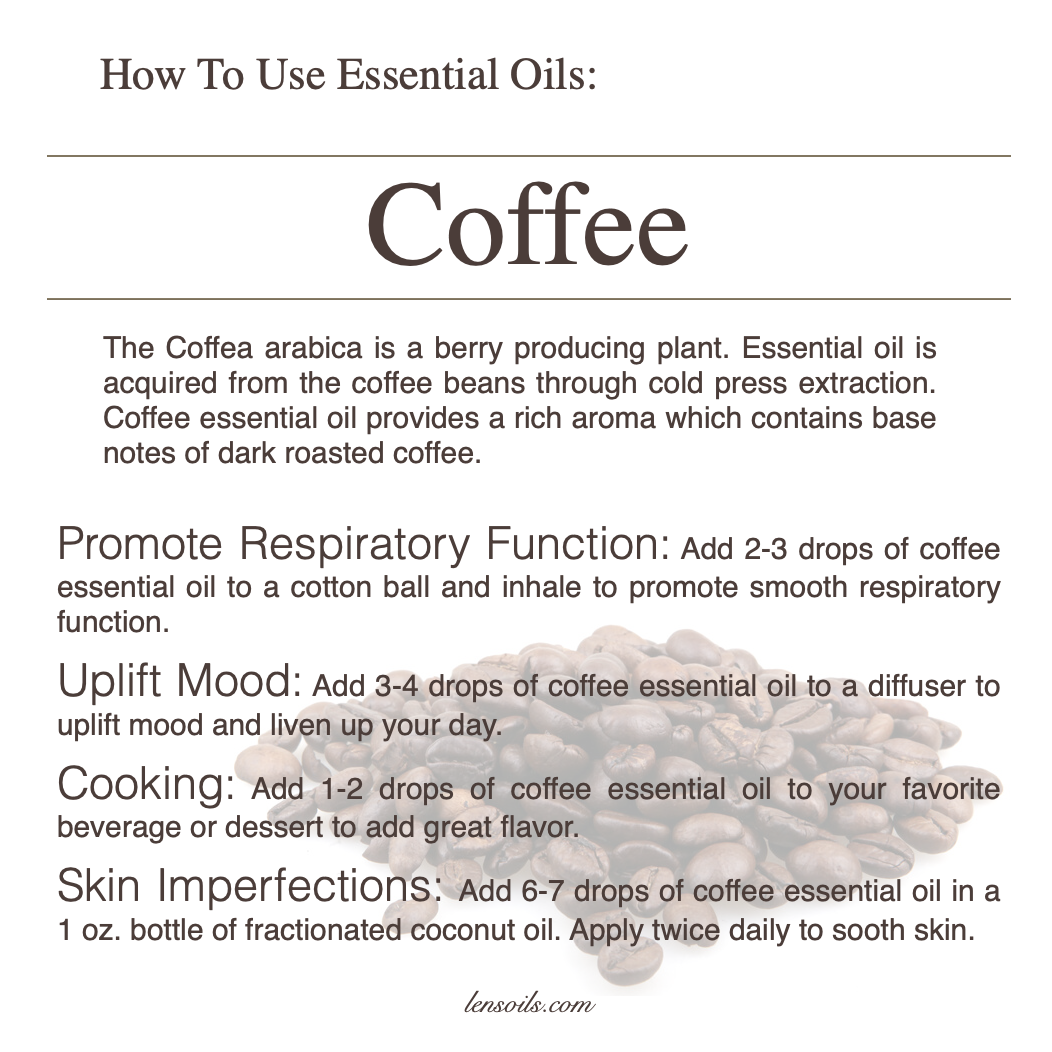
Coffee essential oil, cold-pressed from roasted coffee beans, is known for its bold, roasted aroma that instantly awakens the senses. Just like a freshly brewed cup, this oil carries a warm, rich scent that can energize and uplift the mood. Diffused, it creates a cozy environment perfect for mornings, study sessions, or creative work. Its aroma has been linked to feelings of alertness and comfort, making it a unique addition to diffuser blends.
In addition to its energizing fragrance, coffee essential oil contains antioxidants that can support healthy-looking skin when used in diluted topical blends. Some people use it in massage oils or body scrubs for its invigorating effect on both skin and spirit. Paired with vanilla, cocoa, or spice oils like cinnamon, coffee essential oil adds depth and richness to blends for both personal care and home fragrance.
Did You Know? Coffee is one of the most traded commodities in the world, second only to crude oil. While most people enjoy it as a beverage, coffee essential oil is a relatively new addition to aromatherapy, prized for its ability to capture the comforting scent of coffee in a concentrated form without caffeine.
Dr. Russell J. Osguthorpe, M.D., has dedicated more than 30 years to the healthcare field, beginning with his medical education at McGill University, followed by a pediatrics residency at The Children’s Hospital in Denver and a fellowship in pediatric infectious diseases at Washington University in St. Louis. These years of rigorous training laid the foundation for his lifelong commitment to patient care and advancing medical science. His early career was defined by service in children’s hospitals and clinics, where he specialized in diagnosing and treating complex infectious diseases, often caring for the most vulnerable patients.
For two decades, Dr. Osguthorpe played a key leadership role within Intermountain Healthcare, one of the nation’s most respected health systems. There, he served as Pediatric Medical Director and Department Chair at a tertiary care hospital, overseeing care delivery and building large multi-specialty practices. His leadership style emphasized collaboration, safety, and innovation, helping improve both outcomes and systems of care. During this period, he became widely respected as both a compassionate clinician and an effective administrator capable of guiding large medical teams through change.
In addition to his clinical and leadership duties, Dr. Osguthorpe has invested in academic medicine. He continues to serve as an Adjunct Associate Professor of Pediatrics at the University of Utah, where he has contributed to the training of future physicians and published research in pediatric infectious diseases. His studies on antimicrobial therapy in infants, cost and outcomes for febrile infant care, and case-based pediatric medicine reflect his dedication to evidence-based practice. These scholarly contributions demonstrate his dual commitment to improving patient outcomes and advancing medical knowledge for broader application.
In 2019, Dr. Osguthorpe expanded his career into the essential oils field by joining doTERRA as Chief Medical Officer and Vice President of Medical and Scientific Initiatives. This marked the beginning of his formal work with essential oils, adding to his already extensive medical background. At doTERRA, he has led efforts to integrate essential oils into modern healthcare, directing clinical trials, overseeing laboratory research, and supporting the development of evidence-based applications for essential oils. His work helps bridge the gap between traditional medicine and complementary approaches, aiming to validate and expand the role of essential oils in supporting wellness.
Today, Dr. Osguthorpe’s 30-plus years in healthcare encompass a unique blend of clinical expertise, hospital leadership, academic research, and integrative health innovation. Through his role at doTERRA, he continues to shape the future of healthcare by promoting a whole-person approach that includes both conventional medical practices and the use of essential oils. His vision focuses on empowering patients, enhancing preventive care, and fostering research that supports safer, more natural ways to improve health outcomes.
It began in silence — tucked away in tombs beneath the Egyptian sands. Not gold, not frankincense, not even papyrus, but something far humbler: a handful of small, round seeds. These seeds were placed with care beside royalty, not as decoration but as preservation, perhaps even protection. The ancients didn’t have journals full of reasons. They simply knew, as if by instinct, that this seed mattered.
As empires rose and fell, that same seed followed quietly. The Greeks gave it a name. The Romans gave it a recipe. Centuries later, it wandered its way into Eastern Europe, the Middle East, India, and Latin America — adapted in cuisines, stories, and old-world traditions. It was found in market stalls and temple incense, boiled in broths and ground into spice blends. A plant with two distinct gifts: leaf above, seed below. And somehow, both found their place in medicine and mealtime alike.
But it wasn’t until recently that science began to catch up. In laboratory settings, researchers discovered this seed’s essential oil had noteworthy properties. Studies revealed its natural compounds showed antioxidant potential, helping neutralize unstable molecules in controlled environments. Other research observed antimicrobial effects, where the oil inhibited the growth of certain bacteria and fungi on contact. In preclinical models, some scientists even noted a calming influence on mood and behavior — an observation that sparked further study into its aromatic compounds.
At Texas A&M and institutions abroad, researchers explored its bioactive profile, breaking down terpenes and alcohols like linalool and α-pinene — compounds already known for their presence in some of the world’s most calming botanicals. These were not claims for healing, but they were clues, patterns, echoes of what traditional cultures had always believed: that this tiny seed had something more to offer than just flavor.
Today, thanks to careful sourcing programs — like those supported by doTERRA’s Co-Impact Sourcing® — this plant continues its journey. It grows in nutrient-rich soil, harvested by hands that understand patience, distilled into oil by people who respect the process. It’s not mass produced. It’s crafted. And with every drop, there’s a whisper of history, a reminder that the old world may have known a few things we’re just beginning to rediscover.
And now you know the rest of the story. You’ve known it in the kitchen, tasted it in meals, and perhaps even seen its green leafy cousin on your dinner plate. But the seed — the golden round one that yields a complex, peppery oil — has another name. You may call it cilantro when it’s fresh and leafy. Or coriander when it’s round, dry, and full of mystery. Either way, its story isn’t over. Not even close.




 Len's Oils