Tag Archives: Emotional Balance

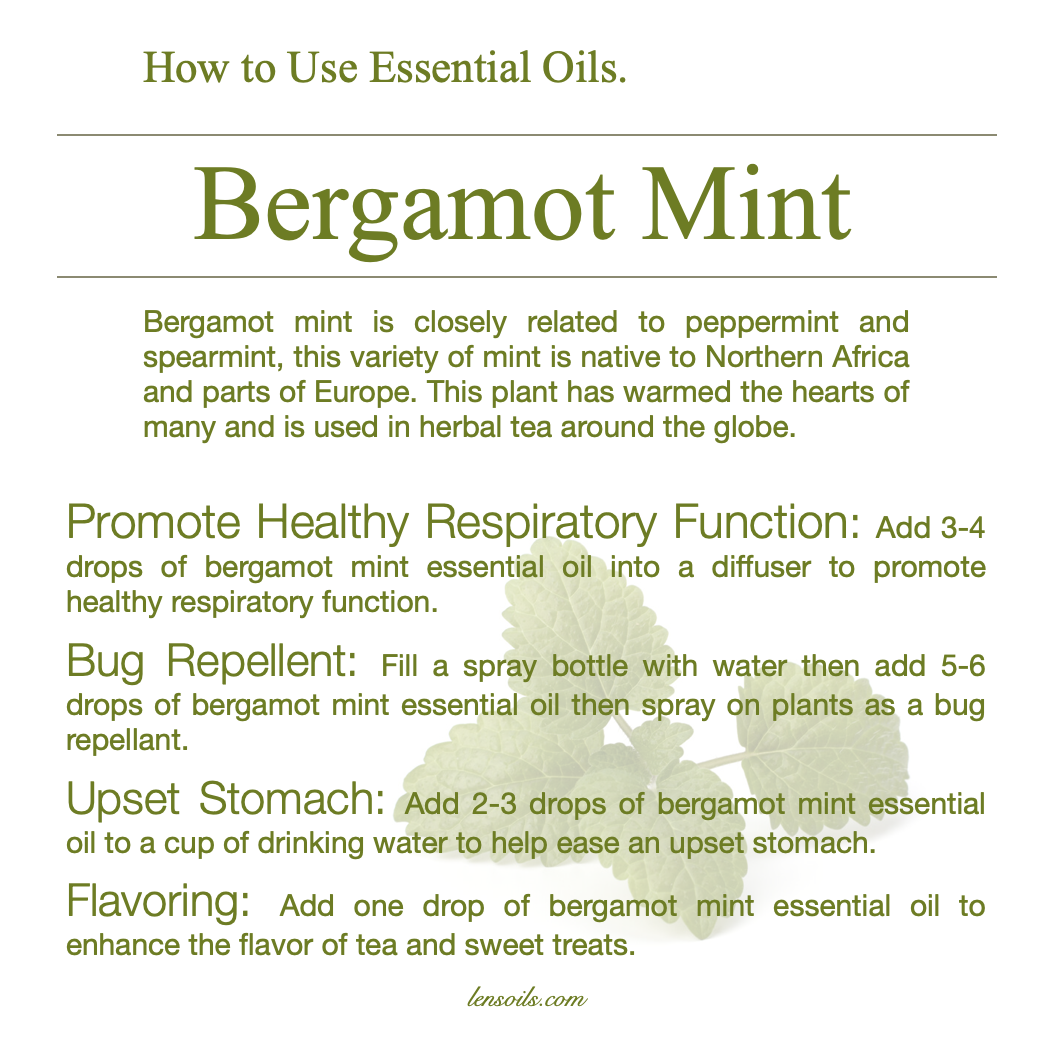
How to Use Essential Oils: Bergamot Mint

Bergamot mint, a close relative of peppermint and spearmint, is native to Northern Africa and parts of Europe. Unlike true bergamot, which comes from citrus, bergamot mint belongs to the mint family and carries a mild, floral aroma with hints of citrus. This plant has been cherished for centuries, commonly used in herbal teas worldwide for its soothing properties. Its gentle scent and refreshing taste make it a favorite in both culinary and wellness applications, providing a natural way to uplift the senses and promote relaxation.

Beyond its pleasant aroma, bergamot mint essential oil offers a range of health benefits. Diffusing 3-4 drops can support healthy respiratory function, helping to clear airways and promote easier breathing. It is also known for its ability to repel insects naturally—adding 5-6 drops to a spray bottle filled with water and misting it on plants can deter pests without the use of harsh chemicals. For digestive support, 2-3 drops in a cup of water can help soothe an upset stomach, making it a useful remedy for occasional discomfort. Additionally, a single drop can enhance the flavor of teas and desserts, bringing a fresh, minty-citrus note to homemade treats.

Among these uses, bergamot mint is also valued for its calming and stress-relieving properties. It contains linalool and linalyl acetate, compounds commonly found in lavender, which contribute to relaxation and emotional balance. This makes bergamot mint an excellent choice for aromatherapy, particularly for those who want the benefits of mint without the intensity of peppermint or spearmint. Whether used to support digestion, freshen the air, or promote relaxation, bergamot mint is a versatile essential oil that blends the best qualities of both citrus and mint.

Beyond the Broom

For many years, I served as an elementary school custodian, taking care of the building and meeting the needs of the faculty and students. It was a demanding job, but I truly loved it. My love languages are words of affirmation and acts of service, so this role suited my personality perfectly. While there were moments of frustration, everyone knew I cared deeply about them.

Teachers would often ask, “When you get a chance, could you help move some desks or clean the carpet?” My response was almost always, “How about right now?” I prided myself on being flexible. Students would come to me to pump up their balls or retrieve the ones kicked onto the roof during recess. I did it all with a smile because I wanted them to know they mattered to me.

Still, I knew I couldn’t keep up with the fast-paced and physically demanding life of a custodian forever. Some days, I walked over 10 miles while working, especially during the intense summer cleaning sessions. One summer, overwhelmed and exhausted, I realized it was time to step away. I made the decision to retire rather suddenly. A few teachers and staff knew, but most of the students didn’t find out until the next school year when I wasn’t there anymore.

Though I moved on to a less stressful job, it hasn’t been as fulfilling as working with such a wonderful community of parents, teachers, principals, and students. One day, I got off work early and decided to stop by the school during lunch to visit. I checked in at the office, and as I was signing in, a class returning from P.E. spotted me. Their faces lit up, and the teacher asked me to come into the hallway to take a picture with her class. It warmed my heart.

When I walked into the lunchroom, I saw the first graders eating lunch. The last time I’d seen them, they were just kindergartners. Without hesitation, they leapt from their seats, ran over, and surrounded me in a massive group hug. The force of their excitement almost lifted me off my feet. It was so emotional. They all knew I loved them, and I could tell they missed me just as much as I missed them. In that moment, my heart felt full—it was exactly what my soul needed.

I stayed through most of lunch, greeting students as they entered the cafeteria. Many hoped I was back for good. I explained that I wasn’t, but I had missed them and wanted to say hello. As I walked past one student, he looked up at me with  his teary eyes and said, “Mr. Fish, you never said goodbye.” His words hit me hard and reminded me of something important: we all leave an impact on the lives of others, often without realizing the depth of that impact.

Reflecting on my time at the school, I’ve come to see that the relationships I built there have lasting meaning, not only for the students but for me as well. These connections remind me of how essential small acts of care and kindness are in creating a positive and nurturing atmosphere.

Now, as I explore new paths in life, I’ve found a way to continue nurturing those connections. Essential oils have become part of my journey, helping me maintain emotional balance and bring calmness into my daily routine. Just as I once used my work to serve others, I now share these oils with those around me, offering a simple way to support their well-being. It’s another reminder that even small actions—whether retrieving a ball from the roof or sharing a soothing scent—can make a lasting impact on someone’s life.

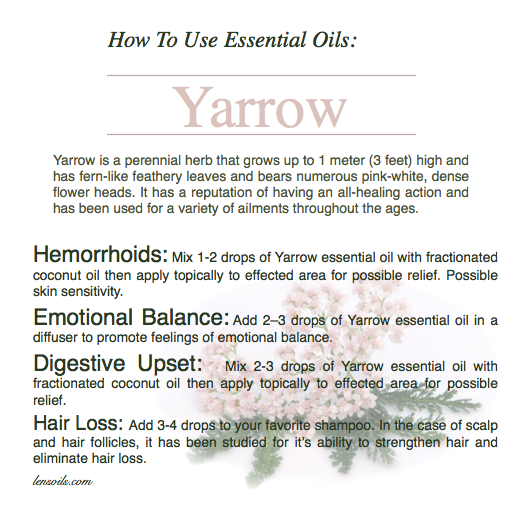
How to Use Essential Oils: Yarrow

Yarrow is a plant that grows back every year and can reach up to about 1 meter (3 feet) tall. It has leaves that look like delicate feathers and produces lots of small, dense flower clusters that are usually pink or white. People have believed for a long time that yarrow can help heal many different health problems.

Myrrh-Did You Know?

MyrrhDid you know Myrrh essential oil is the oil of mother earth? This oil nurtures the soul’s relationship with it’s maternal mother and with the earth. This oil also supports people who have a breakdown of their peaceful connection with the mother-child bond. When this bond has been broken apart, the soul may loose its childlike ability to trust.

Myrrh is nature’s miracle herb. It was one of the three gifts given to Jesus by wise men at His birth. Referenced in the Bible as the Balm of Gilead, Myrrh has been used throughout history as a perfume, incense, and medicine. It was also employed in embalming and religious ceremonies. The name Myrrh is derived from the Arab word ‘morr’ which means ‘bitter’.

Myrrh, botanically, is an aromatic gum resin, an oleoresin to be specific. Oleoresin happens to be a natural blend of a resin and an essential oil. It is obtained from thorny trees of the ‘Commiphora’ genus when a wound in the tree trunk causes it to secrete a resin. The resin has a waxy texture and once harvested, it becomes glossy and hard. The trees are native to regions of Somalia and Ethiopia.

Ancient records show that Myrrh was deemed so valuable that at times it was valued at its weight in gold. Myrrh essential oil is derived from the gummy resin of the small, thorny Myrrh tree and has been used for centuries for its internal and external health benefits. Myrrh has powerful cleansing properties, especially for the mouth and throat. It is also soothing to the skin—promoting a smooth, youthful looking complexion—and promotes emotional balance and well-being.