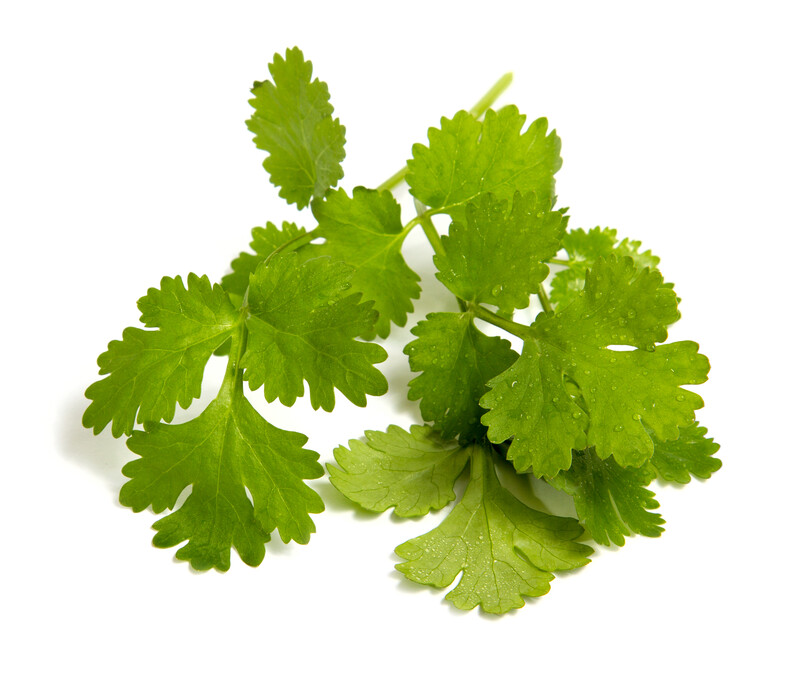
For centuries, an unassuming green herb has graced tables across the world, its fragrance as distinct as its flavor. It has been crushed into pastes, steeped into teas, and scattered atop dishes from Mexico to India. Ancient civilizations knew of its powers long before modern science confirmed its worth. Traces of it have been found in the tombs of Egyptian pharaohs, nestled alongside gold and sacred artifacts, hinting at a value that extended far beyond the kitchen. Hippocrates, the father of medicine, spoke of its medicinal properties, while Chinese healers used it to rid the body of toxins.
In the Middle Ages, it was rumored to hold mystical qualities, a belief likely rooted in its ability to purify and restore. Traders carried its seeds along the Silk Road, sharing its secret with distant lands. The Spanish conquistadors ensured its presence in the New World, where it flourished in the warm, fertile soils of the Americas. Today, it is a staple in kitchens worldwide, yet it remains one of the most polarizing ingredients in culinary history—beloved by some and despised by others.
Its scent, bright and citrusy to some, is curiously soapy to others, a perception dictated by genetics. Charles J. Wysocki, a behavioral neuroscientist, uncovered the genetic link that determines whether one will relish its fresh, tangy bite or recoil at its pungency. This divisive reaction is rooted in olfactory receptors, proving that taste, at times, is simply a matter of biology. But beyond its flavor, it harbors an arsenal of benefits that modern science has only begun to unravel.
Dr. Ellen Silbergeld, a toxicologist renowned for her work in environmental health, found that this little leaf could do what few other plants could—it binds to heavy metals in the body, aiding in their safe removal. Its detoxifying properties have made it a subject of research in holistic medicine, where it is lauded for its ability to cleanse the bloodstream and support liver function. Some have even referred to it as nature’s own “chelation therapy.”
Not just a detoxifier, this herb is a digestive ally. Its essential oils contain compounds that soothe the gut, reducing bloating and discomfort after a heavy meal. A single drop of its concentrated essence, mixed into water, can help the body process rich or indulgent foods. For those who prefer its raw form, adding it to meals not only enhances flavor but also promotes gut health.
Its uses extend beyond digestion and detoxification. Researchers have found that its antioxidant properties may support the body’s defenses against oxidative stress. With a rich profile of vitamins A, C, and K, it contributes to skin health, immune support, and overall well-being. And when paired with lime in a diffuser, its fresh herbal aroma invigorates the senses, bringing a touch of nature indoors.
For all its uses, it remains misunderstood by many. Some associate it with humble street food, while others see it as a refined touch in gourmet cuisine. It has been praised in Ayurvedic medicine for its healing properties, studied by Western scientists for its detoxifying effects, and endlessly debated at dinner tables around the world. Cilantro, with its distinct flavor, divides opinions—fresh and citrusy to some, overwhelmingly soapy to others, a reaction dictated by genetics. Yet, despite the controversy, it continues to thrive in cultures across the globe, enhancing meals, supporting digestion, and purifying the body. A staple in kitchens from Mexico to India, a remedy in holistic medicine, and a topic of scientific curiosity, this humble herb holds a history as rich as its flavor.
And now you know the rest of the story.
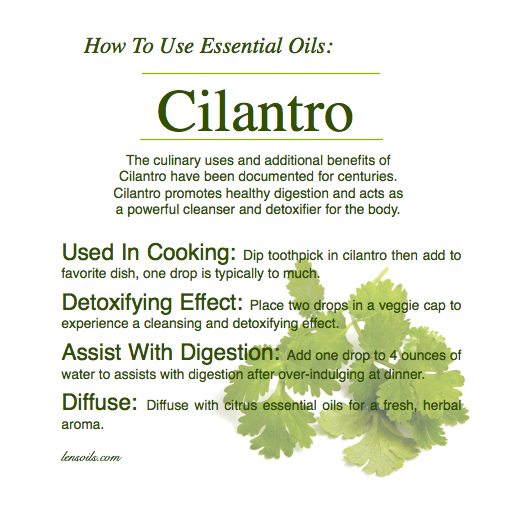 I love using cilantro essential oil in my guacamole. A toothpick dipped in cilantro is all you need, a drop is too much.
 Len's Oils