Category Archives: Essential Oil Quick Facts

How to Use Essential Oils: Cocoa

Cocoa essential oil, derived from the beans of the Theobroma cacao tree, is cherished for its deep, rich, and chocolate-like aroma. Native to Central and South America, cocoa has been celebrated for centuries as both a food and a symbol of love and vitality. In essential oil form, its scent provides comfort and indulgence, often used in blends to create a warm, cozy, and uplifting atmosphere. Diffused, it can evoke feelings of happiness and relaxation, much like enjoying a piece of chocolate without the calories.

Beyond its delightful fragrance, cocoa essential oil is packed with natural compounds that contribute to its soothing and antioxidant qualities. It is sometimes used in skin-care blends for its nourishing properties, helping to support smooth, healthy-looking skin. In aromatherapy, cocoa’s rich scent can help ease stress, encourage relaxation, and even promote a more grounded emotional state. Its luxurious aroma makes it a favorite in romantic blends and self-care rituals.

Did You Know? Ancient Mayan and Aztec civilizations revered cocoa as “food of the gods” and used it in rituals, drinks, and trade. Today, while most people know cocoa for chocolate, its essential oil form is less common and highly prized for natural perfumery and emotional wellness blends.

How to Use Essential Oils: Massage

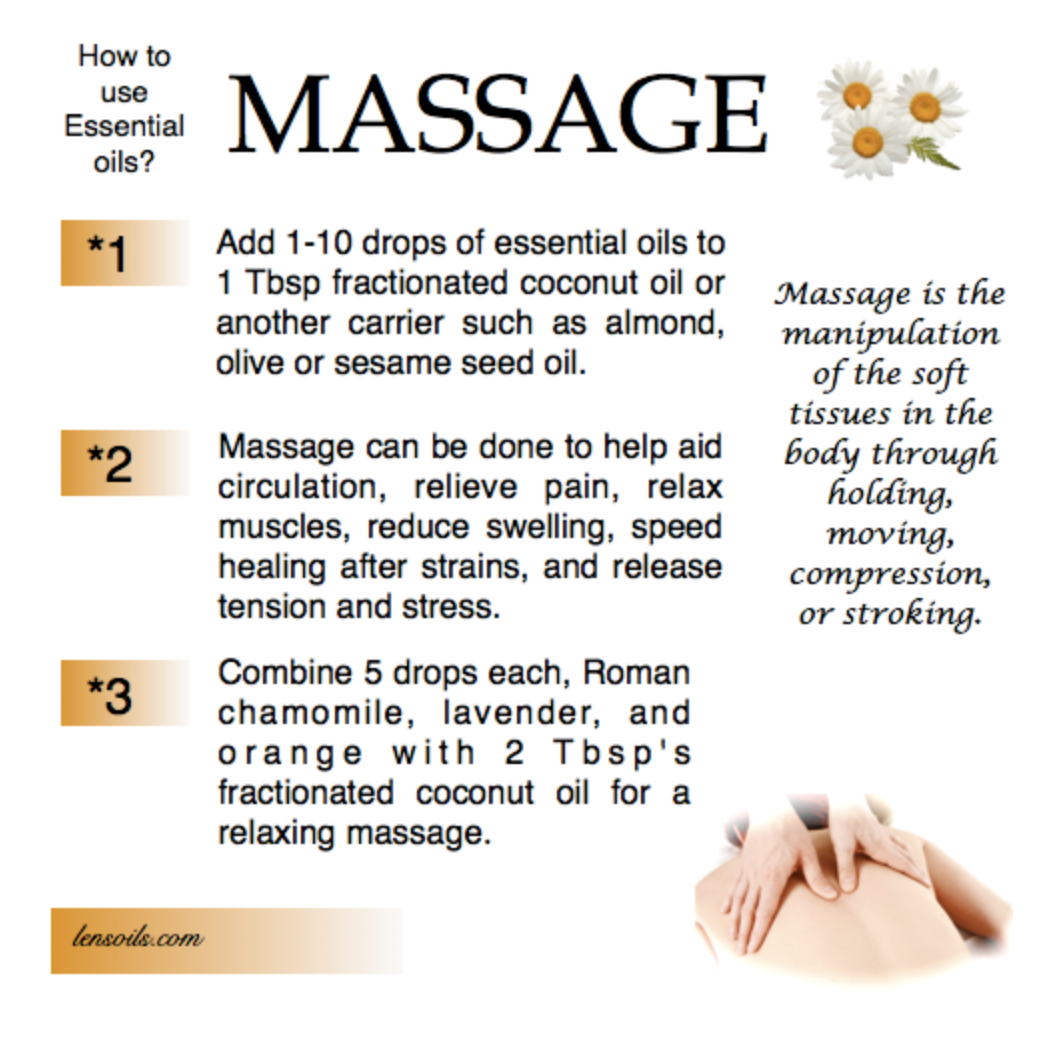
Massage is the manipulation of the body’s soft tissues through techniques such as holding, moving, compressing, or stroking. It can help improve circulation, relieve pain, relax muscles, reduce swelling, speed healing after strains, and release tension and stress. Essential oils can enhance the benefits of massage by adding therapeutic properties and soothing aromas. To use, dilute 1-10 drops of essential oil in 1 tablespoons of a carrier oil such as fractionated coconut, almond, olive, or sesame seed oil to ensure proper application and avoid skin irritation.

For a relaxing massage blend, combine 5 drops each of Roman chamomile, lavender, and orange essential oils with 2 tablespoons of carrier oil. This calming mixture can promote relaxation and ease tension. Massage the blend into the skin using gentle, purposeful strokes to maximize its benefits. Whether used for relaxation or targeted relief, essential oils can make your massage experience even more effective and enjoyable.

How to Use Essential Oils: Jet Lag

Jet lag occurs when your body’s internal clock is disrupted due to rapid changes in daylight and nighttime while traveling across time zones. To help your body adjust, use invigorating essential oils like peppermint and eucalyptus in the morning to promote alertness. At night, calming oils such as lavender and geranium can encourage relaxation and restful sleep. This approach helps ease the transition between different time zones.

To apply, mix 2-3 drops of your chosen essential oil with 1 tablespoon of fractionated coconut oil. Massage this blend onto your back, legs, shoulders, and feet to experience its benefits. This practice can be especially helpful during long flights or upon arrival in a new destination, making your journey more comfortable and rejuvenating.

How to Use Essential Oils: Vetiver

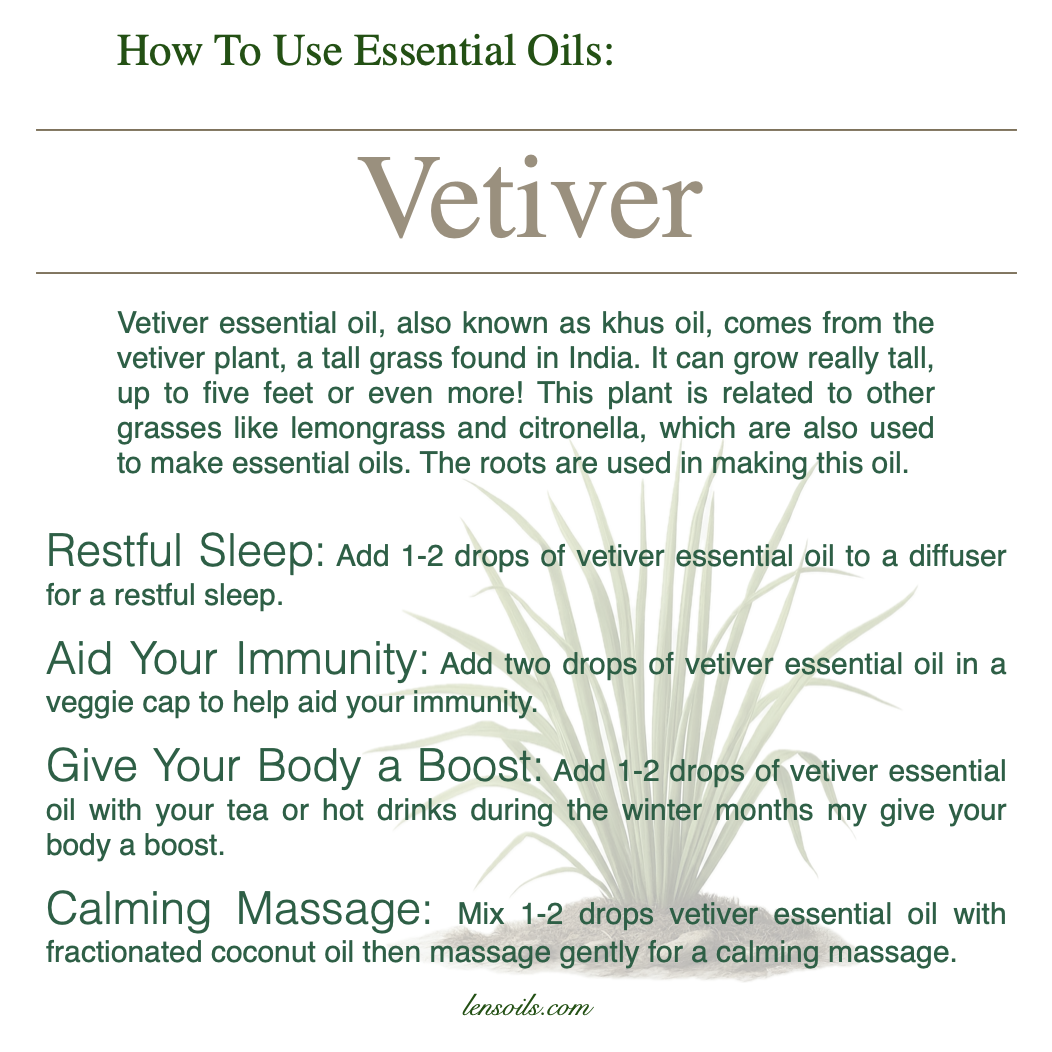
Vetiver essential oil, also called khus oil, comes from a plant called vetiver, which is a tall grass found in India. This grass can grow very tall, sometimes reaching over five feet! It’s similar to other plants like lemongrass and citronella, which are also used to make essential oils. The oil is made from the roots of the vetiver plant.

How to Use Essential Oils: Spikenard

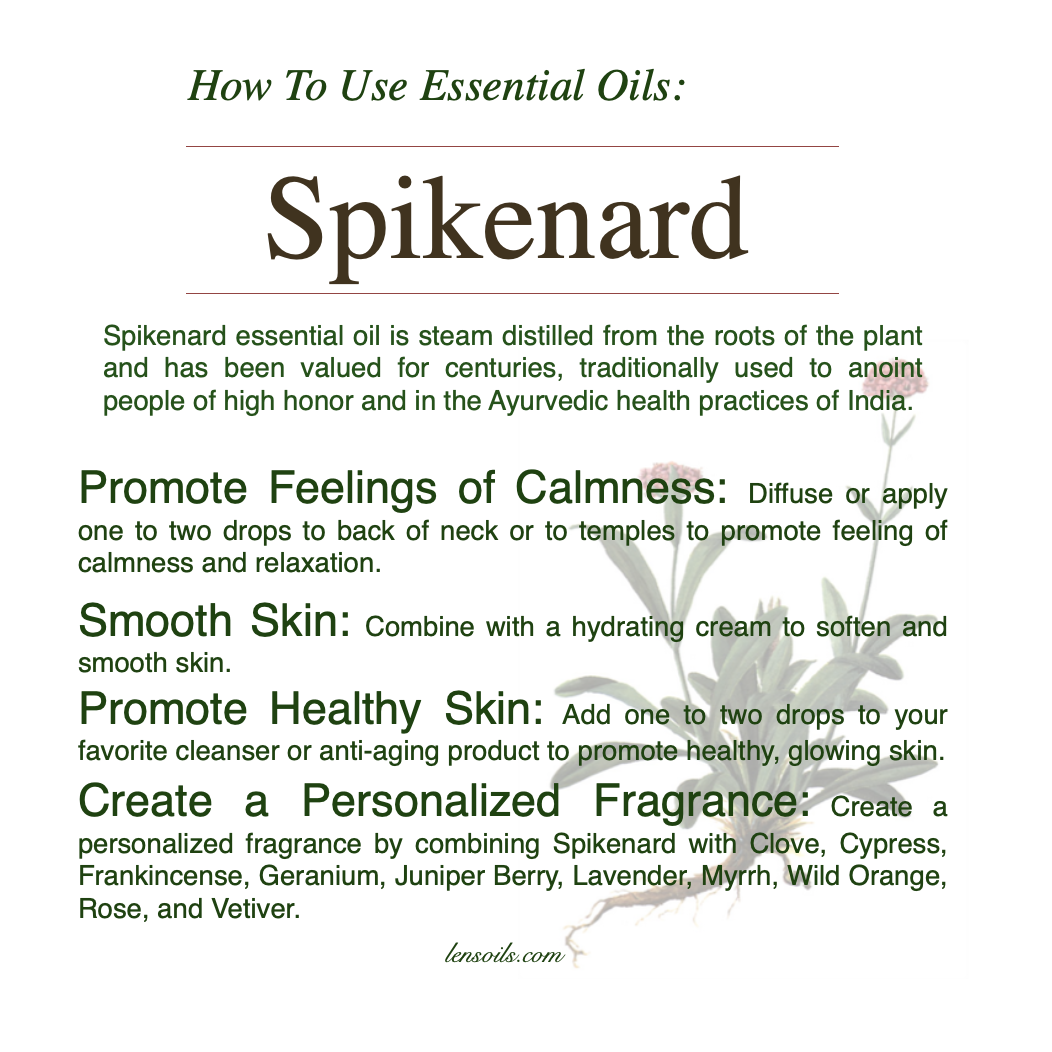
Spikenard essential oil is made by heating the roots of a plant with steam. It’s been important for many years, often used to honor important people and in Indian health practices called Ayurveda. Spikenard plants grow in high places like the Himalayan mountains.

How to Use Essential Oils: Roman Chamomile

Roman Chamomile is a small plant that stays low to the ground, growing only about a foot tall. It has leaves that are gray-green in color and flowers that look like daisies. Plus, it gives off a scent that’s similar to apples.