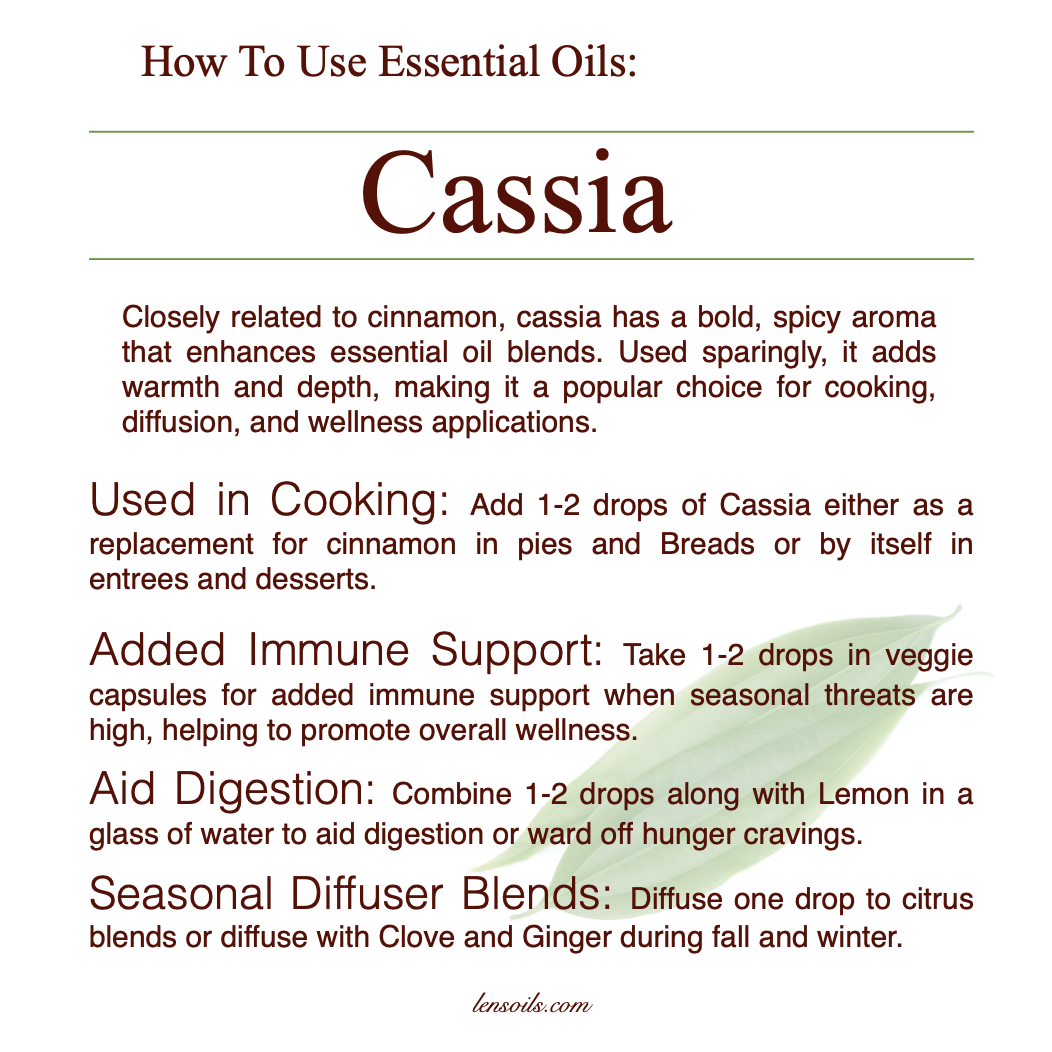
Cassia (Cinnamomum cassia), a close relative of cinnamon, is known for its warm, spicy aroma and strong flavor. Native to China and Southeast Asia, cassia has been used for centuries in traditional medicine and culinary applications. Its essential oil is highly concentrated, and only small amounts are needed to enhance recipes or blends. In cooking, 1-2 drops of cassia essential oil can be used as a substitute for cinnamon in pies, breads, and desserts or as a standalone spice in savory dishes. Due to its intense potency, it should be used sparingly. While cassia is recognized for its aromatic and culinary benefits, research on whether cassia essential oil retains the same digestive and metabolic effects as whole cassia bark is still limited.
Cassia is also commonly used for immune support and seasonal wellness. Many essential oil practitioners recommend taking 1-2 drops in a veggie capsule to help support the immune system, particularly during seasonal changes. Some preliminary studies suggest that cassia contains antimicrobial properties, but more research is needed to determine its direct impact on immune function. Additionally, combining cassia with lemon essential oil in a glass of water is thought to aid digestion and curb hunger cravings, though scientific validation on cassia oil’s role in appetite suppression remains inconclusive. While cassia essential oil may offer digestive support, it is highly concentrated and should always be diluted properly before ingestion.
Cassia’s bold, warming scent makes it a popular choice for diffuser blends, particularly in fall and winter. Just one drop blended with citrus oils or paired with clove and ginger can create a cozy, inviting atmosphere. Some believe that diffusing cassia may also help support respiratory function, but further studies are needed to confirm these benefits. While cassia essential oil has strong antimicrobial and aromatic properties, its direct effects on digestion, immune support, and respiratory health require additional scientific validation. Nevertheless, cassia remains a versatile and powerful essential oil for culinary, aromatic, and occasional wellness applications.
Carrot seed essential oil is primarily derived from wild carrots (Daucus carota), which are commonly found in Europe and parts of Asia. The plant is an annual or biennial herb, recognized for its hairy leaves and white lacy flowers with purple centers. Traditionally, carrot seed oil has been valued for skin and hair care, with historical use in natural remedies and herbal medicine. The oil is known to contain antioxidants and compounds that support skin health, making it a popular ingredient in skincare formulations. Due to its soothing properties, combining 1-2 drops of carrot seed essential oil with fractionated coconut oil and applying it to sunburned areas may help provide relief. While many users report benefits, scientific research on carrot seed oil’s direct effectiveness in sunburn relief remains limited.
Carrot seed essential oil is also commonly associated with liver health and detoxification. Some practitioners recommend adding 3-4 drops to a fruit smoothie to help support liver function, based on its traditional use in herbal detox regimens. While carrot seed oil contains antioxidants, which may contribute to overall wellness, more scientific studies are needed to confirm its direct role in liver cleansing. Another popular use is reducing the appearance of wrinkles, where 2-3 drops added to a skin cream may support skin elasticity and hydration. Carrot seed oil’s rich antioxidant profile makes it a common ingredient in anti-aging skincare, but long-term studies on its effectiveness in reducing wrinkles are still ongoing.
In addition to skincare and detox benefits, carrot seed essential oil has been linked to supporting eye health due to its association with carotenoids and vitamin A. Some sources suggest adding 2-3 drops to 8 oz of water to promote eye health, but this claim requires more clinical research, as carrot seed essential oil does not contain direct forms of vitamin A like beta-carotene found in raw carrots. While carrot seed oil has potential health benefits, its role in eye support and liver cleansing is still being studied, and further scientific validation is needed. Nevertheless, carrot seed essential oil remains a valuable addition to natural skincare, wellness, and aromatherapy routines.
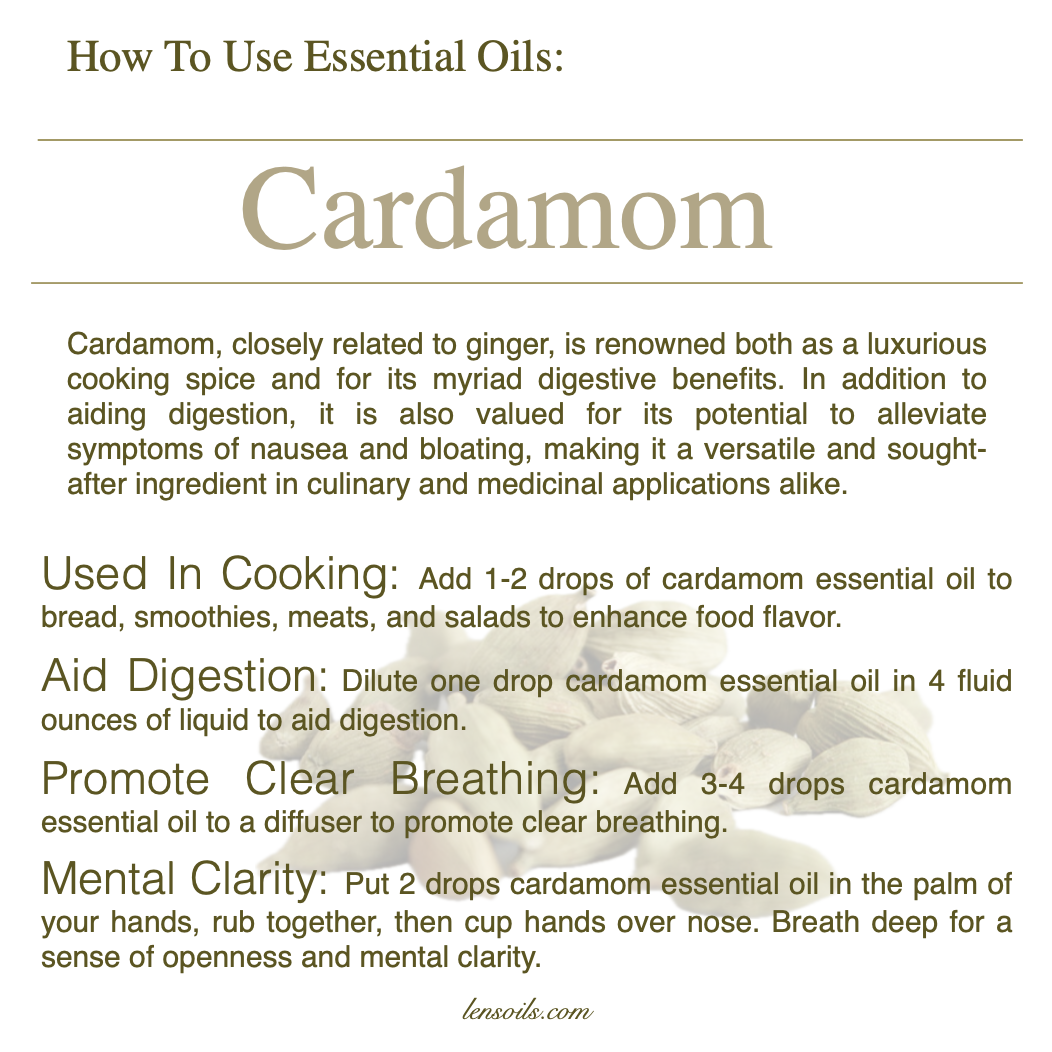
Cardamom (Elettaria cardamomum), a close relative of ginger, has been prized for centuries as both a luxurious culinary spice and a natural digestive aid. Historically, it has been used in Middle Eastern, Indian, and Scandinavian cuisine, where its warm, slightly sweet flavor enhances a variety of dishes. Beyond its culinary appeal, cardamom is known for its digestive benefits, traditionally used to ease bloating, indigestion, and occasional nausea. Adding 1-2 drops of cardamom essential oil to foods such as breads, smoothies, meats, and salads enhances their flavor while also supporting digestion. Additionally, cardamom essential oil can be diluted in 4 fluid ounces of liquid to help aid digestion naturally. While these traditional uses are well-documented, further scientific research is needed to confirm the full extent of cardamom essential oil’s role in gut health and digestive enzyme activation.
Beyond digestion, cardamom essential oil is often used in aromatherapy to promote respiratory health. Adding 3-4 drops to a diffuser can help create an atmosphere that supports clear breathing and soothes airways, making it useful during seasonal changes. Additionally, cardamom oil is said to promote mental clarity—placing 2 drops in the palms, rubbing hands together, and inhaling deeply is believed to provide a sense of openness and focus. Some studies suggest that certain compounds in cardamom may have calming effects, which could support mental well-being, though more clinical research is needed to determine its direct impact on stress reduction and cognitive function.
Among its various applications, cardamom essential oil is sometimes considered beneficial for oral health and detoxification, though these claims require more scientific validation. While cardamom has been used in traditional medicine for freshening breath and cleansing the mouth, research on its effectiveness in preventing bacteria-related oral issues remains limited. Additionally, some practitioners believe that cardamom essential oil may support natural detoxification, but further studies are needed to substantiate these claims. Regardless, cardamom remains a versatile and highly valued essential oil, offering culinary, digestive, and aromatic benefits, making it a staple in both traditional and modern wellness practices.
Nine years ago, I was introduced to something that has transformed my life: essential oils.
Yes I was a big skeptic about them at first, but I now use essential oils on a daily basis in every area of my home, and they have completely changed my life! My medicine cabinet has been completely transformed, and I am now empowered with the tools and knowledge to care for my family.
When I realized I could get free products AND create residual income? I got really excited!
As a result, of my essential oil journey, and passion helping others, I’m ready to help you get started with your essential oil journey as well.
The best part about essential oils is that there is an option for everyone, whether you want to simply enjoy the products for yourself and transform your family’s health (and get free stuff in the process) OR you’re ready to build a team, create residual income, and get out of debt.
If any of these options sound appealing to you, let’s chat!
I’ll help you figure out which option will be the best fit for you, plus you can qualify for some awesome incentives in the process.
I can’t wait to talk to you!
I love sharing essential oils
Please text Free Sample or call me at 801-661-4786
I will be sure to get back to you as soon as possible.
Or
Send me an email at lfish64@yahoo.com
with the heading Free Sample
It will be an honor to help you in any way that I can.
Or
Write a letter requesting a Free Sample to
Leonard Fish
5075 Rushton Acres Court
West Valley City, Utah 84120
Caraway (Carum carvi), a member of the carrot family, has been cultivated for centuries and holds a significant place in both culinary and medicinal traditions. The name caraway is believed to have originated from its early use in Asia and the Mediterranean region. Caraway seeds have historically been used for their digestive benefits and as a natural breath freshener. In biblical times, bread containing caraway seeds was eaten, and there was a superstition that anything containing caraway seeds could not be stolen. This belief made caraway a symbol of protection in European folklore. While these historical uses are well-documented, the scientific basis for caraway preventing theft remains purely anecdotal and rooted in superstition.
Today, caraway seed essential oil is widely used for digestive and oral health benefits. It is often blended with fractionated coconut oil for abdominal massage support, as 2-3 drops may help with occasional stomach discomfort. Caraway seed oil is also used for oral care, with many people adding a drop to their toothbrush or a daily mouth rinse to support fresh breath and dental hygiene. A combination of caraway seed and clove essential oil is sometimes used as a natural cleansing rinse, but while caraway oil has antimicrobial properties, more scientific research is needed to confirm its effectiveness in preventing cavities or gum disease.
Beyond digestion and oral care, caraway seed essential oil is recognized for its calming and relaxing properties. A warm bath infused with one drop of caraway seed essential oil and three drops of lavender essential oil may provide a soothing and aromatic experience. Some studies suggest that caraway seed oil contains antioxidants that may contribute to overall wellness, but further research is needed to determine its full range of health benefits. While many of its traditional applications are well-supported, its effectiveness in areas such as relaxation, stress relief, and long-term antioxidant support requires more clinical validation. Nevertheless, caraway seed essential oil remains a versatile and beneficial addition to natural health and aromatherapy practices.
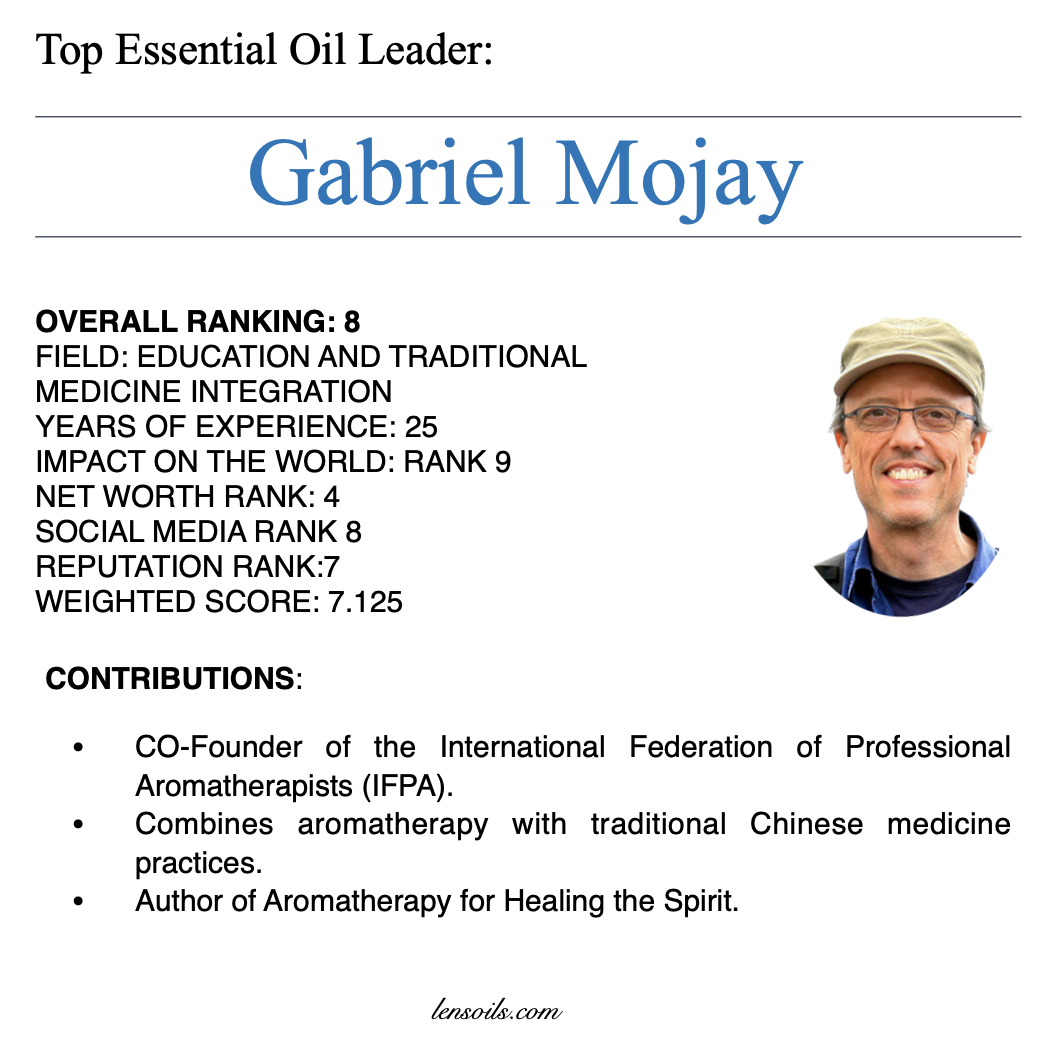
Gabriel Mojay is a highly respected educator, author, and practitioner in the field of aromatherapy and traditional medicine. He is best known for integrating aromatherapy with traditional Chinese medicine (TCM), offering a unique approach to holistic healing that considers both the physical and emotional well-being of individuals. His work has helped bridge the gap between Eastern and Western healing traditions, bringing greater depth to the practice of essential oil therapy. Through his research, writing, and teaching, Mojay has significantly influenced the development of professional aromatherapy standards worldwide.
Born and raised in the United Kingdom, Mojay developed an early interest in natural healing and traditional medicine. His academic journey led him to study both acupuncture and aromatherapy, laying the foundation for his later work in integrative medicine. His deep curiosity about Eastern healing philosophies, particularly the meridian system and the concept of Qi (life energy), inspired him to explore how essential oils could be used to balance the body’s energy and emotions. This early exposure shaped his approach to aromatherapy, distinguishing him from other practitioners who focused primarily on the physical effects of essential oils.
One of Mojay’s most significant contributions to the field was co-founding the International Federation of Professional Aromatherapists (IFPA). The IFPA is a leading organization dedicated to upholding high educational and professional standards for aromatherapists. Through his work with the IFPA, Mojay has helped establish rigorous training programs, ethical guidelines, and certification standards that ensure practitioners receive comprehensive education in both the science and art of aromatherapy. His leadership has played a crucial role in advancing aromatherapy as a credible and respected discipline.
In addition to his work with the IFPA, Mojay is the author of the widely acclaimed book Aromatherapy for Healing the Spirit. This book is one of the first to explore the connection between aromatherapy and TCM, providing readers with a framework for using essential oils not just for their physical benefits but also for emotional and energetic healing. The book outlines how essential oils correspond to specific meridians and organ systems in Chinese medicine, making it a valuable resource for both practitioners and those interested in holistic wellness.
Beyond his writing, Mojay has been an influential educator, sharing his knowledge through lectures, workshops, and international conferences. His ability to convey complex concepts in an accessible and practical way has made him a sought-after speaker in the fields of aromatherapy and integrative medicine. Through his teachings, he has trained countless professionals who have gone on to incorporate his methods into their own practices, further spreading the influence of his work.
Mojay’s contributions to the field have earned him a strong reputation within the holistic health community. While he may not have mainstream celebrity status, his impact among professionals and dedicated practitioners is profound. His approach to aromatherapy, which emphasizes emotional and energetic healing, has been particularly influential in expanding the understanding of how essential oils can be used beyond simple relaxation or symptom relief.
Despite his significant contributions, Mojay has remained more focused on education and professional development than commercial ventures. His commitment to maintaining high standards in the field has ensured that aromatherapy continues to be practiced with integrity and depth. His work with the IFPA and his integration of TCM principles into aromatherapy have set a precedent for future generations of practitioners who seek to combine science with traditional healing wisdom.
As he continues to write, teach, and contribute to the field, Gabriel Mojay’s legacy as a pioneer in education and traditional medicine integration remains strong. His dedication to bridging the gap between aromatherapy and TCM has enriched the practice of holistic healing, ensuring that essential oil therapy is viewed not just as a complementary practice but as a sophisticated and deeply rooted system of wellness. His influence will undoubtedly continue to shape the field for years to come.
Blue tansy, also known as Moroccan tansy (Tanacetum annuum), is a Mediterranean plant native to northern Morocco. It produces small yellow flowers, but when distilled into an essential oil, it takes on a deep blue color due to the presence of chamazulene. This compound is responsible for blue tansy’s well-known anti-inflammatory and skin-soothing properties. Traditionally, it has been used in aromatherapy and skincare to promote calmness and relief from irritation. The oil is often diffused to uplift mood and create a relaxing atmosphere, while topical application—diluted in a moisturizer or cleanser—may help reduce the appearance of blemishes and soothe skin irritation.
In modern wellness practices, blue tansy is widely used for relaxation and muscle recovery. Adding 1-2 drops to lotion can create a restoring massage blend, useful for relaxing muscles after a stressful day or intense workout. Due to its natural antioxidant properties, some people also use blue tansy to help protect skin from environmental stressors. However, its role in broader healing processes remains an area requiring more research. While its anti-inflammatory and antioxidant effects may contribute to skin repair, there are limited scientific studies specifically evaluating blue tansy’s ability to aid in wound healing or other physical recovery processes.
Beyond skincare and relaxation, blue tansy is sometimes used for reducing minor discomfort, particularly in muscle and joint care. Its chamazulene content gives it a mild cooling effect, making it a popular choice for soothing soreness. However, while many users report relief from aches and tension, its effectiveness in pain relief beyond topical inflammation has not been extensively studied. As research continues, blue tansy remains a well-regarded essential oil for emotional balance, skincare, and muscle relaxation, though its broader healing properties and pain-relief potential require further scientific exploration.
The Blue Lotus Flower (Nymphaea caerulea) has held deep symbolic and spiritual significance since ancient Egyptian times. Often associated with rebirth and the sun, the flower was depicted in art and religious texts, representing renewal and enlightenment. In Buddhism, the blue lotus symbolizes victory of the spirit over material desires, signifying wisdom and knowledge. Beyond its symbolic meaning, the flower has been valued for its aromatic and therapeutic properties. Today, blue lotus flower essential oil is used in personal care and wellness routines, offering both emotional and physical benefits. The flower contains apomorphine, a natural compound that can act on dopamine receptors, potentially promoting relaxation and mood enhancement. While historical and anecdotal evidence suggests that Blue Lotus has been used to enhance sensuality and intimacy, there is limited modern scientific research confirming its direct aphrodisiac effects.
As an essential oil, blue lotus flower is often diffused for its delicate, floral fragrance, creating a calming and personal aromatic experience. It has also been traditionally used to promote relaxation, with many incorporating it into warm baths before bedtime. Additionally, blue lotus is highly regarded in skincare, as its oil can be blended with fractionated coconut oil or other skin products to help reduce the appearance of imperfections and promote a radiant complexion. The oil’s historical connection to beauty and spirituality makes it a sought-after ingredient in personal wellness rituals, whether for aromatherapy, relaxation, or skin enhancement. While scientific validation for some claims is ongoing, its long-standing use in ancient and modern holistic practices continues to make it a popular choice in essential oil applications.
Among those influencing the modern accessibility of blue lotus flower essential oil, Emily Wright has played a significant role through her work in the essential oil industry. As a co-founder of dōTERRA, Wright has been instrumental in promoting the sourcing and production of high-quality essential oils, ensuring sustainable and ethical practices in the industry. While her direct role in the widespread distribution of Blue Lotus essential oil is not extensively documented, her influence in dōTERRA’s leadership and product development has contributed to making rare, high-quality essential oils more widely available. With its historical roots in ancient healing traditions and its continued relevance in aromatherapy and skincare, blue lotus flower essential oil remains a luxurious and valued addition to modern wellness practices.
Do you want to expand your health options? Try using natural essential oils.
Request a a Free Sample.
Please text Free Sample or call me at 801-661-4786 I will be sure to get back to you as soon as possible. Or Send me an email at lfish64@yahoo.com with the heading Free Sample It will be an honor to help you in any way that I can. Or Write me a letter, request a Free Sample
Leonard Fish 5075 Rushton Acres Court West Valley City, Utah 84120 USA
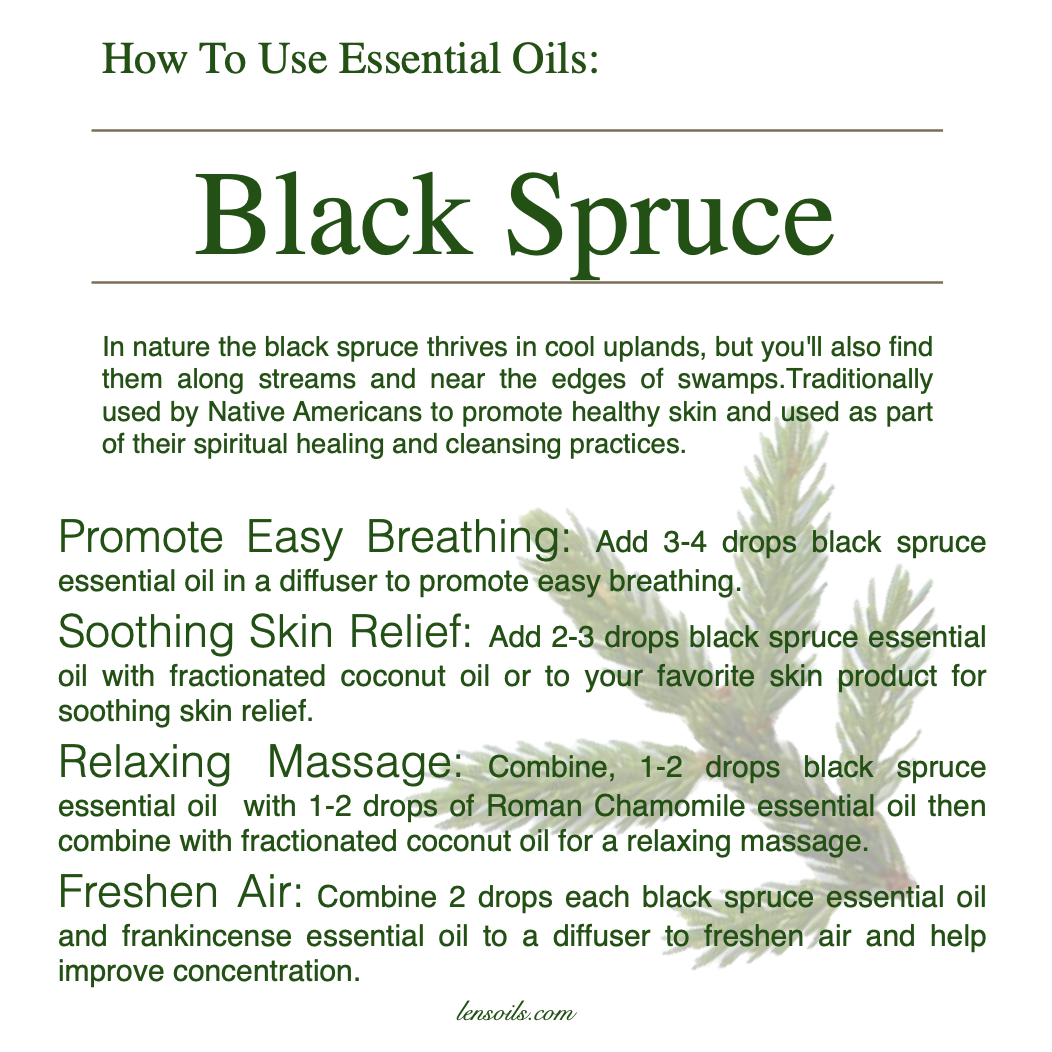
Black spruce is a hardy evergreen that thrives in cool uplands, along streams, and at the edges of swamps. Traditionally, Native Americans used black spruce for its skin-nourishing properties and incorporated it into spiritual healing and cleansing rituals. Its wood and needles were often boiled to create tonics or steam baths, believed to promote overall well-being. The fresh, grounding scent of black spruce essential oil has made it a valuable tool for both physical and emotional healing, with its use continuing in modern herbal and aromatherapy practices.
In modern use, black spruce essential oil is widely recognized for its ability to support respiratory health. Diffusing 3-4 drops can help promote easy breathing, making it useful for seasonal changes or congestion. It is also beneficial for skincare—when blended with fractionated coconut oil or added to a favorite skin product, it provides soothing relief for dryness and irritation. Black spruce is also an excellent oil for relaxation; combining 1-2 drops with Roman Chamomile essential oil and a carrier oil makes for a calming massage blend that can ease tension and promote rest. Additionally, when paired with frankincense in a diffuser, black spruce helps freshen the air and improve concentration, making it a popular choice for both home and workplace environments.
Among these uses, black spruce essential oil is gaining attention for its potential role in supporting adrenal health and reducing stress-related fatigue. The oil contains bornyl acetate, a compound known for its calming effects, which mayhelp reduce feelings of burnout and support the body’s natural stress response. While many aromatherapy practitioners advocate for its benefits in stress relief, scientific studies on black spruce specifically for adrenal support remain limited. However, its grounding properties make it a widely used oil for promoting emotional balance. Whether for skincare, respiratory support, or relaxation, black spruce essential oil remains a versatile and grounding choice in natural wellness, though further research may provide deeper insights into its full range of benefits.






 Len's Oils