
Category Archives: Better Living
Do You Have Any Idea Who I Am?
 It happened at a New York Airport this is hilarious. I wish I had the guts of this girl. An award should go to the United Airlines gate agent in New York for being smart and funny, and making her point, when confronted with a passenger who probably deserved to fly as cargo. For all of you out there who have had to deal with an irate customer, this one is for you.
A crowed United Airlines flight was cancelled. A single agent was re-booking a long line of inconvenienced travelers. Suddenly an angry passenger pushed his way to the desk. He slapped his ticket down on the counter and said, “I HAVE to be on this flight and it has to be FIRST CLASS.”
The agent replied, “I’m sorry sir. I’ll be happy to try to help you, but I’ve got to help these folks first, and I’m sure we’ll be able to work something out.”
The passenger was unimpressed. He asked loudly, so that the passengers behind him could hear, “DO YOU HAVE ANY IDEA WHO I AM?”
Without hesitating, the gate agent smiled and grabbed her public address microphone. “May I have your attention please?” she began, her voice bellowing throughout the terminal. “We have a passenger here at gate 17 WHO DOES NOT KNOW WHO HE IS. If anyone can help him find his identity, please come to gate 17.”
With the folks behind him in line laughing hysterically, the man glared at the United agent, gritted his teeth and swore “F*** you!”
Without flinching, she smiled and said, “I’m sorry, sir, but you’ll have to stand in line for that, too.” The man retreated as the people in the terminal applauded loudly. Although the flight was canceled and people were late, they were no longer angry at United.
Prescription Drugs The Slippery Slope
 Do you want to take back your health using natural essential oils?
The first 5 people to respond to me will receive a free sample.
Please text free sample or call me at 801-661-4786
I will be sure to get back to you as soon as possible.
Or
Send me an email at lfish64@yahoo.com
It will be an honor to help you in any way that I can.
Blue Tansy-Did You Know?
 Did you know Blue Tansy is The Oil of Inspired Action? Blue Tansy helps those that try to prevent action on what they know to be true. Instead of listening to their conscience they are indecisive and postpone action. Their will becomes paralyzed as they refuse to listen to their inner voice for guidance. Blue Tansy invites people to show their inspiration through action.
The Charlemagne and the Benedictine monks of St. Gall are just a few people of interest who have grown and harvested Blue Tansy for its valuable wellness-promoting properties. The ancient Greeks cultivated Blue Tansy for a variety of wellness practices, as well. The Irish have a history of using Blue Tansy to help with joint discomfort, and would combine it with salts in fragrant, calming hot baths.
Blue Tansy is best used for allergy relief, sore muscles and skin care. It also stimulates the thymus gland so it can help with stimulating your immune system. Blue Tansy has similar properties to the Chamomiles, it has sometimes been called “Blue Chamomile” but that is not correct. Always check the botanical name. Blue Tansy Is good to use for rashes, eczema, and dry skin.
Because Blue Tansy is so strong, use carefully.This oil is a very peaceful oil, works very well for skin care. While the azulene is what makes the oil blue, it also is known for skin care properties. Since it is blue in color, be aware it will change the color of any recipes you put together. Especially if you put it in white or cream colored lotions.
Blue Tansy is generally non-irritating and non-toxic. Nonetheless, the preferred way to use is external. It seems to display its strongest effects if its maximum concentration in a blend does not exceed 5%. Avoid use during pregnancy.
Palmarosa-Did You Know?

Did you know Palmarosa is The Oil of Growth and Maturity? Palmarosa can help people to grow and develop physically as well as emotionally. Just like the fast growing Palmarosa grass, this oil can speed up a persons emotional growth process. It is extremely helpful for children as well as adults that are trapped emotionally at a younger age developmentally.
Palmarosa is a wild growing, green and straw-colored grass, with long slender stems, terminal flowering tops and fragrant grassy leaves. It has been traditionally used in India and West Africa to flavor foods and cure meats. People have also used it for decades to make cosmetics, soaps, and perfumes. It has been used for centuries to dilute the more expensive Rose oil. It has a delightful, rosy scent with a hint of lemon, wintergreen and maple leaf.
Palmarosa oil moisturizes the skin and regenerates cells as well as enhances anti-aging functions. It is also antibacterial and aids in digestion of food. In addition, it calms the nerves, treats colds and flu, removes scars, relieves muscle pains and strains, and treats cuts and wounds by preventing infection.
Palmarosa oil has a strong scent, so use sparingly. Calms emotions,warming to the body, and helps relax tight muscles. Lessens pain, and could be useful for treatment for anorexia nervosa. It helps when treating a sluggish appetite. Palmarosa oil brings inner peace, balancing, and is refreshing, and soothing. Is great for skin care, and is safe for all skin types and great for moisturizing the skin and hair.
Palmarosa oil can be used in carrier oil for massages, and to treat fungal infections topically. It can be used to treat wounds topically without dilution. It can be used in aromatherapy to help with anxiety and fatigue. For another alternative, it can be inhaled to kill intestinal infections. Pregnant women should first seek expert advice before use.
Myrtle-Did You Know?
 Did you know Myrtle is The Oil of Adaptability? Myrtle instills the soul with qualities helping you to adjust to new conditions, capable of being flexible, and recovering quickly from difficult conditions. Myrtle helps brings joy to the heart allowing things to flow naturally. It is helpful during difficult and challenging times.
The Ancient Egyptians knew of the therapeutic properties of myrtle, macerating the leaves in wine to counter fever and infection. The best and most fragrant myrtle trees came from Egypt. In Biblical times, Jewish women wore garlands of myrtle on their heads on their wedding day as a symbol of love, and to bring them happiness. In 1876, Dr Delioux de Savignac advocated the use of myrtle for bronchial infections, for problems of the urinary and reproductive system, and for hemorrhoids.
A study shows that myrtle oil kills Salmonella on fresh fruits and vegetables. Scientists intentionally inoculated fresh tomatoes, and iceberg lettuce with a strain of Salmonella. Then they used a cleaning solution that had a dilution rate of 1 to 1000 containing myrtle leaf oil to test if it would kill the bacteria. The results suggest that the use of myrtle can be an effective alternative to the use of chlorine or other disinfectants on fruits and vegetables.
Myrtle lowers blood sugar and has been traditionally used in Iran for the treatment of Malaria. It is also known for its ability to repel mosquitoes, and kills fungus, and mold. In some cultures myrtle is used to heal mouth ulcers, warts, and acne.
Spikenard-Did You Know?
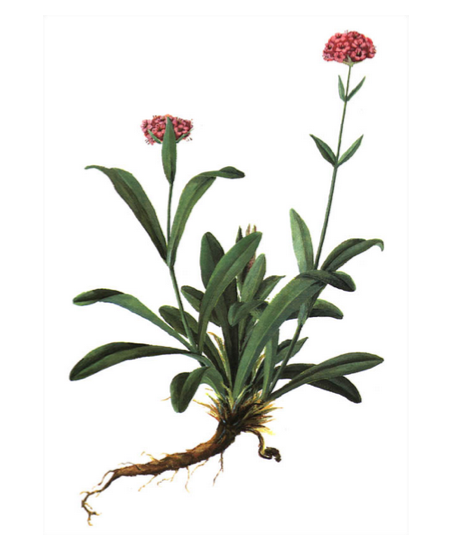 Did you know Spikenard is The Oil of Gratitude? Spikenard encourages true appreciation for life. It addresses repeated patterns of ingratitude, where a person sees themselves as a person whom criticism or abuse may be directed, or a victim of their life circumstances. It encourages individuals to let go and find appreciation for all of life’s experiences.
Spikenard is grown in Nepal, China, and India. For centuries the oil has been used as a perfume, as a medicine, and in religious ceremonies from Europe to India. In the bible It was offered on the specialized incense altar in the time when the Tabernacle was located in the First and Second Jerusalem Temples. Several references to Spikenard, were made in both the Old and the New Testament.
Spikenard was one of the early aromatics used by the Egyptians and is mentioned frequently throughout the bible. The powdered root of Spikenard is also mentioned in some Islamic traditions as the fruit which Adam ate in Paradise, which God had forbidden him to eat. It was traditionally used to anoint people of high honor due to its healing properties, and is considered to have spiritual applications for blessing and protection.
Spikenard has a long list of therapeutic uses in clinical aromatherapy and is considered non-toxic, non-irritant, and non-sensitizing. It is also used to season foods in Medieval European cuisine.The health benefits of Spikenard Essential Oil can be attributed to its properties as a deodorant, laxative, and a sedative in nature.
Health Proverb

Motivate Mondays

May your Christmas be filled with joy and love.
5 Tests Every Essential Oil Should Go Through

Five tests every essential oil should go through for the highest quality. Ask your essential oil suppliers if they do these tests with their essential oils.
Test 1: Gas Chromatography
In gas chromatography, volatile essential oil compounds are vaporized and passed through a long column called a gas chromatograph. Each individual compound travels or “elutes” through the column at a different rate and is measured as it exits the column during the testing period. Using gas chromatography, quality control engineers can determine which compounds are present in a test sample and, as importantly, at what levels.
Test 2: Mass Spectrometry
In mass spectrometry, samples are vaporized and then ionized and each individual compound in a sample is measured by weight. Mass spectrometry provides additional insight to the purity of an essential oil by revealing the presence of non-aromatic compounds, such as heavy metals or other pollutants, which are too heavy to elute along a gas chromatograph. The combination of gas chromatography and mass spectrometry is sometimes referred to as a GC/MS test.
Test 3: FTIR Scan (Fourier Transform Infrared Spectroscopy) In an FTIR Scan, a light is shown at the material sample and the amount of light absorbed by the chemical constituents of the sample is measured. Results are then compared against a historical database to ensure adherence to composition standards.
Test 4: Microbial Testing
In microbial testing, samples are drawn from each batch of essential oils and applied to growing mediums in dishes or “plates.” After an incubation period, each plate is analyzed for growth of microbes. This test is performed on all incoming material to the manufacturing facility, and also performed on finished product to ensure no harmful organisms have been introduced to the product during the filling and labeling process, and to ensure shelf-life stability.
Test 5: Organoleptic Testing
Organoleptics include those attributes of an essential oil that can be tested with taste, sight, touch, and smell. From growers, and harvesters to essential oil chemists; from manufacturing engineers to essential oil practitioners. The extraction of essential oils is very much an art form that can be enhanced by, but not replaced with, mechanical analytics. The wisdom and experience of essential oil experts are an indispensable part of a great quality control standard.
 Len's Oils