
The Meaning of Oil and Frankincense in Worship
In the book of Leviticus, God gave instructions to Moses about how the Israelites should offer sacrifices and gifts as acts of worship. One of these offerings was the grain offering, which included fine flour, oil, and frankincense. A priest would take a handful of this mixture and burn it on the altar as a sweet-smelling offering to God. The oil represented God’s provision and blessing, while the frankincense, a valuable spice, was used for prayer and worship. Together, they symbolized the people’s gratitude and devotion.
The use of oil and frankincense had a deeper meaning in biblical times. Olive oil was used not just for cooking but also for anointing people as a sign of God’s presence. Frankincense, a fragrant resin, was burned as incense to represent prayers rising to heaven. These natural elements were considered sacred, often used in healing, prayer, and worship. In Leviticus 6:15, God asked for these items in the offering to show that true worship comes from a pure and grateful heart.
Even today, essential oils like frankincense are valued for their soothing and healing properties. While we may not offer grain sacrifices, we can still learn from this passage. It teaches us that worship is about giving our best to God, whether through prayer, gratitude, or acts of kindness. Just as the oil and frankincense created a pleasing aroma in the temple, our lives should be a pleasing offering to God, full of faith and thanksgiving.

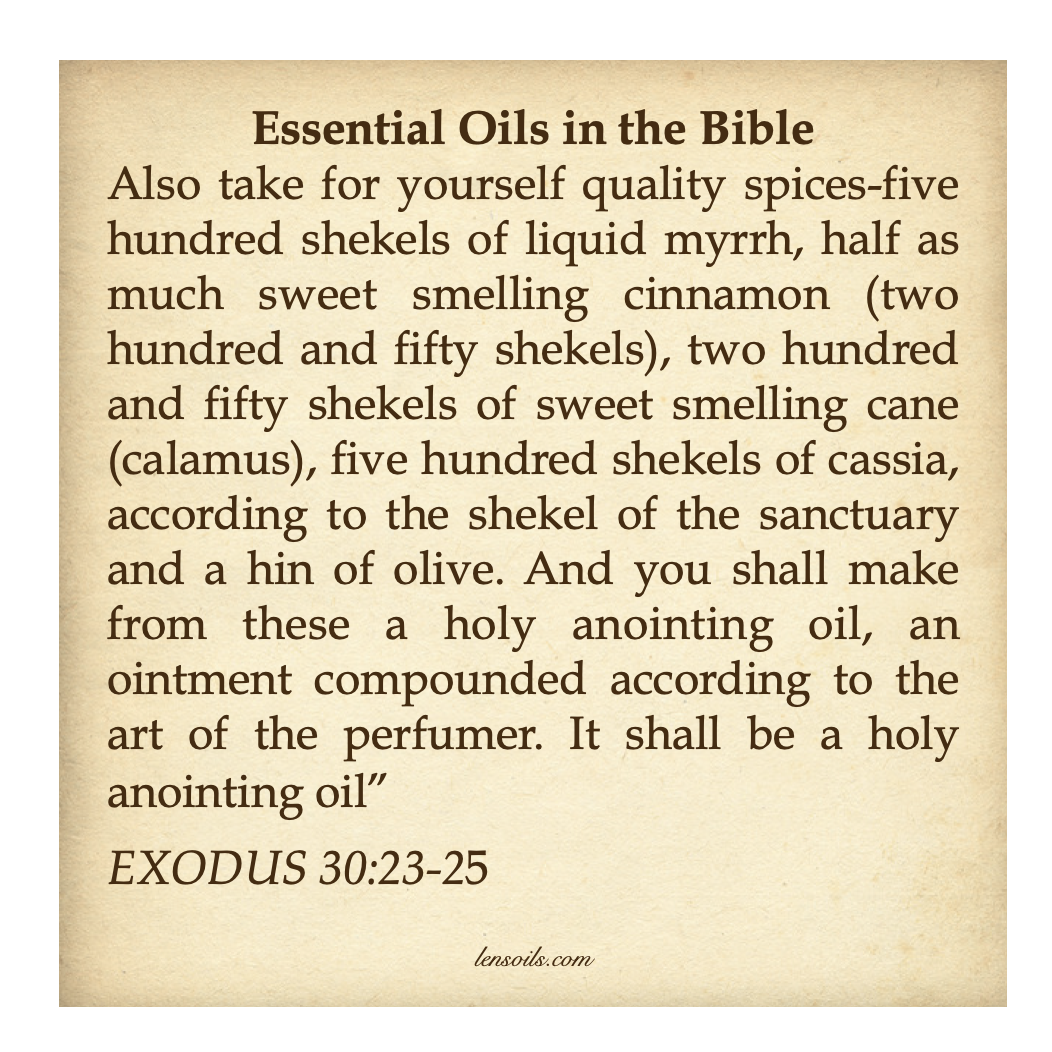

 “Also take for yourself quality spices- five hundred shekels of liquid myrrh, half as much sweet-smelling cinnamon (two hundred and fifty shekels), two hundred and fifty shekels of sweet-smelling cane [calamus], five hundred shekels of cassia, according to the shekel of the sanctuary, and a hin of olive oil. And you shall make from these a holy anointing oil, an ointment compounded according to the art of the perfumer. It shall be a holy anointing oil.” EXODUS 30:23-25
 Len's Oils