Tag Archives: Myrrh

Essential Oils in the Bible

The passage from Esther 2:12 provides a fascinating glimpse into the beauty rituals and cultural practices of ancient Persia, where the events of the Book of Esther take place. Here’s the backstory to the use of essential oils and purification described in this verse:


Historical and Cultural Context

  1. Persian Beauty Practices:
    • The setting of the Book of Esther is the Persian Empire during the reign of King Ahasuerus (often identified as Xerxes I). Persian royalty placed a high value on beauty and refinement, especially in their court.
    • Women chosen to enter the king’s harem underwent extensive beauty treatments as part of their preparation to appear before the king. These treatments were seen not only as a way to enhance their physical appearance but also as a ritual purification process, symbolizing worthiness and readiness to serve the king.
  2. Use of Myrrh and Sweet Odors:
    • Myrrh: Myrrh is a resin obtained from the sap of trees in the Commiphora species, valued for its aromatic, medicinal, and preservative properties. In ancient times, it was used in anointing oils, perfumes, and embalming. For the women in the harem, six months of treatment with myrrh likely served to cleanse the skin, promote healing, and leave a pleasing scent.
    • Sweet Odors: This likely refers to a mix of aromatic oils, perfumes, and natural fragrances made from herbs, spices, and flowers. These treatments were meant to soften the skin, enhance beauty, and create an alluring fragrance.
  3. Symbolism of the Process:
    • The 12 months of preparation underscored the significance of appearing before the king—it was not merely a physical transformation but also a symbolic process of purification and elevation.
    • The use of oils and scents had practical purposes (cleansing and moisturizing in a hot climate) and spiritual or ceremonial significance, as fragrances were often associated with divinity and favor.

Biblical and Spiritual Significance

  1. Purification Rituals:
    • The purification process reflects broader biblical themes where oil is used for anointing and consecration. In the Bible, oil often symbolizes the Holy Spirit, healing, and sanctification.
    • In Esther’s case, the extended preparation underscores her journey from an orphaned Jewish girl to a queen chosen by God for a divine purpose—to save her people.
  2. God’s Providential Plan:
    • While the verse focuses on the physical aspects of Esther’s preparation, it also sets the stage for the larger story of God’s providence. The physical anointing and purification parallel Esther’s spiritual readiness to fulfill her role as a deliverer for her people.

Modern Reflection

This verse highlights the significance of preparation—both physical and spiritual. It reminds readers of the care and dedication involved in stepping into a role of influence or service, as well as the importance of inner beauty and character that complements external refinement. Essential oils, as seen in Esther’s story, carry both practical and symbolic importance, connecting us to the ancient practices of self-care, reverence, and purpose.

Essential Oils in the Bible

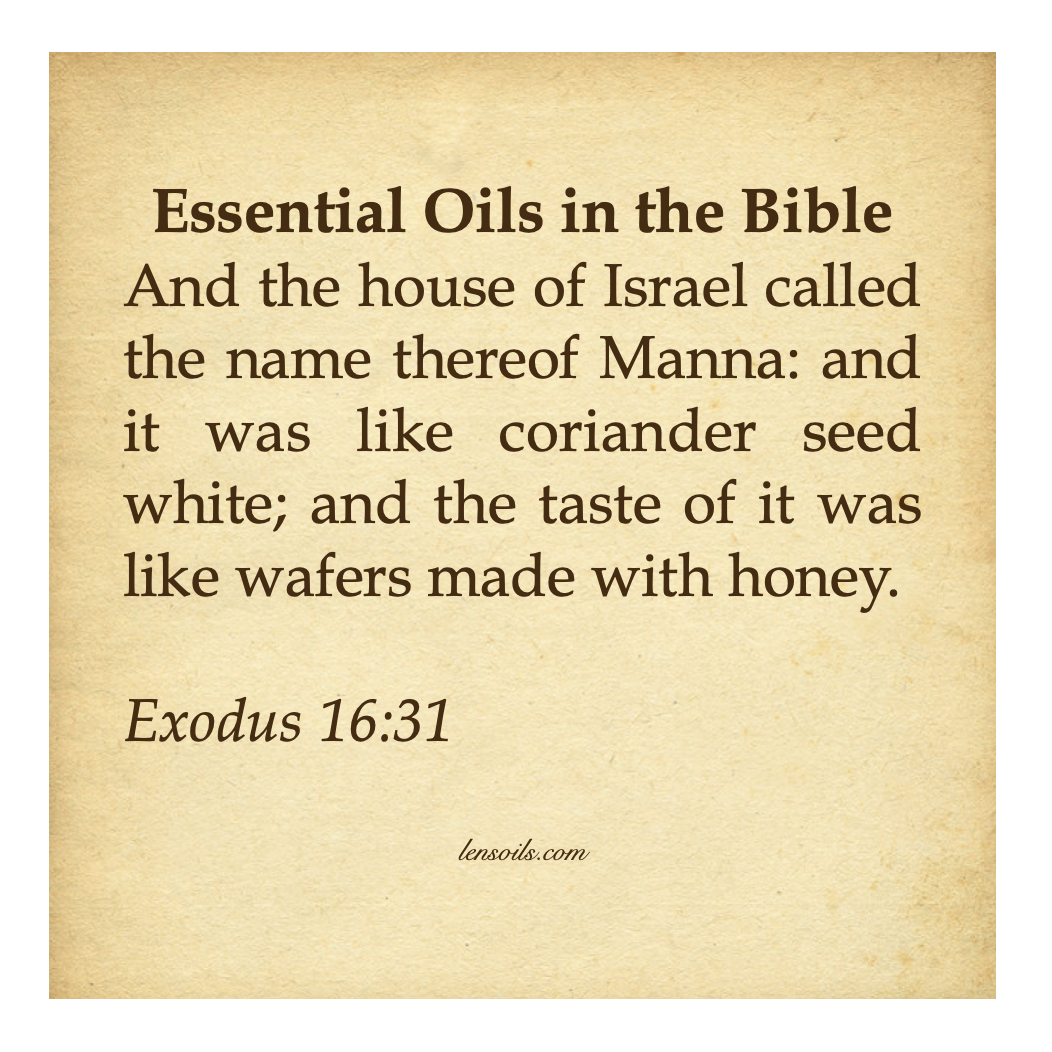
The verse in Exodus 16:31, “And the house of Israel called the name thereof Manna: and it was like coriander seed white; and the taste of it was like wafers made with honey,” recounts a miraculous provision of food from God to the Israelites during their journey through the wilderness after their escape from Egypt. The story of manna is deeply symbolic and reflects themes of trust, divine provision, and sustenance.

After fleeing Egypt and crossing the Red Sea, the Israelites faced hardships, including scarcity of food. They complained to Moses about their hunger, longing for the abundance they remembered in Egypt. In response, God provided manna—a mysterious, edible substance that appeared on the ground each morning like dew. Manna’s description as “like coriander seed, white” and tasting “like wafers made with honey” conveys its nourishing and pleasant qualities, highlighting God’s generosity.

While manna itself isn’t directly connected to essential oils, the Bible often references fragrant plants and resins like frankincense, myrrh, and spikenard, which were used in anointing, worship, and healing practices. Manna shares a similar symbolic role in providing physical and spiritual sustenance. Its sweet taste and miraculous nature reinforced the idea that God would meet the needs of His people, teaching them to rely on Him daily for provision and to obey His commandments.

In broader biblical tradition, manna became a symbol of God’s faithfulness, a lesson in gratitude, and a foreshadowing of spiritual nourishment, as referenced by Jesus in the New Testament when He referred to Himself as the “bread of life” (John 6:35). The connection between natural elements like manna and spiritual truths underscores the Bible’s recurring theme of God’s care through the gifts of creation.

While the verse in Exodus 16:31 doesn’t explicitly mention essential oils, there is a subtle connection to the biblical use of natural substances for physical and spiritual well-being. Manna is described as resembling coriander seed, a plant that is still valued today for its essential oil, known for its warming, energizing, and digestive properties. This description links manna to the natural world and its potential to provide both nourishment and healing.

In biblical times, essential oils and aromatic resins like frankincense, myrrh, and spikenard were widely used not only for anointing and worship but also for their medicinal benefits. Manna, while primarily a miraculous food, fits within this broader biblical theme of God providing sustenance and wellness through nature. The honey-like taste of manna suggests a sweet and wholesome quality, paralleling how essential oils often embody the healing and restorative properties of the plants they are derived from.

This connection can be seen as a reminder of how God’s provision extends beyond immediate needs to include elements of comfort and health. Just as manna sustained the Israelites physically and spiritually in their wilderness journey, essential oils and natural remedies can be seen as part of the divine design for maintaining well-being, echoing the care and nourishment symbolized by manna.

Twas The Night Before Christmas

‘Twas the Night Before Christmas (Essential Oils Edition)

‘Twas the night before Christmas, when all through the house,
Not a creature was stirring, not even a mouse.
The stockings were hung by the chimney with care,
With scents of sweet cinnamon filling the air.

The children were nestled all snug in their beds,
While whispers of peppermint danced in their heads.
And Mama in her scarf, with her lavender spray,
Had just settled down at the end of the day.

When out on the lawn there arose such a clatter,
I sprang from my bed to see what was the matter.
Away to the window I flew like a flash,
The aroma of fir trees as fresh as a splash.

The moon on the snow gave a magical glow,
And hints of pine essence made spirits bestow.
When, what to my wondering nose should appear,
But a sleigh full of oils and eight festive reindeer!

With a little old driver, so lively and quick,
I knew in a moment it must be St. Nick.
More fragrant than ever, his oils they came,
And he whistled and shouted and called them by name:

“Now Frankincense! Now Myrrh! Now Citrus and Spruce!
On Clove Bud! On Ginger! Let the aromas cut loose!
To the top of the porch! To the top of the wall!
Let the scents of the season bring joy to you all!”

As dry leaves that before the wild hurricane fly,
The warm scent of clove and orange filled the sky.
So up to the rooftop the reindeer they flew,
With a sleigh full of treasures, and St. Nicholas too.

And then, in a twinkling, I heard on the roof,
The prancing and pawing of each little hoof.
As I drew in my head and was turning around,
Through the chimney St. Nicholas came with a bound.

He was dressed all in fur, from his head to his toes,
And carried a diffuser to spread Christmas glows.
A bundle of bottles he had flung on his back,
Filled with aromas to keep the season on track.

His eyes, how they twinkled! His dimples, how merry!
His cheeks smelled of nutmeg, his nose like a cherry!
With a drop of vanilla, his smile did gleam,
Bringing joy to the night with his yuletide dream.

He spoke not a word, but went straight to his work,
Adding oils to stockings with a satisfied smirk.
A touch of eucalyptus, a hint of sweet bay,
And a drop of warm cedar to brighten the day.

Then laying his finger aside of his nose,
A burst of fresh pine through the chimney arose.
He sprang to his sleigh, to his team gave a whistle,
And away they all flew like the scent of a thistle.

But I heard him exclaim, ere he drove out of sight,
May your oils bring peace, may your spirits stay bright,
For aromas of Christmas make everything right.”

“Happy Christmas to all, and to all a good night!

Essential Oils in the Bible

In Matthew 2:11, the wise men (or Magi) visited Jesus after His birth, bringing gifts of great significance: gold, frankincense, and myrrh. These gifts were not random; they were deeply symbolic and valuable in their time.

  • Gold: A gift fit for a king, symbolizing Jesus’ royalty and His role as the King of Kings.
  • Frankincense: A fragrant resin used in worship and as incense in temples, representing Jesus’ divine nature and His role as a priest who connects humanity with God.
  • Myrrh: Another resin, often used in anointing oils and embalming, foreshadowing Jesus’ suffering and sacrifice.

Frankincense and myrrh were highly prized in the ancient world for their aromatic, medicinal, and spiritual uses. These essential oils were extracted from tree sap and were considered luxuries, traded along ancient trade routes. Their inclusion as gifts emphasized Jesus’ importance and the acknowledgment of His divine mission, even as a child.

Christmas Diffuser Blends

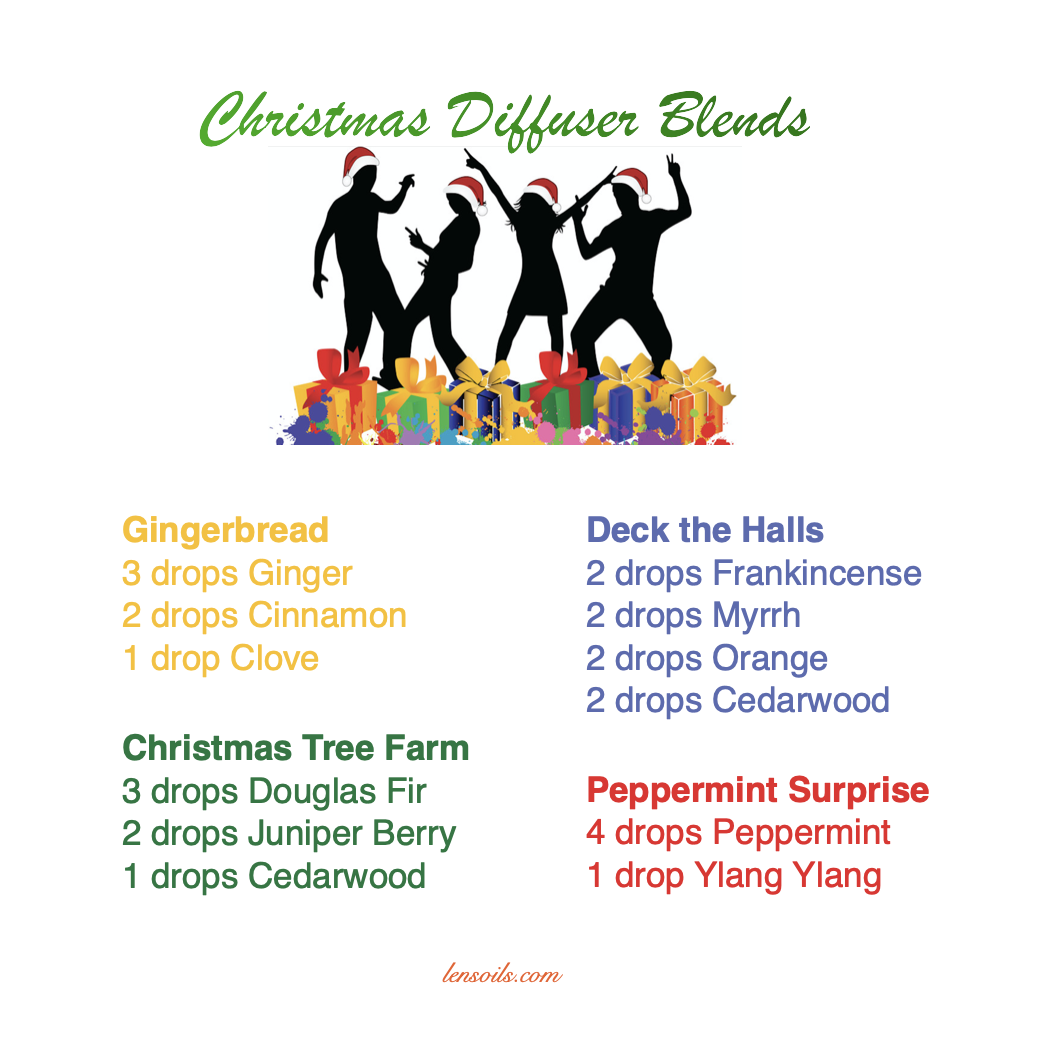
The holidays are a season of warmth, joy, and cherished memories, and these Christmas diffuser blends bring that spirit to life in your home. Each blend tells its own story:

  • Gingerbread fills your space with the nostalgic aroma of holiday baking, evoking cozy kitchens and festive treats shared with loved ones.
  • Christmas Tree Farm brings the crisp, fresh scent of evergreens, transporting you to snowy forests where holiday trees stand tall and magical.
  • Deck the Halls combines the sacred and the citrusy, grounding you with Frankincense and Myrrh while brightening the air with sweet Orange and earthy Cedarwood—a perfect harmony for decorating or quiet reflection.
  • Peppermint Surprise adds a playful twist with its energizing Peppermint and the subtle floral elegance of Ylang Ylang, creating a refreshing and unexpected holiday treat.

These blends are more than just scents; they’re invitations to slow down, breathe deeply, and embrace the beauty of the season. Whether you’re celebrating with family or enjoying a peaceful evening by yourself, let these aromas make every moment brighter, cozier, and more meaningful.

Essential Oils in the Bible

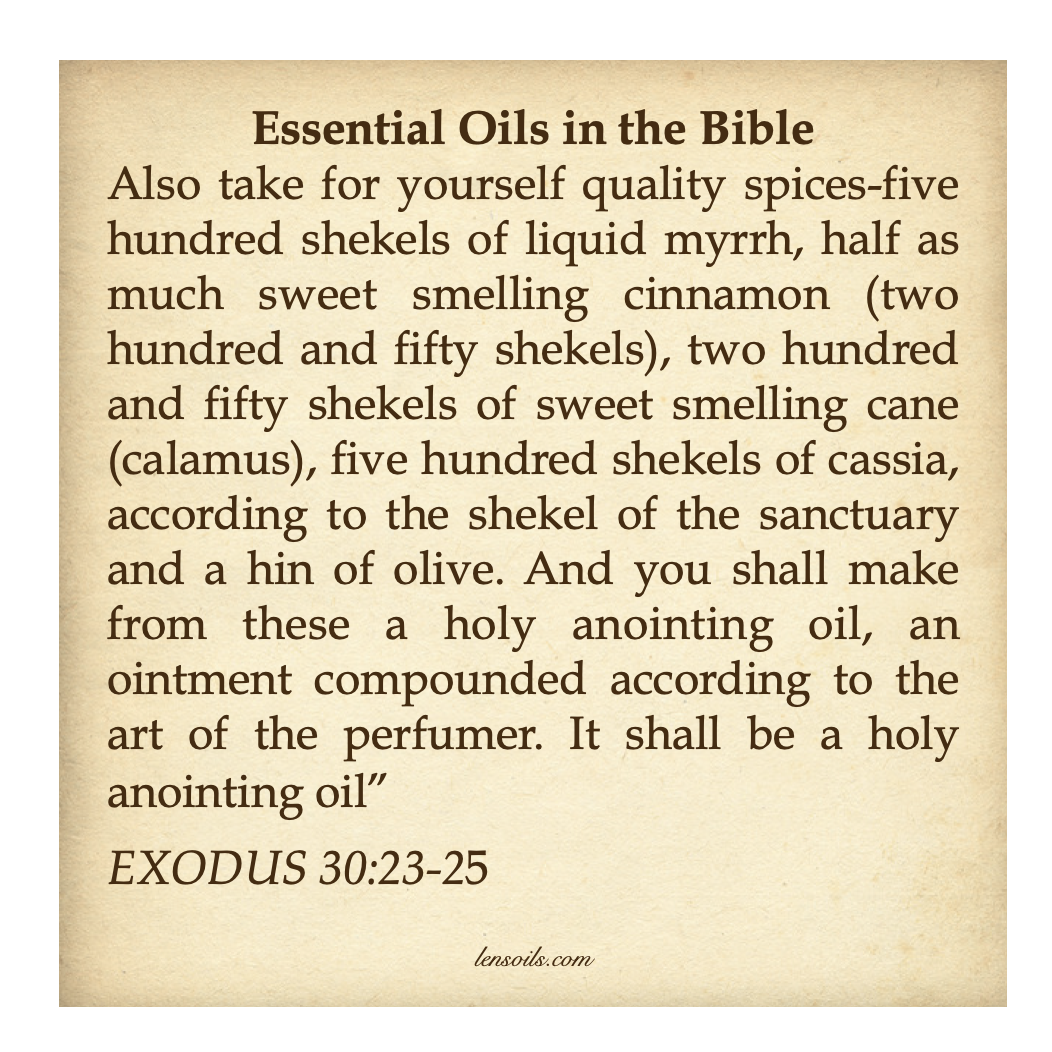
In the Bible, God instructs Moses to create a special holy anointing oil using specific ingredients. This recipe is found in Exodus 30:23-25. Here’s a simplified explanation:

Take the following high-quality spices:

  • 500 shekels of liquid myrrh
  • 250 shekels of sweet-smelling cinnamon
  • 250 shekels of calamus (a fragrant cane)
  • 500 shekels of cassia (a spice similar to cinnamon)
  • A hin (about a gallon) of olive oil

These ingredients are combined by a skilled perfumer to create a sacred anointing oil. This oil was set apart as holy and used for special purposes in worship and dedication.

12 Essential Oils in the Bible

Here are 12 of the most revered oils of the Bible and their historic uses…

1. Frankincense

Frankincense is the king of the oils. It was used as a primary component of the holy incense, a medicine and a currency — and of course, it was a gift from the wise men to baby Jesus. In fact, at the time of Jesus’ birth, both frankincense and myrrh may have been worth more than their weight in the third gift: gold.

2. Myrrh

Quoted in Scripture 156 times, uses of myrrh oil in the Bible included use as an ointment, an incense, an embalming ingredient and as a skin beauty treatment by Queen Esther in Esther 2:12. By far, myrrh’s most common usage in the Bible is as a part of holy anointing oil.

3. Cinnamon

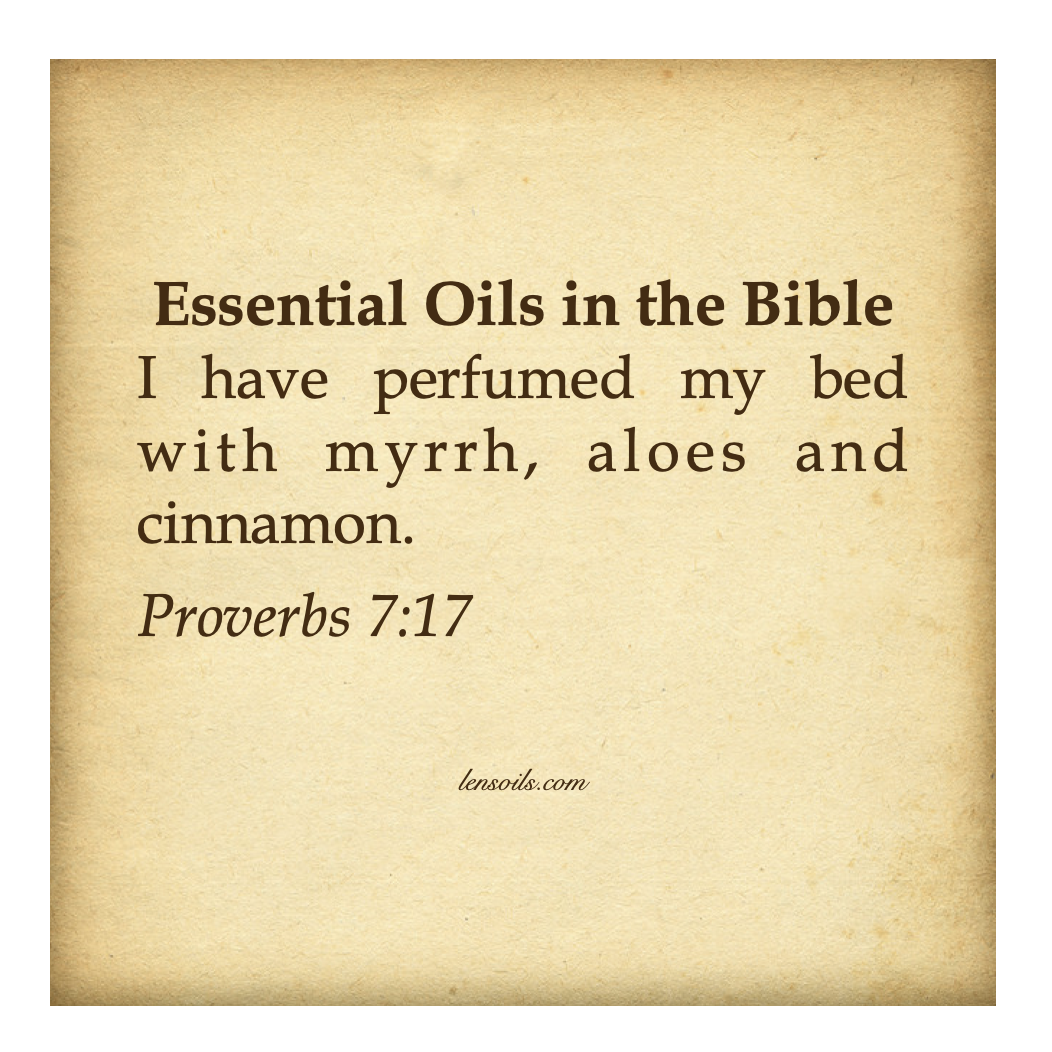
Like myrrh, cinnamon oil was a chief ingredient in holy anointing oil and used to cleanse the air, kill mold and act as a natural medicine. In Proverbs 7:17, Solomon uses this aromatic oil in the bedroom and as a natural perfume or cologne.

4. Cedarwood

King Solomon used cedarwood in building God’s temple and Jesus was crucified on a cross made of cedarwood or cypress. It was thought to bring wisdom, was used for ritual cleansing and served as medicine in treating skin conditions and leprosy.

5. Spikenard

In Biblical times, “nard” was not only a very expensive perfume but also a precious ointment that was used as medicine. Interestingly, the “spikenard” used in the Bible may have in fact been lavender oil. In John 12:3, the Bible tells how spikenard was used to anoint Jesus just days before His death and resurrection.

6. Hyssop

In the Old Testament, God commanded His people to use hyssop in the ceremonial cleansing of people and houses. Hyssop appears at Jesus’ crucifixion, when the Roman soldiers offered Jesus a drink of wine vinegar on a sponge at the end of a stalk of hyssop.

7. Cassia

An herb very similar to cinnamon, cassia oil is the fourth ingredient listed in the holy anointing oil detailed in Exodus 30:24. It may have been brought out of Egypt when the Israelites fled Pharaoh and was commonly used with myrrh and aloes to scent garments.

8. Sandalwood (Aloes)

In Scripture, sandalwood is referred to as “aloes” and is called one of the oils of joy and gladness along with frankincense, myrrh and cedarwood. Nicodemus and Joseph of Arimathea brought sandalwood (aloes) and myrrh to bury Jesus, and in today’s market, the amount of oils used would be worth an estimated $200,000.

9. Cypress

Cypress is celebrated in Scripture as a symbol of strength, security and prosperity. The Bible mentions cypress as the choice wood for building, trading and even weaponry. In Genesis 6:14, God commanded Noah to “make yourself an ark of gopher wood,” which in modern English is in fact “cypress.”

10. Galbanum

Galbanum is a main ingredient of the holy incense used in the heart of the temple in Exodus 30:34. Interestingly, although galbanum itself has a somewhat foul odor, when burned with other sweet smelling oils in holy incense, it has the most beautiful scent and was thought to balance the emotions.

11. Rose of Sharon

Mentioned in the Song of Solomon, the rose of Sharon is not really a “rose” but instead similar to the hibiscus or tulip (which is also called cistus). Some Bible expositors see the rose of Sharon as Christ and the lily as the church, His bride.

12. Calamus

Also known as “sweet cane,” calamus is an ancient herb that is perhaps what we now know as lemongrass. In Biblical times, calamus was used in perfumes, incense and as an ingredient in the special holy anointing oil used by the priests in the temple.